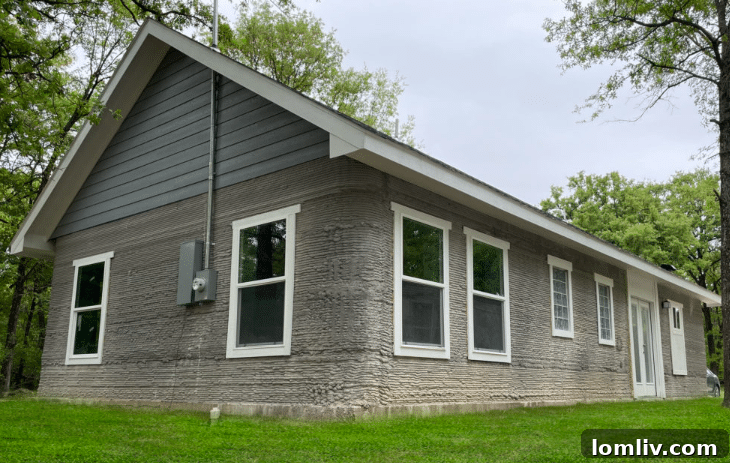
Imagine designing a home shaped like a four-leaf clover, with its stem gracefully leading into a welcoming hallway. For many, such a specific and imaginative architectural dream might seem out of reach, confined to the realm of fantasy. However, a pioneering company based in Richardson, My Robot Builds Robotics (MRB Robotics), is transforming these unconventional visions into tangible realities. With their innovative approach, they’re extruding durable concrete walls from advanced 3D printers, reminiscent of a colossal soft-serve ice cream machine, revolutionizing the way we conceive and construct our living spaces.
At the helm of this innovative venture is Craig Pettit, the visionary president of My Robot Builds Robotics. Pettit’s extensive background includes a long-standing commitment to real estate investment since 1977. Armed with a computer science degree from UT Dallas, he was on the cusp of launching a traditional homebuilding project when a fortuitous email landed in his inbox, detailing the nascent technology of 3D concrete house printing. This discovery profoundly shifted his trajectory, igniting a passion that would redefine his career.
The concept immediately captivated Pettit, who recognized its transformative potential. He articulated his excitement to Daltxrealestate.com, stating, “This technology represents new levels of freedom for the average homeowner to design homes that were never possible before. For centuries, home construction and architecture have remained largely unchanged. Masterful, unique designs were once the exclusive domain of the wealthy. Now, with 3D concrete printing, one’s imagination is truly the only limitation. The cost difference to print completely unique designs versus traditional square structures is remarkably insignificant, whether in terms of programming, material, or labor.” This statement underscores not just a technological advancement, but a democratic shift in architectural possibilities, making bespoke home design accessible to a broader demographic.
MRB Robotics Pioneers 3D Printed Homes Near Cedar Creek Lake
MRB Robotics has now cemented its place as a leader in innovative construction with the completion of North Texas’s first inhabited 3D-printed home. Situated in the serene Cedar Cove subdivision of Mabank, near the picturesque Cedar Creek Lake, this achievement is a testament to the American small-business dream. Unlike many heavily funded tech startups, MRB Robotics has proudly self-funded its journey, bringing a brilliant innovation from concept to a tangible, livable reality.
Craig Pettit elaborated on the significance of their accomplishment, noting, “Our company possesses a printer that is arguably one of the first three in the nation to have constructed a house that someone currently lives in. While other printer manufacturers have been massively well-funded, we achieved this milestone using our own capital. This speaks volumes about the incredible potential for small entrepreneurs to not only compete but to excel in this emerging space. The innovations we anticipate in the very near future will be nothing short of incredible, precisely because these agile, smaller companies have the inherent ability to challenge and innovate. These machines essentially create a ‘factory on wheels,’ making cutting-edge construction technology accessible and affordable for businesses of all sizes.” This perspective highlights MRB Robotics’ role not just as a builder, but as an enabler for broader industry transformation.
The landmark Mabank concrete home quickly garnered attention from the wider construction community, even being featured prominently last month by the esteemed Dallas Builders Association. This recognition from a traditional industry body underscores the growing acceptance and potential impact of 3D printing technology on conventional building practices.
Phil Crone, the Executive Officer of the Dallas Builders Association, offered his insights on the timing and necessity of such innovations. “Considering the tumultuous ride we’ve experienced with escalating lumber prices and a persistent labor shortage that is projected to continue for the foreseeable future, there is every conceivable incentive for advanced technologies like this to emerge and thrive,” Crone stated, as quoted on LinkedIn. He added, “This particular home may offer a crucial glimpse into the future of housing, especially if the technology continues to advance in a way that allows it to seamlessly handle the intricate and complex demands of modern architectural plans. It represents a vital solution to some of the most pressing challenges facing the construction industry today.” Crone’s remarks reinforce the notion that 3D printing isn’t just a novelty, but a strategic imperative for the housing market.
Understanding the Innovation: What Exactly is a 3D-Printed Home?
The term “3D-printed home” often sparks curiosity and sometimes confusion. Craig Pettit humorously points out the seeming paradox: “A 3D-printed home is really a bizarre phrase because all homes are, by their very nature, three-dimensional.” He clarifies that the distinction in the context of MRB Robotics’ projects lies not in the dimensionality of the final structure, but in the revolutionary method of its construction: the employment of a sophisticated 3D concrete printer.
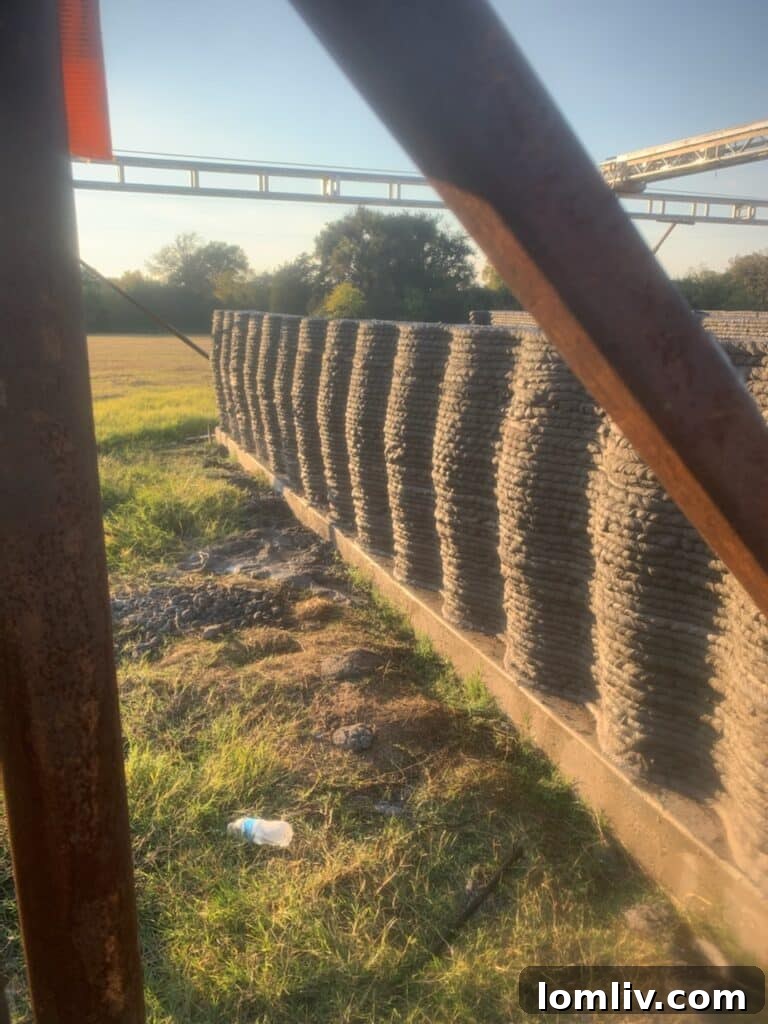
This isn’t just an oversized toy; it’s a monumental piece of engineering. Pettit describes it as a large, integrated system comprising advanced computers, robust hardware, specialized software, intricate wiring, powerful motors, and precision pumps. When all these components work in perfect synergy, they enable the automated creation of a home or building’s walls in ways previously unimaginable, opening up new avenues for architectural expression and structural integrity. This seamless integration of technology allows for a level of precision and customization that traditional methods struggle to match.
Pettit offers an accessible analogy to demystify the process: “In reality, it is quite simply no different from the desktop models used by children and hobbyists, except that it is huge and emits concrete along the path of the floor plan. It adds layer upon precise layer until the walls achieve their desired height and structural integrity.” This comparison helps bridge the gap between a familiar household item and a large-scale industrial machine, emphasizing the core principle of additive manufacturing.
The implications for design are profound. With this technology, a home can take on virtually any form a client can dream up. Whether it’s the bold emblem of a favorite sports team, the distinctive silhouette of an anchor, the sleek lines of an airplane, or even the iconic outline of the State of Texas, the 3D concrete printer can execute these complex geometries with ease. This freedom from traditional rectilinear constraints unlocks unprecedented creative potential for homeowners and architects alike, pushing the boundaries of what is considered possible in residential construction.
It’s important to clarify that while the core structural elements – the walls – are ingeniously printed by the machine, the remaining components of the home are integrated using more conventional methods. Pettit explains, “While the walls are printed by a machine, the roof structure, interior cabinets, plumbing systems, electrical wiring, doors, and windows are all built and installed in the traditional manner.” This hybrid approach leverages the strengths of both innovative and established construction techniques, ensuring both structural integrity and functional completion of the dwelling.
Imagination Unleashed: The Cedar Creek Lake Home and Beyond
The recently completed Cedar Creek Lake home exemplifies the exciting possibilities of 3D concrete printing. Spanning approximately 1,250 square feet, this modern residence features a thoughtful layout with three comfortable bedrooms and two well-appointed bathrooms. The interior boasts a large, open-concept kitchen, dining, and living area, designed for contemporary living and social interaction. Adding to its spacious feel, the home benefits from impressive 9-foot ceilings throughout. As expected, given the innovative construction method, the interior and exterior walls are robust, aesthetically pleasing concrete, showcasing the material’s versatility and modern appeal.
Beyond aesthetics and design flexibility, these 3D-printed homes offer a compelling suite of practical advantages. Engineered for maximum strength and exceptional energy efficiency, they are inherently resistant to a multitude of environmental and structural threats. This includes remarkable resilience against high winds, a crucial factor in many regions, as well as superior protection from fire, termites, and mold. Intriguingly, these homes are even engineered to withstand bullets, underscoring their extraordinary durability and safety features, offering homeowners unparalleled peace of mind.
The construction timeline for a 3D-printed home is often comparable to that of a standard tract-style home, especially when adhering to conventional, rectilinear designs. However, the true efficiency of 3D concrete printing shines when specialized architectural features are incorporated. When designs call for elegant curved walls, innovative circular bathrooms, or unique, art-like shapes emerging directly from the structural elements, 3D concrete printing becomes significantly faster than traditional construction methods. Pettit notes that the ability to rapidly execute complex geometries without extensive manual labor is where the technology truly outpaces conventional building. This not only speeds up construction but also dramatically reduces the labor intensity and potential for human error associated with intricate designs.
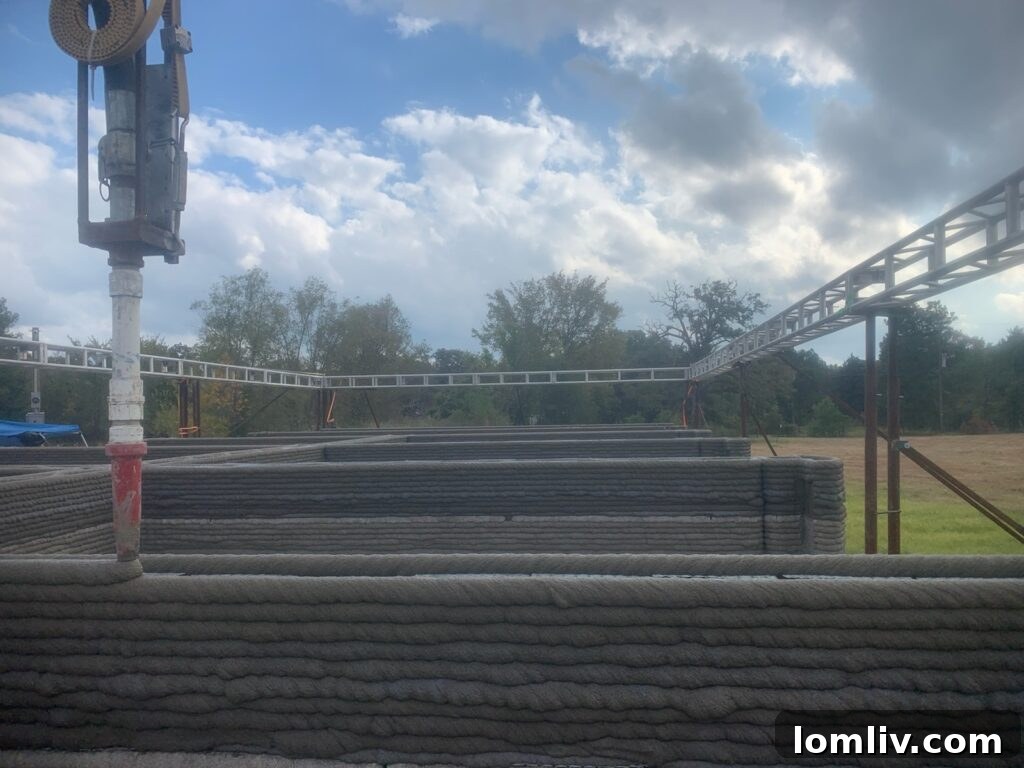
The logistical process for bringing these homes to life is also remarkably streamlined. Pettit elaborates, “Once all the normal pre-construction items, such as foundation work and site preparation, have been completed, the printing machine and its specialized material are transported to the construction site. They are then assembled with precision, and the concrete printing process can commence, transforming a digital blueprint into a physical structure layer by layer.” This efficient on-site setup minimizes disruption and accelerates the wall-building phase of construction.
Crucially, the cost per square foot for a 3D-printed home is currently quite similar to that of a traditionally built home of the same size and quality. This parity makes the innovative technology a competitive option in today’s housing market, without commanding a premium solely for its advanced methodology. Furthermore, MRB Robotics anticipates even greater cost efficiencies in the near future. Pettit optimistically shares, “The next home we build will likely be slightly less expensive, and we expect this trend to continue as our subcontractors and vendors become increasingly familiar and proficient in working with the unique aspects of concrete walls and 3D-printed structures. As the ecosystem adapts, we foresee further optimizations in cost and time.”
The Horizon: What’s Next for 3D-Printed Homes?
Are concrete-printed walls truly the inevitable wave of the future for the construction industry? According to Craig Pettit, the answer is a resounding “probably,” though he cautions that widespread adoption might not be immediate. He draws a parallel to the typical evolution of groundbreaking technologies: “Like all transformative technologies, the adoption process begins slowly, gradually gaining traction before eventually exploding into widespread use. We fully anticipate that the robots themselves will continue to evolve, becoming more affordable, significantly faster, and demonstrably better in their capabilities.” This gradual yet accelerating adoption curve is characteristic of innovations that fundamentally alter an industry.
MRB Robotics is not limiting its innovative approach solely to residential structures. In addition to the groundbreaking home on Cedar Creek Lake, the company is actively engaged in a diverse range of projects. Currently, they are applying their expertise to print a 14-unit self-storage facility, also located in Mabank. This commercial undertaking showcases the versatility of 3D concrete printing. The 1,750-square-foot building features an impressive 25-foot S-curved wall with intricate contours, a design element that would be both challenging and costly to achieve with conventional building methods, demonstrating the technology’s inherent advantage in complex geometries.
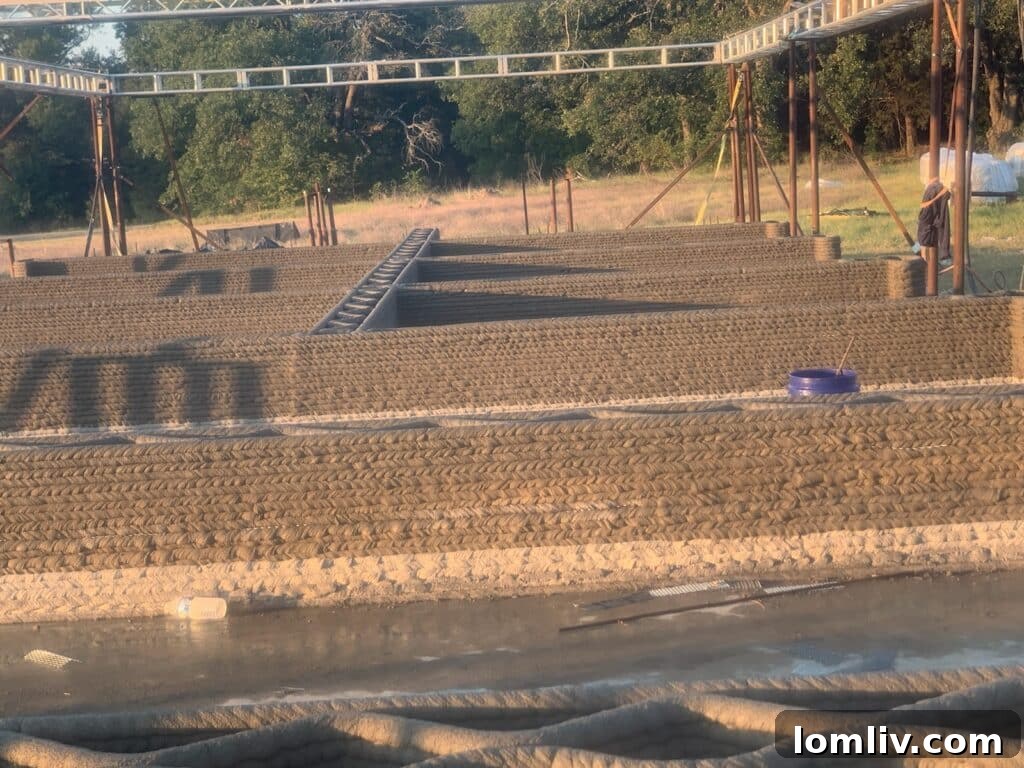
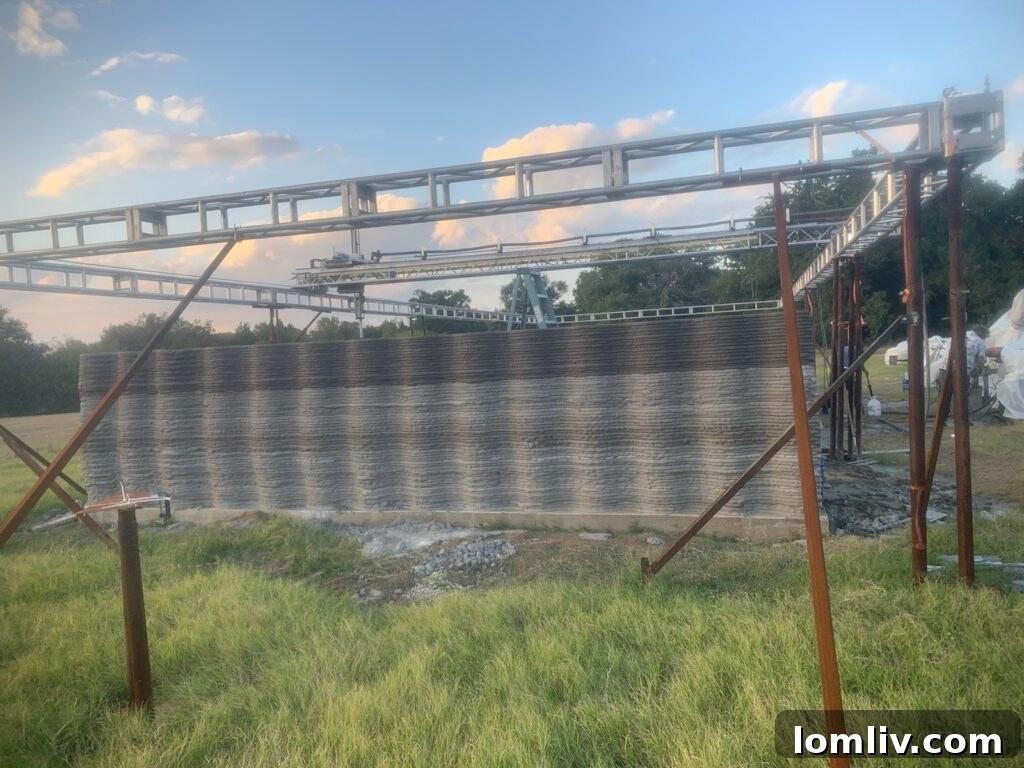
Pettit emphasizes the remarkable adaptability of their core technology, stating, “The same robotic system and printing methodology can be effectively utilized for a broad spectrum of applications, ranging from single-family homes and multi-unit residential complexes to commercial retail spaces, robust garages, and a host of other structural applications. This inherent flexibility makes 3D concrete printing a game-changer across various segments of the building industry.”
Looking ahead, MRB Robotics has ambitious plans for 2023, focusing on strategic expansion within the thriving greater Dallas-Fort Worth area. Their objectives include acquiring residential lots and larger acreage, laying the groundwork for future innovative developments. Pettit articulates the company’s forward-thinking vision: “We are committed to continuously pushing the limits of both architectural design capabilities and structural performance, while simultaneously refining and improving the underlying technology. A key part of our strategy involves forging partnerships with strategic building collaborators to help create optimized products and enhance efficiencies in the installation of the many other components that make up a complete home.” This collaborative approach aims to integrate 3D printing seamlessly into the broader construction ecosystem.
Ultimately, Pettit reveals that the most profoundly stimulating aspect of building with a 3D concrete printer transcends mere considerations of cost or construction time. It is, he explains, the unparalleled opportunity for creative expression and personal customization. “This technology signifies nothing less than a revolution for the entrepreneurial spirit inherent in the American dream,” he passionately asserts. He envisions a future where the barriers to unique home design are dismantled: “My grandson is already printing intricate toys with his desktop 3D printer. Soon, I believe, anyone will be able to affordably rent a large-scale machine, empowering them to print their very own house. We are on the cusp of witnessing a landscape dotted with home after home, each a testament to people being freed to let their imaginations run wild, creating truly personalized and innovative living spaces.” This vision paints a vivid picture of a future where architecture is no longer constrained by conventional methods, but liberated by the limitless potential of 3D printing.