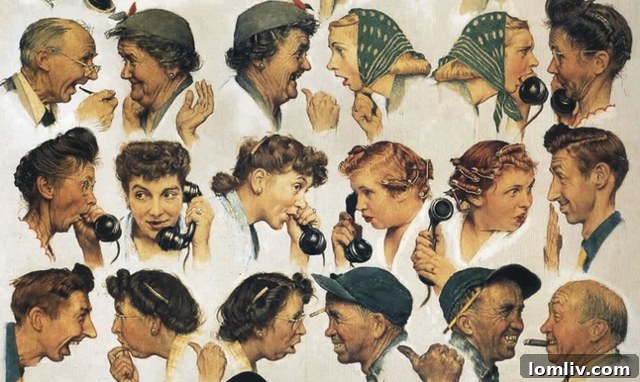
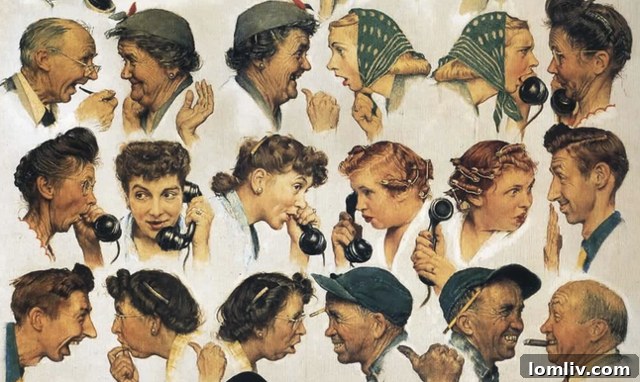
In the complex ecosystem of multi-family dwellings, where countless lives intersect daily, effective communication isn’t just a nicety—it’s an absolute necessity. Yet, time and again, we witness scenarios where the fundamental principles of clear and timely information sharing are utterly overlooked. The age-old adage, “It’s better to ask for forgiveness than permission,” often cited in individual pursuits, proves to be a perilous strategy when applied to the intricate dynamics of a community, particularly within Homeowners Associations (HOAs) that can quickly devolve into a Peyton Place of wagging tongues and rampant speculation.
One of the persistent challenges in these community environments is the general lack of communication training among key stakeholders. Resident representatives serving on HOA boards, while well-intentioned, often lack the specialized skills required for crisis communication or even routine information dissemination. Equally problematic is the occasional deficiency in communication expertise within the management companies themselves. This often leads to situations where fundamental questions—like “How would I want to be informed if I were a resident?”—go unanswered, paving the way for misunderstandings and widespread discontent.
A recent incident in my high-rise building vividly illustrates this predicament. Our management company, acting with the approval of the HOA board, made the decision to terminate the employment of two long-serving staff members. One of these individuals had been an integral part of our building community for over 35 years. Their communication strategy, or rather the lack thereof, was astonishingly misguided: allow the community grapevine to swell with rumors until forced to respond with clumsy attempts at damage control and self-preservation.
“Three may keep a secret if two of them are dead.”
– Thomas Jefferson
True to form, the grapevine erupted. The community was instantly ablaze with a cacophony of fragmented stories, half-truths, and full-blown righteous indignation. Many residents, deeply attached to these long-time employees, seemed less concerned with the ‘why’ behind the firings and more with the perceived injustice. Their sentiment leaned towards the belief that whatever the transgression, it would surely be forgivable given the employees’ long tenure. In the absence of any authoritative guidance from either the management company or the HOA board, a wildfire of speculation, fueled by a mixture of fact and fiction, swept through the building, consuming clarity and trust in its path.
The shockwaves of this news were profound. Residents who, under normal circumstances, might barely acknowledge my existence, were now reaching out—calling and writing—urging me to publicly oppose the HOA board. I chose to decline. Observing poor communicators become ensnared by the very consequences of their own ineptitude, a phenomenon often described as being “hoisted by their own petard,” has, I admit, become somewhat of a peculiar fascination of mine.
The community’s uproar quickly escalated into demands for a town hall meeting, the reinstatement of the terminated employees, and various other remedies, all steeped in palpable anger and frustration.
It was nearly a full day later, after phone lines had been overwhelmed and email inboxes across the building were overflowing with heated exchanges, that the HOA board finally issued a response. The communication was a brief confirmation of the firings. It acknowledged that the decision would cause distress but stated that the specific reasons were private—a fact which is indeed accurate—and that this action was the culmination of a long-standing issue. The note vaguely mentioned that attempts had been made over many months to rectify problematic behaviors, but these efforts had ultimately failed. The phrasing and lack of specific detail left many residents feeling dismissed, perceiving the message as tantamount to “pound sand.”
The Complexities of HOA Governance: Legalities vs. Community Sentiment
Herein lies a critical, yet often misunderstood, aspect of HOA operations. From a purely procedural standpoint, the HOA board’s actions were entirely correct. The management company is the legal employer of those who work within the building or complex they manage. While residents naturally develop relationships with these individuals, exchanging stories and even favors, it is crucial to remember that the building, through the HOA, is not directly responsible for their salaries or employment terms. Indeed, one of the primary reasons HOAs contract management companies is precisely to offload the intricate and often sensitive responsibilities associated with employment issues.
Furthermore, the HOA board, elected by the residents, is empowered to engage with the management company on a broad spectrum of topics. According to Texas condo rules, where this incident took place, employment-related matters represent one of the few specific areas where an HOA board is not only permitted but actually required to operate with a degree of privacy, shielding sensitive discussions from the general resident population. In this particular instance, the HOA board concurred with the management company’s decision. While some might debate whether the HOA board exerted pressure on the management company, or if the impetus truly originated from the management entity, this distinction ultimately remains academic. At its core, residents must place their trust in their elected HOA board and the appointed management company to make sound decisions. Should that trust erode beyond repair, residents retain the ultimate recourse: expressing their dissatisfaction at the ballot box during board elections.
Elevating Communication: A Pathway to Trust and Harmony
Contentious issues are an inevitable part of community living. What truly defines leadership, however, is not the absence of such challenges, but rather how effectively they are managed and communicated. In the case presented, did the HOA board and management company handle the situation optimally? Absolutely not. Their approach serves as a textbook example of how poor communication can exacerbate an already sensitive matter, akin to a landlord changing the locks and simply hoping the neighbors will relay the message to the affected tenant.
The HOA board was undoubtedly aware that the termination of long-term employees would be a significant and alarming development for many residents. Yet, they “chickened out,” opting to let the informal grapevine do the heavy lifting of informing the community. Compounding this error, given that this issue had been brewing for months, there was ample time to meticulously craft a thoughtful and comprehensive communication to residents. Such a message could have been prepared in advance and immediately transmitted after the workers had departed the premises – avoiding what can only be described as a “double chicken out.” Imagine the vastly different outcome if residents had promptly received a note stating something to this effect:
“Today, after many months of dedicated effort to address and remedy ongoing issues with two of our valued employees, we regret to inform you that we were left with no alternative but to terminate the employment of John and Mary. We fully understand the profound shock and sadness this difficult decision must undoubtedly bring to our community, but we want to assure you that this action was not taken lightly, nor was it our desired outcome. Ample time, resources, and opportunities were provided for these problematic behaviors to be altered, yet ultimately, these efforts proved unsuccessful. We recognize that over the years, many of you have formed strong personal relationships and bonds with these individuals, making this news particularly challenging and disheartening to receive. Please understand that Texas law mandates that all employment-related issues must be kept strictly private, which regrettably explains why this announcement cannot delve into the specific details many of you will undoubtedly seek. We humbly ask for your trust and understanding, assuring you that in making this extraordinarily difficult decision, we have acted with the utmost care and consistently in the best interests and welfare of our entire building community.”
Such a message, while painful, would have set a dramatically different tone and trajectory for the community’s reaction.
The Power of Proactive and Empathetic Communication
While the grapevine would undoubtedly have still churned, its tone would have been notably different, and the scale of the negative reaction significantly diminished. Many residents, feeling respected and genuinely informed, would have been better equipped to understand the gravity of the situation, even without all the private details. The act of proactive communication, especially when it acknowledges resident feelings and explains procedural constraints, fosters a sense of respect and inclusion.
In the corporate world, the principle of “getting ahead” of a potentially negative story is paramount; it significantly softens the impact. Being prepared with clear, concise, and empathetic answers is a cornerstone of effective crisis management, serving to blunt the sharp edges of misinformation and partially informed gossip. However, with many HOA boards and management companies often untrained in even the most basic communication strategies, residents frequently feel disregarded or “ridden roughshod over.” This directly and profoundly impacts the delicate balance of trust between the community and its leadership—both the HOA board and the management company.
Short Memories and Lingering Concerns
The silver lining, if one can call it that, for those challenged by effective communication, is the often-overlooked reality that residents tend to have incredibly poor and relatively short memories. In this particular case, the controversial action occurred approximately three weeks prior to the next scheduled HOA board meeting. By the time that meeting arrives, much of the raw emotion and immediate outrage will have dulled, leaving only the most dedicated or deeply affected residents to voice their lingering grievances. From a cynical perspective, one might say the timing, however accidental, was “right” in terms of mitigating immediate fallout.
However, this reliance on short-term memory is a precarious strategy. It merely postpones, rather than resolves, underlying issues of trust and perceived transparency. I now find myself wondering, with a degree of trepidation, just how clumsily or “ham-fisted” they will manage the communication surrounding this year’s upcoming 3 percent dues increase. This increase has reportedly been “known” for months within the inner circles but remains undisclosed to the general resident population. Oops, was that supposed to be a secret too? The pattern of poor communication, if not addressed, will inevitably resurface, potentially leading to greater resistance and dissent on future, equally important community matters.

Remember: High-rises, HOAs, and renovation are my primary focus. But I also deeply appreciate modern and historical architecture, always striving to balance these aesthetics against the dynamic YIMBY (Yes In My Backyard) movement. If you’re interested in hosting a Candysdirt.com Staff Meeting event, please consider me your ideal contact. In 2016 and 2017, the National Association of Real Estate Editors honored my writing with two Bronze (2016, 2017) and two Silver (2016, 2017) awards for my contributions to real estate journalism. Do you have a compelling story to share, or perhaps even a marriage proposal to make? Feel free to shoot me an email at [email protected].