By Laura Miller
daltxrealestate.com Contributor
Editor’s Note: daltxrealestate.com is dedicated to providing comprehensive insights into the dynamic real estate landscape of North Texas. As our region experiences unprecedented growth and transformation, reshaping beloved neighborhoods, our mission is to deliver the most accurate, in-depth, and trustworthy reporting. We believe in going beyond conventional daily journalism to uncover the vital, often untold, stories that directly impact where we live. To achieve this, we frequently collaborate with esteemed guest contributors who bring unparalleled expertise and diverse perspectives. Today, we are honored to feature former Dallas Mayor Laura Miller. As a vital member of City Councilwoman Jennifer Gates’ Task Force Committee, Laura is actively involved in developing a holistic Area Plan for Preston Center and Northwest Highway. This initiative is crucial for examining existing conditions, anticipating future needs, and implementing strategic improvements within one of Dallas’s most rapidly evolving urban cores. Her contribution offers a critical look at the challenges and opportunities facing our community.
The Unveiling of St. Michael’s Office Tower: A Challenge to Preston Center’s Future
From my vantage point as a member of the Preston Road and Northwest Highway Area Plan Task Force, tasked with balancing the imperative of new development with the pressing issues of traffic congestion and parking scarcity, some observations about the proposed office tower by St. Michael’s and All Angels Church are deeply concerning. This isn’t merely a matter of urban planning; it’s about the very fabric of our community.
Beyond the fundamental flaw of its location – the church’s property currently serves as an essential buffer between high-rises and established residential neighborhoods – what truly unsettles me is the deliberate opacity surrounding this proposal. When a community invests $350,000 (a significant sum comprising $250,000 in taxpayer money and $100,000 in private funds) to meticulously analyze a single neighborhood, a complete and transparent understanding of all ongoing developments is not merely desirable, it is absolutely critical for the success and integrity of the planning process.
A Confidential Reveal: How the Task Force Learned of the Project
Regrettably, the Task Force was not formally informed of this ambitious project. Instead, knowledge of it surfaced last fall when a vigilant citizen provided me with a confidential Request for Proposal (RFP). This document, dated August 3 and issued by real estate attorney Jay Grogan on behalf of St. Michael’s and All Angels Church (SMAA), detailed the proposed office development with striking specificity. The 10-page RFP outlined the project’s scope and stipulated a $5,000 non-refundable application fee for interested developers, with the eventual winning bidder (whose identity remains undisclosed) also required to make a $25,000 non-refundable donation to the church. Given the infrequent schedule of our Task Force meetings, my first opportunity to bring this issue to the group’s attention was on December 3, although I had proactively contacted several members beforehand to ascertain if anyone had prior knowledge of the proposal. The response was a resounding no.
One particular paragraph within that 10-page RFP stood out, raising serious questions about communication and intent:
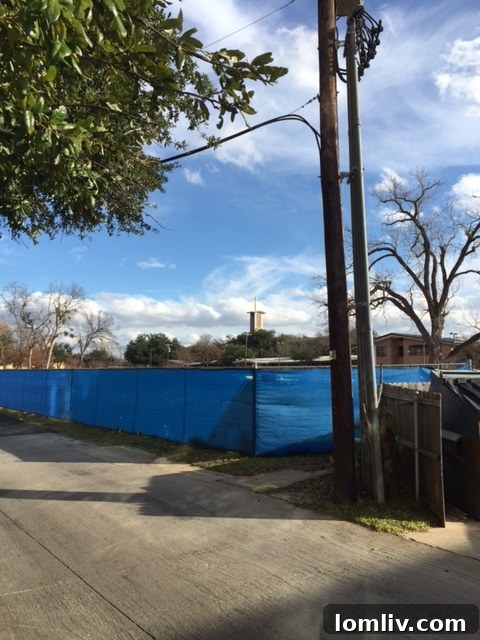
“We have had several conversations with Councilwoman Jennifer Gates about the likely development of the site. As the organizer of the Stakeholder Task Force for the Northwest Highway and Preston Road Area Plan, Ms. Gates has a strong preference that zoning cases be delayed until the Task Force completes its work. At present, the Task Force expects to complete its work on or about May 1, 2016, though there is strong support among its members (NOTE: Jay Grogan is a member of the Task Force) to complete the effort sooner. This is generally consistent with the RFP timeline indicating a “Zoning and Platting Period” of 2/15/16 to 8/15/16, though it could be that an actual submittal might occur closer to May 16, 2016.”
The Grogan Controversy: A Conflict of Interests?
Jay Grogan’s appointment to our Task Force by Councilwoman Gates was to represent Zone 3, or Preston Hollow East. This is especially ironic given that it was precisely this neighborhood’s fervent opposition to the increased traffic from a previous controversial proposal – the Transwestern project – that initially prompted Councilwoman Gates to establish the Task Force. Grogan’s selection was a surprise to many; unlike Ashley Parks, the other representative for Zone 3, Grogan had not been actively involved in the Transwestern opposition nor had he participated in his homeowner association’s activities. This raises immediate questions about the representation of community interests versus developer interests within the Task Force structure.
Out of the thirteen Task Force members, nine are homeowner representatives, including myself (representing homeowners in Zone 7, west of the Tollway). Until recently, none of us were known to be directly involved in commercial development deals within the study area. The remaining four members represent Preston Center proper and are commercial property owners: Bill Willingham (owner of the Jamba Juice building, among others), Leland Burk (owner of 8215 Westchester, a medical building), Bill Archer (La Madeleine building, etc.), and Mark Roppolo (PegasusAblon, a prominent real estate developer). Naturally, these individuals tend to be supportive of additional commercial development in the area. Leland Burk, for instance, has publicly expressed his desire to redevelop his two-story medical building into a residential tower. To his credit, before the Task Force’s inception, Burk withdrew a prior zoning request for a 29-story building on his property and is now awaiting our recommendations before pursuing a new development plan, which under current zoning, limits him to nine stories.
Community Consensus: Prioritizing Traffic and Parking Solutions
While an external perception might suggest homeowner representatives are categorically against any new development, this is far from the truth. There exists a nuanced spectrum of support for various types of density increases in specific locations. However, a consistent and overwhelming theme emerging from online surveys and Task Force workshops is clear: residents in and around Preston Center adamantly oppose any further up-zoning until tangible, comprehensive solutions for the area’s crippling traffic and parking problems are firmly in place.
This critical sentiment will be at the forefront of our next public meeting, scheduled for 6 p.m. on Tuesday, February 16, at the Walnut Hill Recreation Center. The public is strongly encouraged to attend this crucial session. Here, we will present a comparative analysis of current traffic and parking conditions against a scenario where every landowner in Preston Center develops their property to its currently allowable maximum height and density. This exercise is designed to provide a realistic and sobering picture, guiding our recommendations on the redevelopment of the city-owned parking garage and potential innovative traffic solutions, such as a tunnel under Northwest Highway to divert through-traffic from surface roads. Such infrastructure improvements are essential for sustainable urban planning in Dallas.
The Scale of the Problem: Exceeding Current Zoning Limits
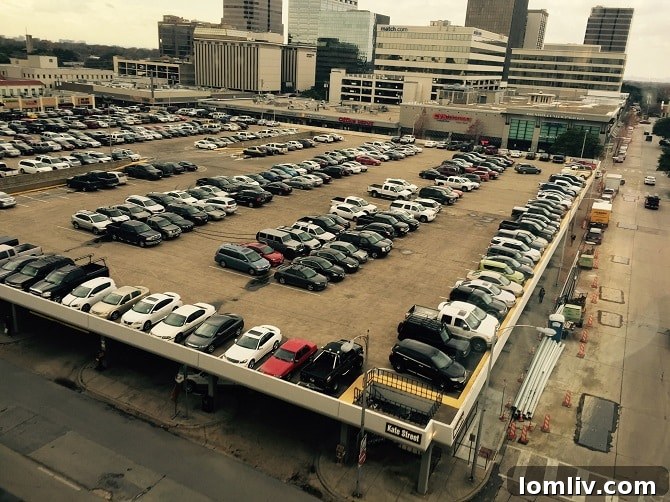
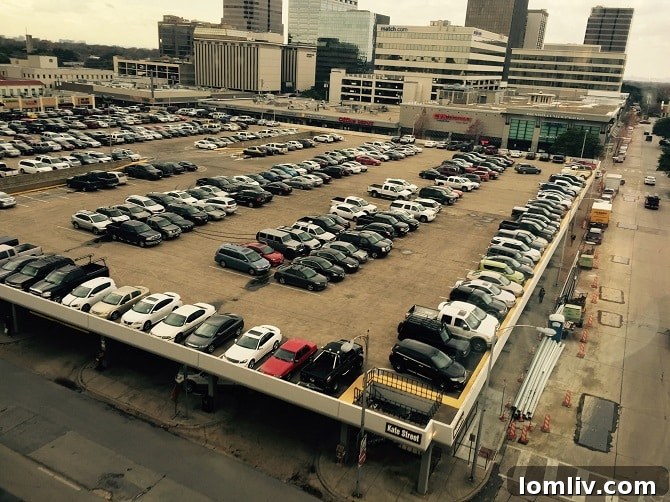
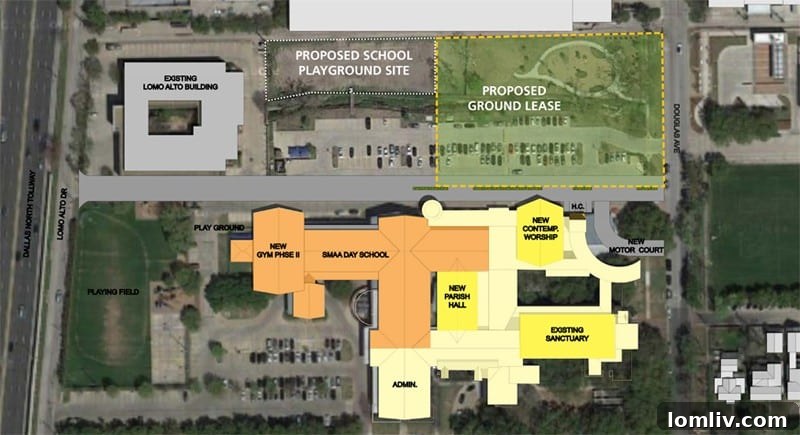
The proposed St. Michael’s project, however, introduces a far greater challenge, as it dramatically transcends existing zoning regulations. The church’s empty lot is currently zoned MF-1(A), which permits only three-story apartment buildings. To put this in perspective, the church’s current proposal envisions an office building comparable in scale to The Richards Group’s new 18-story office tower, completed last year at Central Expressway and Lemmon Avenue. That impressive structure sits atop a 10-story, 713-space parking garage, a footprint eerily similar to the church’s proposed parking facility. This drastic difference in scale between what is currently allowed and what is being proposed highlights a potential disregard for established urban planning principles and community guidelines.
So, what would a project of this magnitude truly mean for the already strained traffic conditions in Preston Center? Utilizing a widely accepted traffic study formula – that 1,000 square feet of office space generates approximately 11 daily car trips – the proposed church office tower would inject an additional 2,750 car trips per day onto Douglas Avenue. This street is designated as the primary new entrance for the church, school, office tower, and the massive parking garage. Furthermore, the church plans to relocate the St. Michael’s Woman’s Exchange store from Highland Park Village to the tower’s first floor, thereby adding even more retail-related traffic to an already overburdened area. During peak hours, an estimated 275 new vehicles would funnel through the perpetually gridlocked traffic signal at Douglas Avenue and Sherry Lane, a mere 220 feet north of the proposed development. This influx would effectively landlock the condominium residents at 8181 Douglas, whose driveway is strategically situated between the proposed office tower and the crucial traffic light. As reported in Robert Wilonsky’s article in The Dallas Morning News last week, these surprised homeowners are now preparing for a formidable fight to protect their neighborhood and quality of life.
The Transparency Divide: Grogan’s Claims vs. Miller’s Memory
Last week, following the publication of the article, Jay Grogan contended that he had been transparent regarding the St. Michael’s project, asserting that he made references to it during Task Force meetings over the past ten months. He stated, “I do not think I said, ‘Oh, by the way, mark it down that we have excess land we are going to develop.’ But later in the process, as the church thought we should pursue this more deeply, I did say — not in detail — when something came up with undeveloped land, don’t forget that St. Michael’s has excess land.”
With all due respect, such an assertion falls significantly short of genuine transparency. I have no recollection of Grogan’s comments about “excess land.” What I vividly recall, however, is a specific evening when, in retrospect, I believe he had a professional and ethical duty to fully inform the Task Force about St. Michael’s plans – and conspicuously chose not to. During our meeting on July 28, a crucial discussion unfolded concerning the absolute necessity of transparency in our work. This topic arose after Leland Burk uncovered a potential conflict-of-interest involving our newly hired consultant, Kimley-Horn, whose team was being introduced that night. Burk noted Kimley-Horn’s name on engineering documents for the proposed sky bridge by Crow Holdings in Preston Center. In response, Michael Morris, Director of Transportation for the North Central Texas Council of Governments and the Task Force’s lead staffer, assured us he would engage an outside firm if we needed to analyze the sky bridge’s impact. Morris further disclosed that Kimley-Horn had acknowledged another potential conflict: church driveways. According to my detailed notes, Morris stated that night, “Church driveways is a Kimley-Horn specialty. If we get into anything with driveways regarding churches, I will put it in another bucket. We’ll get someone without church clients. So you have confidence in the Task Force.”
At that precise moment, Jay Grogan offered a remark to the effect of: “You know, St. Michael’s is going to be doing something at some point.” This comment drew no particular attention, and I interpreted it then as a positive sign, knowing that St. Michael’s school carpool lines are a well-known neighborhood nuisance, suggesting possible improvements. Grogan was subsequently presented with a second, equally perfect opportunity to fully disclose St. Michael’s plans. Piqued by the “driveways conflict,” Task Force member Burk specifically asked Morris: “You seem intently focused on churches and ingress and egress. Is there an application filed by a church? There are five to seven churches in this area.” At this critical juncture, Betsy del Monte interjected, diverting the discussion back to the sky bridge, and Morris responded to her question. Both Grogan and Councilwoman Gates remained silent, offering no further clarification. Six days later, St. Michael’s RFP was officially dated and disseminated.
Understanding Grogan’s Stance and the Reality of the Proposal
Grogan maintains that his dual role as a volunteer member of St. Michael’s planning committee (he asserts he receives no compensation for this work) and a 20-plus-year resident of Zone 3 uniquely qualifies him for the Task Force. He stated, “I want to take care of my neighbors and my community, and I also want to take care of my church. I have no financial interest. Zero. But I really feel like I have perspectives from each side that maybe no one else does.” This perspective, however, leaves some community members questioning where his primary allegiance lies. As we left the December 3 meeting where the RFP was discussed, a homeowner from Zone 3 directly asked me if Grogan would represent homeowner interests or the church’s interests as a high-rise developer. I advised him to pose that question directly to Mr. Grogan.
Further, Grogan downplays the scale of the church’s proposed development, asserting: “There will NEVER be a 250,000-square-foot building on that site. It will never be that big.” This claim, however, directly contradicts the explicit language found within the RFP. Page one, fourth paragraph, unequivocally states: “Required Improvements” are an “office project containing 200,000 rsf [rentable square feet] to 250,000 rsf or more with adjacent structured parking facility containing 500 to 675 or more parking spaces.” The RFP further grants the church the right to “add up to 150 spaces in the parking structure for SMAA exclusive 24/7 use.” The discrepancy between Grogan’s public statements and the official document’s specifications is a significant point of concern for transparency and accuracy in urban planning discussions.
Councilwoman Gates: The Decisive Factor for Preston Center
Ultimately, the future of this controversial project rests with Councilwoman Jennifer Gates. In Dallas City Hall, zoning cases largely follow the council member’s lead; the council member makes the motion to approve, deny, or delay at City Council, and in 99.9 percent of cases, their colleagues follow suit, regardless of Plan Commission recommendations. When interviewed by The News last week, Gates expressed reservations about the project, predicting strong opposition from the church’s neighbors. She also stated that she had told St. Michael’s, “I would not change any zoning in that area until after the study.”
If Councilwoman Gates truly opposes a massive office building on what is currently an empty lot with a playground, then there will be no zoning case to approve it. Developers rarely pursue projects when the area’s council member stands in opposition. However, thus far, according to the RFP, Gates is not issuing a definitive “no” to St. Michael’s. Instead, she is instructing them to await the completion of the Task Force’s work before filing their case. This constitutes a “definite maybe,” a cautious approach she has taken with previous zoning cases, which often leads to frustration and discontent on both sides of an issue. Should this zoning case proceed to filing, it will inevitably ignite yet another protracted and resource-intensive battle in Preston Center. This is precisely the type of conflict our Task Force’s year-long efforts are intended to prevent, by delivering well-reasoned recommendations and a clear path forward for sustainable community development.
A Call for Continued Transparency
In the interim, if any other Task Force members are quietly involved in significant Preston Center development plans with substantial traffic implications – or if Councilwoman Gates is aware of any further undisclosed projects – we urge immediate disclosure. Transparency is paramount. Our community needs to be fully informed to make decisions that will shape the future of Preston Center responsibly and equitably.