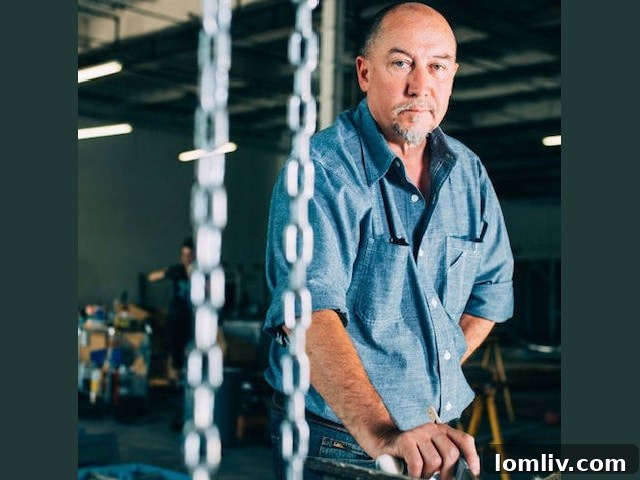
Michael van Enter: The Master Conservator Unlocking Dallas’s Cultural Legacy
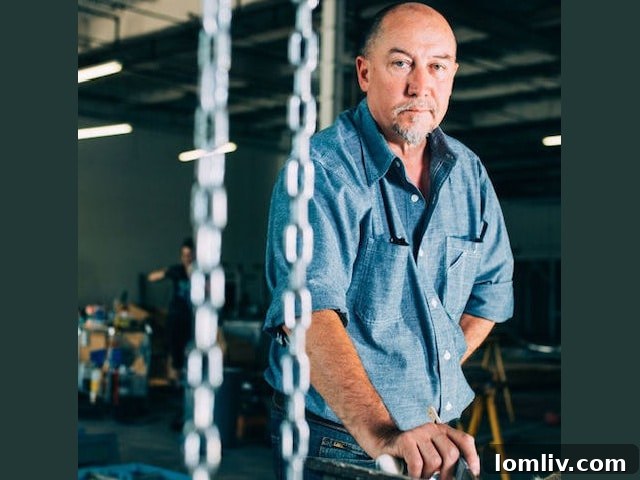
In the vibrant tapestry of Dallas’s cultural landscape, certain individuals stand as guardians of its past and architects of its future. Among them, Michael van Enter shines brightly as a preeminent art conservator, a sculptor, and a problem-solver extraordinaire. His journey, marked by an innate curiosity and a relentless pursuit of understanding how things work, has led him to become one of America’s most respected figures in art conservation. From childhood tinkering with motorcycle engines to meticulously restoring million-dollar sculptures, Van Enter’s story is a testament to dedication, innovation, and an unwavering commitment to preserving our shared artistic heritage.
A Childhood Forged in Creativity and Ingenuity
Michael van Enter’s narrative begins in a household steeped in creativity and hands-on learning. Growing up with his siblings, mischief often found its antidote in the workshop, a haven supervised by his father, a professional illustrator with a deep affection for motocross. This was no ordinary playroom; it was an informal engineering lab. “He’d put an engine on the table, and it was my job to strip it,” Michael recalls, the memory painting a vivid picture of his early education. “It was a great learning experience because when you think about a motorcycle, it has brass, steel, and aluminum parts, and it all has to work together.” This foundational experience taught him the intricate relationships between disparate materials and the necessity of precision – lessons that would profoundly shape his future career in art conservation.
The Van Enter children were encouraged to explore, to create, and to question. Their mother, a talented floral designer, undoubtedly contributed to an environment where aesthetic appreciation and practical skill converged. It’s evident that the fusion of artistic talent and a pragmatic approach to problem-solving was a genetic gift within the family. Michael, ever the visionary, fondly remembers, “I was the nutty kid in the basement building a suit of armor and making helmets at age eight.” This early passion for crafting and constructing complex objects foreshadowed a lifetime dedicated to understanding and restoring the physical integrity of art.
Family leisure was never static. Motion and speed were central to their bonding, with competitive racing activities ranging from go-karts and snowmobiles to, naturally, motorcycles. This dynamic upbringing instilled a sense of daring and a practical understanding of mechanics and performance. The family’s affinity for two-wheeled adventures left an indelible mark: “My sister became a professional motorcycle racer for seven years, then a pilot, and my brother got into the car dealership industry,” Michael explains. “We all grew up on an engine and two wheels,” a heritage that speaks volumes about their shared zest for life and mastery of mechanical principles.
The Path to Preservation: From South Africa to New York
The family’s global journey saw them living in Montreal throughout the 1960s before returning to their South African roots in 1970, a period deeply entrenched in the complexities of apartheid. This era demanded profound resourcefulness and adaptability. “During those years, you became very resourceful and had to figure things out,” Michael reflects. This necessity to innovate and adapt became a cornerstone of his professional ethos, equipping him with an invaluable skillset for the challenges of art conservation.
This innate ability to “figure things out” propelled Michael van Enter towards a distinguished career as a professional sculptor and, eventually, one of America’s most revered conservators. His formal education began at the prestigious Johannesburg School for Art, Ballet, and Music, where he honed his artistic skills in sculpture and painting. His distinctive work quickly garnered attention, culminating in a major exhibition in Johannesburg that solidified his reputation as a formidable artist.
However, destiny had a slightly different path in store. Parallel to his artistic pursuits, Michael developed a reputation for his unique ability to repair and restore the sculptures of others. “I also gained a reputation for fixing other people’s sculptures, and that’s how I got into conservation,” he explains. This organic transition from creator to restorer laid the groundwork for his future. His talents were not limited to the visual arts; his linguistic prowess also played a surprising role. “Years later, I found myself in New York City working at the consulate because of my translation skills. I speak Afrikaans, English, Dutch, a smattering of French, and get by in German.” This linguistic versatility speaks to a curious mind and an ability to navigate diverse cultural landscapes, much like he navigates the complex histories of artworks.
Before fully committing to conservation, Michael briefly explored the advertising world, with stints at industry giants McCann and Grey. It soon became apparent that this path was not his true calling. Life, with its serendipitous turns, then guided him to Douglas Kwart, a prominent New York conservator. Kwart quickly recognized Michael’s profound understanding and innate aptitude. “He recognized I knew what I was talking about,” Michael recounts. “Before I knew it, I was working on a Henry Moore piece I’d seen in a textbook. It was gratifying to be left alone with several million dollars of artwork and be trusted with them. That was a great feeling for me and gave me a lot of confidence.” This pivotal experience confirmed his true vocation and set the stage for a lifetime of preserving priceless art.
Establishing Roots in Dallas: A Hub for Conservation Excellence
Despite the immense gratification derived from his work in New York and his own studio in Stamford, Connecticut, Michael felt a subtle pull suggesting his time in America’s Northeast was nearing its end. A friend’s request for assistance with a move to Dallas unexpectedly opened a new chapter. That fateful decision was made almost 21 years ago, marking the beginning of Michael van Enter’s significant impact on the Dallas art scene.
Initially, Dallas gradually grew on him. “I was still spending a lot of time in New York, but gradually business grew here, and so did the talent pool,” he observes. What began as a transition became a permanent settlement, and Dallas evolved into a thriving center for his conservation practice. He proudly notes, “Now I think we have some of the most experienced people in America here in Dallas.” This collaborative environment, coupled with a growing demand for his specialized skills, firmly anchored Van Enter Studio in the heart of Texas.
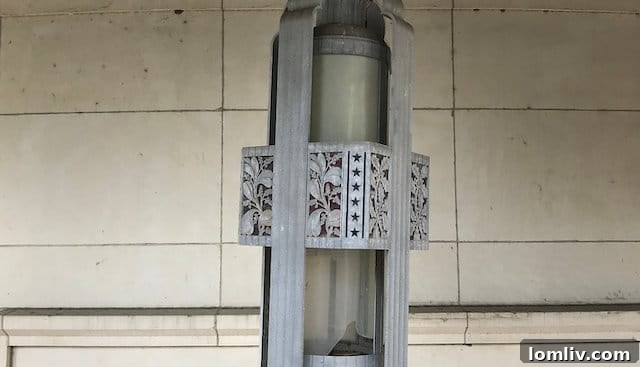
Before Restoration
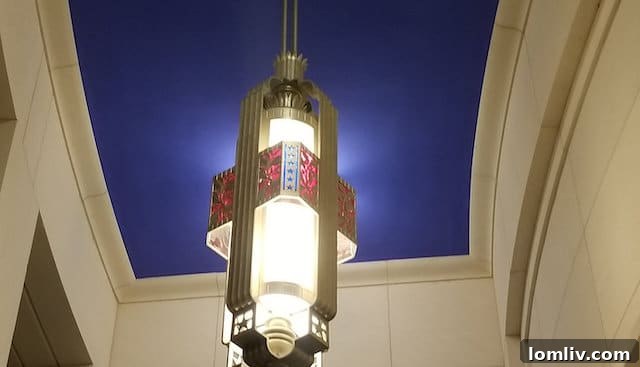
After Restoration
Landmark Projects: Preserving Dallas’s Cultural Heritage
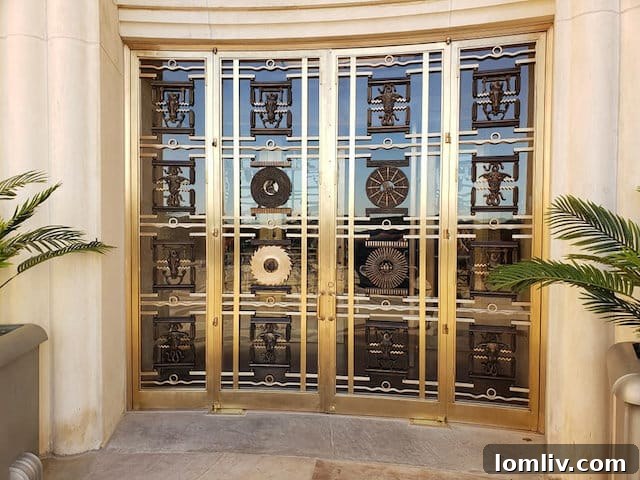
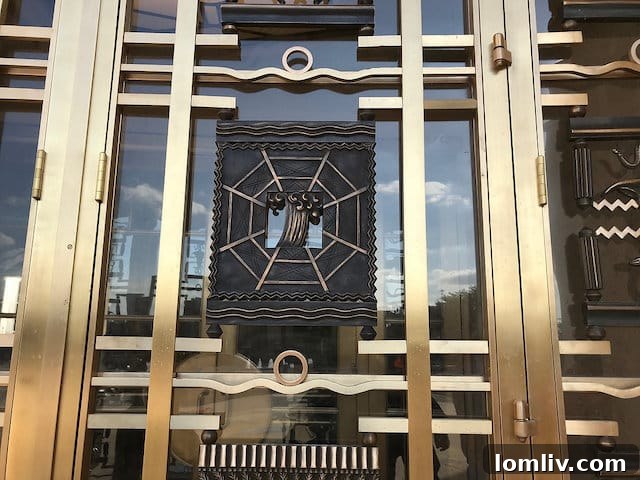
Michael van Enter’s contributions to Dallas’s cultural fabric are extensive and deeply impactful. His studio has partnered with the City of Dallas, numerous museums, foundations, and organizations on projects that are instantly recognizable landmarks. From the gleaming restoration of the iconic Flying Red Horse to the meticulous conservation of the historic Hall of State, his expertise spans an astonishing range. He’s performed intricate paint analyses, developed groundbreaking systems for mosaic removal, painstakingly reassembled enormous sculptures, and even restored ornate Victorian bank vault doors. And yes, for those wondering, his childhood lessons endure: he can still expertly put a motorcycle engine back together!
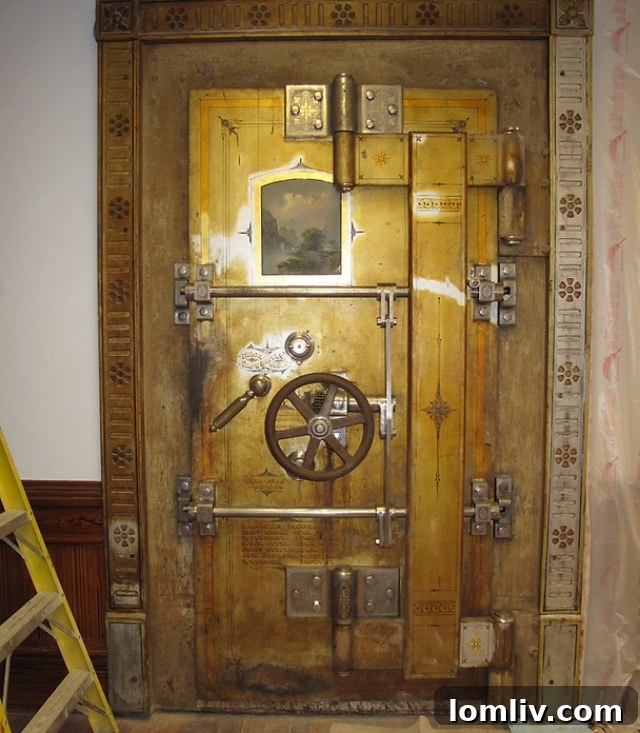
Original Condition
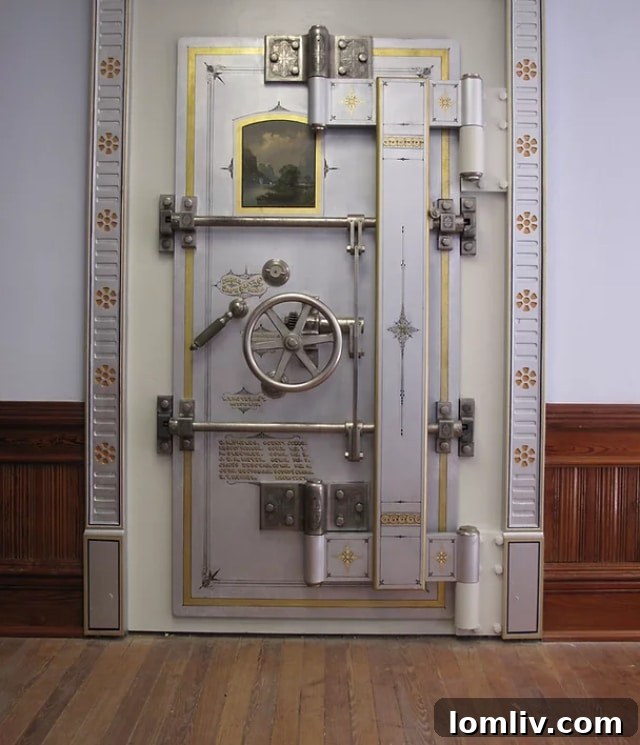
Restored
The Octavio Medellín Mosaics: A Breakthrough in Dallas Conservation
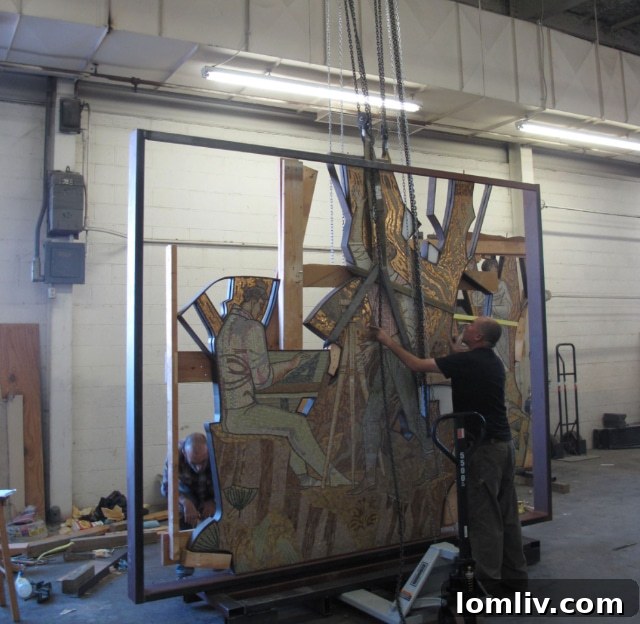
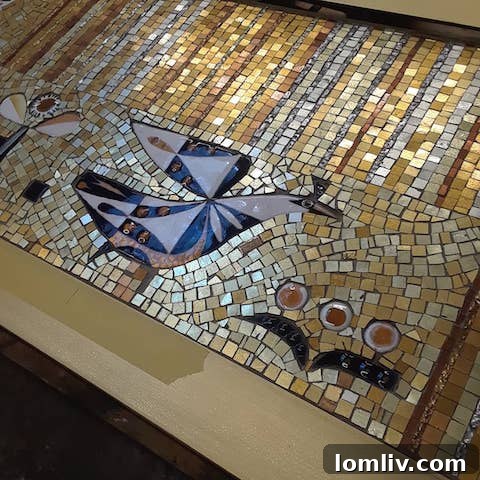
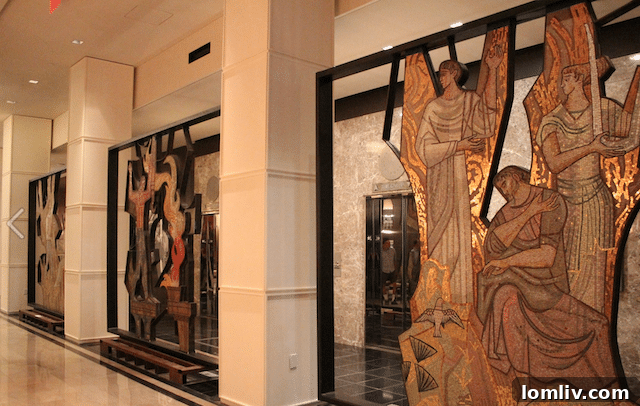
A pivotal moment that cemented Michael’s reputation in Dallas came through Architexas. He was approached with a formidable challenge: to help save a collection of priceless Octavio Medellín mosaics. “No one knew how to take them out of the wall,” Michael explains. This was no small feat; these were delicate, historic artworks embedded into architecture. His extensive experience and ingenious mind quickly found a solution. Drawing inspiration from an archaeological excavation he witnessed in Bulgaria, where a Roman floor was being carefully uncovered, he understood what methods *not* to employ. This insight spurred him to develop an entirely novel system for safely removing the mosaics from the wall. This innovative project was his introduction to the Dallas conservation community, firmly establishing him as the go-to expert for complex preservation challenges.
Reviving the George Rickey Mobile: The Art of the ‘Impossible’ Repair
Another project that significantly elevated the van Enter Studio’s standing was for the Modern Art Museum of Fort Worth. Rick Floyd, the museum’s registrar, sought Michael’s expertise for a seemingly impossible task: the repair of a George Rickey mobile that everyone else had deemed beyond salvation. George Rickey’s kinetic sculptures are known for their delicate balance and intricate movements, making their repair incredibly challenging. True to his nature, Michael “figured it out,” successfully restoring the mobile to its intended graceful motion, further solidifying his reputation for tackling the most complex conservation puzzles.
-

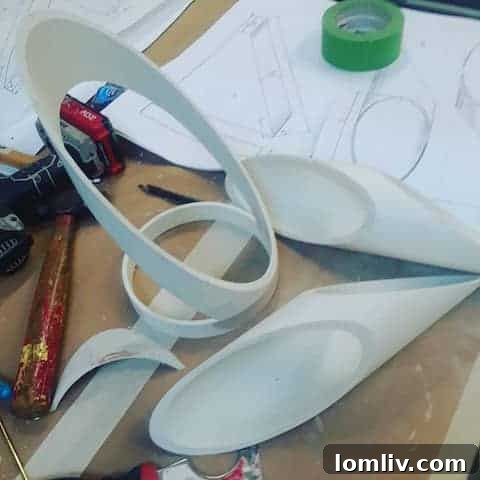
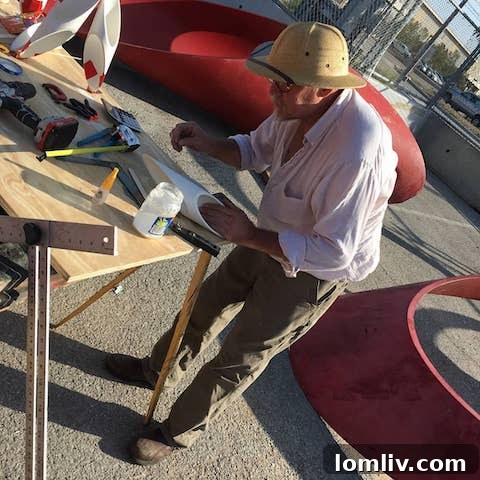
The maquette, a crucial tool for solving the Alexander Liberman puzzle. -
Michael van Enter meticulously deciphering the Alexander Liberman puzzle.
The Alexander Liberman Sculpture: A Monumental Feat at Love Field
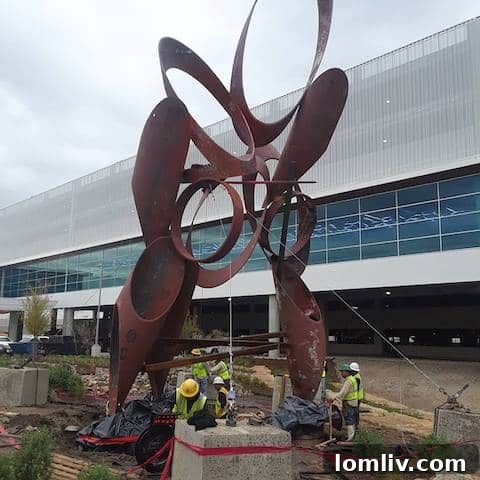
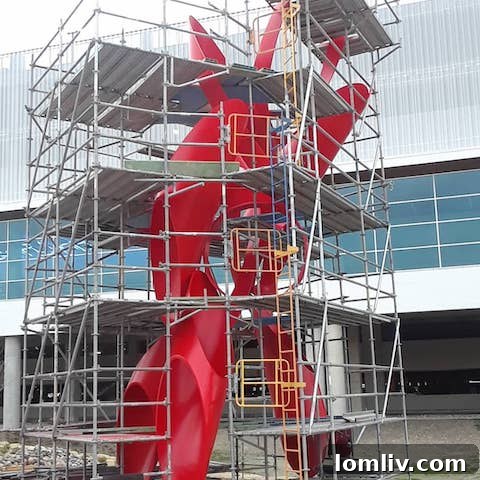
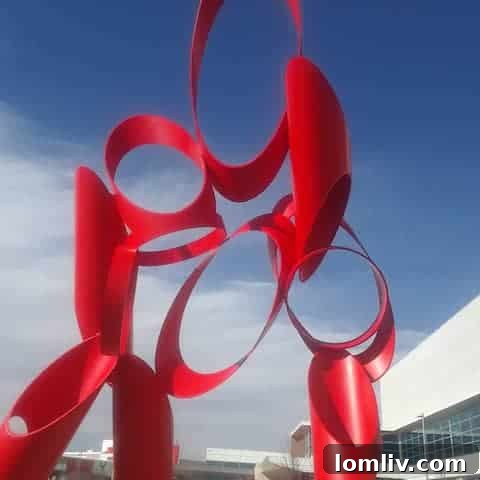
For anyone who has passed through Dallas Love Field, the colossal red Alexander Liberman sculpture is an unmistakable beacon. Its reassembly and installation represent perhaps one of the most challenging projects Michael van Enter Studio has ever undertaken. The sculpture’s journey to Love Field was fraught with peril. In the early 2000s, it had stood majestically outside the Bank of America building downtown. When the bank decided to redevelop, the sculpture was generously donated to the City of Dallas. However, its removal was handled with alarming disregard for its integrity. It was crudely cut into pieces, haphazardly placed on wooden pallets, and then unceremoniously dumped in a field, where it languished, rusting and sinking into the mud. Years later, a decision was made to give this magnificent artwork a new home at Love Field.
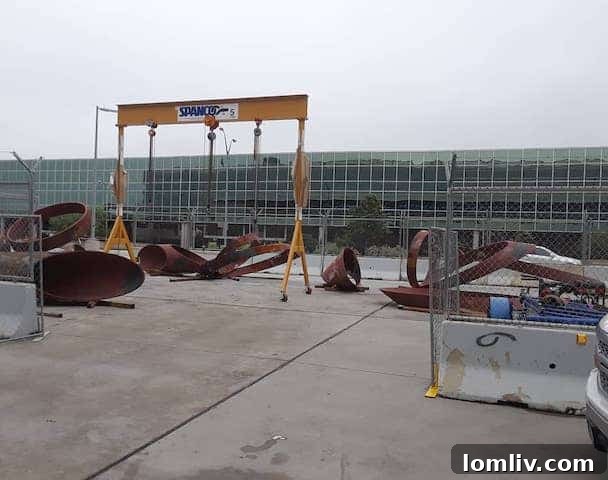
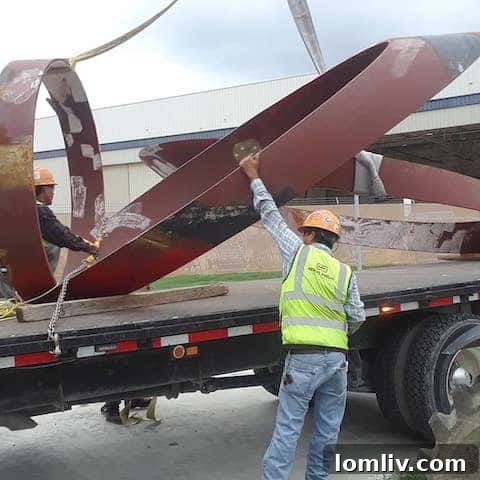
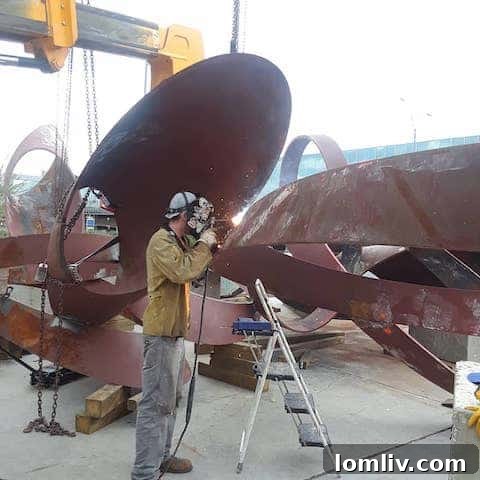
The daunting task of reassembling the Liberman sculpture began with a fundamental problem: “Of course, no one knew how it went together,” Michael recounts with a hint of understatement. Compounding the challenge, there were no reference marks on the disassembled pieces. Due to the complex three-dimensional nature of the sculpture, even existing photographs offered little help in deciphering its original configuration. Michael and his team embarked on an ingenious solution: “So we had to build a 1/12 scale maquette to work out the geometry.” This small-scale model became the key to unlocking the monumental puzzle. The process was far from simple. “It was not as easy as we thought it would be. When we finally built the model, we had to figure out how to rebuild it on location and lying down, which is not how it was originally built.” Furthermore, they had to engineer an entirely new method for lifting the massive, reassembled sculpture into its final upright position. “It was an amazingly difficult project, but it’s beautiful, and it looks just right where it is now.” This project stands as a shining example of Michael van Enter’s unparalleled ingenuity, engineering prowess, and unwavering dedication to bringing significant public art back to life.
The Philosophy of a Master Conservator: Trust, Teamwork, and Gratification
Beyond the technical challenges and historical significance of each project, Michael van Enter finds profound satisfaction in the very nature of his work. “It’s fun fixing stuff, particularly when everyone else can’t figure it out,” he shares, highlighting his inherent love for complex problem-solving. Yet, for him, the most rewarding aspect transcends mere technical achievement. “But the most gratifying part of the work is that your expertise is trusted,” he emphasizes. This trust, extended by clients who hold invaluable artworks in their care, is the bedrock of his practice. It speaks to a deep professional integrity and a proven track record of excellence.
Michael is quick to credit the collaborative spirit that defines his studio. “It’s about teamwork, and you can’t do the work unless you have a good team and good clients.” Art conservation, especially on the monumental scale Van Enter Studio often operates, is rarely a solitary endeavor. It requires a synergy of skills, a shared vision, and a mutual respect among professionals. His success in Dallas is inextricably linked to the strong relationships he has cultivated. “Dallas has been a great place to land, and I landed here at the right time,” he concludes, acknowledging the serendipity and fertile ground the city has provided for his exceptional talents.
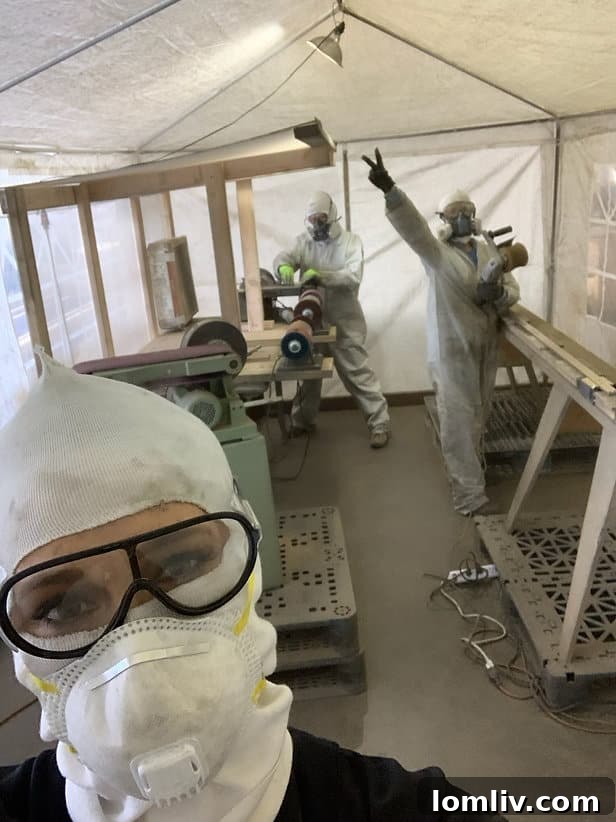
We are Texas proud and privileged to be an integral part of the preservation of Dallas and the local preservation community.
Michael van Enter
Van Enter Studio: A Legacy in Dallas Art Conservation
Through decades of dedicated work, Michael van Enter and his studio have become synonymous with excellence in art conservation and sculpture restoration in Dallas and beyond. His unique blend of artistic sensibility, engineering acumen, and an unwavering commitment to ethical preservation practices has not only saved countless artworks from decay but has also enriched the public spaces and cultural institutions of Dallas. From historic buildings to contemporary sculptures, Van Enter Studio ensures that the stories these artworks tell continue to resonate for future generations.
As Dallas continues to grow and evolve, the importance of preserving its cultural heritage only intensifies. Michael van Enter’s contributions serve as a vital link between the past and the future, ensuring that the city’s artistic treasures are not just maintained, but celebrated and understood. His journey from a curious child dismantling engines to a master conservator reassembling monumental sculptures is a powerful reminder that true expertise is born from passion, ingenuity, and a lifelong commitment to figuring things out, one priceless piece at a time. The Dallas art community is undeniably richer for his presence, and his legacy of preservation will continue to inspire for years to come.