

Dallas-Fort Worth Housing Market: A Comprehensive Look at 4Q17 Trends and Future Outlook
The Dallas-Fort Worth (DFW) metropolitan area continues to solidify its position as a powerhouse in the national real estate landscape, consistently ranking among the top new home markets in the United States. A comprehensive survey by Metrostudy for the fourth quarter of 2017 confirmed DFW’s dominance, revealing robust growth and strategic shifts that are reshaping the regional housing scene. This detailed analysis delves into the key findings of the report, exploring the factors driving DFW’s remarkable expansion, the crucial pivot towards more affordable housing options, and what these trends signify for buyers, builders, and investors in the thriving North Texas market.
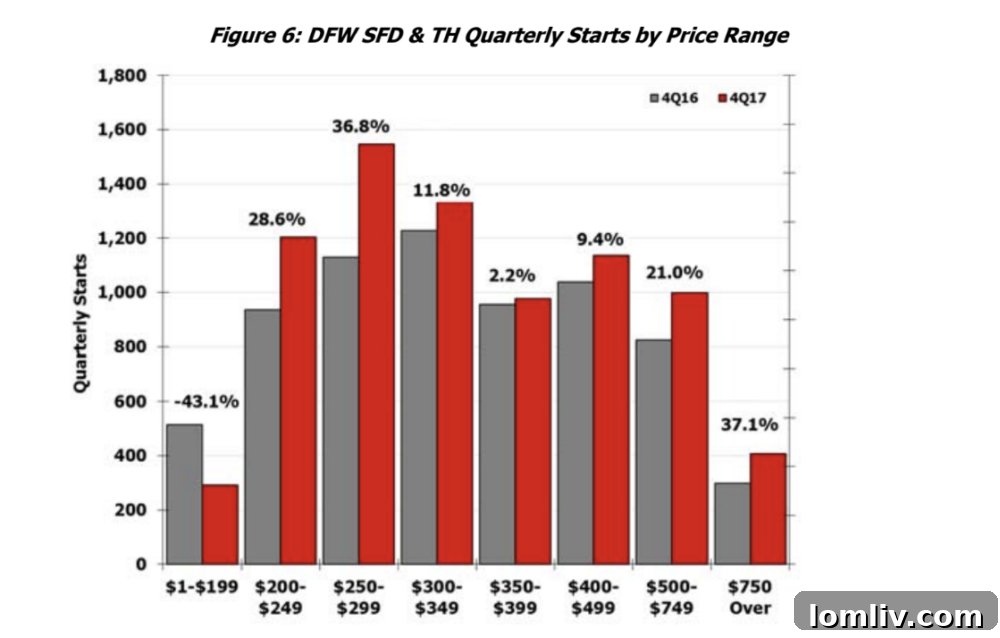
According to the Metrostudy 4Q17 report, DFW builders initiated an impressive 33,243 new homes over the preceding twelve months, with a substantial 8,561 of those starts occurring specifically within the fourth quarter. This surge in construction activity represents a significant year-over-year increase of 16.9% when compared to 4Q16. Such a pronounced jump in new home starts is a vital indicator, reflecting strong builder confidence and strategic preparations for what was widely anticipated to be a vigorous spring selling season. It signals a proactive response to the region’s burgeoning population and sustained demand for residential properties, underpinning DFW’s dynamic economic environment.
Unpacking the Momentum: Record Home Starts Signal Builder Confidence
The 16.9% increase in new home starts is not merely a statistic; it represents a significant injection of inventory into a market that has grappled with supply constraints for an extended period. This level of activity demonstrates a strong belief among developers and builders in the enduring strength of the DFW economy and its ability to attract new residents and businesses. The decision to break ground on thousands of new homes underscores a strategic alignment with projected buyer demand, particularly as the region continues to experience substantial job growth and corporate relocations, drawing in a steady stream of new potential homeowners.
For prospective new home buyers, especially those navigating the competitive price points, this surge in construction bodes exceptionally well. It promises greater choice and potentially more balanced market conditions, moving away from the intensely seller-favored environment that characterized earlier periods. The acceleration of homebuilding is a critical component for the sustainable expansion of the Dallas-Fort Worth housing market, ensuring that the infrastructure and housing stock can keep pace with the region’s remarkable demographic and economic ascent. This commitment to increasing supply is a testament to the responsiveness of DFW’s development community to evolving market needs.
The Crucial Shift: Addressing DFW’s Affordable Housing Challenge
Perhaps one of the most exciting developments highlighted in the Metrostudy report is the deliberate shift towards new homes in the $200,000 to $300,000 range. This movement is a direct response to a monumental shortage of affordable new homes that has persisted in the DFW market since 2013. For years, rapid price appreciation had pushed many entry-level and middle-income buyers out of the new home market, forcing them into the increasingly competitive resale sector or out of homeownership altogether. The renewed focus on this vital price segment is a game-changer for many families and individuals striving to achieve homeownership in North Texas.
The availability of more homes in the $200K-$300K bracket is crucial for fostering a more inclusive and stable housing market. It addresses a significant demographic of buyers, including first-time homeowners, young professionals, and growing families, who are essential to the long-term health and diversity of the DFW community. By expanding options in this “new affordable” segment, developers are not only meeting existing demand but also contributing to the economic vitality of the region by enabling more residents to invest in their futures and establish roots within the Dallas-Fort Worth metroplex. This strategic adjustment by builders signifies a deeper understanding of market realities and a commitment to broad-based economic access.
Navigating Price Dynamics: New vs. Resale Market Trends
The 4Q17 Metrostudy survey also provided insightful data on median home prices, revealing nuanced trends across the new and resale markets. The median new home price in DFW experienced a modest increase, rising slightly to $328,400, an annual increment of just 1.9%. This relatively restrained appreciation for new construction, especially when viewed against the backdrop of increased demand and construction costs, further underscores the industry’s push towards greater affordability, or at least a moderation in the pace of price hikes for new builds.
Conversely, the median resale price climbed by a more substantial 8.4% annually. This difference in appreciation rates played a significant role in narrowing the gap between new and resale home prices. Historically, new homes have commanded a premium, but the strong demand for existing inventory, coupled with limited supply in certain submarkets, has driven up resale values more aggressively. This convergence offers different value propositions for buyers: those prioritizing modern amenities and customization might still opt for new construction, while those seeking immediate occupancy or homes in established neighborhoods might find resales increasingly competitive in terms of price per square foot.
The narrowing price differential between new and resale homes creates a more complex decision-making landscape for buyers. It means that while new homes might seem more accessible at certain price points, the rapid appreciation of resales could make them an equally, if not more, appealing investment over time, especially if the renovation potential or location is strong. This dynamic interplay between new construction and existing homes contributes to the overall vibrancy and competitiveness of the DFW real estate market, encouraging both sectors to innovate and appeal to a diverse range of buyer preferences and budgets.
Robust Closings Underscore a Healthy Market
Beyond home starts and price trends, the Metrostudy report highlighted another critical indicator of market health: annual closings. The Dallas-Fort Worth market proudly recorded over 30,000 annual closings, demonstrating sustained buyer activity and successful transactions throughout the year. The fourth quarter, in particular, saw closings surge past the 31,000 mark, reaching 31,708 homes closed. This represents a healthy 3.7% increase over the previous quarter’s closings, reinforcing the market’s consistent upward trajectory and resilience.
Strong closing numbers are a direct reflection of buyer confidence, effective marketing strategies by builders and realtors, and a streamlined purchasing process. They signify that homes are not just being started and listed, but are successfully moving from contract to completion, injecting capital into the local economy and facilitating population growth. This consistent flow of closings is essential for maintaining liquidity in the market and provides a clear signal that the Dallas-Fort Worth housing ecosystem is absorbing new inventory effectively, even amidst increasing supply. The ability to sustain high closing volumes, particularly at year-end, suggests a robust and active buyer pool that is eager to capitalize on the opportunities presented by the DFW real estate market.
Expert Insights: Paige Shipp on Market Realities and Opportunities
Paige Shipp, Director of Metrostudy’s Dallas-Fort Worth market, offered invaluable insights into the intricacies of the 4Q17 trends. She noted that builders reported “stronger than expected sales at the end of 2017,” a year that otherwise “experienced generally slower sales than 2015 and 2016.” This observation highlights the market’s underlying resilience and ability to finish strong despite earlier fluctuations. Shipp attributed some of the market’s challenges to rapid price appreciation coupled with weak wage growth, which she argued created an “overvalued” market compared to what average buyers could truly afford.
However, Shipp also emphasized the encouraging news: “developers and builders heeded earlier warnings and the push into the ‘new affordable’ market, priced between $200,000 and $300,000, is evident.” This proactive response from the industry is a critical factor in ensuring the long-term sustainability and accessibility of the DFW housing market. Her commentary underscores a conscious effort to realign supply with realistic buyer budgets, moving away from an exclusive focus on higher-end properties.
Shipp concluded her analysis by stating, “Significantly higher quarterly starts and closings indicate a real shift in the new home market landscape.” This “real shift” is multifaceted, encompassing not just an increase in volume but a strategic recalibration towards affordability and a more diverse offering of housing types. Her expert perspective validates the notion that the DFW housing market is not merely expanding but is also evolving intelligently to meet the demands of its growing and diverse population, setting a precedent for responsible and responsive urban development in a rapidly expanding metropolitan area.
DFW’s Future Horizon: A Banner Year Ahead?
Looking ahead, the Metrostudy report suggests a highly optimistic outlook for the Dallas-Fort Worth new home market, with 2018 potentially shaping up to be a banner year. This optimistic forecast is contingent on two crucial factors: developers successfully delivering the large number of lots currently under construction, and builders continuing to supply homes below the $300,000 price point. If these conditions are met, the DFW housing market is poised for continued robust growth, offering a wider array of choices for an ever-increasing population.
The underlying economic drivers supporting DFW’s real estate boom are strong and multifaceted. The region consistently ranks high for job growth, attracting major corporations and fostering a vibrant entrepreneurial ecosystem. This economic dynamism, combined with a lower cost of living compared to coastal metros, continues to draw in thousands of new residents annually. As population density increases, effective land development and construction practices will be paramount to sustain this growth without compromising urban quality of life or exacerbating affordability issues. Investing in infrastructure, managing urban sprawl, and maintaining diverse housing options will be key challenges and opportunities for stakeholders in the coming years.
Ultimately, the 4Q17 Metrostudy survey painted a picture of a resilient, adaptable, and forward-thinking Dallas-Fort Worth housing market. Its ability to lead the nation in new home starts, coupled with a strategic pivot towards addressing affordable housing needs, positions DFW as a model for sustainable urban development. For buyers, sellers, investors, and developers alike, understanding these nuanced trends is essential for navigating the opportunities and challenges that define this exceptional real estate landscape.