By Lydia Blair
Special Contributor
Unraveling the Real Estate Survey Mystery: A Critical Guide for Home Sellers
Selling a home can be a complex process, filled with numerous documents, deadlines, and potential pitfalls. Among the most frequent sources of confusion and unnecessary expense for home sellers often lies within the survey section of their sales contract. Despite clauses written in plain English and highlighted with bold type, misunderstandings regarding the provision of a property survey frequently lead to disputes and delays. This guide aims to demystify the property survey, particularly focusing on common contractual obligations, to ensure a smoother, more efficient sale for every homeowner.
What is a Property Survey and Why is it Indispensable?
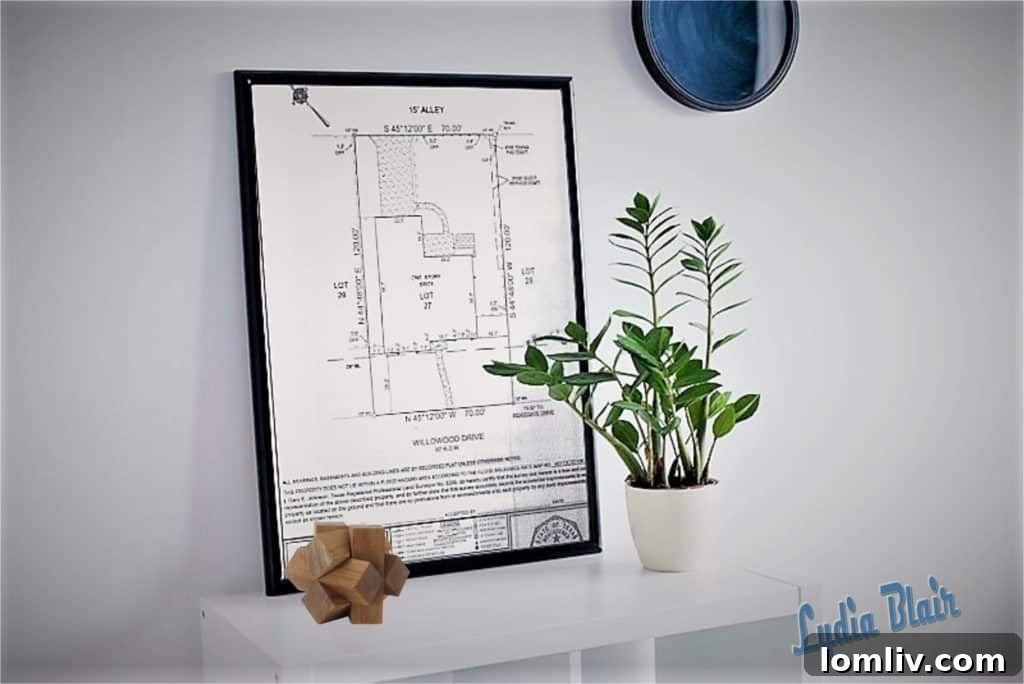
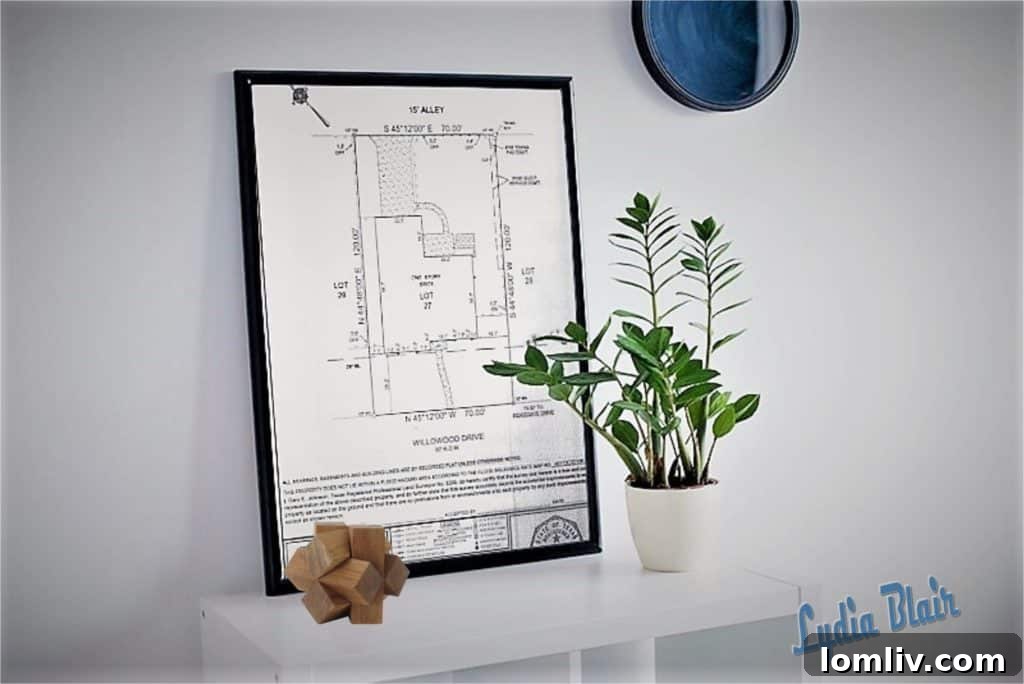
Before diving into contractual specifics, it’s crucial to understand what a property survey entails and why it holds such significant weight in real estate transactions. A property survey is a detailed drawing that precisely outlines the boundaries of a piece of land, identifying all existing structures, improvements, easements, and encroachments. Conducted by a licensed surveyor, it provides a definitive map of the property, offering clarity on its exact dimensions and legal limits.
The importance of a current and accurate survey cannot be overstated for several key parties involved in a home sale:
- For the Buyer: A survey protects the buyer from future disputes by confirming the property’s boundaries, ensuring that all structures are within those lines, and revealing any easements (rights of way for utilities, driveways, etc.) or encroachments (e.g., a neighbor’s fence extending onto the property) that could impact their ownership or use of the land.
- For the Seller: While sellers might primarily focus on getting the best price, providing a clear survey can expedite the sale, prevent last-minute issues, and demonstrate transparency. It can also help resolve any pre-existing boundary issues before they become a deal-breaker.
- For the Lender: Mortgage lenders require a survey to ensure the property serves as sufficient collateral for the loan. They need to verify that the property description matches legal records and that there are no unrecorded encumbrances that could jeopardize their investment.
- For the Title Company: Title companies rely on surveys to issue title insurance, which protects buyers and lenders against claims of ownership or defects in the title. An accurate survey helps them identify potential title defects, such as boundary disputes or undisclosed easements, before closing.
In essence, a property survey acts as a critical blueprint, safeguarding all parties against legal challenges and unexpected expenses that could arise from unclear property lines or undisclosed rights to the land.
Navigating the Survey Section of Your Sales Contract
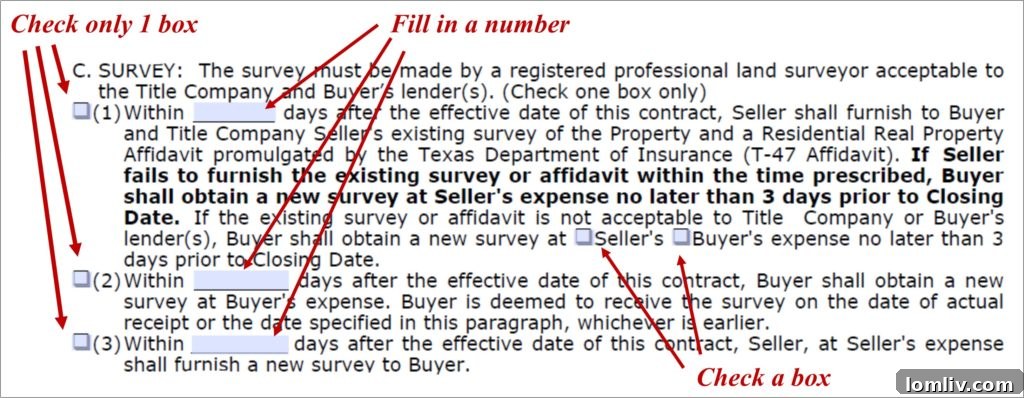
The property survey clause is a standard feature in most real estate sales contracts. In Texas, for instance, the standard TREC (Texas Real Estate Commission) contract addresses this specifically in Paragraph 6C. This section is designed to clearly define who is responsible for providing the survey and by when. However, despite its seemingly straightforward language, it’s often the source of significant misunderstanding and contention.
The contract typically offers several options regarding the survey, and it is imperative that one—and only one—of these options is carefully selected and marked before the contract is finalized. Failing to do so can create ambiguity that leads to costly delays or disputes down the line. Let’s delve into the most common options and the implications of each.

Option 1: Seller Provides an Existing Survey and Affidavit (Paragraph 6C (1))
This is arguably the most frequently chosen option in many sales contracts. Paragraph 6C (1) typically states that the seller agrees to provide an existing survey along with a notarized survey affidavit within a specified number of days from the contract’s effective date. The “existing survey” refers to a survey that the seller already possesses from when they purchased the property or had one commissioned previously.
However, this option comes with a crucial caveat: the existing survey must be “acceptable to the title company and buyer’s lender.” If the existing survey is deemed unacceptable, the contract then provides a space to specify whether the buyer or seller will bear the cost of a new survey. This is where a significant amount of misunderstanding typically arises.
Understanding “Unacceptable” and Common Misconceptions
Many sellers mistakenly believe that if they cannot locate their existing survey, or if it’s deemed unacceptable, the buyer automatically becomes responsible for ordering and paying for a new one, especially if the box indicating “buyer pays for new survey” is checked within this specific paragraph. This is a critical misinterpretation.
If Paragraph 6C (1) is checked, the buyer’s obligation to pay for a new survey only triggers if two conditions are met:
- The seller actually *provides* an existing survey.
- That existing survey is then rejected by the title company or lender for legitimate reasons.
Reasons an existing survey might be deemed “unacceptable” include:
- Age of the Survey: If the survey is very old, it may not reflect the current conditions of the property or surrounding area.
- Property Changes: Significant additions or modifications to the property (e.g., new fences, swimming pools, detached garages, extensions) since the original survey was conducted would render it inaccurate.
- Boundary Disputes: If there are known or suspected boundary disputes, a new survey might be required to resolve them definitively.
- Lender/Title Company Requirements: Specific lenders or title underwriters may have policies requiring surveys of a certain age or accuracy, regardless of the property’s history.
Therefore, if a seller agrees to provide an existing survey and then simply cannot find it, or fails to provide it within the stipulated timeframe, they are typically in breach of contract. In such cases, the seller will almost certainly be responsible for obtaining and paying for a new survey, regardless of any other checkboxes in Paragraph 6C (1) pertaining to buyer responsibility. The agreement was to *provide* an existing survey, not just to *try* to find one.
The Survey Affidavit: A Necessary Companion
In addition to the survey itself, Paragraph 6C (1) often requires the seller to provide a notarized Survey Affidavit. This document is equally important. The affidavit is a sworn statement, signed by the sellers and notarized, confirming that no changes have been made to the property’s boundaries, improvements, or easements since the date of the existing survey. It essentially assures the buyer, lender, and title company that the existing survey remains an accurate representation of the property’s current state.
All too often, sellers meticulously search for their survey but forget about the affidavit. Both documents are legally required to fulfill the terms of Paragraph 6C (1). Failing to provide the notarized affidavit can be just as problematic as not providing the survey itself, potentially leading to delays or the seller having to pay for a new survey.
Option 2: Buyer Pays for a New Survey (Paragraph 6C (2))
If the seller does not possess an existing survey, or if the parties mutually agree that a new one is preferable from the outset, Paragraph 6C (2) can be checked. This option explicitly states that the buyer will pay for a new survey. This might be chosen if the property is very old and unlikely to have a modern survey, or if the buyer has specific concerns that only a new survey can address. While this shifts the cost burden to the buyer, it also means the buyer will have a brand new, up-to-date survey tailored to their needs, which can offer peace of mind.
Option 3: Seller Pays for a New Survey (Paragraph 6C (3))
Conversely, Paragraph 6C (3) stipulates that the seller shall pay for a new survey. This option is frequently selected when the seller knows they do not have an existing survey, or if their existing survey is outdated, inaccurate, or likely to be rejected. A seller might opt for this to streamline the process, avoid potential disputes over an old survey, or simply to make their offer more attractive to a buyer. By proactively agreeing to fund a new survey, sellers can present a cleaner deal and avoid last-minute headaches.
If there is no existing survey available, or if the existing one is questionable, one of these latter two paragraphs (6C (2) or 6C (3)) should always be checked to clearly establish responsibility for a new survey from the beginning.
The Critical Role of Timelines and Deadlines
Regardless of which option is chosen, one element must *always* be meticulously filled in: the specific number of days within which the survey must be provided. This seemingly small detail is paramount to avoiding significant closing delays. If this blank is left unfilled, it creates an open-ended obligation without a deadline. This ambiguity empowers either party to delay obtaining or reviewing the survey, creating a bottleneck in the transaction process.
Consider the ripple effect of a missing deadline:
- Title Company Review: The title company needs ample time to review the survey against the property’s legal description and public records. They must ensure there are no discrepancies that could impact the title insurance policy.
- Lender Approval: Lenders require the survey for their underwriting process. They need to confirm that the property securing their loan is accurately depicted and free of encumbrances that could diminish its value or marketability.
- Buyer’s Review: Buyers need time to review the survey themselves, possibly with an attorney, to understand their property lines, easements, and any potential issues before committing fully to the purchase.
Each of these reviews takes time, typically several business days. Without a firm deadline for survey submission, the entire timeline for the closing process can be thrown into disarray, leading to extended contract periods, additional costs, or even the collapse of the deal. Clearly defining the number of days provides a tangible target for all parties involved, ensuring accountability and maintaining momentum towards closing.
Proactive Steps for Home Sellers
Given the potential for misunderstandings and delays, home sellers can take proactive steps to avoid common survey-related issues. The most crucial advice is simple: if you are selling a property and are unsure of the exact whereabouts or condition of your existing survey, do not simply agree to provide it in the contract without first tracking it down.
Here’s a practical checklist for sellers:
- Locate Your Survey EARLY: Before you even put your house on the market, find your existing survey. It’s typically among your closing documents from when you purchased the home.
- Assess Its Validity: Check the date of the survey. Has anything changed on the property since then (e.g., new fence, deck, shed, pool, additions)? If so, a new survey will likely be required, or the existing one may be deemed unacceptable.
- Prepare the Affidavit: If you have an existing survey and no changes have been made, familiarize yourself with the Survey Affidavit. Have it ready to be notarized.
- Make Copies and Share: Once you have a valid, acceptable survey, make copies. Consider having your real estate agent upload it into the Multiple Listing Service (MLS) so that potential buyers and their agents can review it early in the process. This transparency can be a significant advantage, signaling preparedness and potentially expediting offers.
- If No Survey Exists: If you cannot find your survey or know it’s outdated, be prepared to check Paragraph 6C (3) (seller pays for new survey) or negotiate with the buyer for Paragraph 6C (2) (buyer pays for new survey) from the outset. Do not check Paragraph 6C (1) if you cannot confidently provide an existing, acceptable survey.
Taking these steps early can save you hundreds, if not thousands, of dollars in unexpected costs and weeks of stress and delays during the critical closing period.
Understanding Survey Costs and Lead Times
For an average-sized suburban lot, a new survey typically costs anywhere from $400 to $600. However, this cost can vary based on factors such as:
- Lot Size and Shape: Larger or irregularly shaped lots often require more extensive work.
- Property Location: Surveys in densely populated urban areas or remote rural locations might have different pricing structures.
- Complexity: Properties with many easements, difficult terrain, or historical boundary disputes can be more complex and thus more expensive to survey.
Beyond the cost, it’s also important to factor in the time required to obtain a new survey. Surveyors typically need one to two weeks to complete their work, depending on their workload and the complexity of the property. This lead time must be incorporated into the contract’s timeline to avoid rushing or delaying the closing process. Lenders, in particular, will not issue a mortgage on a property until an approved survey is in hand, making this a non-negotiable step in most home financing scenarios.
Therefore, understanding both the financial and temporal aspects of obtaining a survey is crucial for proper planning and negotiation within your sales contract.
Conclusion: Clarity and Preparation Are Key
The seemingly simple survey section of a real estate sales contract is anything but. It represents a critical juncture where a lack of preparation or understanding can lead to significant financial burdens and transactional delays for home sellers. By proactively locating and assessing your existing survey, understanding the nuances of the contractual options, and adhering strictly to established timelines, you can navigate this aspect of your home sale with confidence.
Remember, an informed seller is an empowered seller. Knowing where your survey is and what your contractual obligations entail can transform a potential stumbling block into a smooth step towards a successful closing. If you’re a current homeowner, take a moment to consider: do you know where your property survey is right now?
The opinions expressed are of the individual author for informational purposes only and not for providing legal advice. Contact an attorney to obtain advice for any particular issue or problem.
Lydia Blair (formerly Lydia Player) was a successful Realtor for 10 years before jumping to the title side of the business in 2015. Prior to selling real estate, she bought, remodeled, and sold homes (before house flipping was an expression). She’s been through the real estate closing process countless times as either a buyer, a seller, a Realtor, and an Escrow Officer. As an Escrow Officer for Carlisle Title, she likes solving problems and cutting through red tape. The most fun part of her job is handing people keys or a check.