Mark Cuban’s Blunt Take on Metaverse Real Estate: Hype or Future Investment?
The concept of the Metaverse has rapidly surged into public consciousness, sparking widespread debate and, for many, considerable confusion. While some envision it as the next evolution of the internet, a persistent, immersive digital realm, others, like billionaire investor Mark Cuban, remain deeply skeptical, particularly concerning the burgeoning market for virtual real estate. Understanding this digital frontier requires navigating between ambitious visions and grounded realities, exploring both its potential and its numerous pitfalls.
Demystifying the Metaverse: More Than Just Science Fiction
For decades, the Metaverse was primarily a staple of science fiction, an imaginative construct where alternate realities and digital identities flourished. Marvel comics, for instance, have skillfully woven it into their narrative as an alternate section of its multiverse, a collection of parallel universes. This conceptualization allowed for fantastical possibilities, unbound by the laws of physics or traditional economics, captivating generations with dreams of virtual escapism.
However, the contemporary interpretation of the Metaverse extends far beyond fictional narratives. Today, it’s increasingly being presented as a tangible digital space where real people and businesses can invest in virtual properties, creating a novel form of digital asset ownership. This involves exchanging actual cash for a digital plot of land or a unique virtual item, each typically secured by a unique, non-duplicable code, often leveraging robust blockchain technology and non-fungible tokens (NFTs). This underlying technology ensures verifiable ownership and scarcity in the digital realm.
This trend might feel vaguely familiar to those who have engaged with digital communities previously. It represents an evolution from earlier forms of digital engagement, such as cultivating online communities on social media platforms like Facebook, tending to virtual farms in popular games like FarmVille, or nurturing a digital pet akin to a Tamagotchi. The fundamental difference now lies in the perceived ownership, verifiable scarcity, and often significantly higher cost of these digital assets, moving beyond free or low-cost interactions to potentially high-stakes investments. Unlike traditional social media or early simulation games, Metaverse virtual space is often intentionally limited, and its value is dictated by market demand, often escalating to substantial figures, creating a new digital economy.
Mark Cuban’s Unflinching Critique of Virtual Land Investment
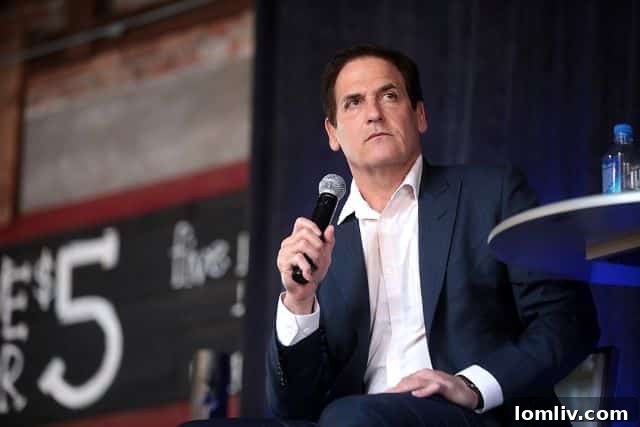
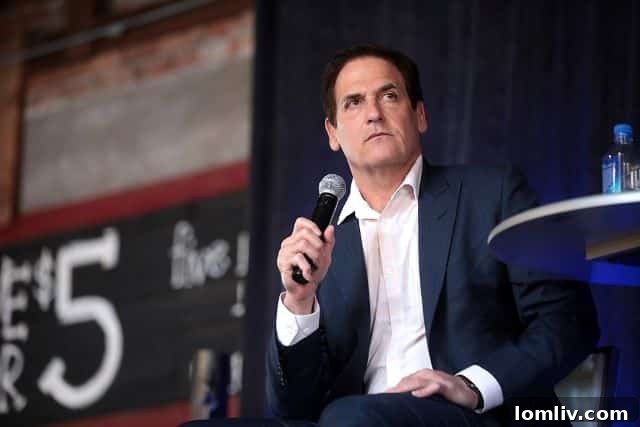
Despite his significant investments in the broader crypto world, Dallas Mavericks owner and serial entrepreneur Mark Cuban, 64, is famously unimpressed by the concept of Metaverse real estate. In a candid interview on the Altcoin Daily YouTube channel, Cuban didn’t mince words, declaring the Metaverse, particularly its real estate component, to be unequivocally “dumb.”
“The worst part is that people are buying real estate in these places,” Cuban asserted, referring to various Metaverse platforms. “That’s just the dumbest [poo-poo] ever.” His deep skepticism stems from several key observations regarding the current state of virtual land ownership and the underlying value proposition it supposedly offers.
The Critical Need for Community and Interoperability
Cuban elaborated on his stance on the Altcoin Daily podcast, highlighting the crucial absence of underlying utility and standardization across platforms. “There’s no rhyme or reason to it yet. It’s gonna be hard to standardize things and to make it interoperable, at least for the foreseeable future.” This lack of interoperability means that assets or experiences created on one Metaverse platform often cannot be seamlessly transferred or utilized in another, significantly limiting their broader value, functionality, and appeal to a wider audience.
He argued that virtual real estate concepts might only achieve genuine success and long-term viability *after* a vibrant and engaged community has organically formed around them. This community, he believes, would provide a genuine reason for people to gather, interact, and create value in that digital space, thereby giving the land intrinsic worth beyond mere speculation. Conversely, attempting to apply a traditional real estate investment model — buying land based on future speculation before a community or proven utility exists — is, in his view, a fundamentally flawed approach, akin to investing in empty plots with no prospective builders or residents.
The Booming, Yet Volatile, Metaverse Market Landscape
Despite Cuban’s strong reservations, the market for virtual space continues its meteoric rise, attracting both significant capital and widespread attention. Investing in Metaverse real estate is anything but cheap; indeed, prices have soared. According to various reports, the average price for a single parcel of virtual land across the four leading Metaverse platforms, including prominent names like Decentraland and The Sandbox, reportedly doubled to an astonishing $12,000 within a mere six-month period last year. This rapid appreciation underscores the intense speculative interest and belief in future growth driving this nascent market.
The broader financial landscape of the Metaverse is equally striking. Statista, a leading market research firm, valued the global Metaverse market at $38.85 billion in 2021. Projections indicate a significant jump to $47.48 billion in 2022, with an astonishing forecast of rocketing to $678.8 billion by 2030. This exponential growth is fueled by massive investments from tech giants such as Meta (formerly Facebook) and Microsoft, an explosion in NFT adoption, and growing consumer interest in immersive digital experiences across gaming, entertainment, and social interaction.
Real-World Crossover: Bridging the Physical and Virtual Realms
The boundaries between physical and virtual real estate are increasingly blurring, creating intriguing new investment and lifestyle opportunities. In an illustrative example that captured widespread attention, a $9.5 million physical house in Beverly Hills recently came with an option to purchase a $100,000 Metaverse version of the property. This innovative bundling caters to individuals keen on establishing a digital presence that mirrors their physical world status, allowing for virtual tours, events, or simply a digital twin of their luxury home.
Further demonstrating this trend, NBC Nightly News featured a developer in Miami, Fla., who is actively selling Metaverse real estate concurrently with actual physical properties. This synchronized offering hints at a future where digital ownership is as integral to a property transaction as its physical counterpart, appealing to early adopters who see value in owning assets in both dimensions. The increasing mainstream media coverage also reflects the growing public fascination and investor curiosity surrounding this phenomenon.
A Miami, Florida home is about to become the first property ever sold as a real-life house and as an NFT in the metaverse.
As virtual worlds become more popular, virtual land is quickly being bought up with crypto, sometimes for eye-popping figures. https://t.co/fALBYs8oL6
— NBC Nightly News with Tom Llamas (@NBCNightlyNews) August 12, 2022
Investment Perspectives: The Motley Fool’s Guarded Optimism
While Mark Cuban expresses extreme caution, other financial advisors view Metaverse real estate with guarded optimism. The Motley Fool, a respected financial and investing advice company, has, for example, endorsed Metaverse real estate investing for individuals who specifically intend to operate as either a developer building experiences or a landlord generating rental income within these virtual worlds. This perspective emphasizes active participation and value creation rather than pure speculative land banking, suggesting that utility and engagement are key drivers for success in this space.
Celebrity Endorsement and Early Adoption: The Snoop Dogg Effect
The Metaverse has also attracted significant attention from celebrities, further fueling its mainstream appeal and driving significant investment. Rapper Snoop Dogg, 50, stands out as one of the earliest and most prominent Metaverse stakeholders. He has established his own virtual territory called “Snoopverse” within The Sandbox platform, where he hosts virtual concerts, events, and offers unique digital experiences to his dedicated fanbase.
Appearing as an avatar within his Snoopverse space, Snoop Dogg made history by releasing the first-ever virtual music video produced entirely within The Sandbox Metaverse. This innovative approach to fan engagement and content creation showcases the immense potential for artists and brands to connect with their audience in novel, immersive, and interactive ways within these nascent digital environments. It represents a new frontier for entertainment and marketing.
The allure of owning a piece of this celebrity-backed digital world is evident in transactions like the one in December, where a collector known as P-Ape purchased a digital plot adjacent to Snoop Dogg’s virtual land for a staggering $450,000. Such high-value sales highlight the perceived prestige and potential future value associated with prime virtual locations, especially those linked to cultural icons and established communities.
Snoop Dogg himself articulates the vision behind his involvement, underscoring the innovative aspect: “I’m always on the lookout for new ways of connecting with fans and what we’ve created in The Sandbox is the future of virtual hangouts, NFT drops, and exclusive concerts.” His statement encapsulates the promise of the Metaverse as a platform for enhanced fan interaction, unique digital collectibles, and groundbreaking entertainment formats, moving beyond traditional media consumption to truly interactive experiences.
The Future of the Metaverse: A Dual Perspective of Promise and Peril
The divergent views of Mark Cuban and enthusiasts like Snoop Dogg underscore the complex and rapidly evolving nature of the Metaverse. On one hand, it represents a frontier of unprecedented innovation, promising new economic opportunities, immersive social experiences, and unprecedented creative freedom. Companies are investing billions, anticipating a future where digital and physical realities blend seamlessly, offering everything from virtual workplaces to digital fashion shows, interactive educational platforms, and entirely new forms of commerce and entertainment.
On the other hand, Cuban’s skepticism serves as a crucial reminder of the significant challenges and speculative risks involved. Issues such as true interoperability between diverse platforms, the development of sustainable economic models, robust regulatory frameworks, overcoming existing technological limitations (like widespread VR/AR adoption), and mitigating the potential for digital inequality must be addressed for the Metaverse to achieve its full, envisioned potential. Without clear utility, robust and self-sustaining communities, and a unified standard for interaction and ownership, virtual land could largely remain a speculative asset, prone to extreme volatility and hype cycles rather than intrinsic value growth and widespread utility.
Ultimately, the Metaverse is still in its nascent stages, a digital wild west brimming with both opportunity and uncertainty. While its future trajectory remains uncertain, it is undeniably a concept that demands ongoing attention from investors, technologists, and consumers alike. Whether it evolves into a truly transformative digital ecosystem or remains a niche interest heavily dependent on speculation will largely depend on its ability to deliver genuine, tangible value, foster vibrant and organic communities, and overcome the very criticisms articulated by astute and seasoned observers like Mark Cuban.