The prestigious Preston Hollow neighborhood in Dallas finds itself at a critical crossroads, grappling with the potential redevelopment plans of entrepreneur and investor Mark Cuban. Residents are gripped by anxiety over his alleged intentions for approximately 8.5 acres of prime residential land he has meticulously acquired since 1988, predominantly located at the northwest corner of Preston Road and Northwest Highway. This unfolding saga is particularly tense given that Preston Hollow acreage currently commands an unprecedented average of $2 million per acre, making this one of the most valuable and hotly contested real estate disputes in recent memory.
During a recent master plan meeting focused on traffic and development within Preston Center, Dallas City Councilwoman Jennifer Gates sought to reassure the community. She explicitly stated that Mark Cuban had not filed any formal applications for zoning changes, emphasizing that the corner in question is considered “sacred ground.” Indeed, these expansive acreages represent highly unusual and invaluable estate properties in a rapidly growing metropolitan area. They offer a rare combination for discerning buyers: the tranquility of a country-like home setting, mere minutes away from the vibrant amenities and conveniences of urban civilization. This unique appeal is precisely what residents fear losing.
Neighborhood apprehension surrounding Mark Cuban’s plans for the northwest corner remains palpable. One resident voiced a direct query: “What is the process Mr. Cuban has to go through to zone his property commercial? And how do we stop him?” Councilwoman Gates, while acknowledging she cannot prevent Cuban from initiating a zoning case, reiterated her view of the corner’s existing single-family zoning as “sacred ground.” This statement garnered significant applause, though a brief murmur of disapproval arose when she referred to The Shelton as an apartment tower rather than a condo, suggesting some residents felt she missed a nuance. It’s worth recalling that Councilwoman Gates once assured a resident at a Highland House meeting that she was not afraid to challenge Mark Cuban.
However, it appears Councilwoman Gates may soon need to put that resolve into practice. A person who attended last week’s meeting, whose home borders Cuban’s newly acquired property, recently engaged in an email exchange with the billionaire. The outcome of this communication was stark: Cuban confirmed his intent to move forward with his plans.
Andrew Sommerman, the concerned neighbor, shared the details of his exchange: “I had a recent email conversation with Mr. Cuban, and he told me he intends to continue with his plans. He intends to tear down the remainder of the wall he controls that divides Northwest Highway from Preston Hollow. He also intends to demolish two homes he owns on Averill and Jourdan. Furthermore, he intends to clear the land he owns. He does not seem unduly concerned about complying with ordinances that typically require him to remediate or replace trees.” Sommerman noted that he politely requested Cuban to consider replacing the wall/fence and trees, but Cuban, equally politely, declined.
Adding another layer of complexity and concern for residents, reports have surfaced that Cuban or his real estate representatives have privately indicated a strategic fallback plan. If his efforts to develop an office complex prove unsuccessful, he intends to sell the extensive land holdings to a “mega church.” This proposition introduces a new set of challenges and potential zoning battles for the community.
“I understand that churches can often be zoned for nearly any location,” Sommerman acknowledged, “However, if they attempt to build by connecting multiple lots, it would necessitate a re-platting process. That is certainly something that could be vigorously contested by the community.” This reveals a potential avenue for residents to legally challenge a mega-church development, even if direct commercial zoning is thwarted.
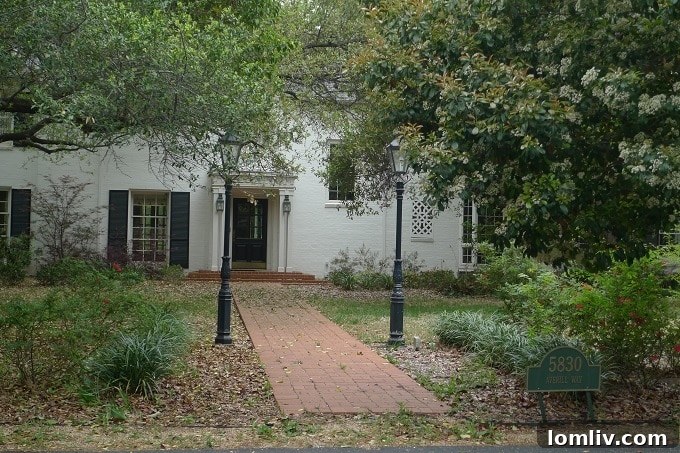
Further complicating the narrative are conflicting reports concerning Cuban’s engagement with existing religious institutions. Whispers suggest that Mark Cuban had, two years prior, approached Northwest Bible Church, a prominent establishment located at Douglas and the Tollway, with a proposal to acquire their parking lot to augment his vast land parcel. At the time, the Church reportedly advised him to secure City Council approval for any such plans. More recently, although no formal offer has been confirmed, it is understood that the minister, or perhaps several ministers, from Northwest Bible Church have requested a meeting with “Neighbor Cuban” this week to discuss his land plans. Cuban, it seems, is keen to proceed with the demolition of 5830 Averill Way with considerable haste. The irony, some might observe, is palpable: the last thing an established church typically desires is a competing religious institution right next door, particularly one that might pay an exorbitant sum like $18 million for prime land.
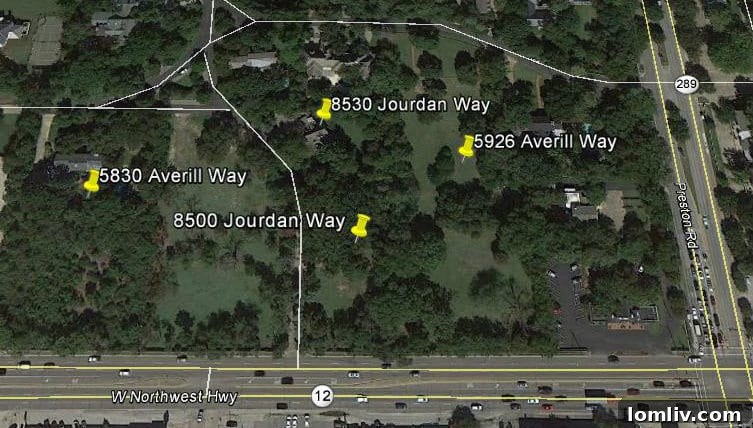
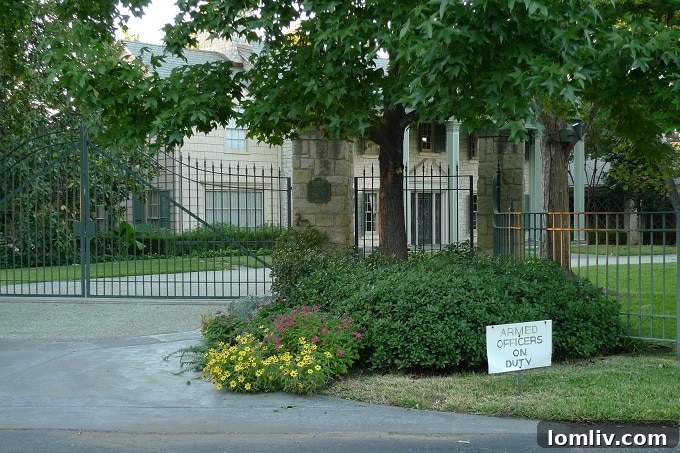
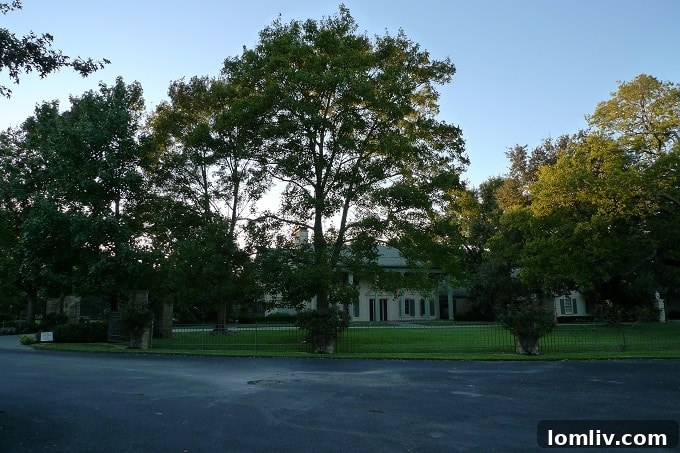
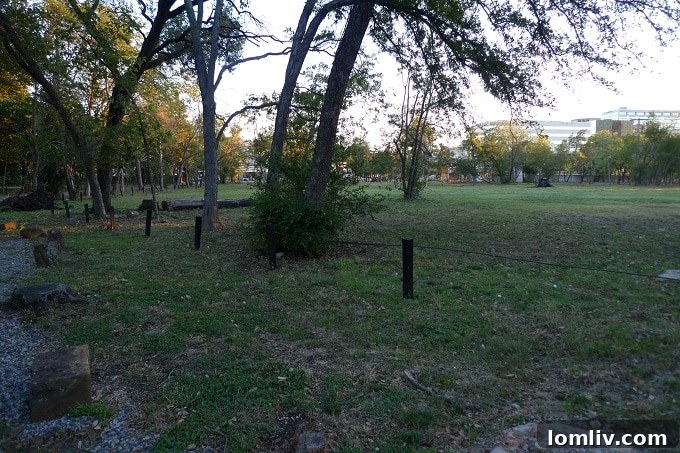
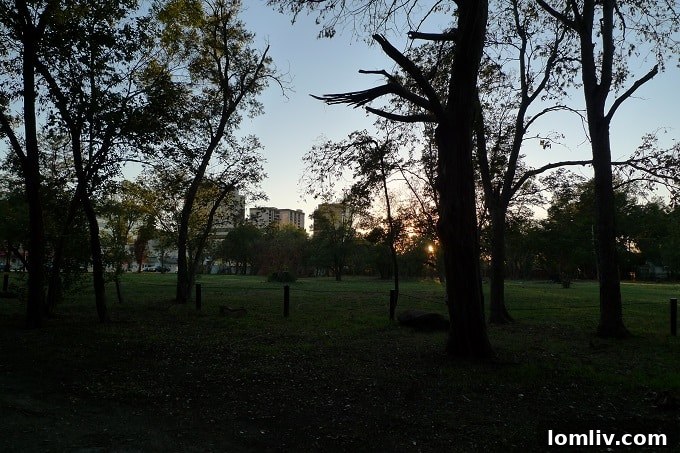
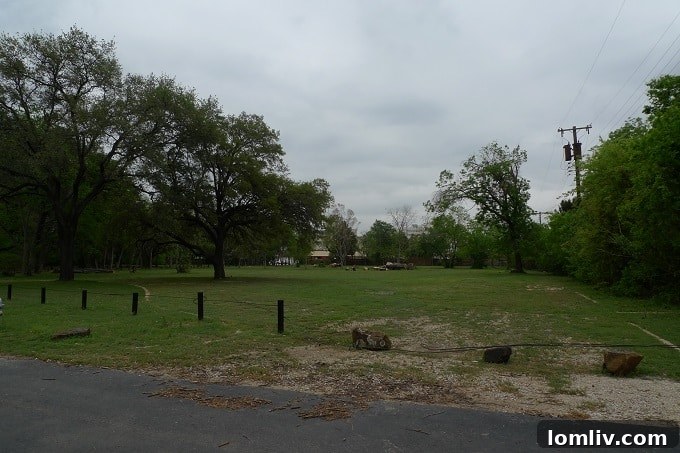
As of now, no official zoning change applications have been filed. Crucially, the neighborhood’s zoning is not merely for single-family residential properties, but specifically mandates a minimum of one-acre single-family residential lots. This stringent requirement is a cornerstone of the area’s character and a key point of contention. While a part of the community might optimistically hope Cuban is merely creating a stir and will ultimately develop eight stunning mansions on those lots—a wishful “April Fools!” scenario—the reality appears far more serious.
The sentiment among several neighbors interviewed is one of deep frustration and anger. They express fury at Mark Cuban’s perceived tactics and profound dissatisfaction with the approach taken by Councilwoman Gates. Residents feel she is allowing the situation to devolve into a localized skirmish among the seven zones, rather than providing decisive leadership. “Without our council member actively engaged in the fight, residents are left without crucial political leadership and vital support,” lamented one anonymous neighbor. “On one hand, Ms. Gates assures us she opposes Mr. Cuban’s plan to rezone Preston Hollow, yet on the other, she declares herself neutral. She has, unwittingly or not, thrust us directly into the shark tank of this dispute.”
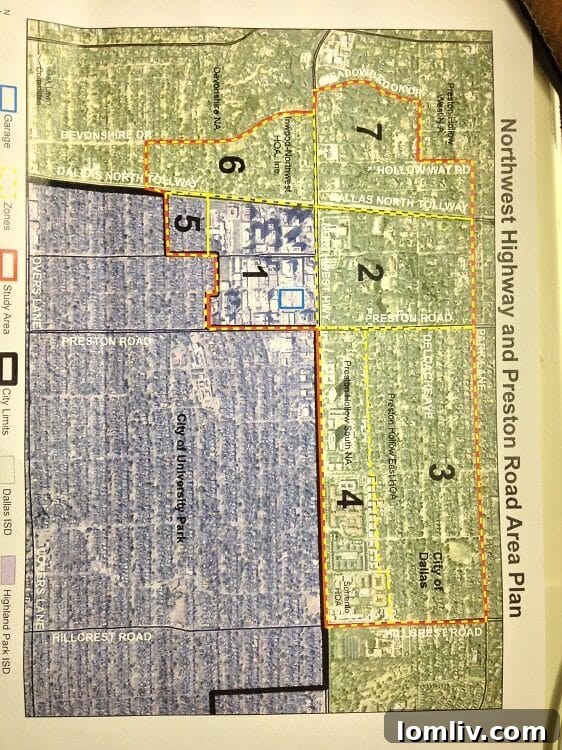
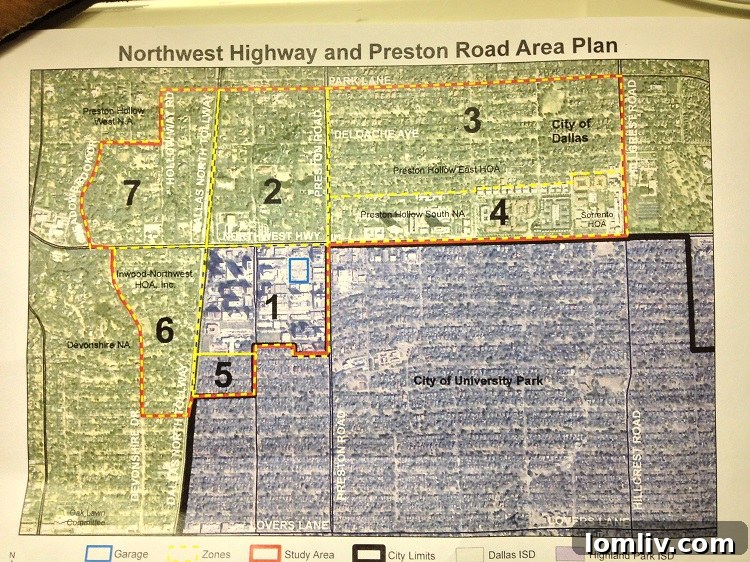
The structure of the local governance further complicates matters. The area is divided into seven distinct zones. Each zone is tasked with electing a pair of representatives to form a special task force. This task force will be instrumental in guiding key decisions related to transportation, land-use planning, and competitive bids—effectively shaping the future fate of the entire area. Intriguingly, and as visually depicted on the accompanying map, Area 7 encompasses the residences of both former Dallas Mayor Laura Miller and Mark Cuban. This raises the distinct possibility that both prominent figures could find themselves serving on the very same committee, setting the stage for a direct, high-stakes confrontation. The fundamental questions remain: who will these other representatives be, and who holds the authority to approve their selection?
Another resident voiced the community’s core principle: “We purchased our homes subject to the existing zoning regulations and have faithfully abided by them. When we removed trees, we replaced them because the City mandated it.” There’s a prevailing sentiment that Cuban, a billionaire with resources far exceeding a collective of Preston Hollow residents, is attempting to manipulate the zoning framework. Many suspect that the broader Preston Center development plan, with its various committee meetings and neighborhood reviews, is merely a precursor or a convenient vehicle for enabling precisely such a zoning change. Every time a committee convenes to scrutinize a neighborhood, a zoning alteration frequently follows, a pattern not lost on the wary residents. “Something significant is undeniably in the air,” they observe.
“While it may not be Cuban specifically she wishes to accommodate, Jennifer Gates certainly has something in mind for the area,” suggested an anonymous source, echoing the concerns of many. “I earnestly hope that principled individuals like Laura Miller, Lisa Blue, and Baxter Brinkmann will actively join this crucial fight. With our city council member adopting a neutral stance, or perhaps even covertly favoring re-zoning, we are in desperate need of all the assistance and leadership we can possibly secure.” The future of Preston Hollow’s cherished character hangs precariously in the balance, contingent upon the community’s resolve and the evolving dynamics of this high-profile land dispute.