

Welcome to our comprehensive guide on understanding and utilizing your home inspection report! In the journey of homeownership, whether you’re purchasing a new property or maintaining your current one, the home inspection report is an invaluable document. While our previous discussion focused on the five major systems of a house, this installment delves deeper into specific details and crucial areas that often get overlooked. Our aim is to equip you with the knowledge to leverage your inspection report, not just as a pre-purchase assessment, but as a dynamic checklist for future projects, essential home maintenance, and even as a negotiation tool.
Unveiling Hidden Issues: From Missing Insulation to Structural Concerns
A thorough home inspection goes beyond the visible, often uncovering issues that can significantly impact a home’s safety, efficiency, and value. These findings can range from seemingly minor details to critical structural or mechanical deficiencies. Understanding how to interpret these findings is key to making informed decisions and protecting your investment.
The Critical Role of Insulation: More Than Just Comfort
A recent viral video highlighted a homeowner’s shock when a home inspection revealed a complete lack of attic insulation, despite it being advertised as having modern foam insulation. The story echoed “The Emperor’s New Clothes,” where an obvious truth was missed by many. The inspector’s findings clearly showed there was absolutely no insulation present, explaining the home’s persistent drafts and high energy bills. This specific case underscores a vital lesson: always verify claims made in property listings, especially those concerning costly upgrades like foam insulation. Without proper insulation, a home struggles to maintain consistent indoor temperatures, leading to:
- Exorbitant Energy Bills: Heat escapes in winter and enters in summer, forcing HVAC systems to work overtime.
- Discomfort: Drafts, cold spots, and inconsistent temperatures make living spaces less enjoyable.
- Moisture Issues: Lack of proper thermal barrier can lead to condensation, potentially fostering mold growth.
- Premature HVAC Wear: Overworked heating and cooling units can fail sooner, incurring significant replacement costs.
If insulation issues are discovered during an inspection, particularly when a property was listed with superior insulation, buyers have strong grounds for negotiation. They might request the seller install the promised insulation, offer a credit for the work, or adjust the sale price. For an existing homeowner, identifying insulation deficiencies through an inspection report serves as a clear directive for a critical energy-saving upgrade.
Improper Installations: A Silent Threat to Your Home and Health
Improper installations are a serious concern that a home inspection can bring to light. Take, for instance, a water heater installed without adequate ventilation. This is not just a minor oversight; it creates a highly dangerous situation where “backdrafting” can occur. Backdrafting means that combustion exhaust fumes, which contain toxic carbon monoxide, are not properly vented outside but instead re-enter the living space. Carbon monoxide is odorless, colorless, and tasteless, making it an insidious killer. Symptoms of carbon monoxide poisoning can mimic the flu, making it difficult to detect without a specialized detector.
Beyond water heaters, inspectors frequently find other improperly installed components, including:
- Electrical Wiring: Incorrect wiring can lead to fire hazards or electrical shocks.
- Plumbing: Leaky connections, incorrect pipe slopes, or missing vent pipes can cause water damage, drain issues, or sewer gas infiltration.
- HVAC Systems: Improperly sized or installed HVAC units can be inefficient, distribute air unevenly, or pose safety risks if gas lines or ventilation are faulty.
- Structural Components: Incorrectly installed beams, supports, or foundation elements can compromise the entire integrity of the house.
In a home purchase scenario, discovering such a critical safety issue gives the buyer significant leverage. They are well within their rights to request that the seller rectify these dangerous conditions before closing. If the property is being sold “as-is,” meaning the seller will not agree to any repairs, the buyer must factor in the cost and urgency of these repairs into their decision. It becomes paramount for the buyer to address these safety hazards immediately upon taking possession, ideally by hiring licensed and qualified professionals. Ignoring such findings is not an option when personal safety is at stake.
Decoding “Unidentified Grey Substance”: The Truth About Water Leaks and Potential Mold
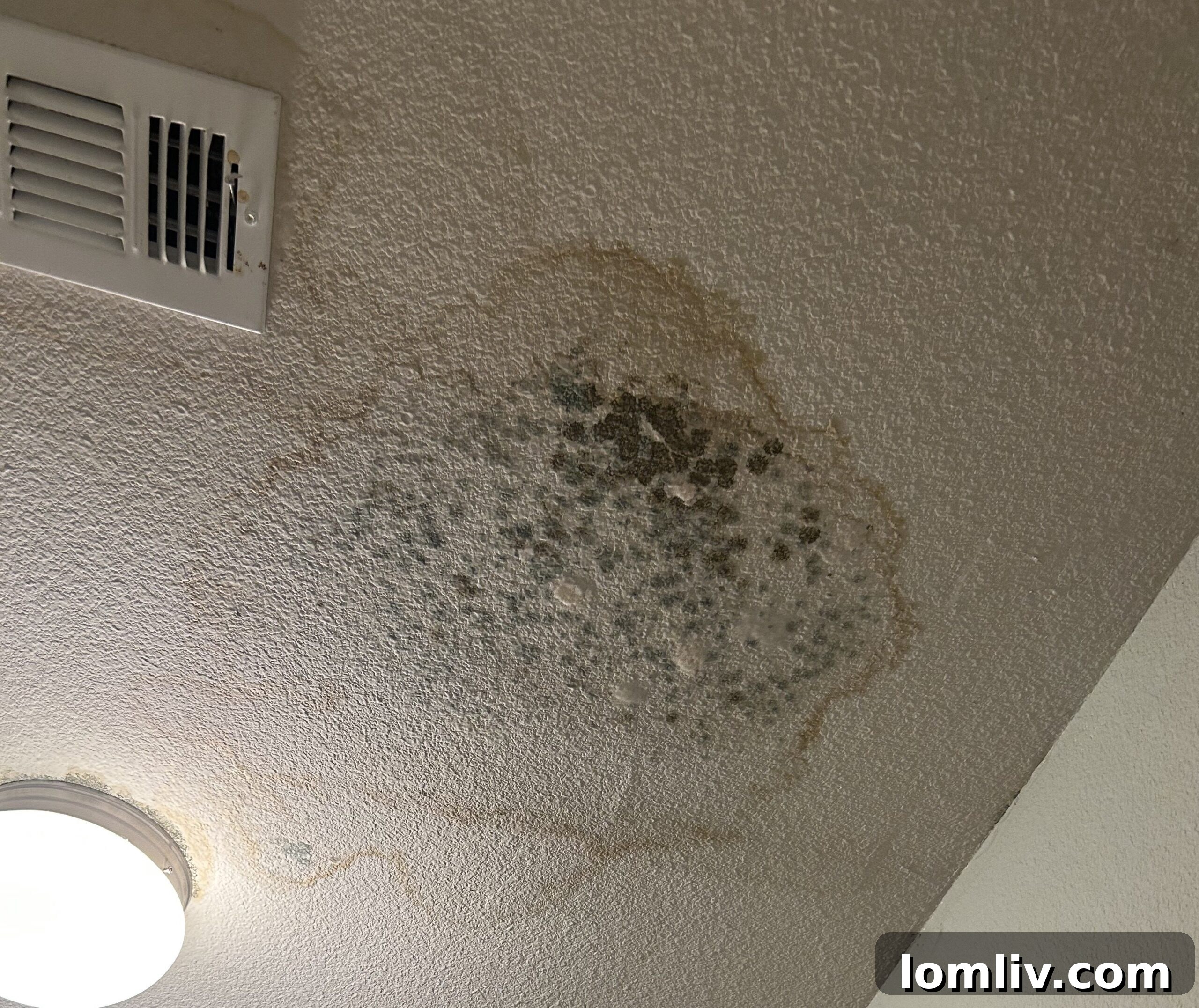
When a home inspector encounters an obvious water leak or suspicious discoloration, their role is to identify the signs of moisture intrusion and any visible damage without intrusive testing or dismantling parts of the home. Due to licensing limitations and liability, inspectors cannot definitively identify “mold” in their reports. Instead, they will describe findings as an “unidentified grey substance” or “suspect microbial growth,” coupled with a clear recommendation to consult appropriate professionals.
Our experience shows that these “unidentified substances” often point to significant underlying problems. For example, during a re-inspection, a spot previously reported as a leak, which the seller claimed to have fixed, was found to still be wet and actively leaking. This led to the recommendation for a mold remediation expert, who subsequently discovered extensive mold within the walls and attic space. This is a common scenario, where a seemingly minor leak has allowed mold to proliferate in hidden areas.
The presence of mold poses several challenges:
- Health Risks: Mold exposure can cause respiratory issues, allergies, asthma attacks, skin irritation, and other health problems, especially for sensitive individuals.
- Property Damage: Mold can compromise structural integrity, ruin drywall, insulation, and other building materials.
- Remediation Costs: Professional mold remediation can be expensive, involving containment, removal, and air purification.
When significant mold is discovered, the next steps typically involve negotiation between the buyer and seller, often with the involvement of real estate agents and insurance companies. Ideally, the seller’s home insurance might cover the remediation. However, if not, parties must negotiate who bears the cost. Options include the seller paying for remediation out-of-pocket, a price reduction or credit to the buyer, or the buyer deciding to walk away from the deal if the costs and risks are too high. A detailed home inspection report is crucial in this process, providing objective evidence for these critical negotiations.
New Construction Problems: The Myth of Perfection
Many believe that a brand new home comes with an inherent guarantee of perfection, but this is a common misconception. In reality, new construction homes frequently have problems, and it is absolutely critical to have an independent home inspection before you close and move in. Builders are often under tight deadlines, and multiple tradespeople work on different aspects of the house, leading to potential oversights or errors. These issues, if caught early, are typically covered by the builder’s warranty, saving you significant hassle and expense down the line.
We routinely find a wide array of issues in newly built homes, from minor cosmetic flaws to major safety hazards. For instance, we once discovered a dangerous gas leak at the water heater in a brand new property, a potentially catastrophic oversight. Other common new construction problems include:
- Electrical Issues: Non-functional outlets or switches, reversed polarity, or circuits wired incorrectly.
- Plumbing Defects: Leaking pipes, reversed hot and cold water lines, or improperly installed fixtures.
- HVAC Problems: Incorrectly sized units, poor ductwork, or inadequate ventilation.
- Structural Concerns: Missing mortar on bricks, framing issues, or foundation irregularities.
- Safety Hazards: Missing smoke detectors, unanchored water heaters, or inadequate railing on stairs.
- Cosmetic Flaws: Poor paint finishes, misaligned cabinets, or damaged flooring.
A comprehensive new construction inspection should ideally be conducted in phases: a pre-pour inspection (before foundation concrete is poured), a pre-drywall inspection (after framing and rough-ins, but before walls are closed), and a final inspection before closing. This layered approach ensures that structural and system integrity is checked at critical stages. By catching these issues before you take ownership, you empower the builder to correct them under their warranty, ensuring your new home truly meets the expected standards of quality and safety.
Maximizing Your Home Inspection Report: A Dynamic Tool for Smart Homeownership
Your home inspection report is far more than a document you glance at during the purchase process and then file away. It’s a dynamic, long-term asset that can guide your homeownership journey for years to come. Here’s how to maximize its value:
- A Comprehensive Maintenance Checklist: The report meticulously details the condition of various components, including their expected lifespan and any immediate or potential issues. Use this as a living checklist for routine maintenance tasks. Schedule repairs or preventative actions based on the inspector’s recommendations to extend the life of your home’s systems and prevent costly emergencies.
- Prioritizing Future Projects: The report can help you prioritize upgrades and renovations. For example, if the roof is nearing the end of its life, or the HVAC system is showing signs of wear, you can budget for these significant expenses proactively. Similarly, recommendations for insulation upgrades or sealing air leaks can guide energy-efficiency projects.
- Understanding Your Home’s Anatomy: For new homeowners, the report is an excellent educational tool. It provides a detailed overview of your home’s systems – plumbing, electrical, HVAC, and structure – helping you understand how everything works together. This knowledge is invaluable when troubleshooting minor issues or communicating with contractors.
- Documenting Home Condition: The report serves as a benchmark for the home’s condition at the time of purchase. This documentation can be useful for insurance claims, future sales, or if you ever need to prove the condition of a system or component at a certain point in time.
Now that you’re armed with a deeper understanding of how to interpret and utilize your home inspection report, I encourage you to dig out your last one and give it a thorough review. You might be surprised to find some items you haven’t yet addressed, or discover new insights into your home’s needs. What’s that? You didn’t keep it, or you never had one? It’s never too late to gain critical insight into your property. You can always schedule a home maintenance inspection to get an up-to-date, comprehensive understanding of the current status of all the systems and components of your home. This proactive approach ensures your home remains a safe, efficient, and valuable asset.