Dallas Love Field’s Soaring Activity: A Tale of Economic Boom vs. Residential Disquiet
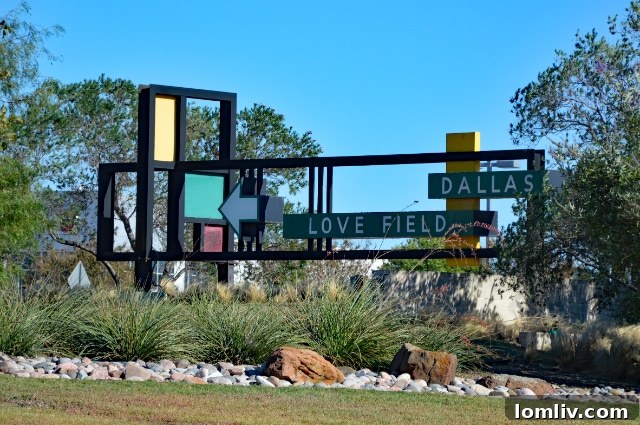
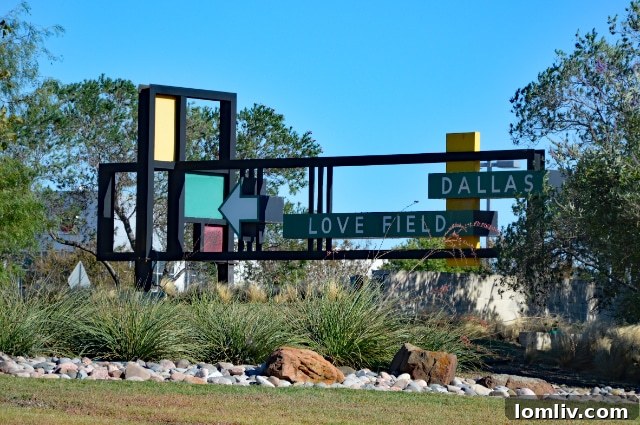
Dallas Love Field (DAL), a cornerstone of North Texas aviation, is currently experiencing a significant surge in operational activity. While this robust growth signals a strong economic rebound for the city-owned airport, it has ignited a fierce debate and considerable frustration among residents in the adjacent communities. What appears to be a success story on paper—with enplanements and revenues nearing pre-pandemic highs—translates into a daily struggle for peace and quiet for thousands living in the shadow of the runways.
Last week, Dallas City Council was informed by Director of Aviation Mark Duebner about the airport’s impressive recovery. Passenger numbers and financial performance have almost returned to the thriving levels seen before the global health crisis. Such statistics are typically celebrated as indicators of progress and prosperity for any metropolitan area. However, for those residing near Love Field, this boom is far from uniformly positive.
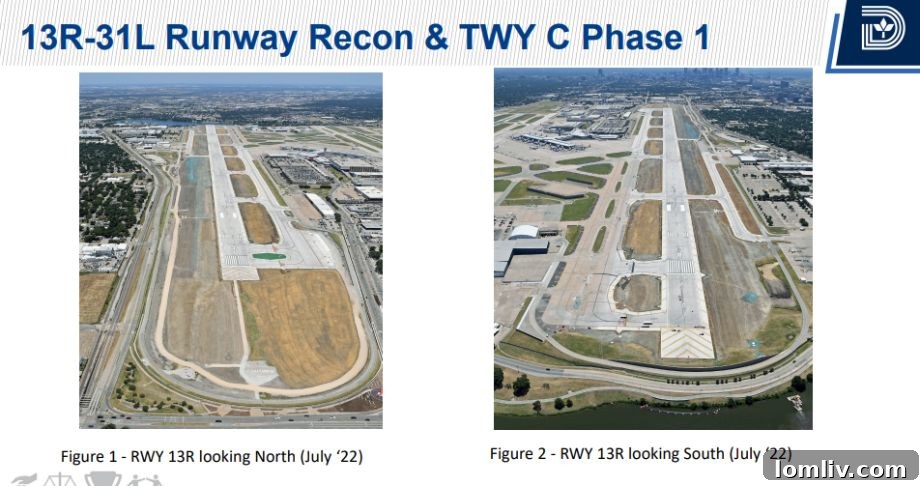
Neighborhoods such as Briarwood, Bluffview, Love Field West, Elm Thicket, and even the affluent Highland Park, are reporting a drastic increase in aircraft noise. This surge is predominantly linked to flights utilizing the 13L-31R “Lemmon Runway,” which directly impacts residential zones, rather than the more industrially flanked 13R-31L “Denton Runway.” The shift in primary runway usage has dramatically altered the soundscape for these communities, transforming quiet residential areas into constant flight paths.
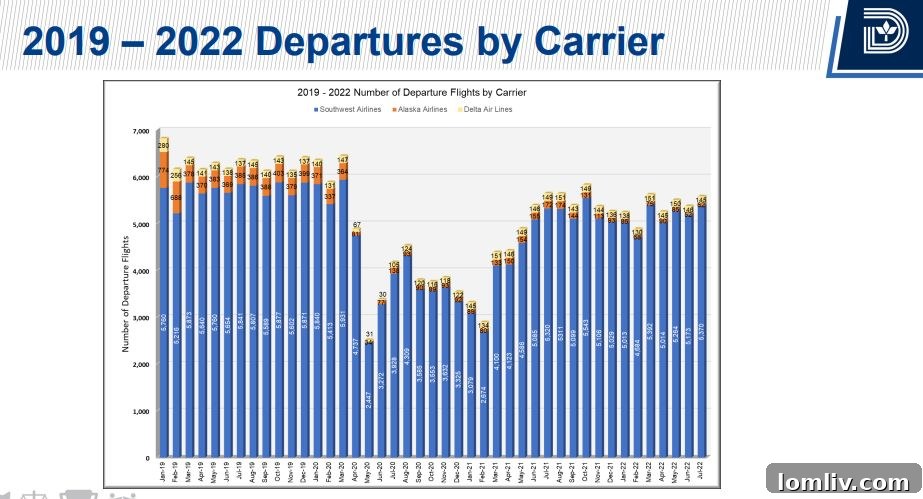
For seven decades, the Denton Runway, bordered mostly by commercial establishments and businesses, served as Love Field’s main artery. The Lemmon Runway, in contrast, was a secondary option, rarely used for routine takeoffs and landings. For instance, in 2014, the Lemmon Runway saw an average of merely 50 flights per week. Today, this figure has skyrocketed to over 200 flights daily. This represents an almost 30-fold increase in the number of aircraft movements over residential areas, a stark change that has profound implications for daily life.
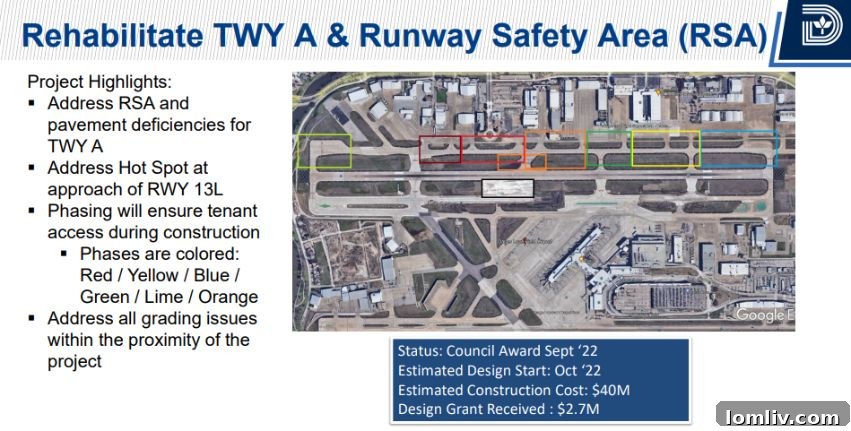
The pivotal change occurred in early 2021 when the Denton Runway underwent extensive reconstruction, a project that spanned well over a year. During this period, all airport traffic was rerouted through the Lemmon Runway, forcing residents to endure unprecedented levels of noise. Homeowners were given assurances that once the Denton Runway upgrades were complete, air traffic would return to a balanced distribution between the commercial and residential sides of the airport. Yet, locals contend that this balance has not materialized, leaving them with what they describe as a “new normal” of relentless noise.
The Unwelcome Symphony: Residents Bear the Brunt of Increased Air Traffic
The surge in noise complaints from exasperated neighbors has largely been met with what many perceive as indifference. Andy Wallace, a resident of Highland Park, expressed his community’s frustration, stating, “The noise has been unbearable through the process of building the new runway along Denton Drive.” He elaborated to Daltxrealestate.com on how Southwest Airlines, the dominant carrier at Love Field, has significantly benefited from operational changes, particularly the redesign of the terminal that facilitated increased utilization of the Lemmon Runway. “The neighborhood is upset since they have told us on every occasion the traffic would return to normal post-runway construction. It has not, and will not unless the public exhibits concern over the new-normal flight traffic,” Wallace emphasized, highlighting the community’s feeling of betrayal.
Currently, city officials are engaged in critical discussions surrounding the update of lease agreements with various airline carriers. These agreements, which dictate the terms of operation and space utilization at the city-owned airport, are set to expire in 2028. Located just six miles north of downtown Dallas, Love Field’s strategic importance makes these negotiations crucial for both the airport’s future profitability and its relationship with the surrounding urban fabric.
Love Field’s Enduring Legacy and Complex Operational Framework
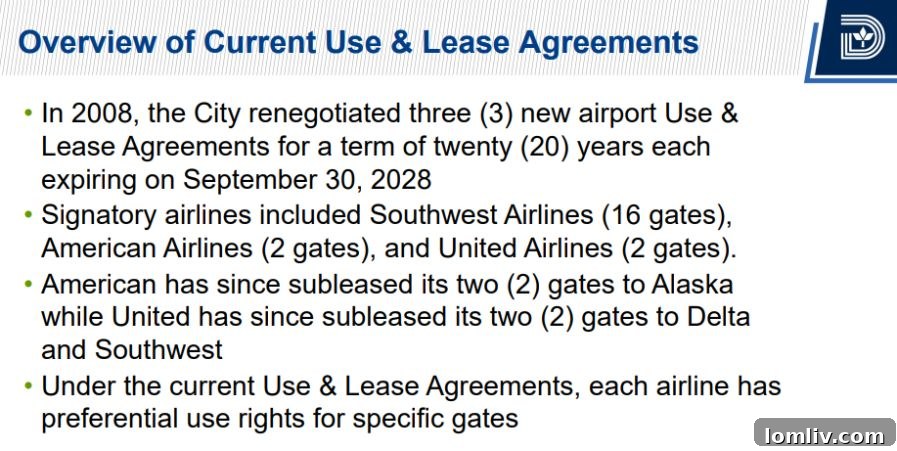
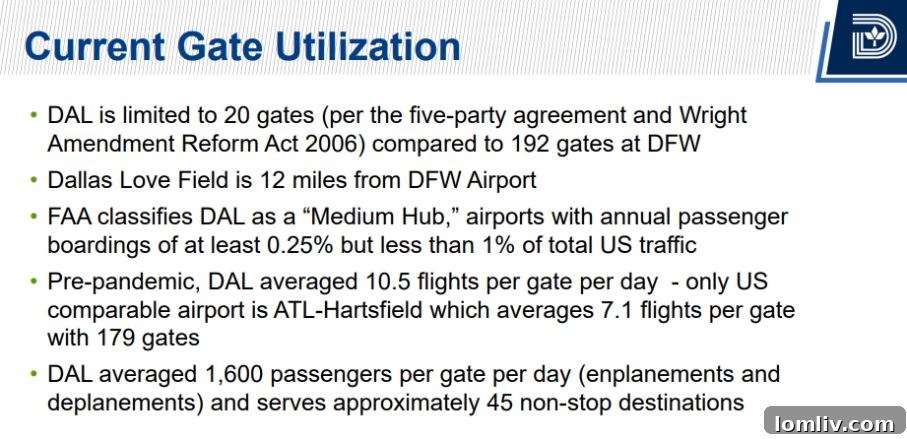
Dallas Love Field boasts a rich history, tracing its origins back to 1917. It served as Dallas’s primary airport for decades, until 1974, and remains significant as the birthplace, corporate headquarters, and a major operational base for Southwest Airlines. The airport’s operational scope, however, is not without its unique constraints. Director Duebner highlighted to the city council that Love Field is limited to 20 gates, a restriction imposed by the Wright Amendment Reform Act and a subsequent “Five Party Agreement.” This regulatory framework, designed to balance competition and regional airport usage, profoundly shapes Love Field’s operational capabilities.
Under these agreements, Southwest Airlines leases 16 of the 20 available gates, cementing its dominant position at the airport. American Airlines and United Airlines each lease two gates, though neither carrier operates directly from Love Field. Instead, they sublease their gates to other airlines, including Southwest, Delta, and Alaska Airlines. Crucially, while the number of gates is strictly capped, the volume of flights originating from or landing at these gates is not. This loophole allows for a continuous increase in air traffic, even without physical expansion, which is a major point of contention for residents.
Duebner’s presentation indicated that the airport efficiently manages approximately 1,600 passengers per gate daily, underscoring the intensive utilization of Love Field’s limited infrastructure. Despite the comprehensive overview of the airport’s robust financial and operational performance, Duebner’s address to the council notably omitted any direct discussion of the escalating noise complaints.
When questioned about the noise issue, Lauren Rounds, Public Information Officer for the Aviation Administration, acknowledged the airport’s location “in a noise-sensitive area of the city near residential neighborhoods.” She affirmed that the City of Dallas has adopted policies aimed at noise reduction to mitigate the airport’s impact on its neighbors. However, Rounds also highlighted the subjective nature of noise tolerance and the various environmental factors—such as weather conditions that affect sound travel, and an individual’s proximity to a flight path—that contribute to perceived noise levels.
Despite the Department of Aviation developing a Voluntary Noise Program for Love Field, the ultimate authority over nearly all aspects of airport operations rests with the Federal Aviation Administration (FAA). Rounds further clarified that FAA regulations mandate the airport to operate 24 hours a day, seven days a week. Furthermore, the city is legally unable to prohibit specific types or sizes of aircraft based solely on noise levels, nor can it impose a curfew without explicit FAA approval. In light of these federal restrictions, neighbors are encouraged to utilize the city’s flight-tracking and noise complaint system to log their concerns, which serves as one of the few avenues for official recourse.
Financial Resurgence and Future Negotiations: What Lies Ahead for Love Field?
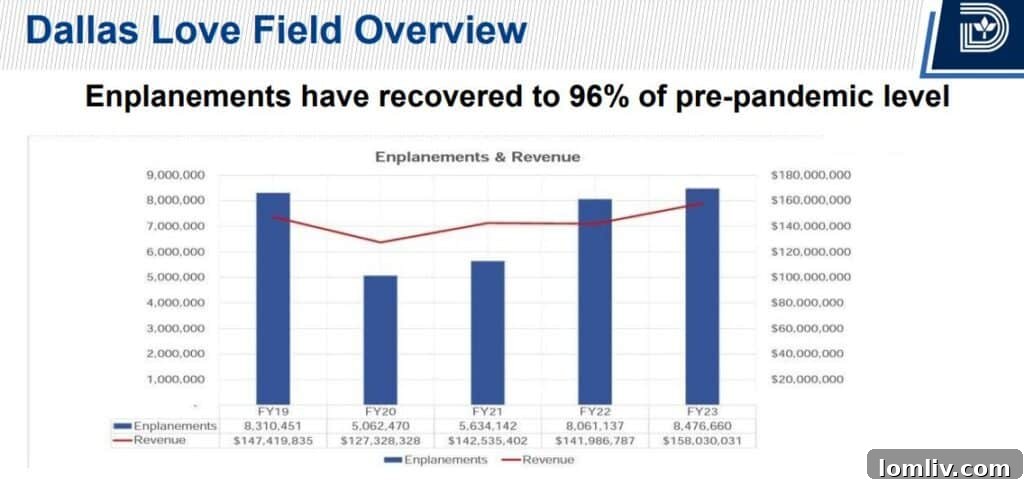
The financial outlook for Dallas Love Field remains strong, projecting 8 million enplanements and revenues of $141.9 million for Fiscal Year 2022, according to Duebner’s October 19 presentation. These figures closely rival the impressive 8.3 million enplanements and $147.4 million in revenue recorded in FY19, before the pandemic. The years FY20 and FY21, heavily impacted by COVID-19, saw significantly lower numbers, hovering around 5 million enplanements and $135 million in revenue. The current trajectory indicates a robust recovery, signaling the airport’s critical role in the regional economy.
“Operations are returning to the levels they were previously,” Duebner stated, underscoring the rapid rebound. “Our revenues have rebounded. We are entirely dependent on the revenues we generate. Revenue per passenger is very strong. That’s on the back of increased prices, inflationary pressures at the concessions, as well as rising parking rates.” This financial self-sufficiency is a point of pride for the airport administration but also highlights the economic drivers behind the increased flight volume.
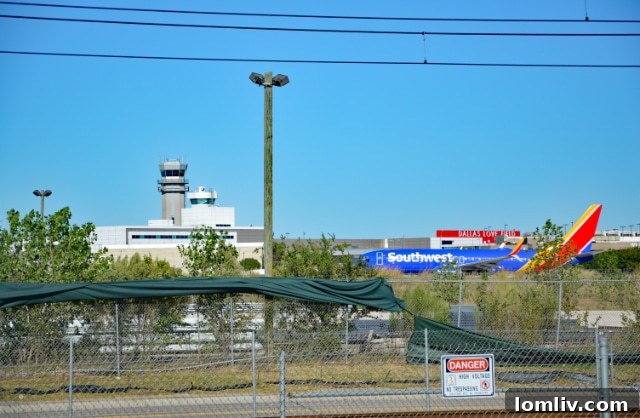
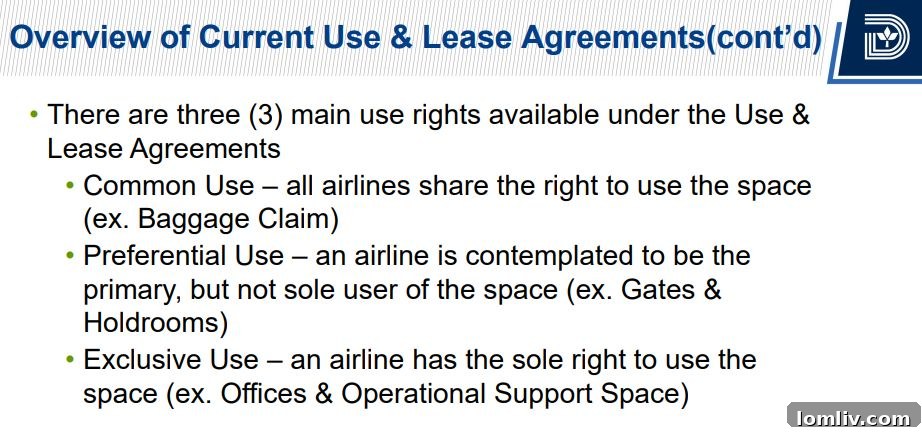
Southwest Airlines continues to dominate Love Field’s operations, transporting up to 96 percent of all passengers. Under existing use and lease agreements, contracting airlines benefit from preferential use, which means no other airline can operate from gates already in use by a preferred carrier. Duebner praised Southwest’s operational prowess: “Some of that utilization that we’re getting out of the gates is due to the efficiency with which Southwest operates. They clearly know how to get the maximum usage out of a gate.” While efficient for the airline, this concentrated activity further contributes to the environmental impact on nearby residential zones.
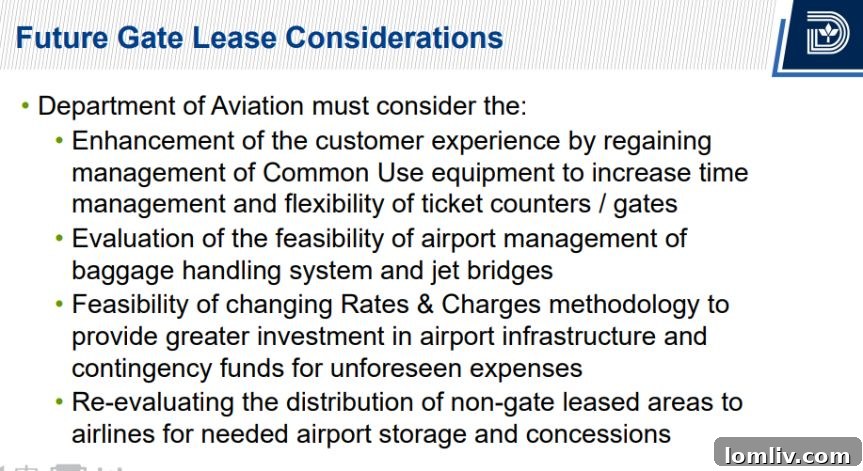
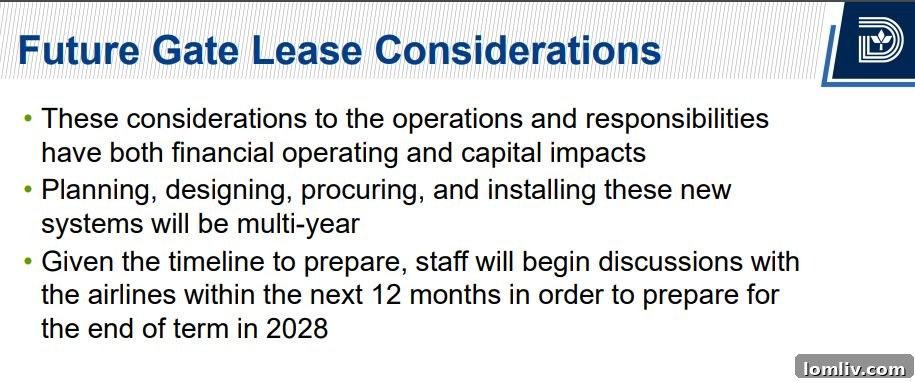
With current lease agreements slated to expire in 2028, the city’s Aviation Administration is actively proposing significant operational changes. These recommendations aim to allow the city to recoup more residual fees from the airlines, thereby enhancing the airport’s financial returns. Duebner also noted the pressing need for additional storage space, acknowledging that the design, procurement, installation, and testing phases for such infrastructure are complex, multi-year processes. The urgency of these discussions is palpable: “We’re saying within the next 12 months we really need to have serious conversations with the airlines, gauge what interest they have in continuing to operate at Love Field, and bring back a recommendation to the council to execute those use and lease agreements,” he stated, setting a tight timeline for critical decisions.
Noisy Neighbors: A Community’s Plea for Serenity
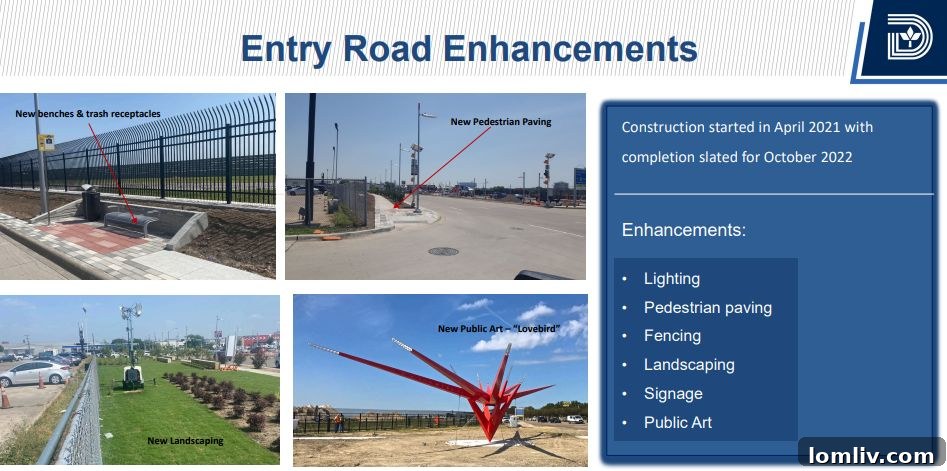
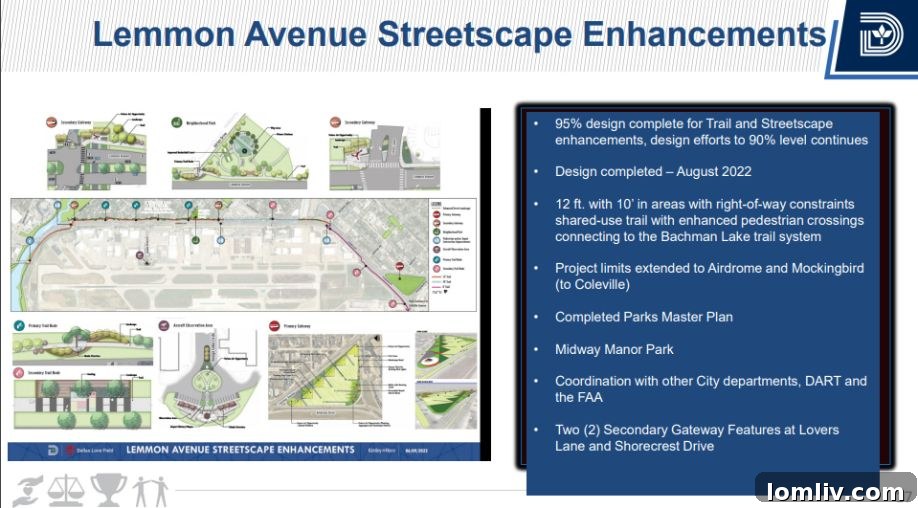
Beyond the operational and financial updates, Duebner also presented plans for community-oriented ventures, including enhancements to the 11th Avenue streetscape. “That is to connect increasing mobility north to the south end of the airport,” Duebner explained, adding that this initiative “will tie in nicely to the recent attention paid to Elm Thicket/Northpark. We’ve got some gateway features to help that neighborhood.” While these improvements are welcomed, residents like Andy Wallace feel that their core grievance—the incessant noise—is being ignored.
Wallace lamented that “no one at the city is talking about the noise.” He described the challenging reality for residents: flights commencing as early as 6 a.m. make it nearly impossible to conduct conference calls or even simple conversations within homes situated along the Lemmon Avenue flight path. This isn’t a case of residents knowingly moving next to a bustling airport; Wallace, who has lived in his home for 11 years, asserts that the situation has drastically changed. “We were told since Day One there would be no ‘new noise’ on us,” he recounted, highlighting a broken promise that fuels community anger.
He attributed the current predicament to airlines, particularly Southwest, learning to exploit the Lemmon Runway’s potential during the 20-month closure of the Denton Runway. “Southwest will choose to sit and wait at Lemmon because it now makes sense to do this. They learned this while the [Denton] runway was closed for 20 months,” Wallace argued, suggesting a deliberate operational shift rather than a temporary inconvenience. “It’s a shame more people weren’t vocal through the years. Now they are all coming out and showing this isn’t fair.”
Kerri Lacher, who built her home in Briarwood 12 years ago, echoed Wallace’s sentiments. “We didn’t have any noise pollution even though we are close to Love Field,” she stated, emphasizing the historical tranquility of her neighborhood. The runway construction marked a turning point: “They started construction [on the runway] and the noise would start at 6 a.m. and go to midnight. The flights would be taking off [on the Lemmon side] every five minutes.” Lacher was informed by a city employee that the aspiration was a 50-50 split in usage between the two runways. However, she was told the split was 60-40 at the time, which she strongly disbelieved: “There’s no way.”
While the frequency of flights has slightly decreased to every 10 to 20 minutes, Lacher insists the noise remains “unbearable.” “It’s destroyed the peace I have in my home,” she lamented, feeling trapped by the outcome of the airport’s modernization. These personal testimonies underscore a deep sense of loss and frustration among those who chose to build lives in these communities, only to have their serenity disrupted by a shift in airport operations.
A Call for Balance: Coexistence in the Heart of Dallas
Andy Wallace’s core request is straightforward: he simply wants the city to prioritize the Denton Drive runway for departures and arrivals, rather than channeling the majority of flights over neighborhoods directly impacted by the Lemmon Avenue side. “I don’t want Love Field to go away,” he clarified, understanding the airport’s immense value to Dallas. “That’s a disservice to the community. I just want to be in a world where we can coexist.” This sentiment captures the broader desire within affected communities: not to dismantle a vital economic asset, but to achieve a sustainable balance that respects residential quality of life.
The residents’ frustration often points to Southwest Airlines, which they perceive as having undue influence due to its significant investment in the terminal. “Southwest Airlines paid for the terminal and they get to do whatever they want,” Wallace contended, highlighting a perceived power imbalance. This situation presents a complex challenge for the City of Dallas: how to foster economic growth and support a key regional transportation hub like Love Field, while simultaneously safeguarding the well-being and peace of its residential communities. As the lease agreements approach their expiration in 2028, the upcoming negotiations offer a critical opportunity for the city to address these long-standing grievances and seek solutions that honor both economic imperatives and the right to a quiet home.