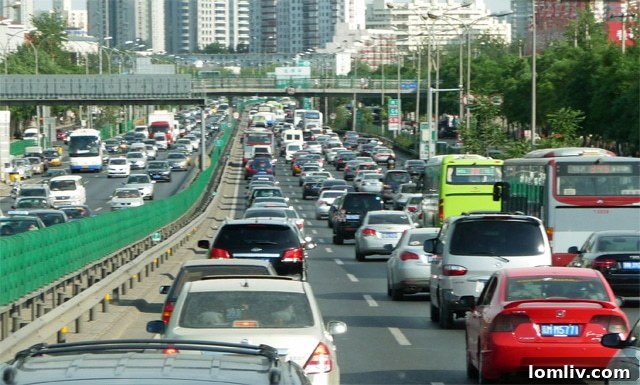
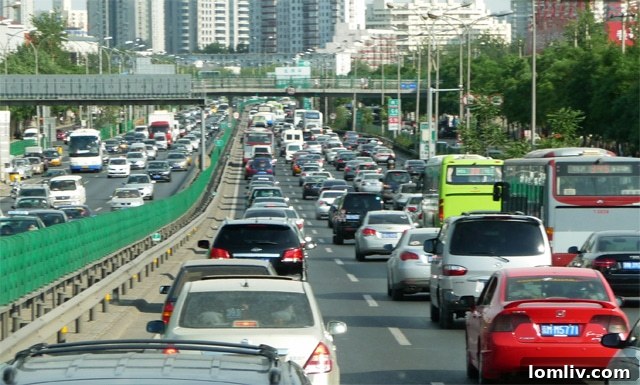
In a significant finding that has resonated across public health and environmental sectors, the renowned medical journal The Lancet published a landmark Canadian study on January 4th, revealing a compelling link between residing near major roadways and an increased risk of developing dementia. This comprehensive research sheds new light on how our immediate environment, particularly the air quality and noise levels associated with heavy traffic, can profoundly impact long-term brain health. While the study meticulously investigated potential correlations with Parkinson’s Disease and Multiple Sclerosis, it found no significant statistical connection for these conditions, focusing its most striking conclusions on the heightened incidence of dementia.
The groundbreaking study was a collaborative effort, benefiting from the expertise and resources of several prestigious organizations. Key contributions came from Public Health Ontario (PHO) and the Institute for Clinical Evaluative Sciences (ICES), alongside leading scientists from the University of Toronto, Carleton University, Dalhousie University, Oregon State University, and Health Canada. This multi-institutional partnership underscores the rigorous and expansive nature of the research, lending considerable weight to its findings and their implications for public health policy and urban planning globally.
The Methodology Behind the Discovery: A Large-Scale Canadian Inquiry
The research team, spearheaded by the distinguished Dr. Hong Chen, embarked on an ambitious project to analyze a vast cohort of Canadian adults. The study focused on residents of Ontario, Canada, sampling individuals within two broad age categories: 20-50 years old and 55-85 years old. Beginning in 2001, the study initially included an astonishing 6.6 million participants, all of whom were free from any diagnosed neurological ailments at the commencement of the research. This crucial baseline ensured that any observed onset of neurological conditions during the study period could be more directly attributed to environmental factors.
A pivotal aspect of the study’s design involved meticulously determining each participant’s residential location and their proximity to major roadways. This data was meticulously derived from postal code addresses, tracing back five years prior to the study’s inception (to 1996). For the purpose of this research, “major roadways” were broadly defined to encompass high-traffic arteries such as tollways, highways, and other significant thoroughfares known for their substantial vehicle volume and associated emissions. This historical data collection allowed researchers to assess long-term exposure, a critical element in understanding chronic health conditions like dementia.
Throughout the duration of the study, which extended to 2012, the incidence of each neurological disease among the participants was rigorously verified. This verification process involved close collaboration with provincial health agencies, ensuring the accuracy and reliability of the health outcomes recorded. By marrying robust residential exposure data with verified health records, the study established a powerful framework for identifying potential environmental health risks. Furthermore, to isolate the specific impact of roadway proximity, the research employed sophisticated statistical models that carefully excluded other unrelated causes of dementia and poor health, such as diabetes, obesity, smoking, brain injury, and socioeconomic factors like poverty. Acknowledging that income often plays a significant role in overall health outcomes, the study’s ability to control for these confounding variables strengthens the confidence in its primary findings regarding traffic exposure.
Unveiling the Startling Findings: Proximity and Dementia Risk
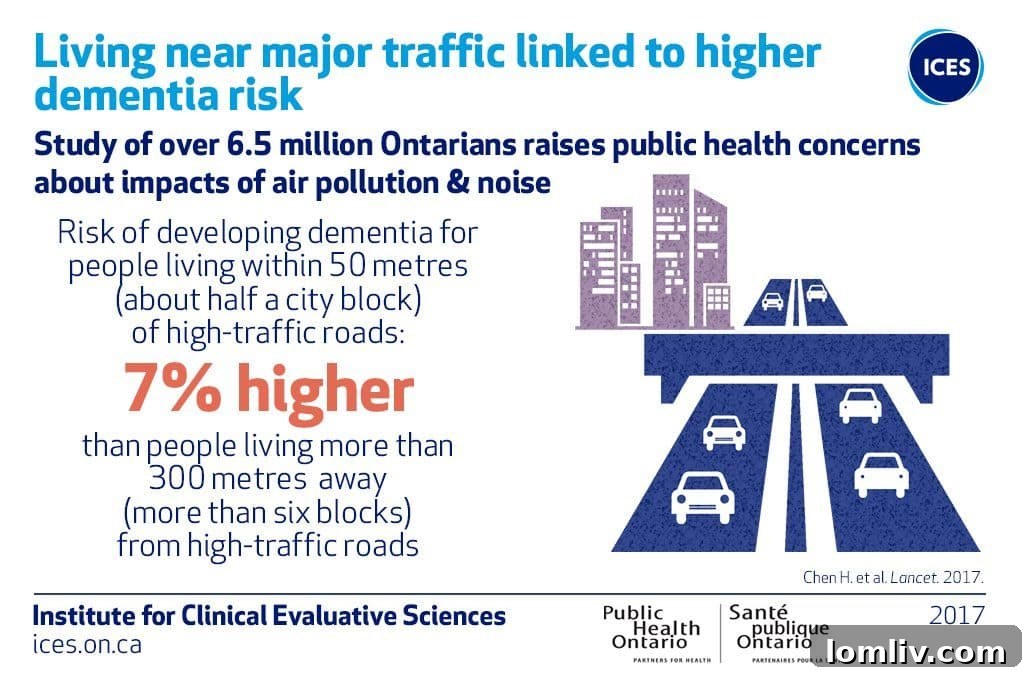
The study’s results painted a clear and concerning picture regarding the link between residential proximity to major roads and dementia risk. Between 2001 and 2012, a noticeable increase in the incidence of dementia was observed among specific groups. For individuals living within a mere 50 meters (approximately 164 feet) of a major roadway, there was a significant 7 percent increase in the incidence of dementia when compared to the general population residing further away. This finding highlights a direct and potent immediate impact of such proximity.
The risk, while decreasing with distance, remained elevated for those living slightly further afield. For participants residing between 50 to 100 meters (164 to 328 feet) from a major roadway, the increased incidence of dementia was an additional 4 percent above the norm. Moving further out, those living between 101 to 200 meters (328 to 656 feet) away still showed a 2 percent increase. It was only beyond 200 meters (656 feet) that the levels of dementia incidence returned to what was considered normal for the population. This “dose-response” relationship, where risk diminishes with increasing distance, provides compelling evidence of a direct environmental influence.
Of particular concern were the findings specific to densely populated urban centers. For individuals residing in major cities like Toronto, the incidence of dementia showed an even more dramatic increase. A striking 12 percent rise in dementia incidence was recorded for those living both less than and greater than 50 meters (164 feet) from a major roadway. This amplified risk in urban environments suggests that factors such as traffic density, building configurations, and prolonged exposure to pollutants may compound the overall health impact, making city dwellers particularly vulnerable.
Understanding the Mechanisms: Air Pollution and Brain Health
“Our study is the first in Canada to suggest that pollutants from heavy, day-to-day traffic are linked to dementia. We know from previous research that air pollutants can get into the blood stream and lead to inflammation, which is linked with cardiovascular disease and possibly other conditions such as diabetes. This study suggests air pollutants that can get into the brain via the blood stream can lead to neurological problems,” explained Dr. Ray Copes, chief of environmental and occupational health at Public Health Ontario and a co-author of the seminal paper. Dr. Copes’ statement provides a crucial insight into the potential biological pathways through which traffic-related pollution might exert its detrimental effects on brain health.
The researchers further hypothesized that a combination of factors contributes to this observed link. Beyond the readily recognized pollutants such as nitrogen oxides, they suggested that ultra-fine particles emanating from sources like tire wear and brake dust also play a significant role. These microscopic particles are particularly concerning because their small size allows them to penetrate deep into the lungs and, critically, even cross the blood-brain barrier. Once in the bloodstream and potentially the brain, these pollutants can trigger systemic inflammation and oxidative stress, both of which are known contributors to neurodegenerative processes.
Moreover, the study posited that long-term exposure to road noise might be an additional, often overlooked, contributing factor. Chronic noise pollution is known to elevate stress hormones, disrupt sleep patterns, and increase blood pressure, all of which can have long-term adverse effects on cardiovascular and brain health. While the study was meticulously designed to identify the correlation between proximity and increased incidence of dementia, it intentionally did not aim to pinpoint the specific causative agents. Instead, its strength lies in firmly establishing that proximity to major roadways significantly increases the incidence of dementia, paving the way for future research to precisely identify the underlying mechanisms.
Considering Vulnerable Populations and Urban Dynamics
This research naturally raises further questions about the complex interplay of urban living and environmental health. For instance, in high-rise buildings prevalent in many major cities, one might wonder if the distance effects from major roadways also extend vertically. Is someone residing on a lower floor at a greater risk compared to an individual living on the 20th floor? The answer likely hinges on the dynamics of chemical dissipation—whether pollutants tend to rise from the ground, disperse horizontally with wind patterns, or both. Urban canyons, created by tall buildings, can trap pollutants, potentially exposing even higher floors to concentrated levels, while strong winds might offer some ventilation depending on the building’s orientation and surrounding structures. This aspect highlights the need for more localized and three-dimensional studies of air quality in dense urban environments.
The implications of these findings are particularly pertinent when observing urban development trends. In cities like Dallas, for example, it’s not uncommon to see numerous senior living facilities situated adjacent to or bordering major highways. Given that these facilities are typically designed with sealed environments to maintain comfortable indoor temperatures and climate control, one hopes they are equipped with advanced air filtering systems. Such systems are crucial for protecting their residents, who, by virtue of their age, are inherently more susceptible to neurological diseases like dementia. Ensuring clean indoor air quality in facilities housing vulnerable populations should be a paramount consideration in urban planning and building codes, especially for those located in high-traffic areas.
The Global Burden of Dementia: A Looming Crisis
Dementia is a broad and devastating term encompassing a range of diseases characterized by a progressive decline in cognitive function, memory, and behavioral abilities. Among these, Alzheimer’s disease stands as the most recognized and prevalent form, accounting for an estimated 70 percent of all dementia cases globally, according to the World Health Organization (WHO). As the global population ages, particularly with the large Baby Boomer generation entering their senior years, the prevalence of dementia is projected to rise dramatically. The WHO estimates that today’s 47.5 million individuals suffering from dementia worldwide will balloon to a staggering 135.5 million by 2050. This demographic shift represents a looming public health crisis with immense societal, economic, and personal costs.
Against this backdrop of increasing global prevalence, the findings from studies like the Canadian research become even more sobering. The potential that a significant portion—estimated at 7 to 12 percent—of these future dementia cases may be directly attributable to vehicle pollution is a stark reminder of humanity’s environmental footprint on health. This connection transforms environmental concerns into a direct and urgent public health imperative, compelling us to reconsider how we design our cities and manage our transportation systems.
Paving the Way Forward: Policy and Prevention
Findings such as those from The Lancet study should act as a powerful catalyst for immediate and transformative policy changes. They strongly advocate for accelerated adoption of electric vehicles, which produce zero tailpipe emissions, thereby significantly reducing localized air pollution. Simultaneously, there is an urgent need for the expansion and enhancement of public transit coverage and options. By offering viable, attractive alternatives to private car ownership, cities can effectively reduce the sheer number of vehicles on the road, directly leading to improved air quality and reduced noise pollution in residential areas. The overarching goal of these strategies must be to drastically cut vehicle emissions and significantly improve urban air quality for the benefit of all residents.
Indeed, an ounce of prevention is truly worth a pound of cure, especially when it comes to neurodegenerative diseases like dementia. The societal and economic burden of dementia care is immense, placing enormous strain on healthcare systems, families, and caregivers. However, beyond the financial costs, the deeply personal toll of dementia is perhaps the most profound. It is a profoundly difficult and often grizzly way for individuals to spend their final years, stripped of their memories, independence, and identity. Investing in preventative measures today, such as cleaner transportation and smarter urban planning, is not only economically sound but also a compassionate imperative to safeguard the cognitive health and dignity of future generations.
The message is clear: Location, location, location—it profoundly impacts not just property value, but increasingly, our very health and well-being. This study urges us to prioritize environmental health in our urban development decisions, recognizing that a healthy environment is foundational to a healthy population.
Remember: High-rises, HOAs, and renovation are my beat. But I also appreciate modern and historical architecture balanced against the YIMBY movement. If you’re interested in hosting a Candysdirt.com Staff Meeting event, I’m your guy. In 2016, my writing was recognized with Bronze and Silver awards from the National Association of Real Estate Editors. Have a story to tell or a marriage proposal to make? Shoot me an email [email protected].