The recent community meeting regarding Lincoln’s proposed Lincoln Katy Trail project at Carlisle and Hall Streets was, to put it mildly, packed with anticipation. While the room itself was modest, designed to seat approximately 30 individuals, the atmosphere was anything but understated. A significant portion of attendees comprised property owners in the vicinity, many of whom were clearly hoping to potentially sell their land to Lincoln, seeing an opportunity for investment in the burgeoning Dallas real estate market. However, their optimism was met with palpable friction from numerous neighbors, who expressed staunch opposition to the project’s scope and potential impact on their community.
The core of this communal friction centered predominantly on the traffic study presented by Lincoln. This study made a claim that struck many as counter-intuitive: it asserted that despite a substantial increase in residential units, the project would result in no more than 35 additional vehicle trips and a mere second of added delay during the peak traffic hour. Following the meeting, I engaged in a detailed discussion with Angela Hunt, a representative for Lincoln, to address these contentious traffic conclusions and understand why they seemed to defy common sense for most residents.
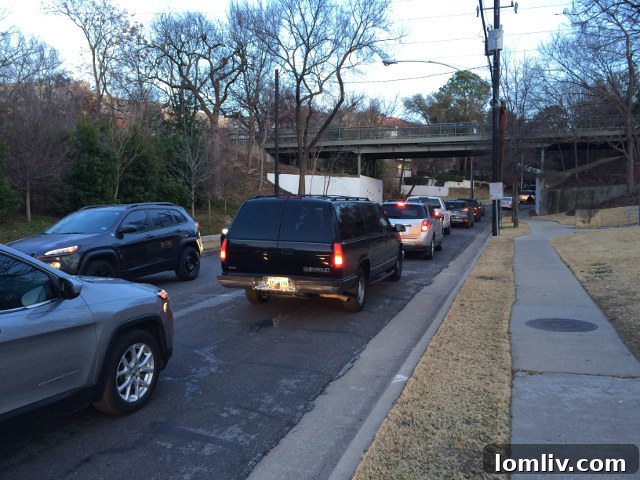
During our conversation, I articulated my concern directly: the study’s assertion that increasing units from 115 to a proposed 309 would generate only 35 additional trips during rush hour appeared to be a gross oversimplification. This statistic, taken in isolation, fails to capture the true dynamic of urban traffic flow. While it might be technically accurate under a very specific, narrow measurement criterion, it paints an incomplete and potentially misleading picture. Hundreds of new apartments invariably translate into hundreds, if not thousands, of additional vehicle movements throughout a typical day. Traffic, much like the tides, is not a static, steady stream; it ebbs and flows with the rhythms of daily life, peaking at various times beyond the single rush hour window measured.
One could, with absolute statistical truth, declare that these hundreds of new apartments would generate “zero increased traffic” between 3 a.m. and 4 a.m. on a typical Wednesday, barring the anomalies of holiday weekends. Such a statement, while factually correct for that specific hour, would be profoundly misleading in the broader context of a 24-hour day. Similarly, emphasizing a peak of merely 35 additional cars can be disingenuous, as this peak is surrounded by periods where the numbers might be 34, 33, or 50 cars, still contributing significantly to overall congestion. A truly transparent and comprehensive answer to the traffic question necessitates presenting the total increase in vehicle movements throughout an entire day, meticulously highlighting the cumulative impact across a full rush hour cycle. Moreover, this impact should not be isolated to a single thoroughfare but measured comprehensively across all affected surrounding streets, including Hall, Carlisle, and Bowen. Each street presents unique characteristics; for example, Hall Street’s direct connection to Central Expressway, exacerbated by a lack of dedicated left-turn lanes, naturally renders it a far more critical choke point than the comparatively less congested Carlisle Street.
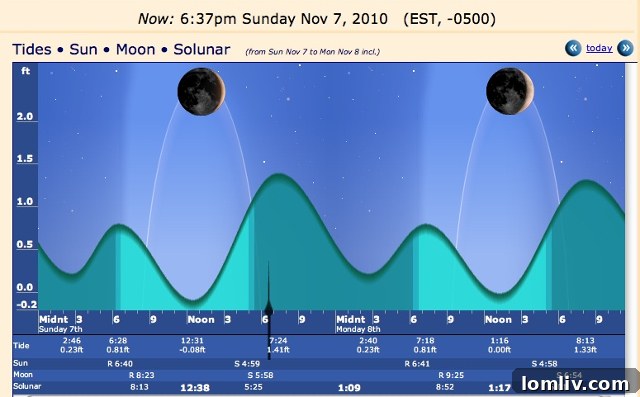
I suggested to Ms. Hunt that a more complete and honest representation would involve a detailed chart mapping out the full picture of daily traffic generation and impact. I have encountered such comprehensive charts in previous projects and offered to email her an example, though locating one swiftly from my archives late at night proved challenging. Nevertheless, the tidal analogy referenced in the image above effectively conveys the essential principle: traffic volume fluctuates dramatically, and any study that fails to account for this broad spectrum provides an incomplete and potentially deceptive analysis. Urban planning demands a rigorous, multi-faceted approach to understanding traffic patterns, considering not just isolated peak hours but the full daily and weekly cycles of vehicle movements, their origins, and destinations. The cumulative effect of increased density on existing infrastructure is a critical factor that can significantly alter the quality of life for residents, impacting commute times, local air quality, and overall neighborhood accessibility.
Beyond the traffic analysis, another contentious point for me was the revised shade study. The new graphical representations displayed at the meeting were significantly different from the initial set. Instead of clearly illustrating the ground-level impact on surrounding streets and properties, the new graphics offered a high-altitude, sky-downwards perspective, rendered in an extremely tiny, almost wire-frame view, reminiscent of peering out of an airplane window. I openly voiced my suspicion that this format change felt “fishy.” Ms. Hunt explained that some community members had previously complained about the clarity or perspective of the prior graphics. While acknowledging that feedback is important, my experience in development reviews suggests that format alterations, especially those that reduce detail or shift perspective dramatically, are often implemented to obscure rather than to illuminate potential negative impacts, such as prolonged shading of neighboring homes or public spaces. A truly transparent shade study should clearly demonstrate how new structures will affect direct sunlight access for adjacent properties, parks, and sidewalks throughout different times of the day and year, a crucial factor for urban living quality.
Ms. Hunt expressed surprise at my lack of support for the project. My stance, however, remains consistent with principles I’ve outlined in a prior column. My primary focus begins with the foundational zoning regulations governing a site. In the case of projects like Toll Brothers’, the underlying zoning (MF-3) already permitted significant height, so the debate centered more on specific design elements. Here, for the Lincoln project, the zoning is MF-2, which explicitly limits building height to 36 feet. This fundamental difference is crucial. Proposing a structure that far exceeds this established limit fundamentally alters the existing urban fabric and challenges the very framework designed to manage growth. I also added that, regrettably, the architectural design, much like many new developments across Dallas, was unlikely to garner any significant awards. I have often found myself more amenable to proposals that push zoning boundaries when they promise truly stunning, architecturally significant buildings that enhance the city’s aesthetic appeal and contribute positively to its identity. This project, unfortunately, did not meet that criterion.
The meeting also presented a peculiar situation: the attendance of Leland Burk, Vice-President of the Oak Lawn Committee (OLC). To my knowledge, Mr. Burk has no direct financial stake in the Lincoln Katy Trail project. Given that the project is actively seeking OLC support, his attendance as an officer of the committee, especially without a clear, publicly stated reason, struck me as potentially inappropriate. The integrity and impartiality of community oversight bodies like the OLC are paramount, and any appearance of undue influence or bias can erode public trust. Transparency in the interaction between developers and community representatives is essential for fostering fair and equitable development processes. This specific instance, as I noted, felt distinctly odd and warrants further consideration in the context of community engagement ethics.
Looking ahead, Lincoln is scheduled to make its fourth presentation to the Oak Lawn Committee this coming Tuesday at 6:30 p.m. The meeting will be held at the Melrose Hotel and is open to the public. These meetings are critical junctures where community voices can directly influence the future of their neighborhoods. Public participation ensures that all perspectives are heard and considered before significant development decisions are finalized. It’s an opportunity for residents to engage with developers, voice their concerns, and hold their community representatives accountable.
Stay tuned for our comprehensive coverage and analysis of Tuesday’s Oak Lawn Committee meeting, which we plan to post on Wednesday. We will delve into the details of Lincoln’s updated proposal, the committee’s questions, and the community’s response, offering an in-depth look at the ongoing dialogue shaping the future of this vital Dallas neighborhood.

Remember: My journalistic focus often revolves around the intricate world of high-rises, the complexities of Homeowners Associations (HOAs), and the transformative process of urban renovation. However, my interests also extend to appreciating the delicate balance between innovative modern architecture and preserving historical structures, particularly as these discussions intersect with the principles of the YIMBY (Yes In My Backyard) movement, which advocates for increased housing density and sustainable urban growth. If your organization is interested in hosting a Candysdirt.com Staff Meeting event, fostering dialogue on these critical urban development topics, please don’t hesitate to reach out. I am keenly interested in engaging with communities and sharing insights from my years of experience covering Dallas real estate. My commitment to insightful reporting has been recognized by the National Association of Real Estate Editors, honoring my writing with two Bronze awards in 2016 and 2017, alongside two Silver awards in 2016 and 2017. Whether you have a compelling story to share about Dallas real estate, a unique architectural project to highlight, or even a marriage proposal that intertwines with the city’s vibrant landscape, I welcome your correspondence. Please feel free to email me directly at [email protected]. Your stories and perspectives are invaluable to the ongoing narrative of our evolving city.