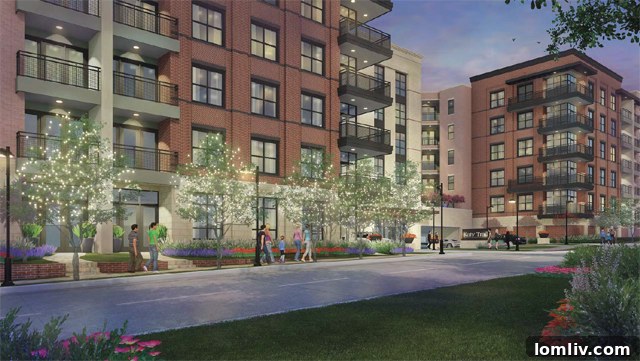
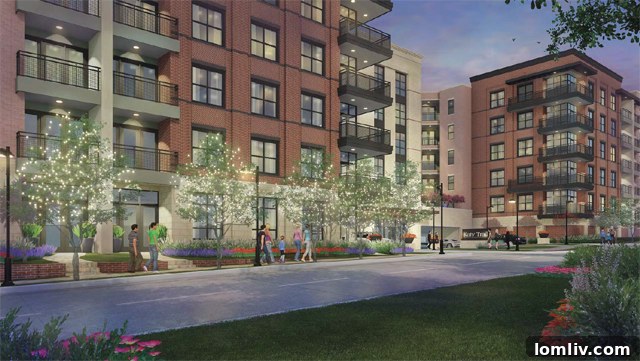
The latest presentation on the controversial Lincoln development near the Katy Trail has once again left community members and urban planning observers with a sense of déjà vu. It appears the developer, Lincoln, is banking on persistence, presenting a largely unchanged plan repeatedly, hoping it will eventually gain neighborhood approval. During a recent meeting, Lincoln’s representative, Angela Hunt, swiftly navigated through an abridged slide deck, prompting questions about missing details crucial for a comprehensive understanding of the project.
One observant Oak Lawn Committee (OLC) member, referencing an earlier, more detailed presentation, highlighted the absence of critical pages. Hunt’s explanation for these omissions was a desire for “brevity.” This excuse was echoed by Lincoln’s Jeff Courtwright when pressed on why specific data, requested months ago concerning the shadow impact on adjacent buildings, had not been provided. Courtwright candidly stated his decision to withhold the requested information, opting instead to present only what Lincoln deemed appropriate. This lack of transparency has been a recurring issue, fostering a perception of disregard for community concerns and a deliberate sidestepping of vital environmental impact assessments. It strongly suggests that the full data, if revealed, would likely underscore the project’s negative effects, leading to its suppression.
This pattern of obscured information extends to the proposed parking solutions. Despite repeated assertions that all parking would be discreetly underground, closer inspection of the complete project documentation from previous meetings reveals a different reality. The parking structure is visibly above ground on the building’s rear facade. For Lincoln, “below ground” seemingly translates to “out of sight from the main street,” conveniently masked by the apartment units themselves. This discrepancy raises serious questions about the developer’s commitment to honest representation and its impact on the urban landscape.
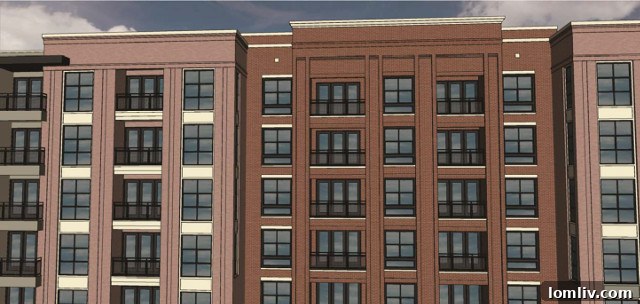
Further evidence suggesting the parking garage remains largely unchanged emerges from Lincoln’s description of their five- and six-story building maintaining a consistent roofline. Such an architectural feature would be impossible unless the structure rests on a foundation that varies in height—a clear indicator of an above-ground garage accommodating the site’s natural slope. The community’s suspicion about the true nature of the parking facility is thus well-founded, pointing to a persistent design that disregards earlier feedback and transparency expectations.
The Unraveling of Traffic Impact Claims
The issue of traffic impact consistently surfaces in Dallas development discussions, and Lincoln’s project is no exception. Angela Hunt’s fluctuating stance on traffic concerns, depending on whom she represents, highlights a troubling inconsistency. Last year, while representing Starbucks and later neighborhood residents opposing the Toll Brothers project across Turtle Creek, Hunt presented contrasting views. For Starbucks, traffic was a non-issue; yet, weeks later, advocating against Toll Brothers, she painted a dire picture of gridlocked roads and compromised emergency services.
Fast forward to the recent meeting, representing Lincoln, traffic concerns were conveniently downplayed. The traffic study presented by the DeShazo Group drew widespread skepticism, eliciting murmurs of disbelief from the audience. The proposed development plans to replace an existing 115-unit complex with 329 units, marking an increase of 214 units. Despite this significant expansion, the DeShazo Group’s study incredibly claimed these additional units would generate “only 35 more vehicular trips leaving/entering during the AM/PM peak hours than the existing development.”
To further underscore their argument, DeShazo referenced a 2015 study for the same site, which, despite contemplating 540 units, concluded that traffic increases would have a “negligible impact.” Hunt elaborated, suggesting that the 214 proposed units would only add “under two seconds” to travel times. This assertion begs the question: is this development intended for a community of shut-ins, or is the data being manipulated? The stark contrast with a similar-sized Toll Brothers building, which projected nearly 1,000 additional trips per day, underscores the profound unreliability of Lincoln’s presented figures.
Such glaring discrepancies illustrate how data can be selectively presented. While 1,000 trips per day might seem substantial, dividing it by 24 hours can yield an “innocuous” hourly rate. However, when directly asked if the “35” figure was “per hour,” Hunt unequivocally responded “no,” reiterating the original ambiguous phrasing. The collective reaction of the community was clear: no rational individual believed such a substantial increase in units would lead to such a minimal traffic surge. This skepticism is especially pointed given Hunt’s past advocacy against similar projects.
Crucially, the emergency services access, a rallying cry against the Toll Brothers project, was conspicuously absent from the discussion. This omission highlights a selective application of concerns, contingent on the developer being represented, rather than a consistent commitment to public safety and well-being.
Setbacks, Privacy, and the Looming Threat of Canyonization
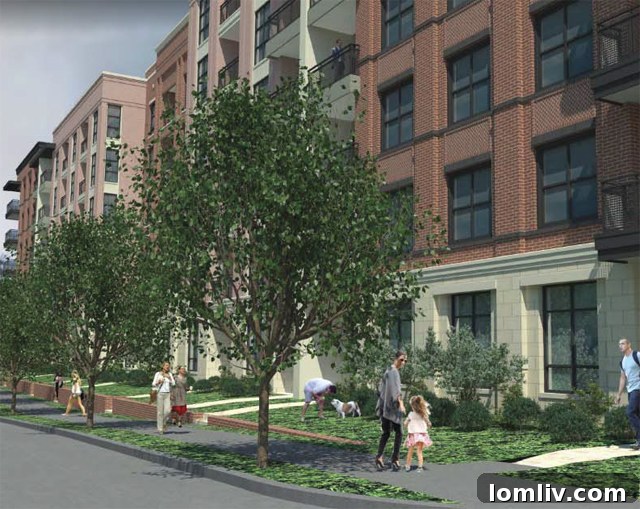
Discussions regarding building setbacks introduced another critical dimension of community concern. Lincoln proudly emphasized an almost 85-foot distance from their building to the Katy Trail—approximately 35 feet to the trail lot line and an additional 50 feet to the trail itself. However, as meticulously pointed out, this generous setback from the trail paradoxically pushes the building closer to Carlisle Street, directly impacting the adjacent Vine townhouses.
This prioritization appears to favor the Katy Trail, largely influenced by the “Friends of the Katy Trail” group, who express valid concerns about the potential “canyonization” of the trail—a fear that many, including myself, share. However, in this specific instance, the proposed distance from front door to front door between The Vine townhouses and Lincoln’s new development is estimated to be roughly equivalent to the building’s distance from the Katy Trail. The critical difference lies in the natural buffer: the Katy Trail is shielded by ample vegetation, whereas The Vine residents would face only a few small trees and the immediate proximity of Carlisle Street, leading to a profound sense of encroachment.
Residents of The Vine townhouses would not only experience a crowded environment and a significant reduction in natural light and sky views but also a considerable loss of privacy. Beyond the obvious window-to-window concerns, The Vine features rooftop decks that currently offer a secluded retreat. Should Lincoln’s proposal proceed as planned, these private spaces would lose their inherent privacy, becoming exposed to the new development. When questioned about potential compromises or design modifications, Courtwright’s response suggested a willingness to consider changes only if they did not impact Lincoln’s profit margins, underscoring a developer-centric approach.
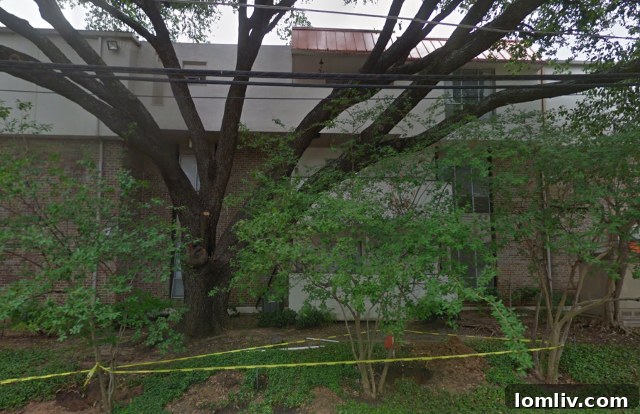
In a tangential but important correction, what was initially perceived as a potential courtyard on Carlisle Street, an amenity that might have offered a modicum of greenery, is, in fact, the entrance and exit ramps for the parking garage. This misapprehension highlights the stark reality of the project’s design priorities: utility over aesthetics, and vehicular access over pedestrian or residential amenity.
Why This Project Defines Dallas’s Development Future
The significance of this proposal extends far beyond the immediate neighborhood. Toward the meeting’s close, new Oak Lawn Committee President Hilda Rodriguez sought a show of hands from the standing-room-only audience: one side for, one against. The initial split appeared even. However, when the question was refined to identify supporters who were not owners in the existing Turtle Creek Terrace condos, only a handful remained, most of whom were part of the Lincoln Property team. This revealing moment underscored the true depth of community opposition, highlighting that genuine neighborhood support for the project is minimal.
Nevertheless, other influential groups are actively backing the proposal, driven by their own substantial financial interests. Sutton Place condos, located a block away on Cole Avenue, has been actively seeking a developer for years. Furthermore, Exxir Capital owns the property immediately north, across Hall Street, and notably employs Angela Hunt—who, as a former city council member, once opposed development in this very area. These entities see Lincoln’s project as a crucial precedent, a “door opener” for their own ambitious, potentially zone-defying developments. Exxir’s confidence in their undisclosed plans is so strong that repairs from an August 2017 fire on their Carlisle property near the Katy Trail remain unaddressed, seemingly awaiting the outcome of Lincoln’s venture.
This situation presents a pivotal moment for Dallas. Does the city aspire to preserve a diverse housing stock and maintain the integrity of its zoning regulations? Or is Dallas destined to emulate a more “lawless” urban model, akin to Houston, where land is acquired by the highest bidder, and the principles of zoning and established neighborhoods become secondary concerns? The outcome of the Lincoln Katy Trail project will undoubtedly set a precedent for future development across the city, defining its character for decades to come.
Following the public meeting, the OLC convened to discuss the project, revealing a deeper internal challenge. Historically, projects of this nature, facing such strong community opposition and perceived transparency issues, would have been rejected. However, as the OLC has gained political clout, developers have strategically adapted, ensuring their representatives are voting members. This tactic, as long-time observers recall, mirrors events from a decade ago that severely impacted the OLC’s credibility with City Hall, inadvertently benefiting developers. The community now watches keenly to see if President Rodriguez can effectively manage these competing interests, ensuring the OLC continues to genuinely represent the neighborhood’s best interests over developer influence.
Additional Updates from the Oak Lawn Committee Meeting
Lincoln was not the sole presenter at last night’s meeting. Masterplan also introduced two agenda items. Firstly, the Katy Trail Ice House is petitioning the city to acquire the undeveloped end of Routh Street, currently home to an old railroad caboose. Their vision includes enhanced landscaping and additional parking facilities, a proposal that appears to be straightforward and without significant controversy.
Secondly, Masterplan provided an update on their McKinney and Hester apartment project, which was previously discussed at the December OLC meeting. After initial plans for a 14-story building were scaled back to five stories, the OLC had assigned them further work. Masterplan returned to showcase their revised plans, demonstrating their responsiveness to the committee’s feedback.
Until next month, the ongoing dialogue between developers and the community continues to shape the evolving landscape of Dallas.

A Bit About My Work: My focus areas encompass high-rise developments, HOA dynamics, and urban renovations. I maintain a keen interest in the delicate balance between modern and historical architecture, often engaging with the principles of the YIMBY movement. If you’re considering hosting a Candysdirt.com Staff Meeting event, please feel free to reach out. My writing has been recognized by the National Association of Real Estate Editors, earning two Bronze awards (2016, 2017) and two Silver awards (2016, 2017) in 2016 and 2017. For any stories, insights, or even a marriage proposal, you can connect with me via email at [email protected].