An update from Councilman Lee Kleinman reveals a touch of Preston Hollow civility: the Rudners, prominent homeowners involved in the development discussions, extended a gesture of goodwill by sending flowers to his office staff. This seemingly small act underscores the complex dynamics at play within this esteemed Dallas neighborhood, where passionate debate often coexists with community courtesies.
The Battle for Preston Hollow: Residents Vigorously Oppose Transwestern Development
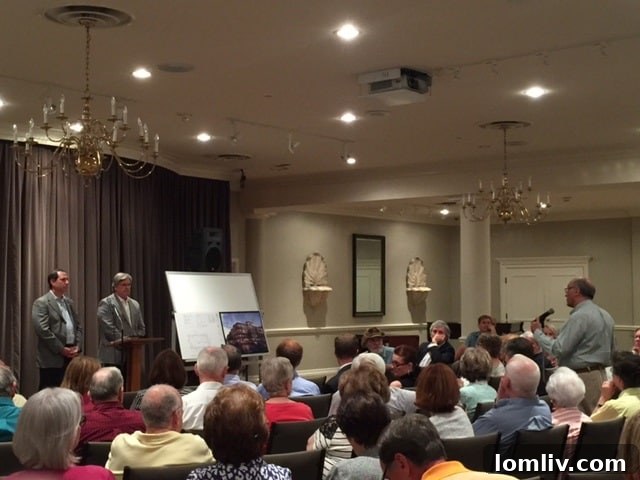
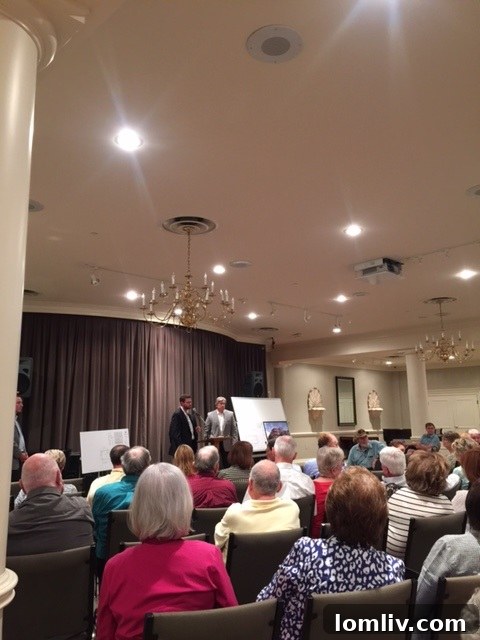
The simmering tensions over the proposed Transwestern luxury apartment project in Preston Hollow reached a boiling point once again at a recent community gathering. While an earlier meeting at Park Cities Baptist Church hinted at a more conciliatory tone, Thursday night’s assembly saw a definitive return to entrenched opposition. Approximately 66 single-family homeowners, predominantly from the Del Norte area and stretching east from Preston to Hillcrest, packed the room, their collective voice resonating with deep concern for their property values and the impending traffic congestion they fear will cripple their streets. As esteemed Realtor Steve Collins aptly put it, illustrating the inevitable flow of vehicles: “traffic is like water: it flows to the path of least resistance.”
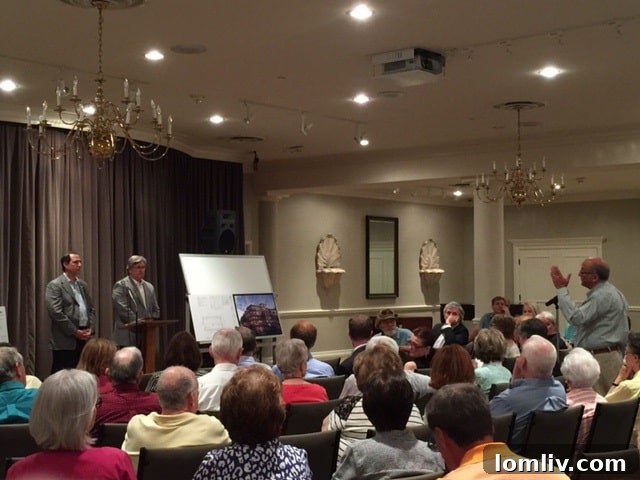
The meeting followed a straightforward agenda: Councilman Lee Kleinman offered introductions, Transwestern representatives presented their plans, and then the floor opened for questions—many, many questions. Leading the charge was Steve Rudner, a resident of Woodland, who had previously expressed his frustration rather emphatically to City Hall staff upon learning the luxury apartment project hadn’t been abandoned. Councilman Kleinman, however, promptly addressed this past rudeness. Despite the admonishment, Rudner presented his arguments tonight with a directness and composure that belied his earlier impassioned calls.
Rudner articulated the community’s stance with unwavering clarity: “I thought we made it clear with our signs and outcry last year that we are opposed to this zoning change. The burden should not be on the residents. We do not support a project that does not comply with the current zoning restrictions.” His resolute statement was met with a wave of applause from the assembled homeowners, a clear indication of the widespread sentiment.
Traffic Turmoil: Residents Foresee a Gridlocked Future
Following Rudner, local resident Claire Stanard, a remarkably articulate and polite voice within the community, stepped up to the microphone. Stanard, whom we’ve invited to contribute a guest post on this crucial topic, was unequivocal in her primary reason for opposing the requested zoning change for a specific corner of the property: traffic. “You are commandeering Averill Way,” she declared, her voice firm. “You build this, you sell it off (to some Japanese company), and then all bets are off. You’re going to dump 350 additional cars onto Bandera, my street. We are a walkable neighborhood!”
Stanard further emphasized that this proposed development is fundamentally different from projects like “The Drexel,” a community of townhomes west of Edgemere. The Transwestern project, she highlighted, is slated for development at what is arguably the busiest intersection in the entire City of Dallas: Preston Road and Northwest Highway. This critical junction was later aptly dubbed “Ground Zero” by another speaker, perfectly encapsulating the widespread sentiment. Seven or eight speakers queued up to voice not only their surprise that the project had resurfaced after previous community efforts to halt it, but also their profound lament over the anticipated additional traffic that would be diverted onto their once peaceful residential streets.
Remarkably, all but one speaker expressed negative views about the proposed development. The unanimity of opposition initially surprised many, especially considering that we had extensively covered this issue and provided comprehensive updates as early as last March. Transwestern stated they had reached out to homeowners, and Steve Collins confirmed that the developer’s general counsel had invited him to lunch, albeit only a few weeks prior to this meeting. However, according to Collins, the “notice” given to the broader neighborhood was “feeble, at best.” Transwestern countered that they had informed neighborhood leaders and requested them to disseminate information via homeowner association websites and emails. Yet, the overwhelming surprise at the meeting suggested a significant communication gap.
Clearing the Fog: The Preston Center Task Force Misconception
Discussions with numerous attendees after the meeting revealed a significant misunderstanding that appears to have stemmed from the creation of the Preston Center Task Force. This initiative, prompted by Laura Miller and spearheaded by Jennifer Gates, was established at another town hall meeting in May of the previous year at Northway Christian Church. At that time, the primary focus was the Highland House at Preston Center project, which has since been abandoned. Crucially, Jennifer Gates has since recused herself from any involvement in the Transwestern case. Councilman Lee Kleinman clarified the procedural intricacies to the assemblage, explaining that he does not even discuss this specific case with Jennifer. Furthermore, he noted that his own position on the matter remains undecided. It was emphasized that Transwestern had applied for the zoning change *before* the Task Force was created, and while they never withdrew their application, they did modify it to propose a lower density plan.
Despite these clarifications, a significant majority of homeowners present at the meeting were under the firm misconception that the Task Force’s formation had effectively halted *any and all* development at Preston Center, including the Transwestern project. Margot Murphy, another attendee at the meeting, elaborated on this point, reiterating what Jennifer Gates had made very clear last May: cooperation with the Task Force, specifically in terms of pausing development, was entirely *voluntary*. The Task Force, Murphy stressed, possesses no authority to unilaterally halt zoning change applications. “There has never been a moratorium,” said Margot Murphy, “there cannot be a moratorium. Listen to the City Attorney on this next Thursday,” she advised, indicating upcoming legal clarity. Even if Gates had politely requested developers to wait until the Task Force completed its work, her recusal from the Transwestern deal meant the responsibility now rested squarely on Lee Kleinman’s shoulders. This confusion, it seems, arose from the fact that many homeowners, deeply invested in their work and family lives, had vigorously fought the initial project and genuinely believed the matter was settled. Instead, the Transwestern case had simply been carved out from the broader purview of the Task Force, proceeding along its independent path.
Dollars and Cents: The Economic Impact and Precedent Setting
Returning to Steve Collins, who had earlier shared his insights, the veteran activist stated unequivocally that for many, the issue boils down to “dollars and cents.” While not inherently opposed to developing the area, Collins is staunchly against rezoning that would inevitably bring more traffic into established residential zones. “People take shortcuts through our street, skipping Del Norte because of the dead end at Edgemere, and they zoom down a street of 52 homes filled with little kids,” he passionately explained, highlighting the very real danger to families and children.
Collins also shed light on the financial implications for existing property owners. He noted that the owners of Town House Row stood to make substantial profits from the sale of their land, significantly more than the approximate $350,000 their townhomes had recently traded for. “These homeowners are suddenly land speculators,” he observed, drawing a parallel: “I’d like to re-zone my block for 75-story high rises and make a killing off my land sale, too.” This raised a critical question: do the land profits of one group potentially come at the expense of the property values or quality of life for another? Collins believes so. “If this deal goes through,” he predicted, “the people who live on the corner of Del Norte and Preston directly behind the new development, will lose easily $100k value in their property.” It is no surprise then that none of the affected homeowners on Del Norte support the zoning change.
Conversely, in the multi-family area “Behind the Pink Wall,” Transwestern has secured over 56% approval. Collins also noted that should Transwestern withdraw, other developers would undoubtedly line up to build within the existing zoning, given the land’s high value. In fact, one homeowner at the meeting even shouted out, “Let’s give another developer a shot at this!”
Further discussions revolved around the concept of deed restrictions to address neighborhood concerns. However, this intelligent group of residents understands that deed restrictions are not enforceable by the city; rather, it falls upon neighbors to seek legal remedies at their own expense. As for Transwestern’s proposal to build a turning lane onto Averill Way off southbound Preston Road, residents dismissed it as insufficient, arguing it “won’t help the traffic one bit.” One speaker, who vividly labeled the site “Ground Zero for traffic in Dallas,” raised a pertinent long-term question: while new apartments are appealing, what happens when they age and decline? Drawing on his experience since moving to Dallas in the 1980s, he might not be aware that the area “Behind the Pink Wall” originated as Garden apartments in the 1950s and 60s before being converted to condos, many of which are indeed quite old. (Full disclosure: I own a unit at The Seville).
A Lone Voice of Dissent: Rob Weiss Proposes Solutions
Amidst the chorus of opposition, one speaker bravely stood in favor of the development: Rob Weiss, a newcomer from Buffalo Grove, Illinois, who now resides on Bandera. His appearance was met with disbelief and even hostility from some Preston Hollow residents. Astonishingly, when he began to speak, members of the audience booed him. One woman in the back loudly interjected, “we don’t care about your opinion” and “go back to Chicago!” I had to reposition myself to hear his remarks over the commotion.
Undeterred, Rob began by stating, “Not everyone is against this project. And folks, the traffic is not going to zero down.” He underscored that whether Transwestern secured an extra story or not, the traffic situation at “Ground Zero” would remain challenging. Despite the boos, Councilman Lee Kleinman maintained order, and a Dallas Police Department officer on duty moved closer to the front of the room. Rob then proceeded to offer practical solutions he had witnessed in his former hometown of Buffalo Grove, Illinois. These included measures such as limiting turns on certain streets during peak traffic hours, lowering speed limits to 25 mph, and implementing speed bumps. However, Steve Collins later countered these suggestions, arguing that speed bumps could negatively impact property values. “Speed bumps are an instant negative to property values,” he asserted. “It hints at a high traffic street.” Rob Weiss, however, concluded his segment by asking, “What is wrong with one story? How will it hurt your life or property?”
The Domino Effect: James Parks on Holistic Urban Growth
James Parks then briefly took the podium, presenting a composed and lawyerly demeanor in his suit. A polite young man with a lovely family, Parks genuinely expressed his concern for his neighborhood. His words were carefully measured: “The city IS changing, becoming more dense, but we need to approach zoning with a holistic process and examine traffic patterns.” His statement subtly alluded to the ongoing work of the Task Force. Parks commended Transwestern for their thoughtfulness, acknowledging their efforts to engage the neighborhood and the concessions they had offered. He then addressed what many considered the “elephant in the room”: “We see this (case) as a domino with repercussions throughout the community.”
This statement captured a profound fear among residents: that approval of the Transwestern deal could set a dangerous precedent, opening the floodgates for future development “Behind the Pink Wall” or further along/across Northwest Highway. If the city concedes on a single extra story for this project, residents worry, what might prevent them from approving five stories for future developments? The fundamental question remains: how does a city grow? Where should it expand? How do established neighborhoods adapt to inevitable urban evolution? While growth might be easier to manage in downtown areas, implementing changes in Dallas’s unique residential neighborhoods often encounters fierce resistance, creating no shortage of compelling stories for us to cover.
Looking Ahead: A Pivotal Decision for Dallas
The upcoming Plan Commission hearing next week is anticipated to draw a substantial turnout from Preston Hollow’s single-family homeowners, all staunchly opposing the zoning change. Equally significant will be the presence of residents living “Behind the Pink Wall,” many of whom believe that a one-story addition is insignificant and will ultimately enhance their community. As we have previously reported, the majority of residents “Behind the Pink Wall” view the concessions secured from Transwestern—including underground parking, green space, and commitments to quality construction—as well worth the allowance of one extra story. As Lee Kleinman and Margot Murphy underscored at the meeting, a crucial point often overlooked is that a developer could, under the existing PD zoning, proceed with a three-story project on that property without even engaging City Hall. Such a “by-right” development could cram the land with smaller units, offer no underground parking, and provide no dedicated park space, potentially resulting in an even higher density than what Transwestern is currently proposing with the extra story and its associated concessions.
Ultimately, this complex decision rests with the Dallas City Council. They are tasked with voting on the zoning change, basing their decision not on the individual interests of residents like Ashley and James Parks, Steve Collins, or Steve Rudner, but on the “highest and best use of the land” for the City of Dallas as a whole. This is precisely what we entrust our elected officials to do—navigate competing interests to chart the most beneficial course for the city’s future.
Stay tuned for further updates on this pivotal development in Preston Hollow.