

Dallas-Fort Worth Metroplex: America’s Undisputed Real Estate Powerhouse
For anyone navigating the vibrant landscape of the Dallas-Fort Worth-Arlington metro area, the sight of towering cranes and bustling construction zones is a daily testament to explosive growth. This incessant activity isn’t just anecdotal; it’s a clear indicator of a region relentlessly shaping its future. Over the past decade, the DFW Metroplex has solidified its position as the nation’s leader in combined real estate activity across all sectors, a monumental achievement underscoring its dynamic economic prowess and magnetic appeal.
This remarkable distinction comes from a comprehensive new report by STORAGECafé, a prominent online platform specializing in nationwide storage unit listings. The study meticulously analyzed new construction data from January 2012 through December 2021 across the 50 most populous metropolitan areas in the United States. The findings unequivocally point to Dallas-Fort Worth as a juggernaut of development, outpacing every other major market in a decade of unprecedented expansion.
DFW’s Irresistible Allure: A Decade of Sustained Growth
The STORAGECafé report succinctly captures the essence of DFW’s success: “One of the fastest-growing metros in the country, Dallas acted as a magnet for both new residents and businesses over the past decade, and the real estate market responded.” This statement resonates deeply with the economic narrative of North Texas. A business-friendly environment, a diverse and expanding job market, relatively lower costs of living compared to coastal cities, and a strategic central location have collectively drawn a continuous influx of individuals and corporations to the region.
This sustained migration has, in turn, fueled an insatiable demand for housing, commercial spaces, and supporting infrastructure. The DFW Metroplex isn’t just growing; it’s transforming, creating new urban centers, expanding suburban communities, and innovating across its industrial and retail landscapes. While Houston has seen immense activity in single-family home construction and the New York-Newark-Jersey City metro area leads in new apartment permits, it is DFW that demonstrates unparalleled, balanced growth across the entire real estate spectrum, proving its holistic strength.
A Deep Dive into DFW’s Real Estate Milestones (2012-2021)
The statistical highlights presented in the STORAGECafé report paint a vivid picture of DFW’s expansive development:
- Residential Boom: Accommodating a Growing Population
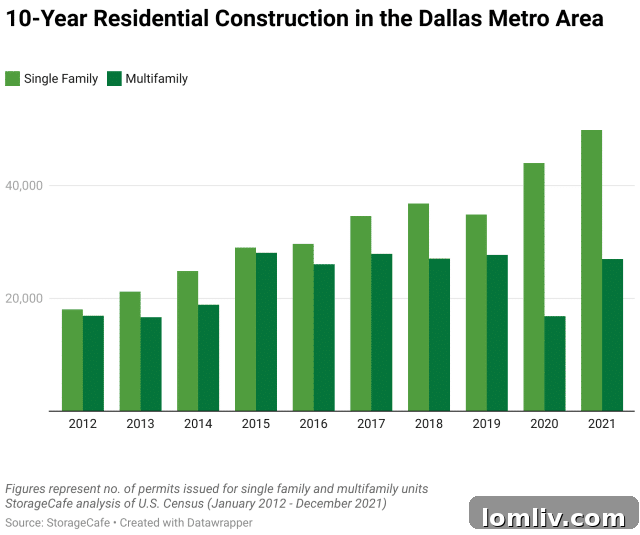
The demand for housing in Dallas-Fort Worth has been nothing short of explosive. Building permits were issued for a staggering 323,250 new single-family homes over the past decade, marking a substantial 59 percent increase. This surge reflects the region’s appeal to families and individuals seeking homeownership, driving development across numerous suburban master-planned communities and contributing to the metroplex’s sprawling footprint.
Equally impressive is the growth in multi-family units, with 233,246 permits issued, representing an astounding 176 percent increase. This segment has been critical in accommodating the rapid influx of new residents, particularly younger professionals and those seeking the convenience and amenities of urban living. While the initial year of the pandemic saw a 40 percent drop in multi-family construction due to economic uncertainties and supply chain disruptions, the market demonstrated incredible resilience, bouncing back strongly in 2021 with almost 27,000 new apartments beginning construction in DFW. This swift recovery underscores the underlying strength and continuous demand within the DFW residential market.
- Commercial Expansion: Fueling Economic Engines
The corporate landscape of DFW has seen monumental growth, directly impacting its commercial real estate sectors:
- Office Space: DFW’s appeal as a corporate relocation hub led to an expansion of office space by an incredible 54,977,882 square feet. This figure places DFW second nationally, trailing only the perennially dominant New York City market. Major corporations, from tech giants to financial services firms, have established or expanded their presence, creating new business districts and revitalizing existing commercial corridors.
- Industrial Space: Reflecting its strategic position as a logistics and distribution nexus, industrial space in DFW ballooned by an astounding 228,119,597 square feet. This expansion is critical for the booming e-commerce sector and supports DFW’s role as a vital link in national and international supply chains. Massive fulfillment centers and logistics parks have reshaped the region’s industrial footprint, leveraging its extensive transportation networks.
- Retail Space: The growth in population and economic activity naturally spurred retail development, adding 47,823,117 square feet of new retail space. This growth caters to the increasing consumer base, supporting everything from large shopping centers to local boutiques and essential services, often integrated into new mixed-use developments that blend living, working, and leisure.
- Self-Storage: A Barometer of Transition and Mobility
The self-storage sector serves as an intriguing barometer of population mobility and economic vitality. Dallas added approximately 23 million square feet of new self-storage space, leading the nation in this category. This significant expansion indicates not just population growth but also the dynamic nature of DFW’s housing market, with residents frequently moving, renovating, or needing temporary storage during transitions.
Understanding the Drivers of Self-Storage Growth in Dynamic Markets
The robust performance of the self-storage sector in DFW is a direct reflection of broader real estate and demographic trends. Doug Ressler, Yardi Matrix’s business intelligence manager, offers crucial insight in the STORAGECafé report: “Self-storage generally follows growth in demand, which is what draws developers to a location.” He further notes, “The new supply pipeline nationally is now at 8.9% of existing stock. Growth has been concentrated in secondary markets across the South, Southwest, and West, especially in Las Vegas, Phoenix, and Dallas, as well as the ‘Acela Corridor’ in the Northeast.”
This analysis highlights several key factors. Firstly, the ongoing population migration from high-cost coastal areas to more affordable and economically vibrant regions in the South and Southwest directly fuels self-storage demand. New residents often require temporary storage during moves or while settling into new homes. Secondly, the robust housing market, characterized by frequent home sales, renovations, and new construction, creates a cyclical need for storage solutions. Lastly, the proliferation of small businesses and startups in DFW also contributes, as entrepreneurs often utilize self-storage for inventory or equipment, reflecting the region’s entrepreneurial spirit.
The Future is Bright for the Dallas-Fort Worth Real Estate Market
The Dallas-Fort Worth Metroplex’s decade of dominance in real estate development is a testament to its powerful economic fundamentals, strategic geographical advantages, and a forward-thinking approach to urban and suburban planning. From its flourishing residential communities to its booming commercial and industrial hubs, DFW has masterfully balanced growth across all sectors, distinguishing itself from other major metros that might specialize in one or two areas.
This comprehensive growth trajectory positions DFW not just as a national leader but as a benchmark for sustainable economic expansion. As businesses continue to relocate, bringing with them a skilled workforce and fostering innovation, the demand for diverse real estate solutions will only intensify. While challenges such as managing infrastructure, maintaining affordability, and ensuring equitable development will undoubtedly arise, the Dallas-Fort Worth Metroplex has demonstrated an unparalleled capacity for adaptation and resilience. Its dynamic real estate market is poised for continued vibrancy, cementing its status as a premier destination for living, working, and investing in America.