LBJ Corridor Rezoning: Community Unites Against Multifamily Apartment Proposals
Urgent Community Meeting: Sunday at 4:30 p.m.
Location: King of Glory Lutheran Church, 6411 Lyndon B Johnson Fwy., Dallas
The future of the bustling LBJ Corridor, a vital artery stretching from Coit to Preston roads in Dallas, is currently at a critical crossroads. A recent series of community meetings, spearheaded by Dallas City Councilwoman Jaynie Schultz, aimed to gather essential input from local residents and homeowners regarding their vision for this significant area, particularly in anticipation of potential rezoning requests. What transpired, however, was a clear and forceful message of opposition to proposed multifamily apartment developments, demonstrating a united front from the community.
The initial gathering, scheduled for a Monday night, barely had the chance to commence before nature intervened dramatically. As residents began to converge, eager to voice their perspectives on the proposed changes, the ominous wail of tornado sirens abruptly cut the meeting short, sending everyone scrambling for safety. This particular neighborhood, unfortunately, is all too familiar with the devastating impact such severe weather can inflict, adding a layer of tension and urgency to the already fraught discussion.
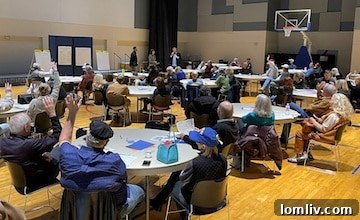
Undeterred by the weather-related interruption, the meeting was promptly re-convened on Tuesday evening, relocating to the more spacious King of Glory Lutheran Church, strategically situated on the north side of the LBJ Freeway. Despite initial jesting among some attendees about the organizers’ supposed gratitude for Monday’s premature adjournment, and musings that a third attempt might deter participation, the turnout was remarkably robust. By my personal count, at least 68 committed residents were in attendance, a testament to the community’s deep engagement and concern regarding the corridor’s future.
The Tuesday session quickly rekindled the heated discussions from the prior evening. Many homeowners expressed renewed skepticism and frustration regarding the necessity of these meetings, questioning the underlying motivations behind the proposed developments. Evelyn Mayo from RAYO, tasked with facilitating the discussion, patiently reiterated the fundamental purpose: to solicit invaluable neighborhood input that would help shape a future development vision for the area. Questions naturally arose concerning the whereabouts of Councilwoman Schultz (who was on vacation in Nova Scotia) and her newly appointed representative to the City Plan Commission, whose absence was also noted.
A key question echoed throughout the room: Who was funding this extensive corridor study? The community clearly felt that understanding the financial backing was crucial to fully grasp the motivations driving these potential changes. We anticipate providing detailed information on this funding in a forthcoming update, recognizing its importance to the residents.
Community’s Unwavering Stance: A Resounding “No” to Multifamily
Following the initial exchanges, the meeting transitioned into a structured round-robin format, encouraging each circular table of participants to discuss and answer specific questions. Residents were asked to articulate what they most LIKED about their area, what they DISLIKED, and, crucially, their aspirations and dreams for the corridor’s future. However, even before these detailed discussions began, a powerful consensus emerged. A simple show of hands made the community’s message unequivocally clear: the proposed multifamily apartments, championed by Miami-based Related Group (RD Investment Properties), were met with an overwhelming “no.” The message was resolute: “no way, Jose” to the high-density apartment complexes.
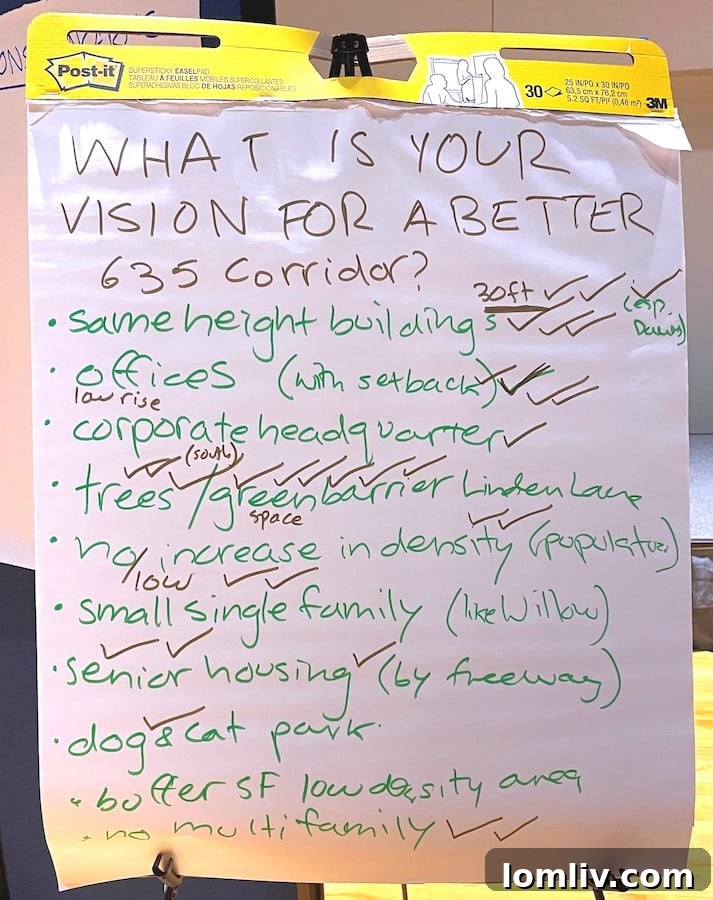
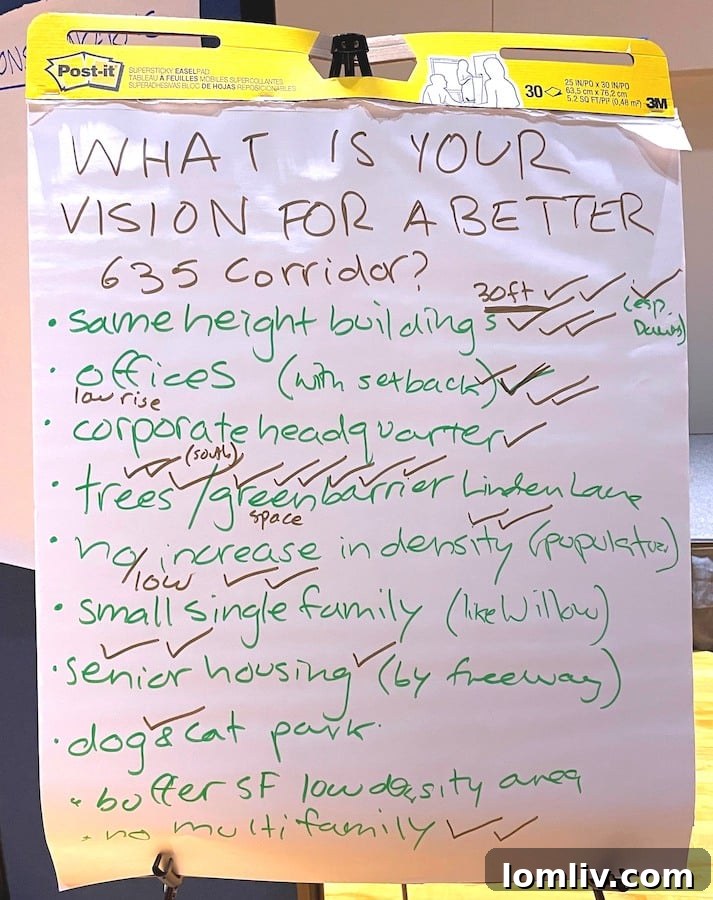
The subsequent exercise, where attendees brainstormed “what I would like to see in the corridor” without budget constraints, led to a fascinating array of creative and community-focused ideas. Among the many suggestions, residents proposed the establishment of a dedicated police substation to enhance public safety, the creation of a new green space akin to a “Clyde Warren Park III,” and the development of specialized dog and cat parks, along with more general park areas. My own contribution to this brainstorm included the innovative concept of transforming an existing, underutilized office building into a museum, dedicated to showcasing the area’s natural creeks and preserving its green spaces for future generations.
Garrette Sherman, a former apartment developer himself and a committed local resident, was a prominent figure at the meeting for the third consecutive time. He diligently distributed information packets to homeowners, arming them with crucial details on how to directly contact the developers and firmly express their disapproval of the apartment proposals. Sherman emphasized the urgent need for decisive action from local leadership.
“What we need, right now,” Sherman passionately articulated, “is for our D11 Councilwoman, Jaynie Schultz, to state clearly – in a formal letter, in an unequivocal email – that she is opposed to apartments, period. That she will not vote to support any apartments at LBJ and Hillcrest now or in the future. It’s truly astonishing that this case remains pending; it was denied by a unanimous staff vote back in December. The community expects a clear stance, not ambiguity.”
Understanding the Regulatory Landscape: Forward Dallas vs. Zoning Law
During the meeting, Evelyn Mayo once again meticulously explained that the city was in the process of re-evaluating and updating the outdated 2006 Forward Dallas Plan. This critical re-evaluation is precisely why Councilmember Schultz initiated the Corridor Study, aiming to align the city’s long-term vision with current realities and community aspirations. However, Sherman was quick to provide a crucial clarification, reminding attendees that Forward Dallas serves as a guide for *land use suggestions* rather than possessing the binding power of *zoning regulations*.
“There is no statutory power behind Forward Dallas,” Sherman asserted, drawing on his extensive experience in property development. “Zoning law is what truly counts and dictates what can be built. Every development proposal must proceed on a case-by-case basis – which is precisely why we demand a concrete pledge from our City Councilwoman regarding the future of zoning in this corridor. Without it, the community remains vulnerable to piecemeal development that contradicts their collective vision.”
The Tangible Impact on Property Values and Community Character
Andrew Cox, a licensed Texas Realtor with a distinctive British accent, who also resides near the beloved Churchill Park, offered a professional assessment of the potential consequences of the proposed rezoning. In his expert opinion, replacing the existing low-slung, two-story office buildings with towering five-story apartment complexes would undoubtedly have a detrimental effect on the property values of his and other nearby homes. This isn’t merely a matter of aesthetics; it’s a direct threat to the financial stability and equity homeowners have built.
“It could strip 30 percent off the market value of my home,” Cox stated emphatically, highlighting the severe financial repercussions. “If this development proceeds as proposed, the developer should be prepared to write me a check for the current market value of my home today, plus an additional 50 percent, and I’ll be gone. That’s the only way to mitigate such a significant loss for homeowners who have invested deeply in this community.” His powerful statement underscored the gravity of the situation for countless residents.
Dallas County’s Population Dynamics: A Warning to City Leaders
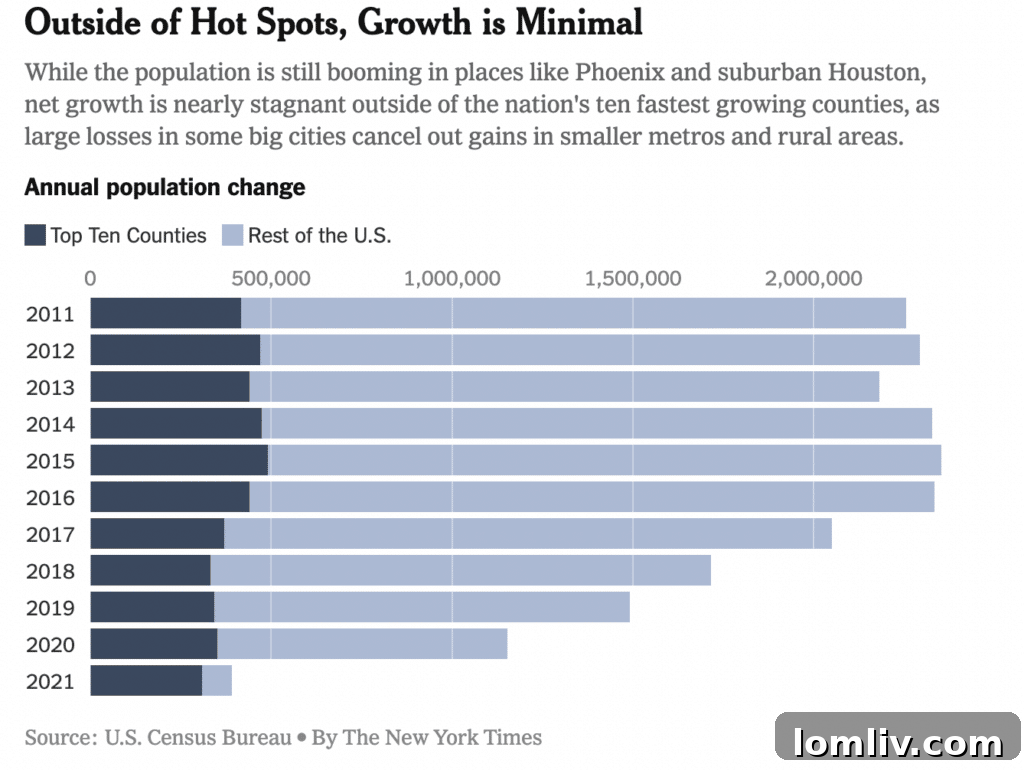
City leaders must pay close attention to recent demographic shifts and census data, which paint a sobering picture for urban centers. According to new Census data, as reported in the New York Times, 2021 marked the slowest year of population growth in U.S. history. A primary contributor to this trend was substantial population loss in some of the nation’s largest and most vibrant cities—a trend that unfortunately includes Dallas County itself.
Further alarming statistics from the Census Bureau reveal that Dallas County experienced a net loss of 25,000 residents between 2020 and 2021. While the broader Dallas-Fort Worth metro area saw impressive growth of nearly 100,000 people (97,290 specifically), much of this expansion occurred in the flourishing suburbs. Dallas County, in stark contrast, actually shed population and has largely stalled in its growth trajectory. This demographic reality poses a critical challenge for urban planning and development strategies.
Given these compelling figures, city leaders would be wise to carefully reconsider the implications of forcefully imposing upzoning for high-density apartments on established neighborhoods. Such actions risk alienating and driving away high-tax-paying property owners, exacerbating the very population decline that the county is striving to reverse. Prioritizing the preservation of neighborhood character and respecting resident input is not just good policy; it’s essential for the long-term vitality and fiscal health of Dallas County.