The Vanishing Grandeur of Old East Dallas: A Call for Historic Preservation
There was a time, not so long ago, when my weekly pilgrimage to Jimmy’s Food Store involved a cherished ritual: a drive past the magnificent old brick mansion at 4901 Live Oak. Living in Junius Heights, the journey for my indulgent cannoli always ended with a sweet return, but the drive itself was punctuated by the enduring beauty of that historic home. It stood as a silent sentinel, a testament to a bygone era, its stately presence as “sweet and perfect” in my mind as the Italian pastry I savored.
It wasn’t just this particular mansion that captured my heart; it was the collective charm of Old East Dallas and its esteemed neighborhoods like Junius Heights. The area boasts an unparalleled collection of historic homes, each with its own story, its unique architectural flourishes. Even those properties showing visible signs of age or minor disrepair contributed to the rich tapestry of the community, fostering a distinctive sense of place that new developments often struggle to replicate. These residences, with their intricate brickwork, expansive porches, and mature landscaping, whispered tales of Dallas’s past, creating an irreplaceable atmosphere.
The Fading Glory: Early Signs of Disrepair and Unfulfilled Hopes
While the mansion at 4901 Live Oak exuded undeniable grandeur, it was not immune to the relentless march of time. Around its edges, the patina of age was becoming more pronounced. I recall numerous occasions noticing areas on the expansive porch that seemed to cry out for urgent structural attention, and the roof, a critical component of any historical structure, had clearly seen better days, showing wear that suggested a need for significant repair. Despite these visible signs of deterioration, I held a deep conviction that a building of such historic significance and architectural magnificence would surely command the attention it deserved. I believed implicitly that the next owner, understanding its inherent value, would undertake the necessary historic preservation efforts, ensuring its continued existence for generations to come. The thought that such a landmark could simply vanish never truly entered my mind; surely, I thought, this building was here to stay.
My perspective shifted somewhat after moving to Casa View in 2007. The weekly cannoli runs, a delightful ritual of my Junius Heights days, ceased with our relocation to the “other side” of White Rock Lake. Gradually, the image of that old red brick house began to recede into the corners of my memory, collecting mental cobwebs alongside forgotten jingles and childhood rhymes. Years passed, and the immediate presence of the mansion faded, though its profound beauty remained a cherished, if distant, memory. It was with immense joy and renewed enthusiasm, therefore, that I heard the news: the venerable home at 4901 Live Oak was slated to be transformed into a chic wedding venue. My heart swelled with relief and elation. Finally, I thought, someone with vision and resources was going to give that magnificent old mansion the meticulous attention and loving restoration it had long deserved, breathing new life into its historic walls and ensuring its future.
A Glimmer of Hope Dimmed: Community Roadblocks and Developer’s Shadow
However, my profound sense of relief was tragically short-lived, quickly giving way to a gnawing frustration. To my dismay, the ambitious plans to revitalize the mansion as a vibrant wedding venue were effectively blocked by local opposition. It seemed that despite the potential for renewed life and purpose for the historic structure, the project faced insurmountable hurdles from within the community. The owner, Adam Rico, articulated the disheartening reality of the situation:
“We’re new at this and this seems like it’s a big headache and a really political situation that we didn’t want to get involved in,” said Adam Rico, the owner of 4901 Live Oak. “We’re not going to appeal. We’ll probably just sell the property to whoever wants and it will probably be a developer who will probably tear it down.”
Mr. Rico’s words proved tragically prophetic. Disheartened by the protracted struggle and the unexpected local resistance, the owners’ dreams for the property were ultimately dashed. The beautiful vision of a revitalized Dallas architectural heritage landmark serving a new generation of celebrations crumbled. Faced with what felt like an unwinnable battle against bureaucratic complexities and neighborhood concerns, they made the difficult decision to sell the property. In a twist of cruel irony, the very outcome they had feared—the demolition of the historic structure—became almost inevitable.
The Inevitable Fall: When History Yields to Modern Development
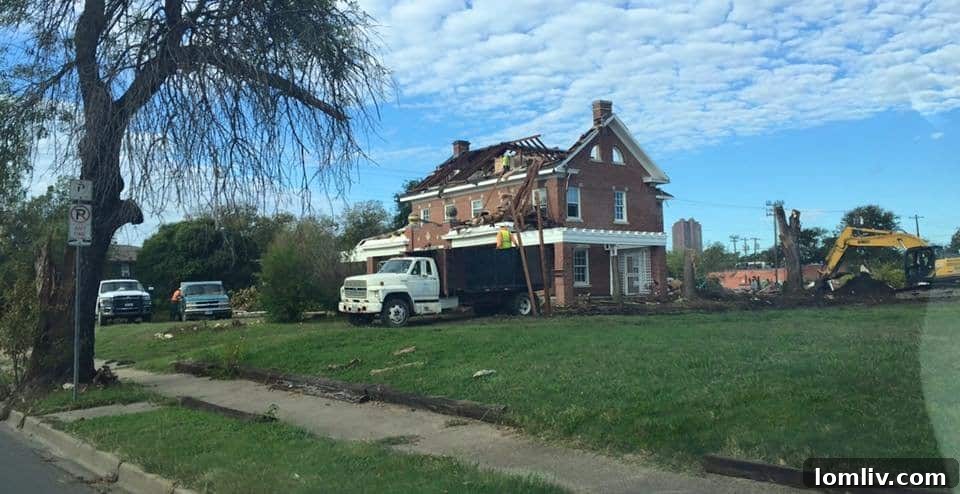
True to Adam Rico’s prediction, the property was acquired by an investor, marking the beginning of the end for the grand mansion. What followed was a period of disheartening neglect. The once proud home, now devoid of a clear purpose or vigilant ownership, became increasingly vulnerable. It wasn’t long before the property became open and accessible, eventually attracting squatters who took up residence, leaving the once pristine lot strewn with trash and further accelerating its decline. This unfortunate turn of events not only defaced the property but also made it an unwelcome presence in the neighborhood, ironically fueling arguments for its removal. As its condition deteriorated, whispers began to circulate about the investor’s plans. It became clear that the owner intended to leverage the existing MF-2 (Multi-Family 2) zoning. This particular zoning regulation, designed for higher-density residential development, offered a straightforward path to an economically lucrative outcome: the complete demolition of the existing historic home to make way for new construction. Despite increasing awareness and the efforts of some advocates, the legal framework allowed for the house to be completely razed, with little to no recourse for those who valued its legacy.
And so, it happened. In the place of that irreplaceable grand old mansion, with its unique character and deep connection to Dallas’s past, now stand contemporary townhomes. These structures, while functional and new, bear a striking resemblance to countless other developments that have sprung up across the city over the last decade. They are efficient, modern, and utterly devoid of the history, the artistry, and the distinct personality that defined the original home. The intricate brickwork, the soaring ceilings, the bespoke details, and the very soul of that property are now irrevocably lost, replaced by a uniformity that, while perhaps practical, leaves a gaping void in the architectural heritage of Live Oak Street and Old East Dallas. The demolition of 4901 Live Oak serves as a poignant, stark reminder of the constant tension between modern urban development and the preservation of invaluable historical assets.
The Broader Context: Why Historic Preservation Matters
The year 2015, which saw the demise of the Live Oak mansion, was also notably the year that Preservation Dallas launched its “Most Endangered Historic Places” list. It is, undeniably, a profound tragedy that a vibrant city like ours would even necessitate a list dedicated to drawing attention to its most vulnerable historic and architecturally significant buildings – structures that face the imminent threat of demolition or irreparable alteration. However, this grim necessity also presents a crucial opportunity: an organized platform for community advocacy, heightened public awareness, and concerted action. The majestic red-brick mansion at 4901 Live Oak was unequivocally worthy of saving, a true gem of Dallas architecture. Yet, its fate underscores a critical question: how can we effectively preserve a building if we, as a community, remain unaware that it is at risk? How can we mobilize to protect our past if we don’t know which parts are on the brink of being erased?
The value of historic preservation extends far beyond mere sentimentality. It is about safeguarding our collective cultural heritage, maintaining tangible links to the past that inform our present and inspire our future. These buildings are not just bricks and mortar; they embody generations of craftsmanship, architectural innovation, and the stories of the people who lived and worked within their walls. When a historic structure is lost, it’s not merely a building that disappears; it’s a piece of our shared identity, a chapter of our city’s narrative, and a unique aesthetic contribution that cannot be replicated by modern construction methods. The generic townhomes that replaced the Live Oak mansion, while perhaps addressing housing needs, simply cannot offer the same depth of character, historical resonance, or aesthetic beauty.
The Silent Threats: Understanding the Challenges to Our Architectural Legacy
The story of 4901 Live Oak is a microcosm of the complex challenges facing historic homes and districts across Dallas and beyond. One primary obstacle is often the lack of adequate protective ordinances. Many significant buildings, though old and beautiful, may not have formal historic landmark status, leaving them vulnerable to market forces and the whims of new owners or developers. Economic pressures play a massive role; in a booming city like Dallas, land values soar, making it incredibly attractive for developers to demolish older, lower-density structures to build larger, more profitable multi-family units. The cost of maintaining and renovating an old home can also be a significant burden for individual owners, especially when compared to the perceived ease and lower initial cost of new construction.
Furthermore, public awareness often lags behind the threat. Many residents only learn of a proposed demolition when it’s too late to intervene effectively. The very zoning regulations intended to manage urban growth can, ironically, facilitate destruction when they permit higher densities without specific clauses for historic protection. The experience of the wedding venue proposal, where community opposition inadvertently cleared the path for demolition, highlights another delicate balance: the tension between new uses for historic properties and the concerns of existing neighbors. While preservation aims to keep history alive, finding sustainable new purposes that are both economically viable and community-accepted remains a significant hurdle. These layers of challenge mean that truly effective historic preservation requires a multi-pronged approach involving legislation, financial incentives, and robust community advocacy.
A Call to Action: Protecting Our Most Endangered Historic Places
The unfortunate fate of the grand dame on Live Oak Street stands as a stark and urgent reminder of what we risk losing if we remain complacent. Every architectural treasure, every historic home, contributes to the unique soul of our city. Once a building like the 4901 Live Oak mansion is gone, it is lost forever, taking with it irreplaceable elements of our history, craftsmanship, and local identity. The mission of Preservation Dallas and its “Most Endangered Historic Places” list is not merely to mourn losses but to proactively prevent them. It serves as a vital alarm bell, drawing critical attention to properties that desperately need protection before they face the wrecking ball. This initiative empowers individuals and communities to act, to speak up, and to become stewards of our architectural legacy.
Do you know of a property, a hidden gem, or a beloved landmark in Dallas that could tragically meet the same fate as that magnificent brick mansion on Live Oak? A structure whose history, architecture, or cultural significance makes it indispensable to our city? Today marks your last opportunity to nominate it for the Preservation Dallas Most Endangered Historic Places list for 2021. This is not just a nomination; it’s an act of safeguarding our past for the benefit of our future. By participating, you contribute directly to an essential cause, ensuring that these vital pieces of our heritage receive the attention and protection they deserve before it’s too late. To explore previous years’ lists and understand the impact of this crucial program, please click here.
Your involvement is critical. Don’t let another piece of Dallas history vanish without a fight. To nominate a property and join the effort to protect our city’s invaluable architectural legacy, please click here. Let us collectively ensure that the stories etched in the bricks and beams of our historic buildings continue to inspire and endure.