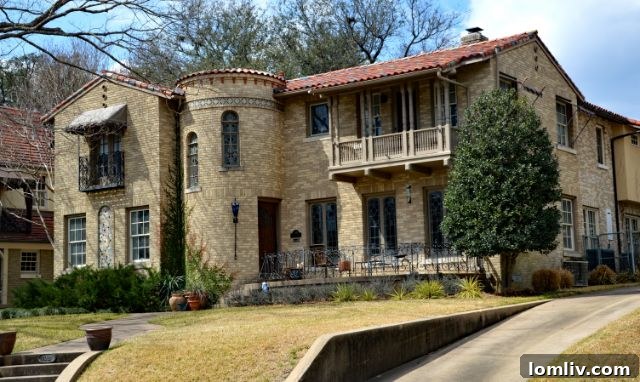
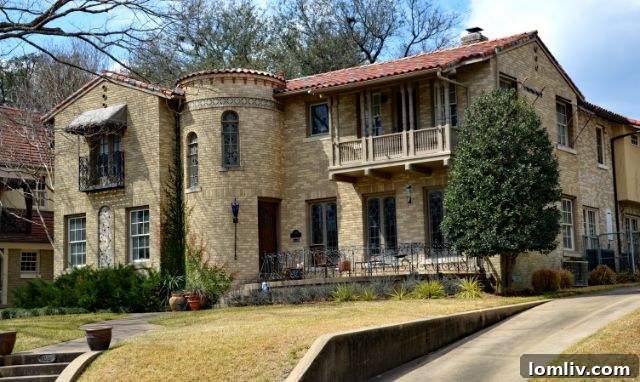
Dallas boasts an extraordinary collection of architecturally significant homes, a testament to its rich history and visionary builders. Among these, the distinctive designs of **Charles Dilbeck** and **Clifford Hutsell** stand out, forming one of the nation’s most impressive assemblages of their work. Yet, despite their profound historical and aesthetic value, these treasured properties often remain vulnerable to modern development pressures. The paradox is stark: we possess an invaluable architectural legacy, but struggle to safeguard it effectively.
The inherent value of these homes lies profoundly in the preservation of their original exteriors. Any alteration, such as a repaint that deviates from historical accuracy or a renovation that compromises original features, can drastically diminish their market value and historical integrity. It is this understanding that fuels the critical efforts to expand the **Lakewood Conservation District (LCD)**. The progress on this vital initiative brings a renewed sense of hope for the future of these irreplaceable structures. Recently, Summer Loveland provided an encouraging update on the Lakewood Conservation District expansion process.
“We are eagerly awaiting the verification of signatures, a crucial step we anticipate completing by the end of July,” Loveland explained. “The $2,400 application fee has been paid, thanks in large part to the generous contributions of our neighbors, who covered approximately half of the cost. The next phase involves the City scheduling ten public meetings, which are expected to commence in late August. These meetings will be instrumental in engaging the community and moving the process forward.” This collaborative effort underscores the community’s deep commitment to preserving its unique architectural heritage.
Many assume that the stunning, eclectic homes designed by the celebrated Charles Dilbeck and Clifford Hutsell in Dallas, particularly within the historic Lakewood neighborhood, are already under comprehensive protection. The reality, however, is often a surprising revelation: a significant number of these architectural treasures lack the formal safeguards necessary for their long-term survival. This lack of robust protection leaves them susceptible to demolition or inappropriate renovations, a shocking truth for those who cherish Dallas’s unique built environment.
Lakewood: A Dallas Neighborhood Rich in Architectural Legacies
The story of Lakewood’s architectural splendor began in the 1920s when visionary developers Albert Dines and Lee R. Kraft acquired 184 sprawling acres surrounding what is now the prestigious Lakewood Country Club. Their ambition was to create one of Dallas’s most beautiful and architecturally diverse residential enclaves. They succeeded spectacularly, attracting a roster of prominent architects whose designs continue to define the neighborhood’s character today.
Beyond Dilbeck and Hutsell, other renowned architects like O’Neil Ford, celebrated for his Texas Modernist contributions; Arch Swank, known for his modernist and contemporary designs; and David O. Williams, whose works often blended traditional elements with modern sensibilities, all left an indelible mark on Lakewood. The neighborhood is a veritable architectural museum, showcasing an impressive array of styles. Here, one can discover everything from stately classic Colonials, exuding timeless elegance; to practical yet charming Prairie-Four Squares, reflecting early 20th-century American design; and the highly sought-after Spanish Eclectic styles, characterized by their vibrant charm and historical authenticity. Among these diverse forms, the historic Dilbecks and Hutsells consistently rank as the most coveted, representing the pinnacle of architectural artistry and historical significance within the community.
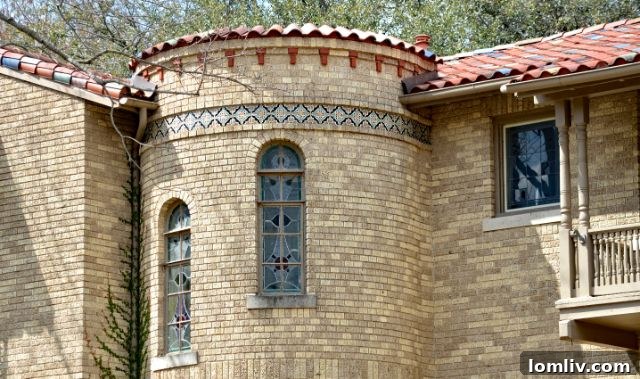
Uncovering Lakewood’s Gold Mine of Dilbeck and Hutsell Designs
Identifying a Clifford Hutsell-designed home is often a delightful exercise, as his signature style is quite distinct and whimsical. Homebuyers and architecture enthusiasts can easily spot a Hutsell by its characteristic clay tile roofs, often intricately crafted; the ornate ironwork adorning balconies and windows; the detailed tile work that adds splashes of color and texture; and an overall sense of playful artistry that imbues his creations with immediate charm and personality. These elements combine to create homes that are not just structures but works of art, full of individuality and historical flair.
Charles Dilbeck, on the other hand, presents a fascinating challenge for architectural historians and preservationists. Unlike Hutsell, Dilbeck famously favored no single architectural style, embracing a wide range of influences from French Provincial to Colonial Revival, and even rustic ranch styles. This stylistic versatility, while showcasing his remarkable adaptability and creativity, is precisely why identifying some of his homes can be difficult. Without a singular, easily recognizable motif, verifying a Dilbeck often requires extensive research and expert knowledge. The complexity of his body of work makes robust documentation and preservation efforts all the more crucial.
For years, Willis Winters, former Dallas Parks and Recreation Director and a respected preservationist, has dedicated his efforts to meticulously tracking down and authenticating these elusive Dilbeck homes. His tireless work is culminating in the definitive book on Dilbeck, a highly anticipated publication that promises to shed new light on the architect’s extensive legacy and provide invaluable resources for future preservation. I recently had the opportunity to speak with Mr. Winters, gaining his invaluable perspective on the current deficiencies in protecting these architectural treasures.
“Lakewood, unlike many other residential neighborhoods throughout Dallas and the Park Cities, remains remarkably intact,” Winters observed, highlighting a rare opportunity. “There is still a significant window to preserve its rich history and safeguard its unique architectural legacy. As a former Lakewood resident whose own historic home was tragically demolished, I unequivocally support expanding the boundaries of the Conservation District. This expansion is essential, as it will encompass many significant residences that demand immediate and lasting preservation to protect the character of our community for generations to come.” His personal experience underscores the urgency and emotional weight behind these preservation efforts.
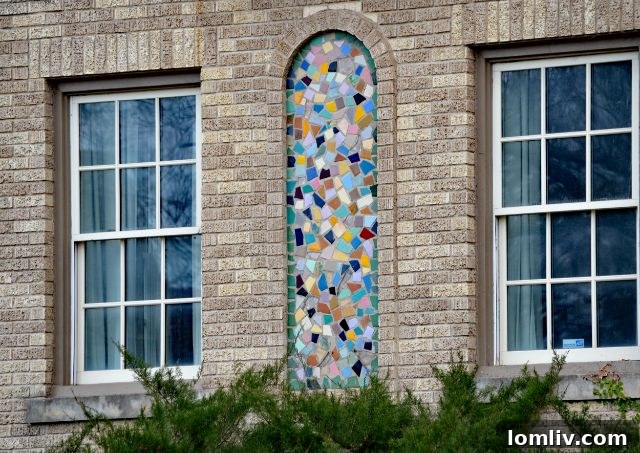
Saving an Intact Neighborhood: The Lakewood Conservation District Expansion Initiative
It is often easy to feel powerless in the face of widespread development, to “sit back and wring your hands” as the saying goes. However, history continually reminds us that significant change often begins with the passion and determination of just one individual. In Lakewood, this catalyst for change emerged in the form of resident Summer Loveland, who decided to proactively address the pressing lack of protection for the neighborhood’s invaluable historic homes, particularly those designed by Hutsell and Dilbeck.
“The turning point for me was seeing a Hutsell home down the street with a ‘for sale’ sign last May,” Loveland recounted, recalling the moment her advocacy began. “It was situated on a prominent corner lot, and I was genuinely worried someone would acquire it with the intention of tearing it down for new construction. That concern prompted me to contact the city immediately to explore how we could expand the existing conservation process in Lakewood and prevent such losses.” Loveland’s initiative highlights the critical role of grassroots action in safeguarding community heritage.
Loveland’s prior experience proved invaluable, as she had been actively involved in the successful formation of the Belmont Conservation District several years ago. This firsthand knowledge equipped her with a deep understanding of the intricate challenges and procedural complexities inherent in establishing and expanding conservation districts within Dallas.
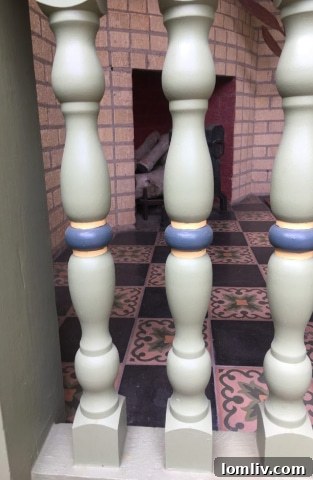
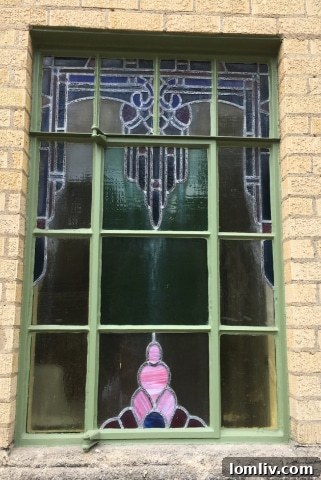
“The original Lakewood was established as Dallas’s second Conservation District back in 1988, but its protection only extended to homes situated between Abrams and Brendenwood,” Loveland explained, highlighting a critical gap. “Remarkably, there isn’t a single Clifford Hutsell-designed home within that currently protected zone, despite the fact that nearly 50 such properties exist in the broader Lakewood area, all presently unprotected. The proposed expansion area is specifically designed to encompass all of these invaluable Hutsell residences, finally bringing them under the umbrella of preservation. When I began discussing this initiative with my neighbors, I was incredibly encouraged to find a widespread interest and strong support for safeguarding our shared architectural heritage.”
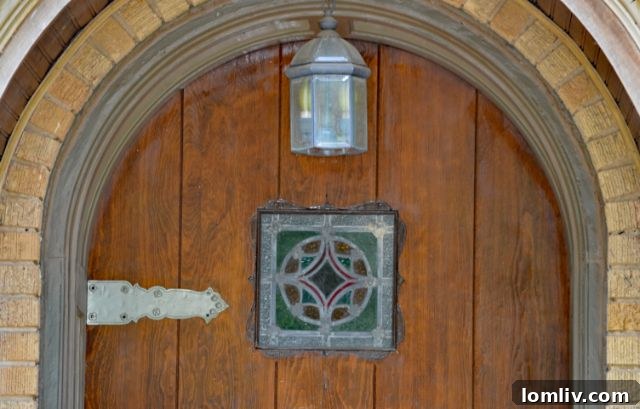
The journey to preserve historic properties often requires a collective effort, truly taking “a village” to succeed. Recognizing this, Loveland reached out to Willis Winters to ensure a comprehensive and accurate inventory of these historic properties could be compiled, providing a solid foundation for the preservation effort. Armed with this crucial data, she then dedicated herself to rallying community support, a vital step in any successful grassroots initiative. The city’s regulations require a committee of ten dedicated individuals to formally advance the proposal. Loveland quickly identified neighbors who were deeply invested in the mission, forming a robust and committed team. To the pleasant surprise of many, the process has moved forward with remarkable speed, reflecting the strong community consensus and organizational efficiency.
The formal request to determine the eligibility of the proposed expansion area was submitted and has since undergone thorough review by the city’s planning department. Loveland anticipates receiving official approval of eligibility in April, a pivotal milestone. Once eligibility is confirmed, the city is mandated to provide the neighborhood committee with official petitions within a two-week timeframe. The next significant hurdle involves securing signatures from 58 percent of the affected neighbors, indicating their agreement and support for the expansion. This stage requires extensive community engagement, door-to-door advocacy, and clear communication about the benefits of a Conservation District. Following the successful collection of signatures, the city will then schedule a public meeting, allowing for further community input and discussion before the proposal moves to the final stages of approval by the City Council.
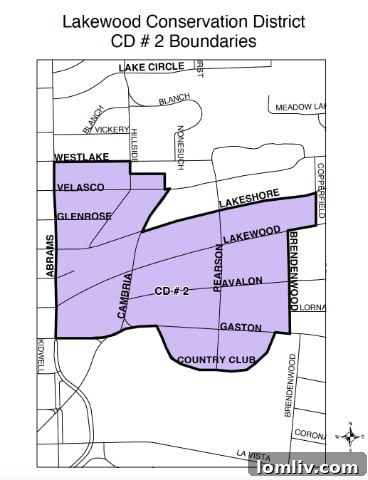
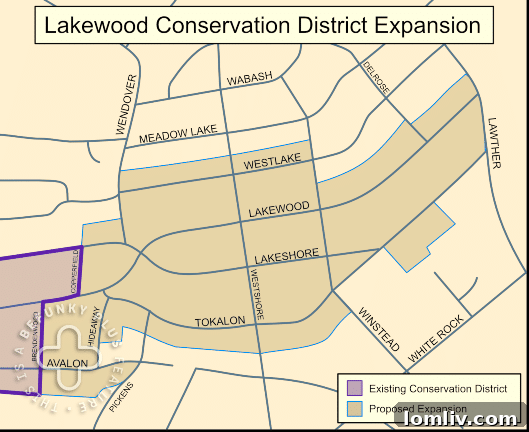
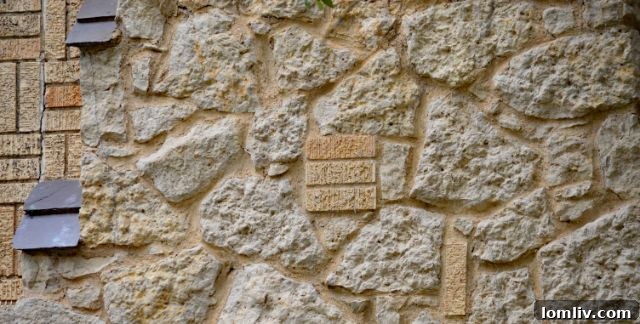
In our ongoing endeavors to preserve the invaluable historic homes and buildings across Dallas, the journey often feels like taking “one step forward and two steps back.” The fundamental concepts of preservation, conservation, and adaptive reuse—which emphasize the enduring value and potential of existing structures—are, regrettably, not always priorities within the lexicon of many developers. For them, profit often remains the sole, overriding driver, making it challenging to grasp and appreciate value that extends beyond immediate financial returns. This often leads to a disconnect between economic incentives and cultural stewardship. Furthermore, homeowners, while often well-intentioned, are regrettably either uneducated about the benefits of preservation or misinformed about the potential for their properties within a conservation framework, inadvertently contributing to the erosion of historic fabric.
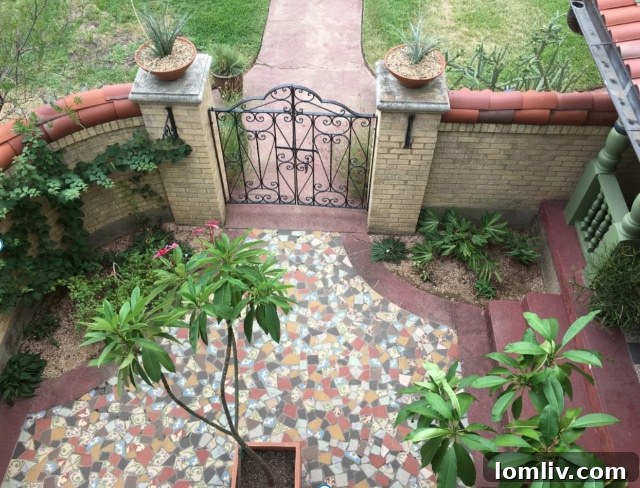
The dire consequences of unchecked development are starkly visible in other prestigious Dallas areas. Highland Park, for instance, is currently undergoing an intensive period of reconstruction, effectively transforming much of its historic character into a continuous construction zone. If current trends persist, little to no original history will remain in just a few short years. A chilling statistic reveals the extent of this loss: fifty of the original homes prominently featured in Great American Suburbs: The Homes of the Park Cities, Dallas have already been demolished. These weren’t just any homes; they included iconic estates like the grand Carey Estate and the legendary Old Alice, residences once owned by the very visionaries and pioneers who laid the foundations of our city. Once these irreplaceable structures are gone, their intricate stories fade into obscurity, and with them, an invaluable piece of our collective history is irrevocably lost, leaving future generations with a diminished understanding of their heritage.
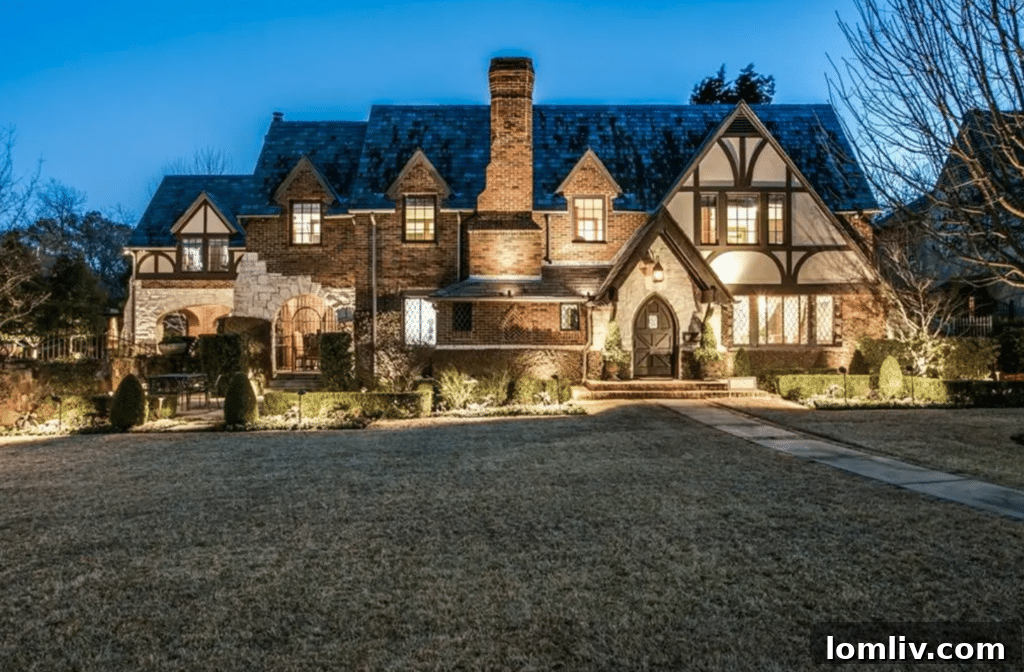
As the daily attrition of Dallas’s historic properties continues, leading to an ever-dwindling inventory, the urgency of preservation becomes increasingly clear. In this critical landscape, Lakewood stands out as a beacon of hope and an example of enlightened community action. Unlike many other areas struggling with the balance between progress and preservation, Lakewood appears to possess a profound and collective understanding of the intrinsic value that preservation brings—not just to individual properties, but to the entire fabric and character of the neighborhood. This proactive stance and deep appreciation for its architectural heritage make Lakewood a shining model for how communities can actively safeguard their past while shaping a vibrant future.
Bravo to the residents of Lakewood for their dedication and foresight!
For those seeking more comprehensive information on the proposed expansion of the Lakewood Conservation District and a detailed list of facts regarding Conservation Districts in general, please click on the provided PDF flyer. Your engagement and understanding are vital to these ongoing preservation efforts.