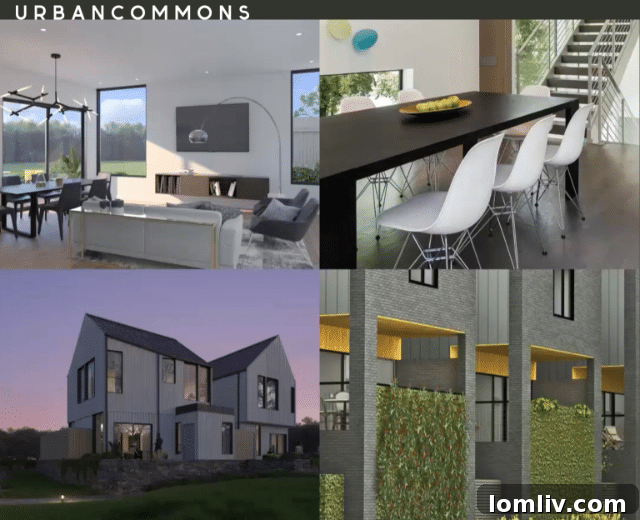
In the vibrant heart of Northeast Dallas, a groundbreaking vision for modern urban living is taking shape: **Urban Commons in Lake Highlands**. Led by acclaimed developer Diane Cheatham, renowned for her award-winning Urban Reserve project, this new community challenges conventional housing models. Situated strategically near LBJ and Abrams Road, Urban Commons is more than just a collection of homes; it’s a meticulously designed, low-impact sustainable community crafted with an unwavering commitment to high design and a strong sense of collective belonging. Diane Cheatham openly acknowledges that this unique development isn’t intended for everyone, but rather for a discerning group of homeowners who prioritize thoughtful design, environmental consciousness, and genuine community engagement within the bustling Dallas landscape.
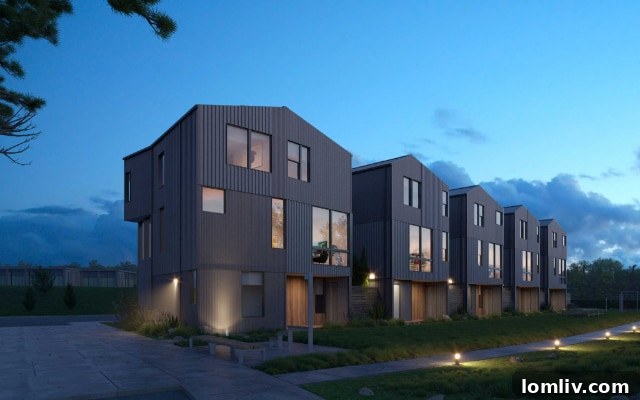
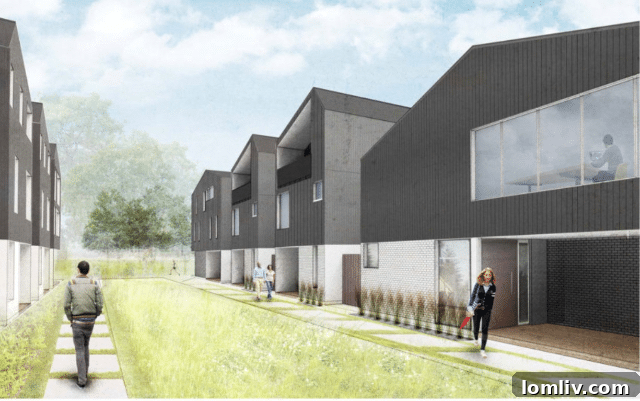
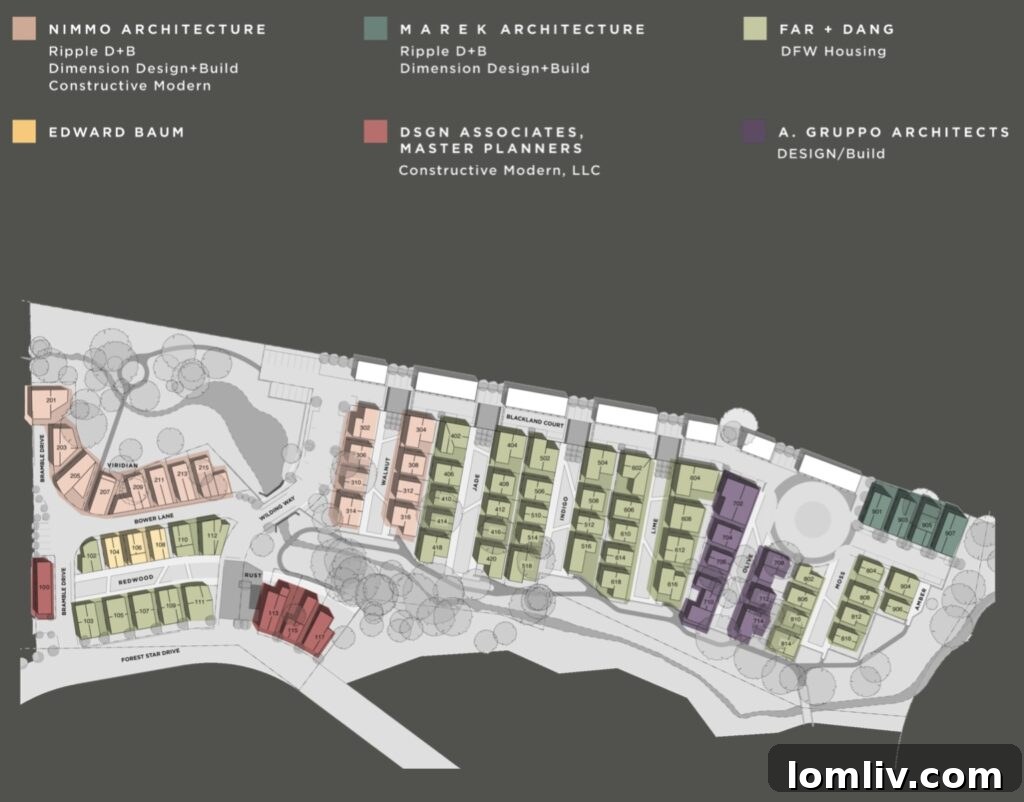
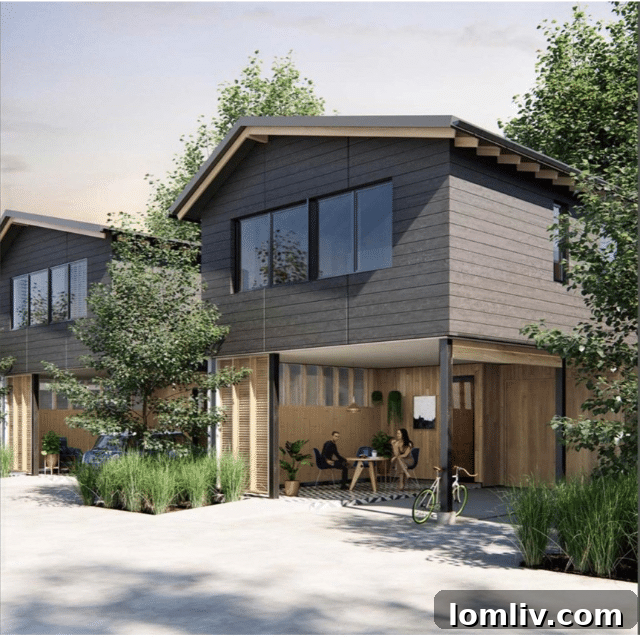
Cheatham has brought together an extraordinary ensemble of architectural talent and master planners to bring the Urban Commons vision to life. This innovative community will feature 83 distinctive single-family homes, each contributing to a cohesive yet individually expressive aesthetic. Among the notable contributors are Bang Dang and Rizwan Faruqui of the renowned firm Far+Dang, who are spearheading the design of 46 homes within the development. Visitors entering Urban Commons from Forest Star Drive, conveniently located off the LBJ access road behind an existing self-storage facility, are immediately greeted by a striking row of five Far+Dang-designed homes. These boxy, contemporary residences offer a compelling first glimpse into the architectural character of the community, setting a high standard for modern aesthetics. Construction at 130 Winding Way is well underway, with the initial phase of homes rapidly nearing completion, signaling the imminent realization of this ambitious project aimed at redefining residential living in Lake Highlands.
Daltxrealestate.com recently had the privilege of sitting down with Diane Cheatham to delve deeper into the philosophy, design, and unique offerings of the Urban Commons project, gaining insights directly from the visionary behind this pioneering development and its potential impact on Lake Highlands real estate.
Unpacking the ‘Commons-Based’ Concept: A Nod to the Dutch Woonerf
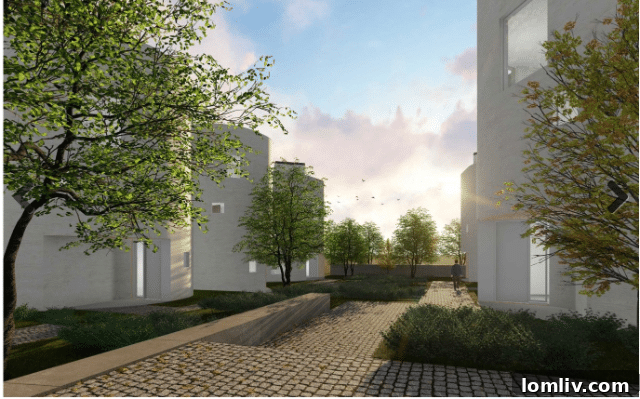
When asked to elaborate on the core principle of Urban Commons, Diane Cheatham articulated its foundation as a “commons-based master plan,” drawing significant inspiration from the Dutch Woonerf concept. This innovative approach redefines residential living by placing shared spaces at the forefront, fostering interaction and connectivity among residents. Cheatham explained, “A commons community is characterized by homes that gracefully front a dedicated common area, rather than a traditional street or individual backyard. In Urban Commons, our common areas are a generous 40 feet wide, meticulously designed to be inviting hubs for social interaction. Imagine tranquil picnic tables, comfortable seating, and beautifully landscaped zones where neighbors can gather, converse, and truly connect.” She emphasized the project’s dedication to this ideal, noting, “Crucially, we’ve allocated more land to these expansive common areas than we have to individual home lots, underscoring our commitment to collective well-being and green space for all residents.” To further enhance this sense of shared identity and place-making, each cluster of homes within the development will be designated as a ‘commons’ and thoughtfully named after a vibrant color found in nature, such as Walnut, Redwood, Rust, and Olive, creating a unique and organic sense of neighborhood within the larger community of Lake Highlands.
Innovative Home Design and Smart Lot Utilization for Modern Living
The homes at Urban Commons are a testament to innovative urban planning, offering single-family living on what Cheatham describes as “townhome-sized lots.” This smart use of space incorporates a zero lot line design, maximizing living areas while minimizing individual private yard maintenance, perfectly aligning with a low-impact and sustainable lifestyle. The residences themselves span a broad range of sizes, from efficient 1,000 square feet to more expansive 2,800 square feet, catering to diverse needs and preferences within the modern urban demographic. “Our aim was to create homes that feel spacious and connected to the outdoors, despite their smaller footprint, embracing modern living principles,” Cheatham explained. Parking solutions have also been thoughtfully integrated into the community’s design philosophy. Homes directly facing the traditional street access feature convenient attached garages, offering direct entry. For other homes, residents benefit from well-designed surface parking options or the unique flexibility to rent a detached garage. This varied approach to parking underscores the project’s emphasis on community-centric design, where cars are intentionally de-emphasized in favor of pedestrian-friendly common areas, promoting walkability in Lake Highlands.
Rethinking Parking: The Detached Garage Advantage for Affordability and Community
One of the more innovative aspects of Urban Commons is its progressive approach to parking, particularly the option for detached garages. Cheatham clarified, “Homeowners have the choice to rent a conveniently located detached garage for a modest fee of just $75 a month.” This ingenious model serves multiple purposes, aligning with the project’s sustainable and community-focused ethos. “And that’s truly one of the cool parts of this whole development,” she added with enthusiasm. The revenue generated from these garage rentals plays a crucial role in offsetting other operational costs for the community. As a result, the projected homeowners’ association (HOA) fee for Urban Commons is remarkably low, anticipated to be only $30 a month. This significant reduction in monthly expenses makes high-design, sustainable living more accessible and attractive in the Dallas market, demonstrating how innovative planning can directly benefit residents’ financial well-being while promoting a unique communal lifestyle where resources are shared efficiently.
Embracing a Car-Lite Lifestyle: A Vision for Deep Community Connection in Dallas
When probed about potential buyer apprehension regarding the parking arrangements, especially the absence of an attached garage for some homes, Cheatham offered a candid yet passionate defense of the Urban Commons philosophy. “It’s true that half of our homes will come with attached garages, catering to those who prefer that convenience,” she noted. “However, for the other half, my challenge to potential residents is: ‘Why do you want your car to dictate your life and your living space?'” This question lies at the heart of the Urban Commons concept, promoting a pedestrian-friendly environment. Cheatham’s vision is to foster a community where interactions happen naturally and frequently, unhindered by the dominance of automobiles. “This community is fundamentally about celebrating common spaces,” she emphasized. “It’s about the joy of parking your car, stepping out, and immediately being present with your neighbors in a beautifully designed shared environment. When you create a development that genuinely caters to the activities and values residents cherish, it profoundly connects people.” She continued, “We’re attracting individuals who are specifically interested in low-impact living, stunning modern architecture, and vibrant common spaces in Dallas. This approach cultivates a genuinely connected community, and it’s going to be incredibly rewarding to witness those connections flourish.” Cheatham readily acknowledged, however, that this innovative approach isn’t universally appealing. “But yes,” she conceded, “there will inevitably be people who firmly believe there’s no way they would ever purchase a home without an attached garage. And that’s perfectly fine; Urban Commons is designed for a particular mindset and those seeking a truly unique urban experience.”
Navigating the Dynamic Dallas Real Estate Market: Pricing at Urban Commons
The price ranges for Urban Commons homes, displayed on the project’s website from $300,000 to $800,000, reflect the diverse offerings and the dynamic nature of the Dallas real estate market. Diane Cheatham, with her four decades of experience in development, offered a pragmatic perspective on current market trends. “Shelby,” she addressed the interviewer, “I’ve been immersed in this industry for 40 years, and I can genuinely say I’ve never witnessed prices fluctuate and escalate quite like they do today. Construction costs, material expenses, and demand are all continuously on the rise, impacting modern housing developments across the board.” She provided a specific example of this trend, highlighting the value proposition of the development: “On the far end of the neighborhood, a thoughtfully designed 1,200 square foot home, infused with our unique modern aesthetic and sustainable features, is currently priced around $500,000.” This pricing, while reflective of the broader market and inflationary pressures, also underscores the premium placed on the cutting-edge design, sustainable elements, exceptional architecture, and unparalleled community amenities offered within Urban Commons, making it a compelling investment in Lake Highlands real estate.
Architectural Harmony: A Cohesive Modern Aesthetic for Urban Commons
Comparing Urban Commons to Cheatham’s previous acclaimed project, Urban Reserve, which is celebrated for its highly cohesive architectural look, the question arose about the materials and design choices for this new development. Cheatham elaborated on how a unified aesthetic is achieved while allowing for individual architectural expression. “Our material palette is deliberately refined and minimalist,” she explained. “Homes will predominantly feature white, dark gray, or light gray exteriors, complemented by distinctive sloping metal roofs. The aim is to create a sense of harmony across the entire community, ensuring every structure feels integrated into the overall design language.” She humorously added, “For each of the individual ‘commons’ within the development, the homes are designed to look like ‘kissin’ cousins’—distinct enough to have their own character, but clearly part of the same modern architectural family.” This thoughtful approach ensures visual consistency without sacrificing the unique flair brought by different architects. Beyond the architectural elements, Cheatham also shared a personal touch regarding community identity: “For all my projects, I’ve always implemented executive numbering, like ‘310, 316, 302,’ rather than those generic, long five-digit addresses. This allows residents to easily identify with their home and ‘commons,’ saying things like, ‘I’m Diane, I’m in Walnut 316,’ which fosters a deeper sense of belonging and personalized identity within the Urban Commons community.”
The Nuances of Ultra-Modern and Unique Aesthetics in Urban Commons
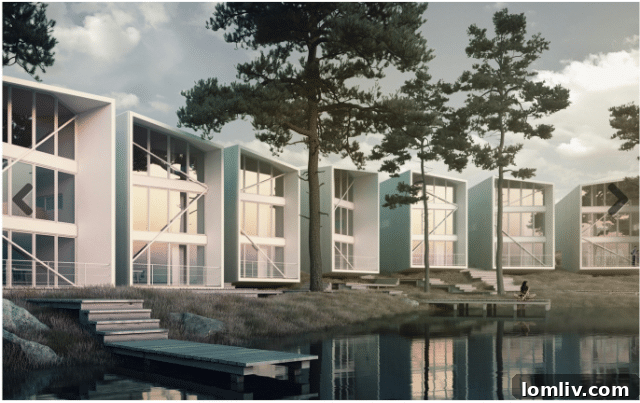
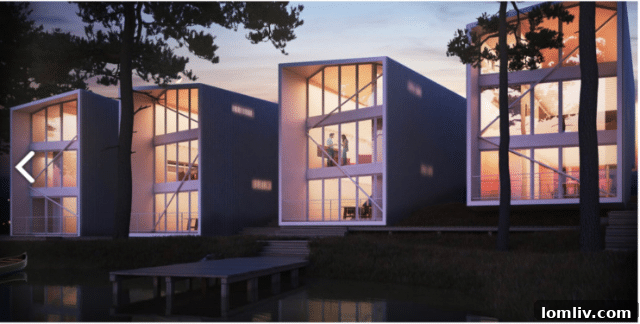
Renderings of Urban Commons consistently portray an aesthetic that is both ultra-modern and undeniably unique, prompting further discussion on its distinctive visual appeal. Cheatham elaborated on the intentional design strategies employed to achieve this cohesive yet varied look. “When you’re working with modern houses, there’s a vital need to ensure the homes feel intrinsically connected and pulled together,” she explained. “Modern architecture, by its very nature, encompasses a vast spectrum of different looks and styles within that overarching category. To bridge this diversity and create a unified visual language, we carefully selected similar core materials and a consistent color palette that are applied across the various ‘commons’.” This thoughtful material selection acts as a unifying thread, allowing each architect’s unique vision to shine while still contributing to the overall harmony of the development. Cheatham also highlighted the transformative power of nature in the final aesthetic: “Once the extensive landscaping, particularly the array of trees, reaches maturity, the individual houses will blend seamlessly into their surroundings. You won’t perceive them as isolated structures as much. Landscaping, in this context, makes an absolutely monumental difference in creating a soft, integrated, and visually rich environment that complements the high-design architecture of Urban Commons.”
Curating Excellence: The Selection of Esteemed Architects for a Visionary Dallas Project
The caliber of architects involved in Urban Commons is a testament to Diane Cheatham’s commitment to design excellence and her extensive network within the architectural community. She revealed the collaborative spirit behind the selection process: “All the architects participating in Urban Commons are individuals I’ve known and had the privilege of working with for a considerable duration. This long-standing professional relationship ensures a deep understanding of my vision and a shared commitment to high standards in modern architecture.” She specifically highlighted some key contributors: “We have talent like Josh Nimmo, the innovative minds at Far + Dang, and several other highly respected practitioners known for their work on modern homes in Dallas.” Cheatham also pointed out the diverse range of styles these architects bring, enriching the community’s architectural tapestry: “Scott Marek, for instance, contributes a distinctly different aesthetic—one characterized by a calmer, softer, and often more textural look, providing a unique dimension to the modern design. And then there’s Thad Reeves, who isn’t just an architect but also a highly skilled design-builder, and in my opinion, he stands out as one of the very best in the entire city.” This curated selection ensures that while the community maintains a cohesive modern identity, it also benefits from a rich variety of architectural perspectives and expert craftsmanship, making Urban Commons a showcase of contemporary Dallas design.
The Strategic Choice of Lake Highlands: Embracing Natural Beauty and Sustainable Development
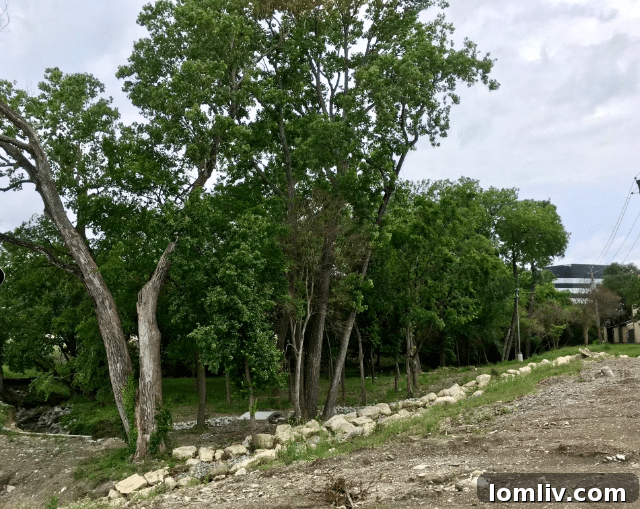
The selection of the specific parcel of land for Urban Commons in Lake Highlands was far from arbitrary; it was a deliberate decision rooted in appreciation for its natural attributes and strategic location. Diane Cheatham shared her deep affinity for the area, stating, “I absolutely love Lake Highlands. It’s a wonderful part of Dallas with a unique character and a strong sense of community.” What truly captivated her about this particular site, however, was its inherent natural beauty: “I was especially drawn to the land because it had this beautiful creek running right through it, presenting a unique opportunity for integration into the community’s design.” While the presence of a natural waterway presented its own set of development challenges, including extensive and costly flood studies, Cheatham viewed these not as obstacles but as opportunities to enhance the community’s appeal and sustainability. “Yes, it certainly got expensive with all the necessary flood studies and mitigation efforts,” she conceded. “But our response was to integrate the creek as a central amenity. We’re building a dedicated bridge across the creek, and more importantly, we’re creating a serene walking path alongside it for all residents to fully enjoy, transforming it into a cherished natural resource.” This commitment transforms a natural feature into a valuable communal asset. Cheatham lamented, “So often, communities unfortunately fail to treat a natural creek as the incredible amenity it can be. Here at Urban Commons, we were determined to do precisely that – to celebrate and develop it responsibly for everyone’s enjoyment, fostering a stronger connection to nature within an urban setting, a hallmark of sustainable community design.”
The Visionary Developer’s Passion: Why Urban Commons Excites Diane Cheatham
Diane Cheatham’s enthusiasm for the Urban Commons project is palpable, stemming from her enduring passion for pioneering innovative development. “What truly excites me about this project is the opportunity to consistently be on the cutting edge of what’s happening in the industry,” she expressed. With over four decades of experience, Cheatham has forged a unique path, choosing to focus on niche developments rather than mass-market properties. “I’ve been doing this for 40 years, but I don’t operate a large-scale development machine,” she clarified. Her expertise lies in crafting communities that resonate with a specific, discerning clientele. “I don’t develop the kind of property that appeals to a vast majority of people. Instead, my focus is on a smaller, more sophisticated group of individuals who are actively seeking a very particular kind of home.” She elaborated on the ideal Urban Commons buyer: “This is for the buyer who possesses a genuine appreciation for modern architecture, who is committed to sustainability and low-impact living, and who embraces a taste that is inherently particular and sophisticated when it comes to their living environment. Urban Commons is a testament to this philosophy, offering a truly distinctive and forward-thinking residential experience in the heart of Lake Highlands, Dallas, for those who value design, community, and environmental responsibility above all else.”