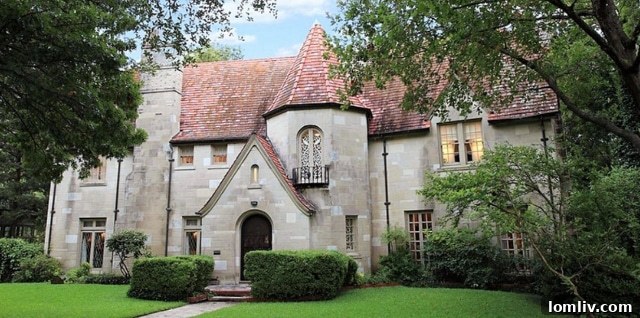
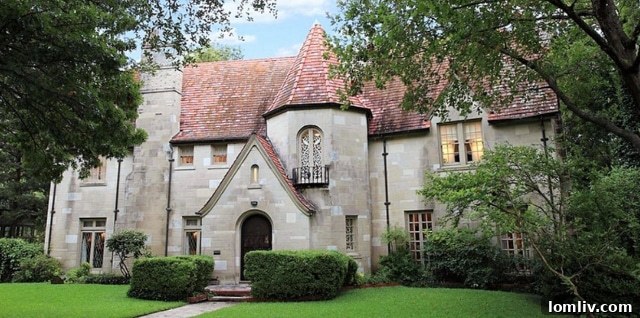
The magnificent Lacy estate, a true architectural jewel, has just entered the exclusive Dallas real estate market, presenting an unparalleled, once-in-a-lifetime opportunity for the discerning buyer. This iconic historic home, a stunning example of French Eclectic grandeur, has remained a closely guarded treasure, having been owned by only two families since its construction in 1929. This extraordinary lineage alone speaks volumes about its enduring appeal, exceptional preservation, and profound historical significance within the vibrant Lakewood community and beyond. Owning such a property is not merely acquiring a residence; it is becoming a custodian of Dallas history.
An Iconic Estate for a Prominent Dallas Family: The Lacy Legacy
The significance of this distinguished home runs deep, starting with the visionary individual who commissioned its construction: Lester (L.H.) Lacy. A graduate in civil engineering from The University of Texas, Lacy embarked on his remarkable career in 1907, joining the engineering department of the Cotton Belt Railroad. His early professional life laid the foundation for an illustrious career that would dramatically shape the infrastructure of Dallas and beyond.
His profound experience and specialized knowledge in concrete engineering proved invaluable during a pivotal time in American history, leading him to contribute significantly to the United States shipbuilding efforts during World War I. Following his distinguished service, Lacy made the strategic move to Dallas in 1919, a city on the cusp of significant growth. Here, he founded the L.H. Lacy Co., initially focusing on residential construction. His company’s reputation for excellence and reliability quickly propelled its expansion into large-scale commercial projects, and by 1930, it had become a dominant force in highway construction, shaping much of Texas’s burgeoning infrastructure.
To truly grasp Lester Lacy’s immense importance and influence within the construction and engineering industries, one must consider the monumental projects entrusted to his expertise. He was the man responsible for building the renowned Woodrow Wilson High School, an enduring landmark, and for paving Love Field during its critical construction phase. These achievements underscore his unparalleled skill and the high regard in which he was held by the community and his peers.
Mr. Lacy and his wife, Nina, initially established their home on Bryan Parkway in 1920. By 1929, with their success growing, they sought a more expansive and grand residence to accommodate their family and social standing. For this ambitious undertaking, the Lacys engaged the talents of architect Vern E. Shanklin. There is a strong possibility that Shanklin had previously collaborated with the Lacys on their elegant Munger Place bungalow, suggesting a trusted professional relationship. Shanklin, who opened his architecture firm around 1922, was celebrated for his innovative designs in commercial buildings. However, his portfolio also included several distinguished residential properties across Dallas, notably 4331 Beverly Drive and 6223 La Vista Drive. Yet, it was the magnificent Lacy home at 7030 Tokalon Drive that stands as his most substantial and perhaps most enduring residential masterpiece.
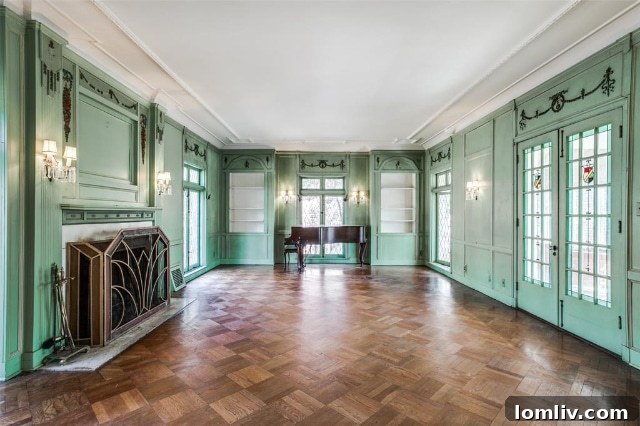
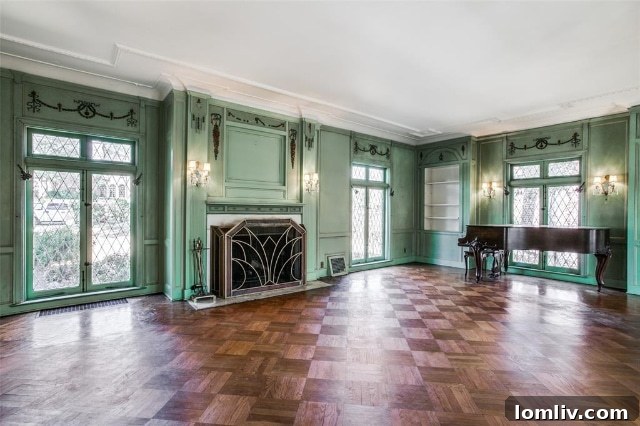
The rare combination of Lester Lacy’s profound expertise as an engineering authority and his role as a meticulous homeowner resulted in a residence of unparalleled structural integrity and design. He possessed an intimate understanding of the precise support and construction standards required for a home of this grand scale, coupled with invaluable experience in collaborating effectively with architects. This unique confluence of knowledge and dedication means that it is highly probable there isn’t another home in Dallas that boasts such superior construction quality, making the Lacy estate a testament to enduring craftsmanship and visionary planning.
The rich history and intricate details of the Lacy estate and its distinguished surroundings were recently brought to light through brilliant research conducted by Carol Roark for Preservation Dallas. Her findings offer invaluable insights into the property’s origins and its place within the historical fabric of the city.
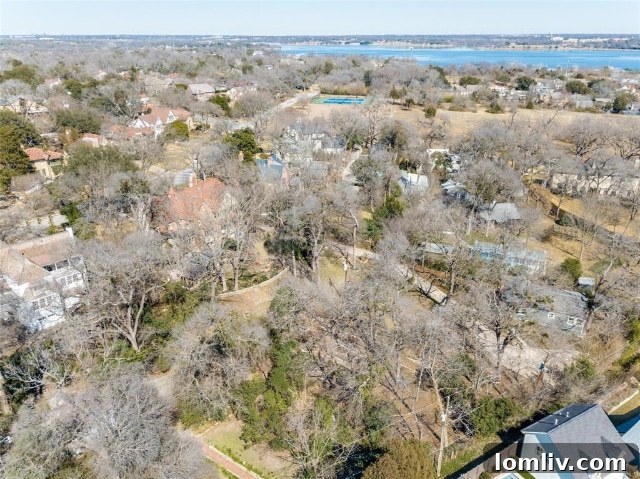
Dallas developer Albert Dines opened Westlake Park in May 1925. Westlake Park was marketed as “a natural park” with “hills, valleys, and winding avenues” and definitely “not an ordinary parcel of land cut up into square blocks and straight streets.” Tokalon Drive (or, as the map on April 3, 1925, an advertisement for Westlake Park referred to it as “Tokalone”) was the “estate section” with slightly larger lots and restrictions requiring two story houses with slate or tile roofs. The street name was apparently taken from the Greek phrase “To kalon,” which meant highest or greatest beauty.
Annexation to the City of Dallas took place at about the same time as the construction of the home, but the Lacy House apparently “beat” annexation, as there is no building permit record for it. The City of Dallas voted to annex the White Rock area on December 1, 1929, and the neighborhoods became part of the City on January 1, 1930, just in time for the 1930 census.
This historical context reveals that the Lacy estate was conceived as part of an exclusive “estate section” within Westlake Park, a vision for a distinguished community unlike any other. Tokalon Drive itself, deriving its name from the Greek phrase “To kalon” meaning “highest or greatest beauty,” perfectly encapsulated the aspiration for this elite neighborhood. The meticulous planning, requiring two-story homes with slate or tile roofs, ensured a cohesive and elegant aesthetic that has stood the test of time, with the Lacy home embodying this ideal.
A Legacy Preserved: Passing the Baton of Stewardship
The Lacy family deeply cherished this magnificent residence, making it their home for an impressive 42 years. Within its walls, Lester and Nina Lacy lovingly raised their three children—Jeanne, Julia, and Jerry—creating a vibrant family life. Beyond their domestic sphere, the Lacys were deeply embedded in the Dallas community, and the estate itself served as a hub for social activity. Countless newspaper clippings from the era detail the numerous teas, meetings, and elegant parties hosted at the house, underscoring its role as a prominent social landmark in Lakewood.
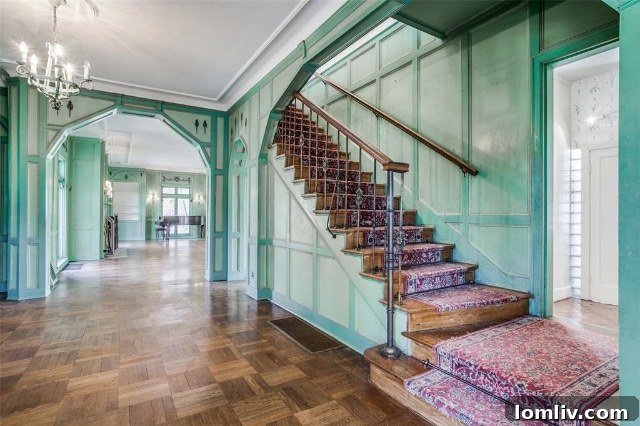
In 1972, the Lacys entrusted their beloved home to its next stewards, Sandra and Herbert Steinbach. For decades, the Steinbachs have honored this legacy, meticulously treasuring and preserving the stunning French Eclectic architecture and its original charm. Their dedication has ensured that the Lacy estate remains an incredibly intact example of its period, a living testament to architectural heritage.
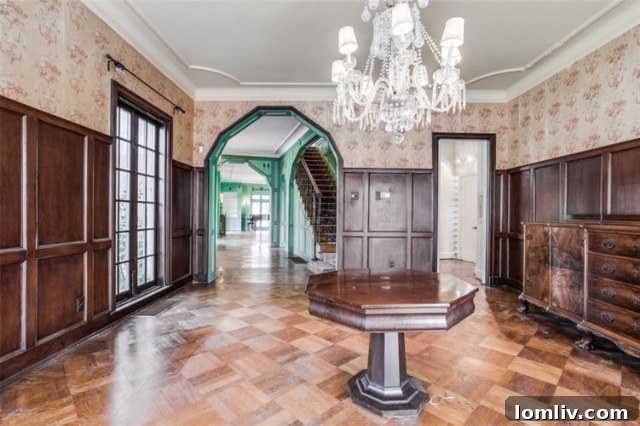
The Lacy estate holds such profound importance within Lakewood’s rich history that Preservation Dallas recently hosted an exclusive, members-only event at the property. This special gathering underscored the architectural and historical significance of the home, drawing attention from those dedicated to safeguarding Dallas’s heritage.
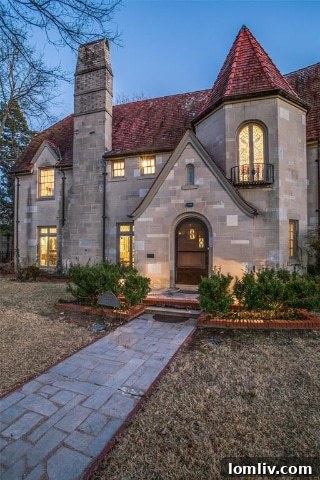
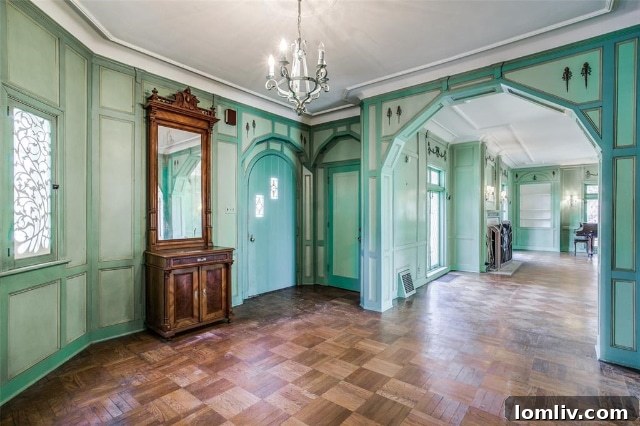
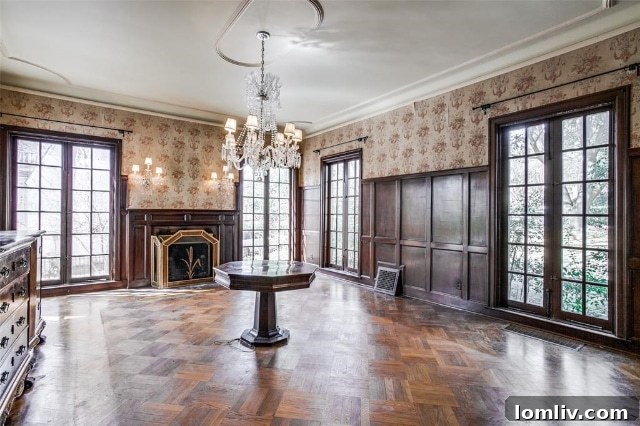
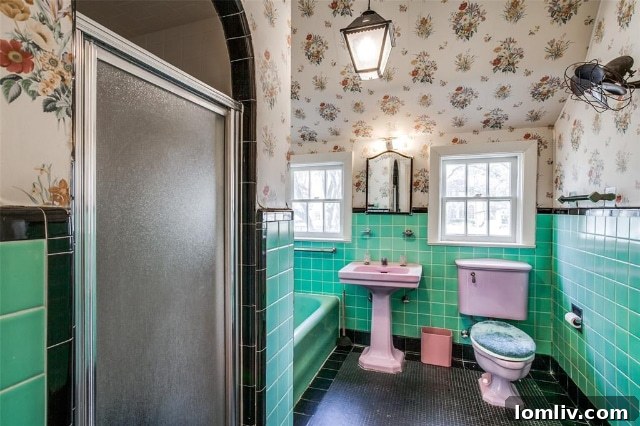
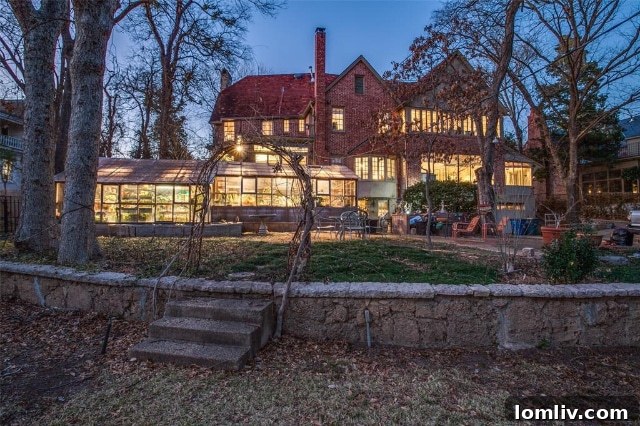
David Preziosi, Executive Director of Preservation Dallas, eloquently articulated the estate’s unique allure: “It’s an incredible home. Its exterior stone and Ludowici tile roof are particularly unusual and distinctive, as you simply don’t encounter a lot of that architectural detailing in Lakewood. The grand entrance and the charming turret, complete with its elegant balcony, add an irresistible character. What’s truly remarkable is how incredibly intact the house remains from when it was originally built. Every detail, from the exquisite trim work to the delicate appliques over the wood, is perfectly preserved. Even the vibrant, colorful tile bathrooms are still exactly as they were, offering a rare glimpse into the period’s design sensibilities.” This level of untouched authenticity is a true rarity in today’s market, making the Lacy estate a pristine example of Dallas’s past.
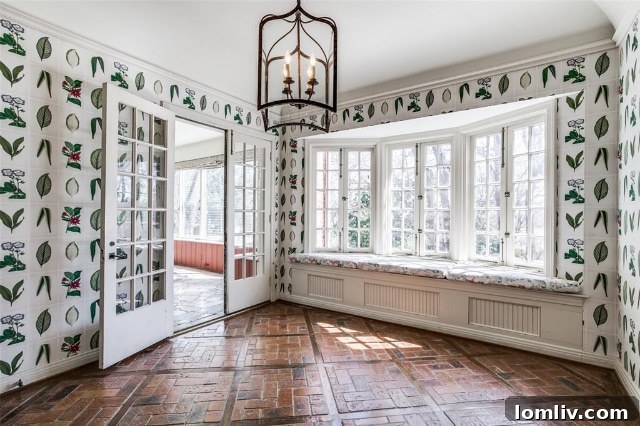
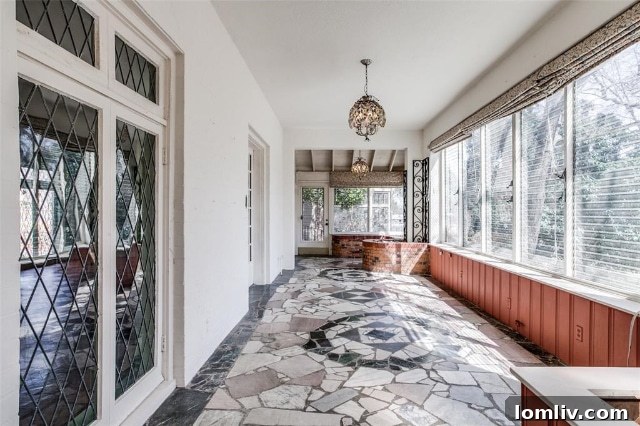
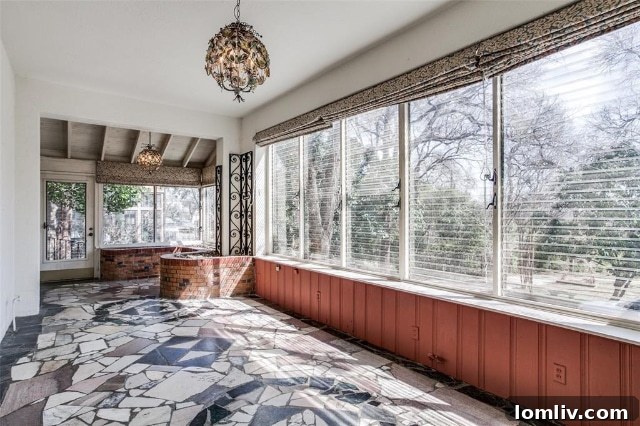
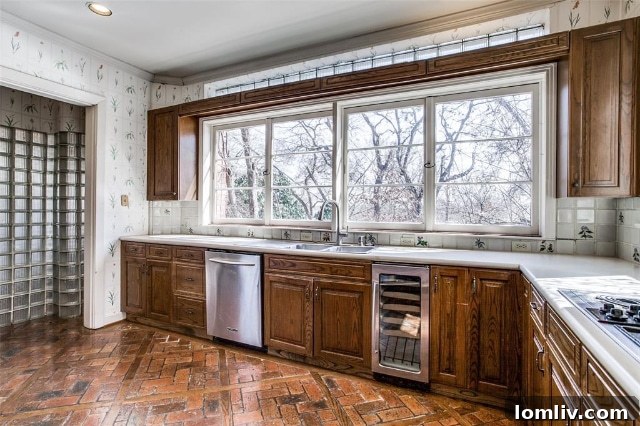
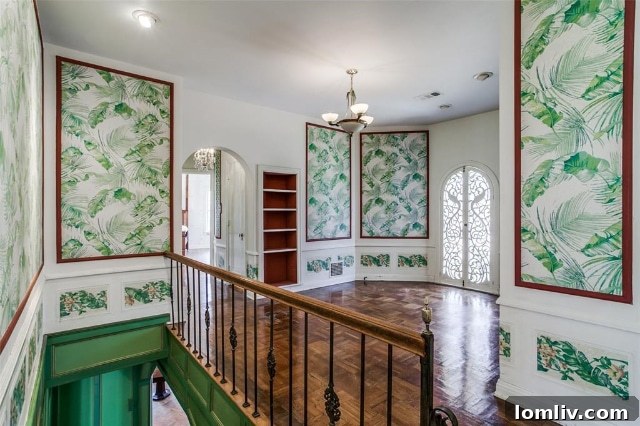
The Lacy estate represents an extraordinary opportunity for a buyer with vision – someone who will appreciate its deep historical roots and understand how to seamlessly integrate appropriate modern updates while respecting its heritage. Currently encompassing a generous 4,744 square feet, the main residence features three spacious bedrooms and two bathrooms. Its thoughtfully designed layout includes a dedicated office, a versatile game room, a cozy den, a bright solarium, and a truly unique, wonderful library elegantly housed within the property’s distinctive turret.
Beyond the main house, the expansive 1.07-acre lot is a verdant oasis, boasting a massive greenhouse that hints at potential for gardening enthusiasts or further development. The sheer depth of the lot provides an incredible canvas for future enhancements. It would be remarkably straightforward to undertake additions to the rear of the house, install a luxurious swimming pool, or undertake a comprehensive update of the charming 1,284-square-foot cottage, all while preserving the extensive and private grounds that ensure tranquility and seclusion.
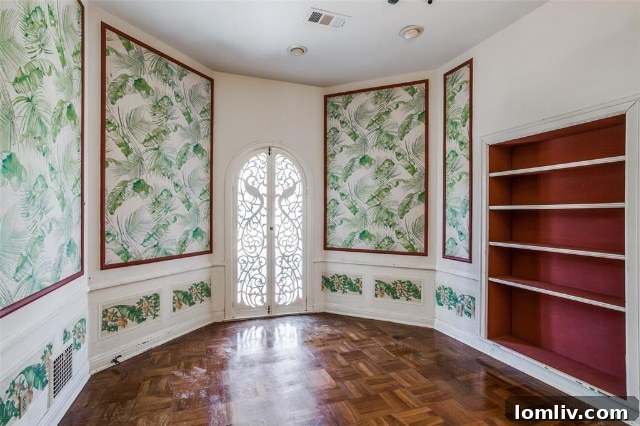
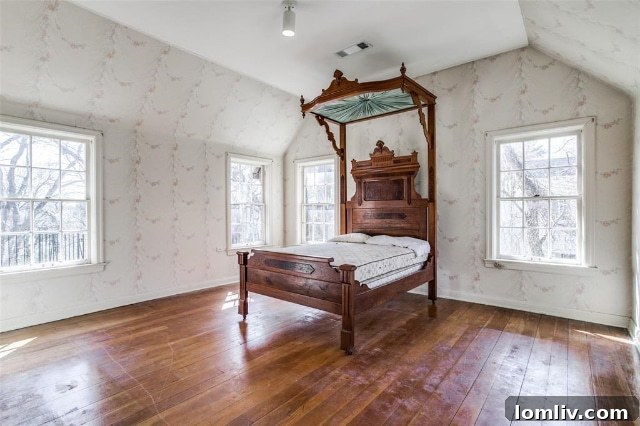
With its rich history, impeccable construction, and remarkable potential, the Lacy estate is poised to continue its legacy as one of the grandest and most coveted residences in Dallas, provided it finds the right owner—a steward who appreciates its past and envisions its future. For those eager to catch a rare glimpse of this architectural beauty and explore its timeless charm, simply become a member of Preservation Dallas and sign up for their upcoming In-Town Outing event.
The exclusive opportunity to own this piece of Dallas history is represented by Dave Perry-Miller Real Estate listing agent Rob Elmore, who has 7030 Tokalon listed for $2.5 million. This price reflects not just a house, but a legacy, a masterwork of design, and a rare chance to inhabit a truly iconic part of Dallas’s heritage.