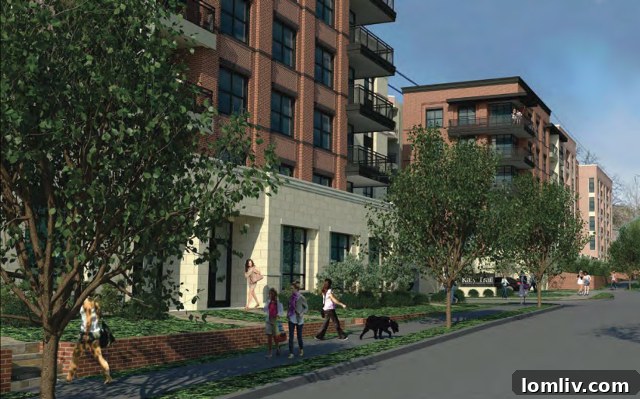
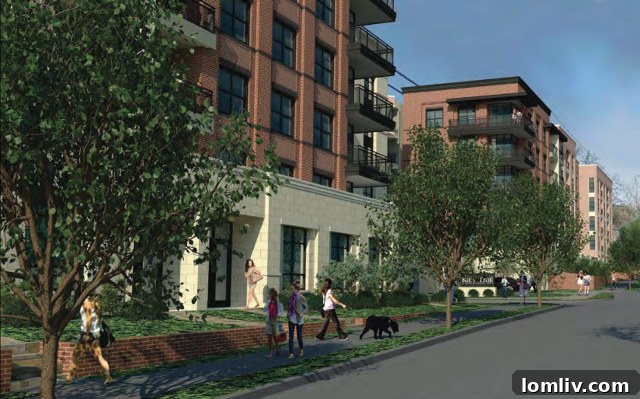
For many residents and urban enthusiasts in Dallas, the image above represents a long and arduous journey for Lincoln Property’s proposed “Lincoln Katy Trail” project. It is with a sense of hope that we anticipate this will be the final public appearance of this particular rendering, signaling a potential shift towards a more community-aligned design. The project’s path has been anything but smooth, marked by significant public opposition and a series of challenging hurdles that highlight the complexities of urban development in prime areas like Oak Lawn and the vicinity of the beloved Katy Trail.
Rewinding to February, the initial proposal for the Lincoln Katy Trail development barely scraped through the Oak Lawn Committee, passing by a single, highly contentious vote. This slim victory came only after multiple previous attempts to secure sufficient support from the committee and the surrounding community had failed. The project’s design and its potential impact on the neighborhood were key points of contention, raising concerns among existing residents about density, traffic, and the character of their established community. This narrow approval foreshadowed the even greater challenges that lay ahead for Lincoln Property Company.
The tenuous approval from the Oak Lawn Committee was followed in July by a truly disastrous appearance before the City Plan Commission (CPC). At this pivotal meeting, no commissioner could be swayed to second a motion put forth by Paul Ridley, the District 14 representative for Philip Kingston. In fact, several commissioners openly called for Lincoln Property to return to the drawing board with a fundamentally better plan, one that would address the profound objections raised by both the community and the commission itself. This public rejection underscored the widespread dissatisfaction with the project’s current iteration. Following that critical meeting, an examination of the city’s official filings of neighborhood support revealed a stark reality: aside from a handful of entities looking to profit and move on, there was virtually no organic community support for the Lincoln Katy Trail project as it stood. This complete lack of endorsement from those who would be most affected sent a clear message that the development was out of sync with local aspirations and needs.
In the subsequent weeks, Lincoln Property Company intensified its efforts, managing to secure a letter of support from the influential Friends of the Katy Trail – a move that raised questions and will be explored in greater detail later in this article. However, this solitary gain did little to sway the primary opposition. A critical meeting held the previous week at the Mayfair condos, attended by residents from the Mayfair, Vendome, and Claridge buildings, concluded without any change of heart from these firmly opposed communities. Their concerns remained steadfast, highlighting deep-seated issues that a single letter of support could not resolve. Coupled with an aggressive, yet largely unsuccessful, lobbying campaign waged around Dallas City Hall, it became increasingly clear that even Lincoln Property, a major developer, had to finally acknowledge the prevailing sentiment. The writing was unmistakably on the wall: the project, in its current form, was untenable.
During the impassioned CPC meeting, Lincoln’s chief opponent had explicitly stated that a path forward existed for a redesigned building – a project that could genuinely benefit the community rather than detract from it. This presented a clear “out” for the developer, an opportunity to pivot and create something truly impactful. Yet, many observers, including myself, pondered why Lincoln Property seemed initially too arrogant or perhaps too committed to their original vision to seize this opportunity. The reluctance to adapt, despite overwhelming feedback, suggested a disconnect between the developer’s objectives and the community’s desires for thoughtful, integrated urban planning.
The message, fortunately, finally resonated late last week. Lincoln Property Company made the prudent decision to postpone their second CPC presentation, which had been scheduled for August 16, pushing it back until October. Furthermore, they have strategically placed themselves back on the October Oak Lawn Committee schedule. These actions strongly suggest that the developer is now committed to a significant redesign. One can only assume that this series of strategic delays is all in service of developing a new, revised design – one that everyone, from the neighboring residents to the city commissioners and the broader community, can finally live with and, ideally, embrace. Fingers crossed for a truly transformative and well-received outcome for this prominent Dallas development.
“Friends” of The Katy Trail: A Critical Examination
Two weekends prior, my travels took me to New York City, where I spent considerable time walking along its globally renowned High Line Park. For those unfamiliar with this urban marvel, the High Line is an elevated linear park ingeniously repurposed from a section of abandoned rail tracks. The concept immediately evokes a sense of familiarity for Dallas residents, bearing a striking resemblance in its origin story to our own beloved Katy Trail. Both parks represent incredible opportunities for urban revitalization and integration.
In New York, the Friends of the High Line organization has been a monumental force, instrumental not only in the park’s creation and maintenance but also in strategically attracting what are known as “starchitect” buildings to its periphery. These are projects designed by world-famous architects that elevate the aesthetic and cultural value of the entire area, turning the High Line into a magnet for architectural innovation and design excellence. The High Line’s success is deeply intertwined with the quality of the architecture it inspires. In stark and perplexing contrast, the Dallas-based Friends of the Katy Trail recently sent a note of support for Lincoln Property’s original, and widely criticized, project. This begs a crucial question: What exactly is “up with that,” and what vision do our local “friends” hold for the Katy Trail’s future?

A mere 30-second observation of the High Line’s vibrant usage is all it takes to grasp the profound difference in its role and impact on New York compared to the Katy Trail’s current status in Dallas. The High Line buzzes with activity; there are vendors selling artisan ice cream and refreshing drinks, designated rentable sections for private events and gatherings, and a constantly evolving schedule of public art installations and dining experiences. Every aspect is meticulously curated to create a truly dynamic and highly coveted public space, one that is eagerly embraced and utilized by residents and tourists alike. It functions more like a linear Klyde Warren Park, but with the added benefit of being miles longer, offering an extended corridor of cultural and recreational engagement. This level of active programming and commercial integration amplifies its value exponentially, making it a significant economic and social asset to its city.
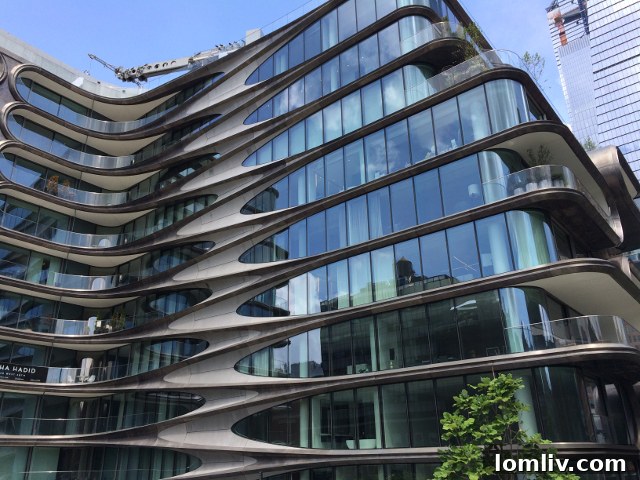
Returning to the subject of architecture, which plays a pivotal role in the High Line’s allure. At its northern terminus lies the impressive Hudson Yards development, where I observed Thomas Heatherwick’s iconic “Vessel” under construction – a truly sculptural marvel that redefines public art and gathering spaces. Further south along the park, Zaha Hadid’s breathtaking 520 W. 28thStreet building was actively moving in its first wave of residents, its fluid, futuristic forms a striking complement to the industrial backdrop of the High Line. Nearing the park’s southern end, Studio Gang’s ambitious 40 Tenth Avenue project was visibly rising from the ground, another example of world-class design contributing to the park’s architectural tapestry. At each of these locations, I witnessed spontaneous “bubbles” of people congregating, pausing to gawk and enthusiastically photograph the innovative architecture. What was entirely unexpected, and deeply telling, were the groups of people I saw actively Googling the buildings. They were eager to learn more about the structures, their designers, and the stories behind them. Literally, clusters of individuals huddled around a phone screen, scrolling through images and articles, while one person read aloud. They were utterly entranced, captivated by the power of exceptional design and its ability to inspire curiosity and admiration.
That level of thrall, that widespread popularity and architectural engagement, is precisely the kind of transformative impact the Dallas Katy Trail could, and should, aspire to achieve. Imagine Dallasites and visitors alike being drawn to the Katy Trail not just for exercise, but as a destination to experience groundbreaking architecture and vibrant urban living.
Instead, the “friends” of the Katy Trail, in their initial endorsement, supported a building that offered nothing of note to the trail itself. There was no meaningful connection, no interactive elements, and certainly no visually glorious architecture that would enhance the overall Katy Trail experience. In fact, the project’s backside, as presented, primarily featured a utilitarian fire lane, an exposed parking garage, and a loading dock – poorly concealed by a sparse scattering of trees. The only potential Google search term inspired by such a view would be a bewildered “WTF,” rather than an enthusiastic “Who designed that stunning building?” This stark contrast underscores a fundamental misalignment in vision between the Katy Trail’s potential and the development it was initially prepared to accept.
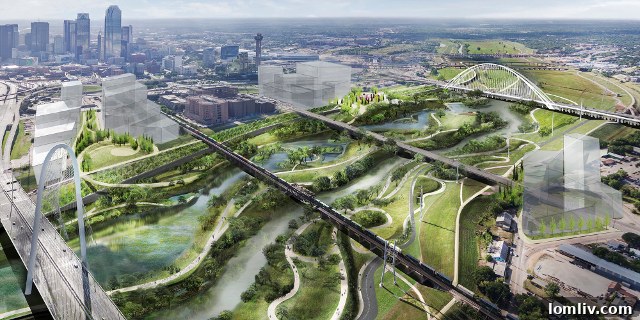
The Friends of the High Line in New York also initiated another significant endeavor: the High Line Network. This collaborative group unites urban parks and greenway projects from across the nation, fostering a community of shared knowledge and best practices. Its esteemed members include Houston’s Buffalo Bayou Park, Washington D.C.’s ambitious 11th Street Bridge Park, Chicago’s innovative 606 trail, San Francisco’s Presidio Tunnel Tops, Austin’s Waller Creek, and notably, two of Dallas’ own prominent green spaces: Klyde Warren Park and the planned Trinity River Park. This network comprises nineteen planned or existing parks in total, each striving for excellence in urban design and community engagement. Conspicuously absent from this list, however, is the Katy Trail. Its omission raises questions about its current trajectory and whether it is leveraging its full potential as a nationally recognized urban asset.
Let me be clear: I am not asserting that the Katy Trail is inherently terrible or without its merits. It is, by all accounts, a fantastic resource for Dallas, cherished by countless residents for recreation and connectivity. However, my contention is that it possesses the untapped capacity to be so much more. Its true potential could be fully realized if there were a more deliberate and visionary approach to what connects to its edges. The surrounding developments, the architectural quality of adjacent buildings, and the intentional integration of public spaces all play a crucial role in elevating an urban trail from merely a pathway to a truly iconic civic amenity. A harmonious relationship between the trail and its urban fabric is essential for unlocking its next phase of evolution and impact.
Ultimately, I am profoundly hopeful that Lincoln Property’s next iteration of the Katy Trail project will represent a significant win for their immediate neighbors, for the broader Dallas community, and critically, for the Katy Trail itself. This isn’t just about appeasing opposition; it’s about seizing an unparalleled opportunity to contribute something truly exceptional to the urban landscape of Dallas. Whether the “Friends of the Katy Trail” fully appreciate this broader vision or not, the responsibility lies with developers and city planners to champion designs that elevate our shared public spaces. A well-designed, integrated development can set a new standard, creating a symbiotic relationship between private investment and public benefit, thereby enhancing the legacy of one of Dallas’ most cherished green arteries.

Remember: My primary focus revolves around the intricate world of high-rises, the dynamics of Homeowners Associations (HOAs), and the complex, often transformative, process of urban renovation. This beat allows me to explore the practicalities and challenges of living and developing in dense urban environments. Beyond these core areas, I hold a deep appreciation for modern and historical architecture, always viewing them through the lens of balance against the growing YIMBY (Yes In My Backyard) movement – advocating for thoughtful development that serves community needs while preserving aesthetic and historical integrity. My commitment to insightful and impactful real estate journalism has been recognized nationally. In 2016, 2017, and 2018, the National Association of Real Estate Editors (NAREE) honored my writing with three prestigious Bronze awards for categories reflecting my keen observations on housing styles (2016), property tax dynamics (2017), and significant real estate events (2018). Further affirming this dedication, I also received two Silver awards during this period for my contributions to broader housing and international real estate narratives (2016, 2017). If you have a compelling story to share, an innovative project to discuss, or even a marriage proposal that somehow intersects with Dallas real estate, please don’t hesitate to reach out. Shoot me an email at [email protected]. While you’re welcome to search for me on Facebook and Twitter for more urban insights and real estate discussions, you might find my digital presence somewhat elusive – but the hunt is part of the fun!