Armed Robbery Shakes North Dallas Costco: A Deep Dive into Shopper Safety and Security Concerns
The everyday act of grocery shopping, a mundane ritual for many, was shattered for hundreds of individuals at a North Dallas Costco on a seemingly ordinary Sunday afternoon. What began as a routine trip to stock up on household essentials quickly devolved into a terrifying ordeal, leaving shoppers and employees traumatized and raising critical questions about retail security measures, particularly the controversial “15-second door delay.” This incident underscores the vulnerability of public spaces to sudden acts of violence and the profound psychological impact such events can have on a community.
The Setting: North Dallas Costco and Its Strategic Location
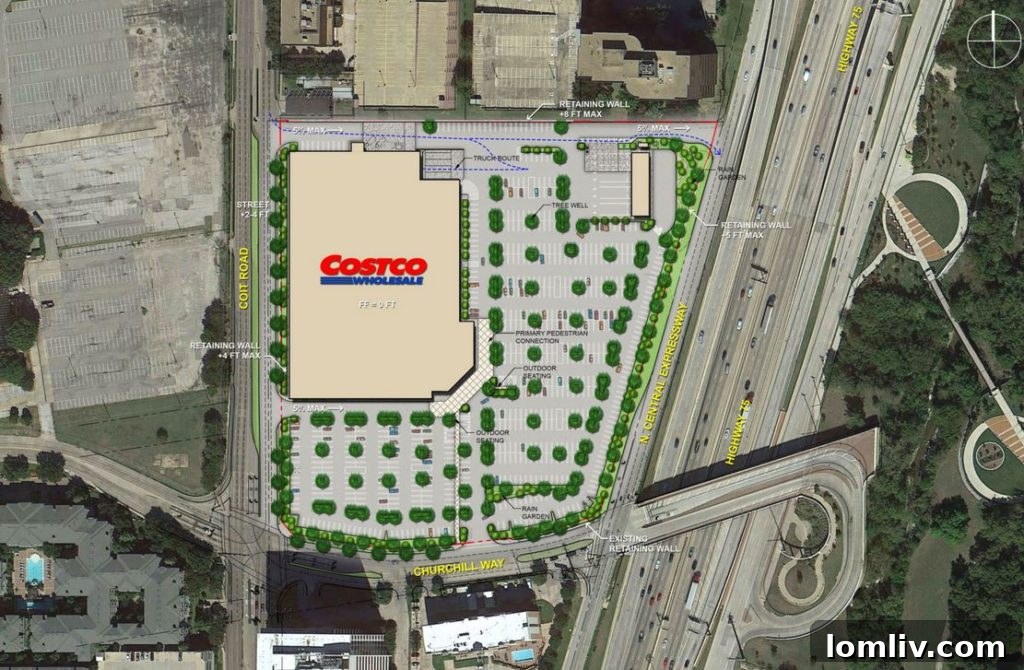
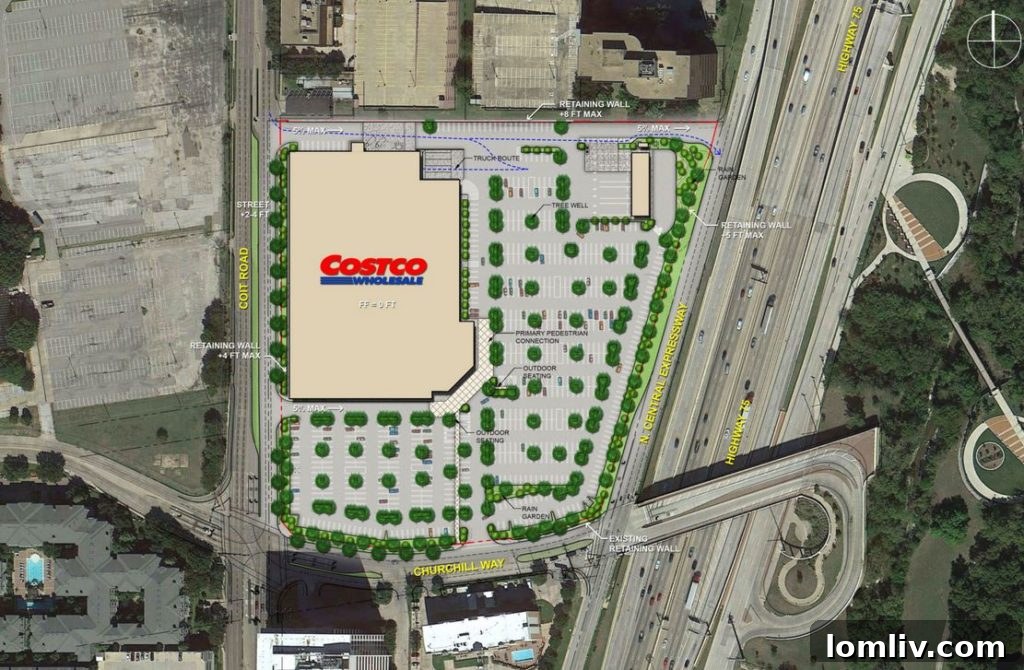
For residents of North Dallas, the “new” Costco situated prominently on Churchill Road, bordering the bustling thoroughfares of LBJ Freeway, Coit Road, and North Central Expressway, has become a familiar landmark. Its strategic location offers unparalleled convenience, allowing easy access for countless shoppers from across the region. This accessibility, while a boon for customers and the store’s business, also presents a double-edged sword when considering security. The site itself was developed with a significant economic incentive, including a reported $3 million in taxpayer dollars, highlighting its importance to the local economy. However, its proximity to major highways, which facilitates quick entry and exit for legitimate customers, unfortunately, also offers an advantageous escape route for criminals, a fact brutally demonstrated during the armed robbery incident.
Sunday Afternoon Terror: The North Dallas Costco Robbery Unfolds
The peaceful Sunday afternoon of July 1, 2018, around 3 p.m., was abruptly interrupted by a violent armed robbery that sent shockwaves through the North Dallas community. According to police reports and numerous eyewitness accounts, three armed men forcefully entered the bustling warehouse club. Their target: the high-value jewelry cases located prominently near the front of the store. Wielding a gun and a pickaxe, the robbers brutally shattered the glass displays, creating a scene of immediate chaos and terror. The sudden violence, coupled with the sound of breaking glass and the sight of weapons, instantly plunged the otherwise calm shopping environment into pandemonium. Shoppers who had been casually browsing or waiting in checkout lines were suddenly faced with a life-threatening situation, forcing them to make split-second decisions for their safety and the safety of their loved ones. The criminals swiftly gathered their loot and fled the scene, likely utilizing the very expressways that make the Costco so accessible, disappearing into the city’s traffic.
The Critical “15-Second Door Delay”: A Point of Contention
Amidst the chaos and fear, a particular aspect of Costco’s security protocol came under intense scrutiny: the “15-second door delay” at the main entrance. While this system is typically implemented to deter shoplifting or manage inventory flow, its effectiveness and safety implications during an active armed robbery became a major concern. Eyewitnesses reported a horrifying moment where, in the immediate aftermath of the attack and as people desperately tried to flee, some found themselves momentarily trapped at the main exit. In a situation where a gunman is present, a delay of 15 seconds, no matter how brief it may seem in ordinary circumstances, can feel like an eternity. It creates an agonizing window of vulnerability, potentially exposing individuals to further danger and intensifying the psychological trauma of an already terrifying event. This policy sparked a crucial discussion about whether security measures designed for one type of threat inadvertently compromise immediate safety during another, more violent, scenario.
Eyewitness Accounts: Voices from the Chaos
The harrowing experience of that Sunday afternoon is best captured through the poignant accounts of those who lived through it. Their stories paint a vivid picture of the fear, confusion, and desperate struggle for safety.
Adam Vanek’s Harrowing Experience
Adam Vanek, National General Counsel and Assistant Corporate Secretary for the Susan G. Komen Foundation, was shopping with his wife and two young children, aged three and seventeen months, when the robbery occurred. “We were at the check-out line furthest from the front door,” Adam recounted. As their receipt was being printed, the normalcy of their outing evaporated. “We heard people scream. Then there was this wave of people running towards us, some dropping behind counters.” The situation escalated rapidly with the activation of an alarm, described by Adam as “LOUD.” The sudden, deafening sound, combined with the sight of panicked individuals, including employees, rushing towards back doors and any available exit, confirmed the gravity of the threat. Without knowing the exact nature of the unfolding events, Adam’s immediate instinct was to protect his family. He grabbed his wife and children, seeking refuge in a nearby bathroom which was also close to an emergency exit. In their haste and fear, they abandoned their shopping cart, even his wife’s purse, prioritizing immediate safety over all else. Adam estimated that the entire store was cleared out in approximately 90 seconds, a testament to the sheer panic and urgent need for evacuation. Though he never heard a gunshot, a piercing scream of “gun!” echoed through the store, leaving no doubt about the imminent danger. He later reflected on how the loud panic alarm might have, ironically, muffled the sound of any shots fired.
A particularly disconcerting detail for Adam was the lack of clear communication after the initial evacuation. There was no public address announcement informing shoppers when it was safe to re-enter or what steps they should take. This left many customers watching and waiting outside, observing the fleeing employees and trying to piece together the situation. Many exited through the back, some even climbing fences in their desperate attempt to distance themselves from the building. The emotional toll was evident: his wife was “totally freaked” and couldn’t sleep that night, while Adam himself was shaking once the adrenaline surge subsided. The incident left them questioning the security of such familiar places. “What happened yesterday,” Adam noted, “doesn’t happen at the Costco in Frisco or Plano,” highlighting a perceived difference in safety or incident frequency.
A Friend’s Close Encounter: Four Feet from Danger
Another eyewitness, a friend of the article’s author, shared her terrifying account on Facebook, providing a visceral description of being mere feet from the gunmen. Her story amplifies the terror and confusion of the moment, offering a granular perspective on the robbery’s immediate impact:
COSTCO ARMED ROBBERY TODAY FOUR FEET IN FRONT OF MY SHOPPING CART! Life and death, grocery shopping on a Sunday afternoon in Texas… Around 2:30 today as my son and I were leaving Costco, I was on the phone with a friend. My cart was 4 feet from the jewelry case in the photo below. I noticed a very oddly dressed man walk quickly past my left. I commented to my friend those are the wildest pants I have ever seen. Then I noticed his bright orange hoodie pulled low, a fabric mask over his lower face, headband and glasses and his hand over his crotch… Like the naive fool that I am I told my friend “I think he has a gun”. The man in the orange hoodie turned and looked straight in my face and then pulled a gun out and paused… I thought my God he is going to shoot me in the chest? Then he started shooting. On my right a man pulled out a pick axe and slammed the jewelry counter at the same time. I flipped around and grabbed my son and screamed run, run, run now, run! We ran to the exit and people were ahead of us trying to get out the doors. Costco had a sign on the doors that said 15 second delay… (incredibly stupid… do you realize how long 15 seconds are in this situation?) Then the doors opened and we ran out. As I looked behind me I saw a confused older couple trying to get out. I went back into the store to help the people out. Then it was over. Then a Costco employee said Ma’am were you at the robbery and I said yes. He said yes, we saw you next to it. He asked me to speak with the police and I did, two statements, in detail. Afterwards I checked out in a fog…
Her account vividly illustrates the sudden shift from casual observation to immediate, life-threatening danger. The detail of the “wildest pants” and the “bright orange hoodie” underscores the surreal nature of the moment before the horrific realization set in. Her instinct to grab her son and flee, coupled with her brave decision to return and assist a confused older couple, highlights the profound human response to such crises. The frustration with the “15-second delay” is palpable in her narrative, emphasizing how a seemingly innocuous security measure can become a terrifying impediment during an active threat. Her description of “checking out in a fog” perfectly encapsulates the disorienting and traumatic aftermath of such an incident.
The Immediate Aftermath and Lingering Trauma
The immediate aftermath of the robbery was marked by confusion, fear, and a desperate scramble for safety outside the store. Customers and employees who had fled the building found themselves in a state of shock, trying to process the horrifying events. The sight of people literally climbing fences to get away from the building underscored the pervasive fear. Many stood at a distance, calling loved ones or emergency services on their cell phones, attempting to regain a sense of control in an uncontrollable situation. The emotional fallout was immediate and profound; the adrenaline rush eventually gave way to shaking, tears, and a deep-seated sense of vulnerability. For many, the incident irrevocably altered their perception of safety in public spaces. The once-familiar and seemingly secure environment of a large retail store had been violently breached, leaving behind a lingering sense of unease and a questioning of where true safety can be found. The trauma experienced by victims, like Adam Vanek’s wife who suffered from sleeplessness, speaks to the deep psychological scars left by such an ordeal. The comparison made to other Costco locations in Frisco or Plano also highlights a perception among locals that such violent crimes are either less frequent or perhaps less expected in certain areas, adding another layer of distress to the North Dallas incident.
Costco’s Official Stance and Future Security Measures
In the wake of the robbery, the North Dallas Costco store directed inquiries to its regional office. A spokeswoman for Costco’s regional office, when contacted, stated, “We cannot comment at this time. The investigation is ongoing, but we are taking steps to keep our stores and everyone more secure.” This official response, while standard for an active investigation, left many questions unanswered regarding specific changes to security protocols. However, it does acknowledge the seriousness of the event and indicates an internal review of their safety measures. In the broader context of retail security, “taking steps to keep stores more secure” could encompass a range of enhancements. These might include an increased presence of security personnel, both visible and discreet, to act as a deterrent and provide an immediate response. It could also involve upgrading surveillance systems, implementing advanced access control measures, and re-evaluating existing emergency protocols for active threat situations. Crucially, it could lead to a re-assessment of policies like the “15-second door delay,” potentially introducing dynamic systems that override such delays during confirmed emergencies to prioritize rapid evacuation. Enhanced training for employees on how to respond during a robbery or active threat, including communication strategies and evacuation procedures, would also be a critical component of any comprehensive security improvement plan. The goal would be to strike a better balance between preventing crime and ensuring the immediate safety of all individuals within the store during a crisis.
Beyond the Incident: Re-evaluating Retail Security and Shopper Safety
The North Dallas Costco robbery serves as a stark reminder of the complex challenges retailers face in ensuring the safety of their customers and employees while maintaining an open and inviting shopping environment. In an age where violence can erupt unexpectedly, the incident highlights the critical need for robust, adaptive security strategies that go beyond traditional crime prevention. Retail security is not merely about protecting assets; it is fundamentally about protecting lives. This includes comprehensive risk assessments, continuous evaluation of security technologies, and, perhaps most importantly, developing clear and effective emergency response plans that prioritize human safety above all else. The psychological impact of such events extends far beyond the immediate victims, affecting community perception of safety and fostering a heightened sense of vigilance in everyday activities. Retailers must engage in an ongoing dialogue with law enforcement, security experts, and their communities to foster environments where shoppers can feel truly safe, even when the unforeseen occurs. The lessons learned from incidents like the Costco robbery are invaluable in shaping future safety protocols, encouraging innovation in security, and reinforcing the commitment to protecting those who walk through the doors of public establishments.
Conclusion: A Call for Vigilance and Enhanced Safety
The armed robbery at the North Dallas Costco was a terrifying event that profoundly impacted many lives. It laid bare the vulnerabilities inherent in public spaces and sparked crucial conversations about the efficacy of existing security measures, particularly the controversial “15-second door delay,” during moments of extreme danger. The harrowing eyewitness accounts underscore the raw fear and urgent need for swift, unhindered escape when lives are on the line. As communities continue to grapple with the realities of crime, this incident serves as a powerful reminder of the imperative for continuous evaluation and enhancement of retail security protocols. It calls for a renewed focus on ensuring that safety measures are not only preventative but also facilitate immediate protection and evacuation in an emergency. Ultimately, the goal is to foster environments where customers and employees can feel secure, knowing that robust, human-centric safety strategies are in place, ready to respond when the unthinkable happens, allowing the simple act of shopping to remain a routine pleasure rather than a potential peril.