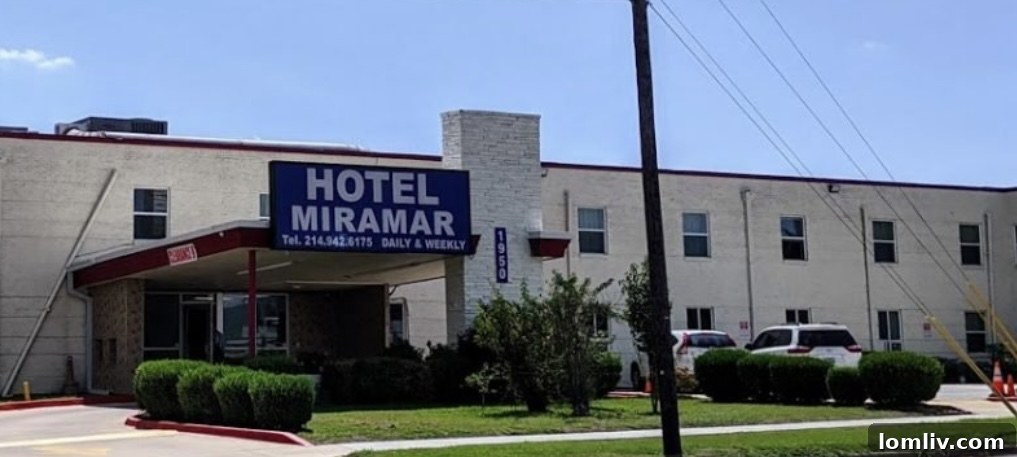
The City of Dallas has recently initiated a pivotal step in its ongoing efforts to combat the burgeoning homelessness crisis, greenlighting a significant architectural contract for the transformation of the long-vacant Hotel Miramar. This decision, however, has been met with both cautious optimism and pointed criticism, as the city moved forward with design plans for permanent supportive housing at the site before a dedicated operator for the facility had been formally selected. This sequence of events has prompted some observers to suggest that the city is, perhaps, “putting the cart before the horse.”
On February 14, the Dallas City Council approved an emergency contract totaling $536,186 with Kirksey Architecture. This contract, vital for addressing critical public safety concerns at the property located at 1950 Fort Worth Avenue, marks a significant moment in the project’s tumultuous history. Assistant Housing Director Darwin Wade highlighted the immediate necessity of this contract, citing a litany of safety issues plaguing the derelict structure. The building has been a hotspot for break-ins, rampant vandalism, and even fires, often ignited by unhoused individuals seeking shelter in its dilapidated basement. Such incidents not only pose a danger to those occupying the building but also present a considerable risk to the surrounding community.
Christine Crossley, director of the Office of Homeless Solutions, underscored the profound sense of urgency driving this project. She emphasized the dual pressures of the building’s prolonged vacancy and the substantial financial resources currently being expended merely to maintain its security. The collective sentiment within the city leadership is that swift action is paramount, not just to alleviate the immediate hazards but to finally realize the vision of providing much-needed housing solutions.
The acquisition of the Hotel Miramar property by the City of Dallas in 2020 was heralded as a beacon of hope for addressing the city’s persistent homelessness challenge. Yet, more than three years later, the building remains unoccupied, a stark and visible symbol of the complexities inherent in urban redevelopment and social housing initiatives. Councilwoman Cara Mendelsohn openly voiced her embarrassment regarding the extended vacancy, especially given the escalating homelessness crisis gripping Dallas. She further articulated her concerns about the project’s unconventional approach: “We’re continuing it by hiring an architect before we even have the operator to know what it’s going to be,” she remarked, questioning the efficacy of an architect’s role in addressing fundamental public safety issues without a clear operational framework.
The overarching goal for the Hotel Miramar site is to provide permanent supportive housing (PSH), a proven model designed to offer stable, affordable housing coupled with crucial wraparound services for individuals experiencing chronic homelessness. PSH projects are characterized by their holistic approach, integrating rental assistance and supportive services such such as case management, mental health counseling, substance abuse treatment, life skills training, and employment assistance. This comprehensive framework is instrumental in helping vulnerable individuals achieve stability, improve their health outcomes, and reintegrate successfully into the community. The city’s ambition is not merely to provide shelter but to foster long-term stability and well-being for its most vulnerable residents.
However, the journey to transform 1950 Fort Worth Avenue into this vital resource has been fraught with challenges and setbacks.
A Legacy of Missteps and Delays at 1950 Fort Worth Ave.
The site at 1950 Fort Worth Avenue once stood as the Hotel Miramar, a name that now carries a negative connotation due to its association with a long-vacant, dilapidated structure. Consequently, city leaders often refer to it simply by its address, hoping to shed the historical baggage and emphasize its future purpose. The city’s initial purchase was driven by a dual aspiration: to reduce the number of unsheltered individuals on Dallas streets and to establish a facility offering comprehensive “wraparound services” crucial for tenant success. The urgency of this mission was further underscored by a January discussion of the city’s Homelessness, Organizations, Policies, and Encampments (HOPE) Report, which unequivocally highlighted a severe shortage of suitable housing options for the unhoused population across Dallas.
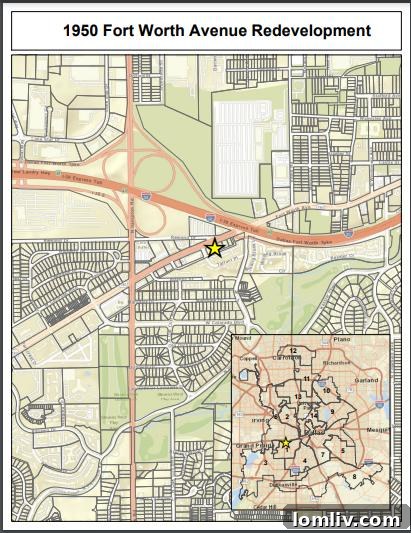
The path to redevelopment has been anything but smooth, marked by a series of unfortunate events and administrative hurdles. As reported by daltxrealestate.com in October 2023, the City of Dallas initially entered into a contract with CitySquare in June 2021 for both renovations and property management of the Miramar site. This partnership, intended to kickstart the project, regrettably dissolved more than a year later when CitySquare opted to end the agreement due to shifts in its core business scope. This early termination introduced the first significant delay and forced the city to reassess its strategy.
Following CitySquare’s withdrawal, the city engaged CBRE Global Commercial Real Estate Services to manage the complex solicitation process for both design and redevelopment. This step was meant to streamline the project and bring in specialized expertise. However, the subsequent process also encountered significant complications. Delays inevitably led to cost increases, further burdening city coffers and prolonging the wait for a resolution. In April 2023, an agreement was reached with UCR Development for design and renovation services. This appeared to be a promising step forward, signaling renewed momentum for the project.
Yet, the promise was short-lived. The contract with UCR Development was later declared null and void. The primary reason for this invalidation was CBRE’s failure to strictly adhere to state procurement laws and federal regulations during the contract preparation phase. This critical error underscored the intricate and often unforgiving nature of governmental contracting, where procedural compliance is as crucial as the project’s objectives. Such a substantial procedural misstep not only caused further delays but also eroded public trust and raised questions about oversight.
In response to these setbacks and to re-establish a transparent and compliant process, a Notice of Funding Availability (NOFA) was officially issued in January for interested developers. This crucial step aims to solicit new, qualified proposals for the Miramar project, with the submission period set to close on March 11. This NOFA represents a fresh start, designed to correct past errors and ensure that the next phase of the project adheres to all legal and regulatory requirements, thereby safeguarding public funds and accelerating the delivery of essential housing.
District 1 Councilman Chad West, whose district encompasses the Fort Worth Avenue property, openly acknowledged the troubled history, stating that “a lot of missteps have occurred” since the city initially purchased the property. Despite these considerable challenges, Councilman West highlighted the remarkable support from his constituents. “To their credit,” he noted, “the majority of the residents in District 1 who live nearby recognize the need for permanent supportive housing.” He praised their unwavering backing of the purchase and the project itself, even in the face of “a lot of heartache and a lot of hard conversations to overcome the fear of bringing this type of project into District 1.” This community resilience and understanding are vital for the successful integration of permanent supportive housing facilities.
Kirksey Architecture Hired For Preliminary Work Amidst Debate
Despite the history of setbacks and the current “cart before the horse” criticism, Councilman Chad West, along with the entire Dallas City Council, ultimately supported the hire of Kirksey Architecture. This unanimous vote, documented in the Kirksey Architecture Resolution, signals a collective determination to push the Miramar project forward, albeit with lingering concerns about the sequencing of operations.
Councilman West, while voting in favor, candidly expressed his reservations regarding the timing of the architect’s engagement. “How can the architect determine the maximum number of units when the project developer isn’t selected yet?” he queried. He articulated a preference for a different approach: “I don’t like this process of selecting the architect before the project developer. I think the project developer should select their own architect.” However, his commitment to the project’s ultimate success outweighed his procedural concerns, leading him to conclude, “I will support it because I want to get this project moving.” This encapsulates the difficult balance city officials must strike between ideal processes and the pragmatic need for progress on critical social infrastructure projects.
Assistant Housing Director Darwin Wade offered clarification regarding Kirksey Architecture’s immediate role, seeking to allay fears about misdirected efforts. He explained that the architecture firm’s scope of work would be strictly preliminary, focusing on foundational tasks such as comprehensive site assessment, evaluation of structural integrity, and initial conceptual planning. This preliminary work is crucial for understanding the existing building’s potential and limitations. Wade further elaborated that the firm would then collaborate closely with the selected developer once they are on board, ensuring that the architectural plans align seamlessly with the developer’s vision and operational requirements. He also indicated that a basic framework of approximately 40 units has already been established as a guiding principle, providing a starting point for the design process.
Councilwoman Mendelsohn reiterated her deep advocacy for permanent supportive housing, acknowledging its vital necessity in addressing chronic homelessness. However, she juxtaposed the Miramar project’s convoluted timeline with a successful permanent supportive housing initiative in her own North Dallas district. “The property in District 12 was immediately opened and has served hundreds and hundreds of homeless families,” she proudly stated, highlighting the efficiency and impact achievable with a streamlined approach. She pointed out that even that successful facility required adjustments to provide the correct environment tailored to the operator’s specific needs and methodologies. Her central critique remained consistent: “We don’t even have an operator selected. How would the architect know what common space might be needed as opposed to individual units?” This fundamental question underscores her concern about potential inefficiencies and misalignments that could arise from planning without the insights of the future operator. “I am an advocate for permanent, supportive housing. It’s necessary, but I don’t understand why we’re putting the cart before the horse so late in the game,” she concluded, emphasizing the urgency and the lessons learned from previous projects.
The journey to transform the Hotel Miramar into a beacon of hope for Dallas’s unhoused population is a testament to both the city’s commitment and the inherent complexities of large-scale urban development. While past missteps have created delays and frustration, the recent architectural contract signifies a determined push forward. The successful selection of a qualified developer and experienced operator through the ongoing Notice of Funding Availability will be the next critical step. Only then can the architectural visions truly materialize into a functioning, compassionate facility that provides not just shelter, but dignity and a pathway to a stable future for hundreds of Dallas residents.