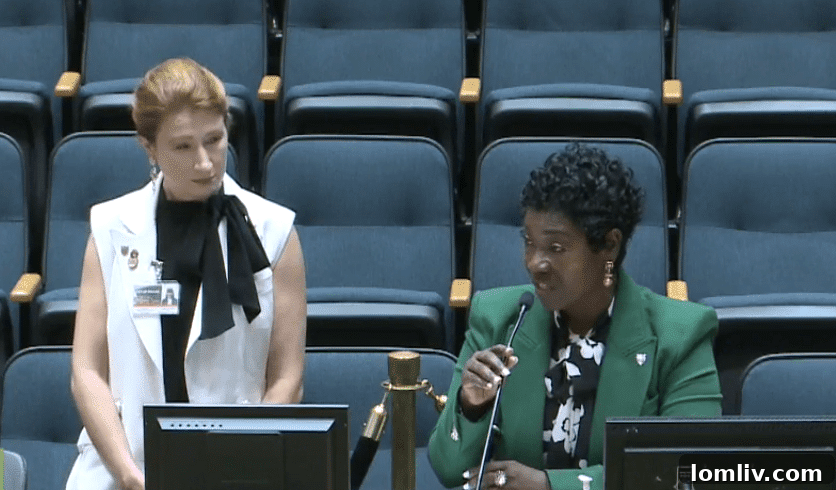
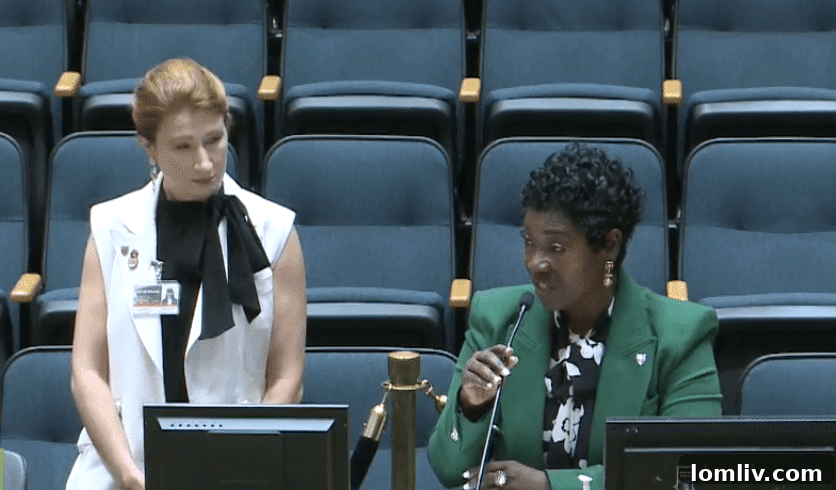
In a pivotal decision shaping the future leadership of Dallas, the City Council officially appointed Kimberly Bizor Tolbert as the interim city manager on Tuesday. This critical appointment comes in the wake of T.C. Broadnax’s resignation, which is slated to become effective on June 3. The search for a permanent successor to Broadnax is now a top priority for the city, and Tolbert’s interim role is designed to ensure stability and continuity during this crucial transitional period for Dallas governance.
Kimberly Bizor Tolbert brings a wealth of experience to this demanding role, having demonstrated her leadership capabilities across various vital city departments. Prior to her interim appointment, Tolbert oversaw a comprehensive portfolio of key city operations, including the Office of Risk Management, the Department of Aviation, Dallas Water Utilities, Human Resources, Communications, Outreach, & Marketing, the Office of Homeless Solutions, and the Small Business Center. Her extensive background in managing diverse and essential services provides her with a deep understanding of the city’s intricate operational landscape and the multifaceted challenges it faces. This broad experience is expected to be invaluable as she steers the city through its interim phase, maintaining essential services and administrative functions.
The council’s decision to appoint Tolbert, which will commence on June 3 and conclude upon the selection and installment of a permanent city manager, was not unanimous. The vote concluded with a 12-2 majority in favor, with Council Members Cara Mendelsohn and Paul Ridley casting dissenting votes. Notably, Mayor Eric Johnson, who had previously advocated for the search process to be handled by the Ad Hoc Committee on Administrative Affairs, was absent from Tuesday’s council meeting, as well as a separate committee meeting held on Monday. The Mayor’s absence, coupled with the split vote, underscored underlying tensions and differing perspectives within the city’s leadership regarding the process of succession.
Navigating Procedural Complexities and Transparency Concerns
The path to appointing an interim city manager was marked by significant procedural discussions and public scrutiny, particularly concerning the involvement of multiple city entities. There was palpable confusion among council members and the public regarding why the matter was being deliberated by two distinct bodies, both comprising similar key players. This duplication of oversight raised questions about efficiency and the clarity of the decision-making process within Dallas City Hall.
Councilman Adam Bazaldua, who initiated Tuesday’s meeting alongside Council Members Jaime Resendez and Jaynie Schultz, moved to discharge the Ad Hoc Committee on Administrative Affairs from further consideration of candidates for the interim city manager position, the timeline for naming such, and the broader search process for a permanent city manager. His motion aimed to consolidate the discussion under the full council, ensuring that all fifteen members had a direct voice in this significant leadership decision. This move, however, was met with immediate challenge and debate, highlighting a fundamental disagreement over governance procedures and authority.
Councilwoman Cara Mendelsohn vocally questioned the council’s authority to override a committee that had been specifically charged by the mayor. Her concerns extended beyond mere procedure, touching upon the perceived rushed nature of the process and a broader lack of transparency. “We shouldn’t even be here today,” Mendelsohn stated, expressing her belief that the meeting itself was prematurely called by only a fraction of the city council. She emphasized that the matters under discussion had been previously delegated to the ad hoc committee, which, in her view, should have been allowed to follow a normal city process. Mendelsohn articulated worries about a swift appointment when a more systematic consideration of all possibilities was warranted, implicitly criticizing what she described as a “campaign that is lacking in transparency.”
These sentiments were echoed by members of the Dallas public, who took to social media to express their dismay over the perceived opaqueness in how the interim city manager process was being handled. The community’s reaction underscored a growing demand for greater accountability and openness in city governance, particularly during high-stakes leadership transitions. John Botefuhr, a former District 9 City Council candidate, articulated this frustration trenchantly after Tuesday’s meeting. He wrote, “The very genesis of this governance was started in secret and behind closed doors and that DNA was carried through to today. This decision was not made based on the altruistic will of a stronger city, but based because of egos, and a quick opportunity window for perceived power. Let’s all pray that the search for a new Dallas city manager does not continue this process laid out and fertilized by the last one.” Such strong public commentary highlights a deep-seated desire among residents for city leadership that prioritizes collective good over perceived political maneuvering.
The criticisms also extended to the limited discussion of other potential candidates for the interim role, such as Jon Fortune, leading to concerns that the decision to appoint Tolbert might have been predetermined, regardless of the procedural “shenanigans.” This perception further fueled the narrative of a process lacking in comprehensive deliberation and genuine consideration of alternatives, eroding public confidence in the council’s commitment to a fair and open selection.
In response to the procedural concerns, Councilwoman Jaynie Schultz clarified that discharging the ad hoc committee was not intended to undermine or eliminate its work. Instead, she described it as a procedural effort designed to allow the full council to engage in a comprehensive discussion of the matter. City Attorney Tammy Palomino supported this interpretation, confirming that the original charge could indeed be resubmitted to the ad hoc committee following the full council’s deliberation. This procedural flexibility ultimately led to a resolution at the conclusion of Tuesday’s meeting, where the council voted to return the responsibility for both the search and hiring process of the permanent city manager back to the ad hoc committee. This decision represented a significant shift, signaling a re-commitment to a more structured and perhaps less contentious approach moving forward.
Support for the ad hoc committee’s initial discharge of duties was also voiced by Councilwoman Paula Blackmon, who stressed the importance of collective involvement, stating, “All 15 of us should be at the table.” Councilman Chad West concurred with this sentiment, reinforcing the idea that decisions of such magnitude require unified leadership. “When you have something this important on the table in front of you, we all need to be working together as one united body getting it done,” West asserted. Their comments underscored a desire for collective responsibility and a united front in navigating this critical leadership transition for the City of Dallas.
Kimberly Tolbert’s Appointment and Community Endorsement
Amidst the procedural debates, strong community support emerged for Kimberly Bizor Tolbert’s appointment as interim city manager. The public comment portion of Tuesday’s meeting saw a diverse group of faith leaders, prominent businesspeople, and influential community activists step forward to express their endorsement for Tolbert. This groundswell of support highlighted her positive standing within various segments of Dallas society and her reputation as a capable and trusted leader.

Harrison Blair, President and CEO of the Dallas Black Chamber of Commerce, delivered a passionate address emphasizing the importance of considering residents’ voices when making major leadership decisions. He articulated the community’s long-term commitment to Dallas and its desire for steady leadership during times of transition. “Right now, as we transition, we want to make sure we keep our city in steady hands, and Kim Tolbert has represented that,” Blair stated, underscoring Tolbert’s ability to provide stability. He also highlighted the organic nature of the support, noting, “She didn’t ask us to be here, she didn’t want us to be here, but when you ride with us like that, we’re going to stand for you whether you ask for it or not.” Blair concluded by directly referencing the mayor’s call for confidence, asserting, “Like the mayor said, if we want to inspire confidence, hear us when we say as a coalition, we want Kim Tolbert.” This powerful endorsement from a key community leader reflects a broader sentiment of trust and confidence in Tolbert’s leadership capabilities and her commitment to the city’s well-being.
In recognition of the increased responsibilities and leadership demands of the interim city manager role, Tolbert’s compensation will see a significant adjustment. Her pay will be increased by 15 percent during the interim appointment, elevating her annual salary to approximately $367,683. This adjustment reflects the city’s acknowledgment of the critical nature of the position and the expertise required to navigate Dallas through this period of transition.
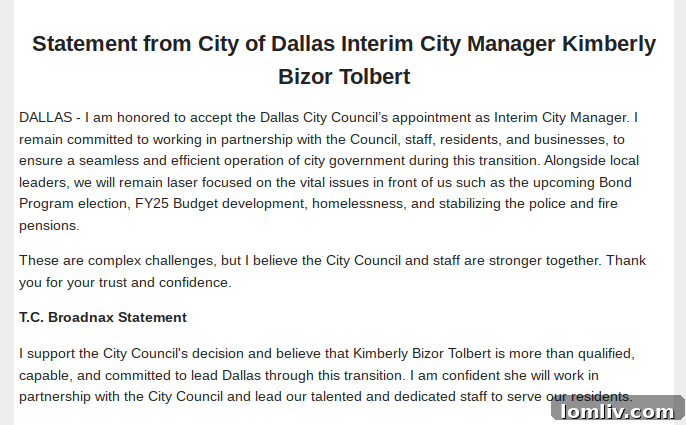
Following her appointment, Tolbert issued a statement to local media on Tuesday evening, acknowledging the trust placed in her and reaffirming her dedication to the city. While the specific text of her statement was not provided in detail, such communications typically convey a commitment to public service, a focus on maintaining continuity, and a pledge to work collaboratively with the city council and staff to address Dallas’s pressing needs.
Addressing the underlying concerns about the transparency of the process, Deputy Mayor Pro Tem Tennell Atkins, who chairs the ad hoc committee and presided over Tuesday’s meeting, directly refuted accusations of any clandestine dealings. He firmly stated, “We are going to do what is best for the City of Dallas. It’s not backdoor politics… It wasn’t a backdoor deal.” Atkins’s strong denial aimed to quell public apprehension and reassure residents that the decision was made with the city’s best interests at heart, emphasizing the council’s commitment to ethical governance and transparent leadership. This public affirmation sought to rebuild trust and underscore the integrity of the process, moving Dallas forward with an interim leader at the helm as the search for a permanent city manager begins in earnest.
The appointment of Kimberly Bizor Tolbert marks a significant moment for Dallas, setting the stage for a period of careful navigation as the city seeks its next long-term leader. Her extensive experience and the community’s support position her well to maintain stability and progress. Meanwhile, the city council faces the crucial task of conducting a transparent and thorough search for a permanent city manager, a process that will undoubtedly be closely watched by residents eager for strong, unified leadership. The path ahead requires continued dedication to open governance and collaborative decision-making to ensure Dallas remains on a trajectory of growth and prosperity.