When DIY Dreams Turn into Home Renovation Nightmares: A Cautionary Tale
In the iconic Clint Eastwood film, Magnum Force, Dirty Harry Callahan delivers a timeless piece of wisdom: “A man’s got to know his limitations.” This profound statement resonates deeply, perhaps nowhere more truly than in the world of homeownership. It’s an expression that surfaces most frequently when that tempting, often mischievous thought – “Hey, we can totally do this ourselves!” – begins to brew in your mind, promising cost savings and the satisfaction of a job well done. But as many homeowners discover, the path from DIY ambition to successful completion is fraught with potential pitfalls, costly mistakes, and even outright disasters.
My husband and I learned this lesson the hard way, right after purchasing our first home. The siren song of do-it-yourself projects was almost irresistible. Every weekend seemed to present a new opportunity for us to roll up our sleeves and tackle a home improvement challenge. We approached each task with boundless enthusiasm, albeit often with limited practical experience. This overconfidence eventually led us to the ambitious decision to install a new water heater on our own.
It was a revelation, a baptism by fire, demonstrating unequivocally that certain home improvement projects are not to be approached lightly. What seemed like a straightforward swap quickly devolved into a complex, multi-day ordeal. We discovered, much to our dismay, that a standard 40-gallon water heater doesn’t simply slide into the space previously occupied by a 20-gallon unit. This seemingly minor difference necessitated an entire redesign of the closet, involving unexpected demolition and reconstruction. As we navigated this initial hurdle, new problems emerged: the emergency pressure relief valve wouldn’t align with the existing plumbing, new pipes had to be cut and soldered, and what was supposed to be a simple replacement became a cascade of unforeseen complications. The sheer frustration, the escalating costs of multiple trips to the hardware store, and the growing sense of incompetence were overwhelming. By the time we finally conceded defeat and called a professional plumber, we were utterly exhausted and would have genuinely welcomed Dirty Harry’s .44 Magnum as a merciful end to our self-inflicted misery. This experience burned into us the critical importance of recognizing when a job truly calls for expert hands.
From Personal Blunders to Public Display: A Portland DIY Masterpiece

Our water heater saga, painful as it was, served as a crucial turning point. It taught us to approach home renovations with a healthy dose of skepticism and a clear understanding of our own limitations. Without that hard-won wisdom, I have no doubt our first home might have easily resembled the property we’re about to explore – a stunning, albeit unsettling, testament to the perils of ambitious DIY projects undertaken without adequate skill or planning. This week’s featured listing truly captures the essence of home improvement projects that have, shall we say, taken a unique turn.
Located at 1633 SW Skyline Boulevard, Portland, Oregon, this property is currently on the market for an ambitious $799,900. It boasts four bedrooms and three bathrooms, spread across almost 2,300 square feet, and sits comfortably on nearly half an acre of land. These are impressive statistics, but as we delve deeper into the visual evidence, it becomes clear that this house tells a much more intricate story than its basic specifications suggest – a narrative rich with bewildering design choices and questionable construction techniques that challenge conventional notions of home aesthetics and functionality.
The Stairway to… Confusion: Deconstructing the Front Porch

I admit, I have always been a staunch advocate for front porches. There’s something inherently charming and relaxing about a well-designed porch – a place to unwind, sip a morning coffee, and watch the world go by. It’s an extension of the home, a welcoming transitional space that enhances curb appeal and provides a sense of community. This particular porch, however, transcends the traditional and ventures boldly into the realm of the purely utilitarian, or perhaps, the utterly perplexing. Its design appears to prioritize an obstacle course over comfortable accessibility.
Why, you might ask, is this porch so peculiar? The answer lies in its sheer abundance of steps, a labyrinthine arrangement that demands both attention and agility. One begins with three steps to reach the first deck. Then, two more steps are required to enter the house itself. Should you desire to explore the other side of the property, be prepared for a descent: three steps down, followed by another two steps down. The cumulative effect is less a welcoming entry and more a rigorous workout routine. Forget the gym; a simple trip to and from your front door could easily fulfill your daily cardio requirements. This design raises fundamental questions about functionality, safety, and aesthetic coherence, suggesting a series of ad-hoc additions rather than a unified architectural vision.
Puzzling, indeed. It’s the kind of design that makes you wonder about the thought process behind each successive addition, each new level, and whether any long-term planning was involved at all.
An AC Unit’s Bold Statement: The Art of Unconventional Placement
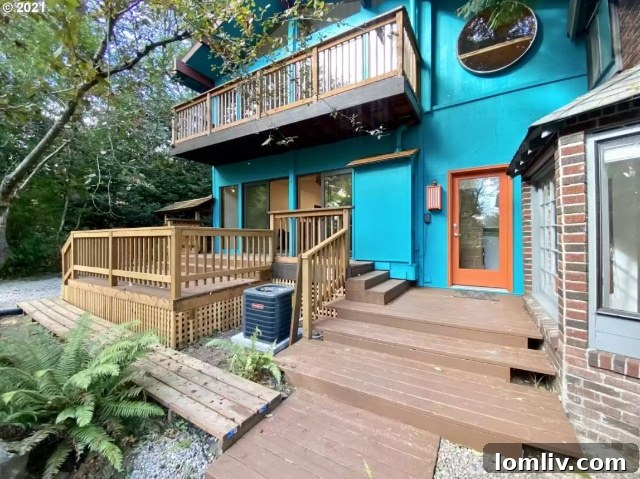
Imagine the conversation that might have led to this specific design choice: “Honey, do we really have to lug this heavy AC condenser unit all the way to the backyard?” The response, in what I can only imagine was a moment of misguided ingenuity, might have been: “Why no, sweetie, this spot right here is perfectly fine! We’ll make it work. We’ll simply build a few more steps and a lovely 2×6 walkway right in between all the existing steps to accommodate it.” And so, an eyesore was born.
This placement is far from ideal. Not only does it mar the home’s exterior aesthetic, but it also raises questions about the unit’s efficiency, noise levels near the main living areas, and accessibility for maintenance. HVAC systems are complex, and their outdoor units, while robust, require clear airflow and stable positioning. This haphazard arrangement, tucked away on a makeshift platform amid a maze of steps, speaks volumes about a lack of foresight and an eagerness to prioritize immediate convenience over proper installation and long-term functionality. It’s a classic example of a “make-it-work” mentality leading to less-than-optimal results.
The Doorway to Nowhere (or Everywhere?): A Study in Impracticality
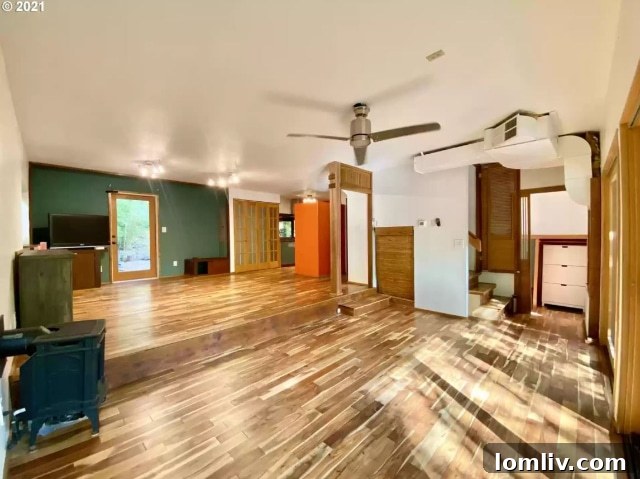
Are you starting to notice a recurring theme here? Allow me to present yet another fascinating architectural puzzle. Take a closer look at this next image.
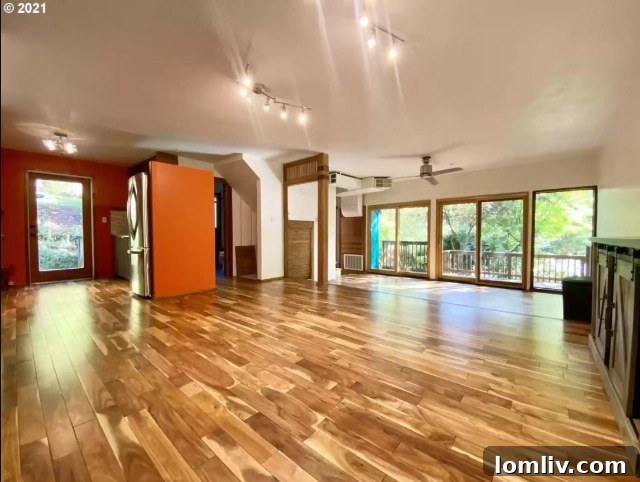
Indeed, that doorway with its single, towering step immediately brings to mind a scene from Mel Brooks’ comedic masterpiece, Blazing Saddles. You know the one: the bad guys are on their destructive path to Rockridge, only to be stopped by a ridiculously placed toll booth in the middle of the desert. Instead of simply riding around it, they send someone back for dimes to pay the toll. This doorway is the architectural equivalent of that absurd toll booth. It’s a deliberate impediment where none is required, a vertical challenge that could easily be circumvented with a simple, albeit large, step. The practicality is non-existent; the safety, questionable. One can only assume the residents of this home possess the shapeliest, strongest legs on the planet, honed by daily navigation of these unique architectural features. It’s a design choice that bafflingly elevates form (or lack thereof) over fundamental function and accessibility, making every entry and exit a minor athletic event.
The Bathroom: An Ode to Exposed Framing and “Creative” Storage
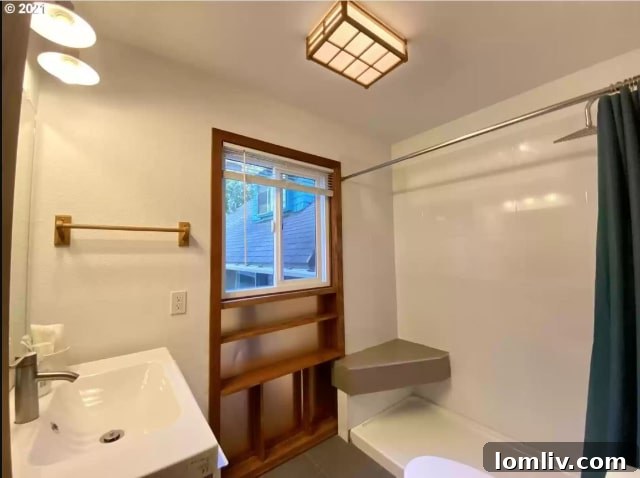
The bathroom truly is a marvel of “innovative” design. Forget meticulously planned cabinetry, sleek built-in niches, or even basic IKEA shelving units. Who needs professionally installed storage when you have raw, exposed framing? And what a brilliant idea to have it extend directly into the shower! The hypothetical conversation that spawned this creation might have unfolded thus: “Darling, it would be wonderful if we could have some extra shelving in the bathroom for our toiletries.” To which the confident DIYer might have responded: “I am already ahead of you, babycakes. Hold my beer.”
The result is a testament to raw ambition unfettered by conventional wisdom. Exposed wood framing in a wet environment like a shower is an invitation for mold, mildew, and eventual rot. Beyond the obvious hygiene and durability issues, the aesthetic impact is one of unfinished construction, not purposeful design. It screams “temporary fix” rather than a thought-out, permanent solution. This particular feature encapsulates the essence of DIY projects that prioritize expediency over proper materials, finishing, and long-term maintenance, ultimately creating more problems than they solve.
The Laundry Room: Hidden in Plain Sight
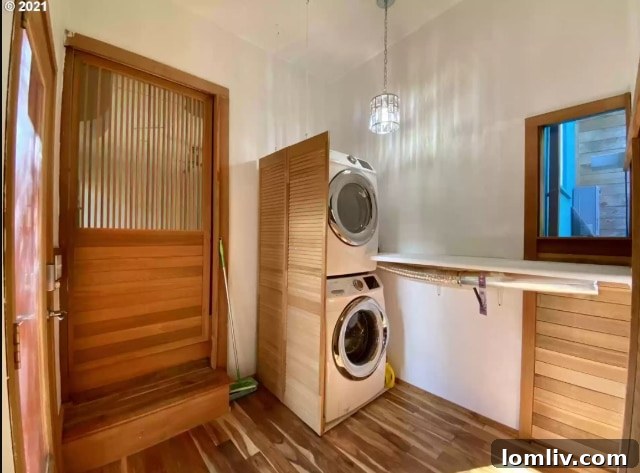
Even the washer and dryer seem to be experiencing a crisis of identity, shyly attempting to conceal themselves behind what appear to be reclaimed partition doors. One can almost hear the conversation: “Angel, it would be great if we could carve out a dedicated laundry room.” The response, full of characteristic DIY bravado: “No problemo, love of my life. Let me just grab those partition doors we were about to take to the curb. They’ll be perfect!”
This improvised laundry nook, characterized by its less-than-seamless integration and apparent lack of finishing, highlights yet another common pitfall of DIY enthusiasm: the repurposing of materials without considering their suitability or the overall aesthetic coherence. A laundry area should ideally be functional, well-ventilated, and, if enclosed, acoustically managed to mitigate noise. Here, it feels like an afterthought, a corner hastily screened off, leaving the space feeling disjointed and unfinished. It underscores the critical difference between creating a functional space and simply hiding appliances behind flimsy barriers.
The End of the Line: Knowing Your Limitations in Home Renovation

It’s not very often we get such a comprehensive, unfiltered look at what can happen when DIY aspirations meet a fundamental lack of expertise or careful planning. This Portland property serves as a compelling, if somewhat painful, cautionary tale. While the allure of saving money and the satisfaction of personal accomplishment are strong motivators for undertaking home improvement projects, there are crucial junctures where professional intervention isn’t just an option, but a necessity. Ignoring this truth can lead to results that are not only unsightly but also potentially unsafe, inefficient, and detrimental to your home’s value.
So, when should you absolutely call in the experts? For projects involving plumbing, electrical wiring, structural changes, roofing, and HVAC systems, professional knowledge is paramount. These areas carry significant risks if handled incorrectly, from fire hazards and water damage to structural instability and code violations. Even seemingly simpler tasks, like complex tiling or custom cabinetry, can yield vastly different results between a seasoned professional and an enthusiastic amateur. Knowing your limitations isn’t a sign of weakness; it’s a mark of wisdom, preventing your DIY dreams from spiraling into costly, time-consuming, and utterly disheartening renovation nightmares. Learn from our water heater debacle, and certainly, learn from this house in Portland: sometimes, the best tool you can wield is the phone to call a qualified professional.
To explore more bewildering details and photos of this unique listing, you can visit the full gallery here.