The concept of “view protection” often conjures images of affluent high-rise residents fiercely guarding their exclusive aerial panoramas. While there’s certainly a degree of truth to that sentiment, as someone who has personally invested time in scrutinizing nearby zoning regulations to anticipate future obstructions—a foresight few possess until it’s too late—the discussion extends far beyond individual property rights. What about the breathtaking vistas of our urban landscapes, those intricate tapestries of concrete, steel, and glass? Are these collective views, which define a city’s character, not equally deserving of preservation for all residents and visitors alike?
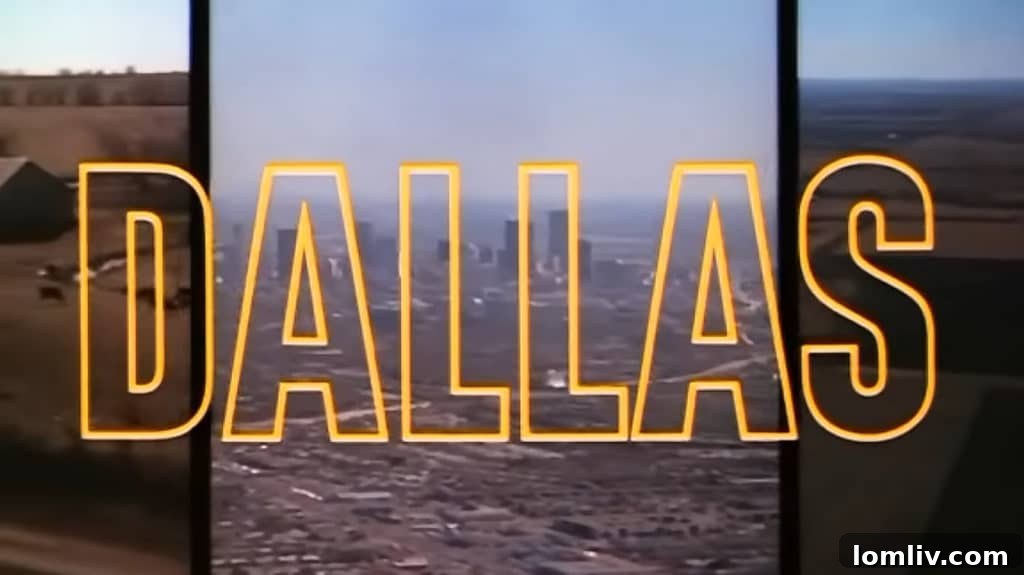
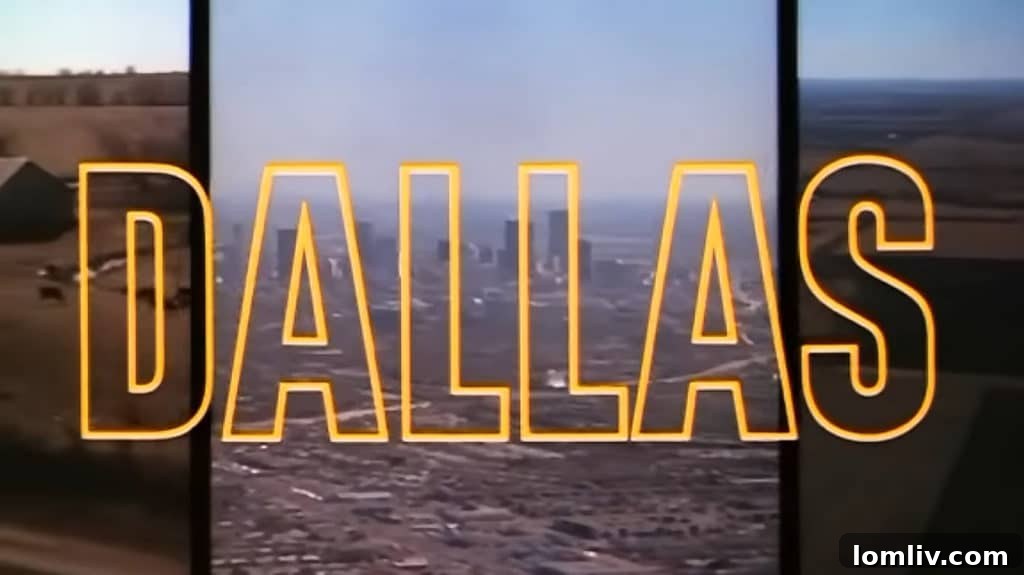
Indeed, city skylines are more than just clusters of buildings; they are indelible signatures, the visual epitaphs that encapsulate a city’s spirit and history. Just as the iconic opening credits of the 1980s television show Dallas etched its skyline into the global consciousness, so too do the silhouettes of other great cities serve as powerful symbols. Consider Washington, D.C., where strict height restrictions ensure no structure eclipses the majestic Capitol dome, maintaining a visual hierarchy that honors its democratic foundations. Think of Paris, where the Eiffel Tower remains a prominent beacon visible for miles, a testament to thoughtful urban planning that prioritizes its landmark. Honolulu, in the 1960s, famously halted plans that would have shrouded the majestic Diamond Head behind a wall of high-rises, recognizing the irreplaceable value of its natural icon. My hometown of Chicago offers another compelling example: certain buildings are deemed so integral to the city’s visual fabric that their views from Lake Michigan cannot be obstructed, even if these architectural marvels are located several blocks inland. These examples underscore a fundamental principle: a city’s aesthetic appeal, its very identity, is intrinsically linked to the preservation of its distinctive views.
Global Precedents: Cities That Champion View Preservation
The foresight displayed by cities like Washington D.C., Paris, and Honolulu in protecting their defining views isn’t merely an act of aesthetic preference; it’s a strategic decision rooted in cultural reverence, economic benefit, and a commitment to civic identity. In D.C., the Height of Buildings Act of 1910 ensures that the monumental core remains visually dominant, reinforcing the city’s role as the nation’s capital and preventing the dwarfing of its historic landmarks. This legislative framework not only preserves views but also fosters a unique urban experience, distinct from the towering canyons of other major metropolises.
Paris, with its renowned urban planning traditions, has long understood the power of an unobstructed vista. The city’s relatively uniform building heights, coupled with specific protected view corridors, allow the Eiffel Tower, Notre Dame, and the Sacré-Cœur to stand out as defining features against a cohesive urban backdrop. This approach contributes significantly to Paris’s global appeal as a tourist destination, where the romance of its architecture is consistently celebrated. Similarly, Honolulu’s decision to protect Diamond Head wasn’t just about preserving a natural landmark; it was about safeguarding the essence of Hawaiian identity and its allure for visitors, demonstrating a clear understanding of the interplay between natural beauty and urban development.
These global examples provide a powerful argument for proactive urban planning that considers view preservation as a critical component of sustainable growth. They highlight how cities can strategically manage their development to enhance, rather than diminish, their unique character and ensure that iconic landmarks remain visible and accessible to the public imagination. Such planning fosters a deeper connection between residents and their city, cultivates civic pride, and ultimately contributes to the long-term economic and cultural vitality of the urban environment.
Chicago Protects Its Classics: The Tribune Tower Legacy
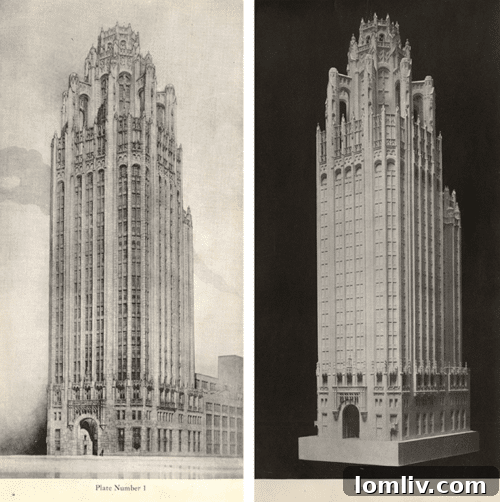
Chicago’s Tribune Tower stands as a monumental testament to the city’s commitment to architectural heritage and view preservation. Erected in 1925, its distinctive neo-Gothic form was the triumphant result of a globally acclaimed design competition that attracted entries from avant-garde modernists like Eliel Saarinen and Walter Gropius. Its victory underscored a prevailing appreciation for architectural grandeur that endures to this day. Despite being situated four substantial blocks inland from Lake Shore Drive, the Tribune Tower remains distinctly visible from the tranquil waters of Lake Michigan, a privilege afforded by the city’s farsighted leaders who designated it worthy of a protected view corridor, famously known as the Ogden Slip view corridor.
This protection isn’t just about admiring a beautiful building; it’s about safeguarding a piece of Chicago’s soul. The Tribune Tower, with its intricate carvings and flying buttresses, embodies a significant era in journalism and urban development. In an age where many metropolitan newspapers have downsized their operations, moving into smaller, more functional spaces, the grand edifice of the Tribune Tower has transitioned into luxury condominiums. This transformation, while reflective of changing urban economies, also ironically highlights a past era that placed immense value on the civic duty of fostering an informed citizenry.
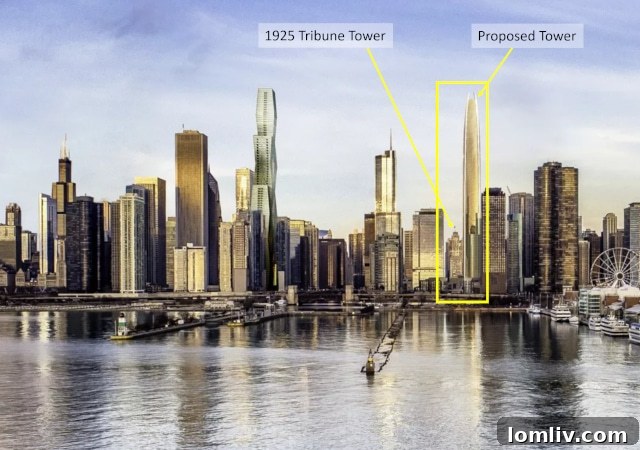
The rear section of the tower, which once housed the massive printing presses within a more modest, low-rise structure, has naturally caught the eye of developers. With their perpetual drive to maximize urban real estate, there were plans to erect a new tower on this very parcel. However, thanks to the established view protections, any new construction must respect the existing visual integrity of the Tribune Tower from the lakefront. As the accompanying image illustrates, this forthcoming development cannot obstruct the public’s cherished lakeside views of this nearly century-old architectural stalwart. The Tribune Tower, therefore, endures not just as a historical landmark but as a vibrant, visually accessible element of the Chicago skyline, a living example of how thoughtful urban planning can reconcile modern development with historical preservation.
Dallas’ Eroding Skyline: A Case of Unintended Consequences
My early professional travels to Dallas in the late 1980s and 1990s were often marked by a particular moment of pure urban enchantment: the drive into the city from the airport. Exiting south onto TX-183, passing the old stadium, I’d anticipate the first spectacular glimpse of Dallas’s illuminated skyline, sprawling majestically in the distance as I navigated the curve onto I-35E. That specific, breathtaking vista, a true signature of the city, is now tragically gone. It has been regrettably “stolen” by a proliferation of undistinguished, often bland, buildings that have sprung up in areas like Victory (notably, The Katy and Alexan) and the Design District, including the unremarkable AMLI tower. While the AMLI Fountain Place at least attempts to harmonize with I.M. Pei’s original design, many of these newer structures contribute little to the city’s visual language, instead acting as architectural noise.
One cannot help but wonder if the Dallas Plan Commission or the City Council ever truly deliberated on the immense value of preserving that iconic I-35E view for the countless residents and visitors who pass through. My skepticism is profound. Was there an open discussion regarding the architectural merits or the visual impact of One Arts Plaza’s monolithic slab, which now obstructs crucial downtown views from the east? Again, I harbor serious doubts. In both these unfortunate instances, the encroaching buildings offer little in the way of architectural verve or distinction to compensate for the significant visual “thefts” they have committed. While I’ve always wished for a bolder statement, structures like the Museum Tower at least contribute positively to the downtown’s visual dialogue, unlike the uninspired Stewart building, clumsily placed near the Myerson, or the impending Atelier, which threatens to further clutter the landscape.
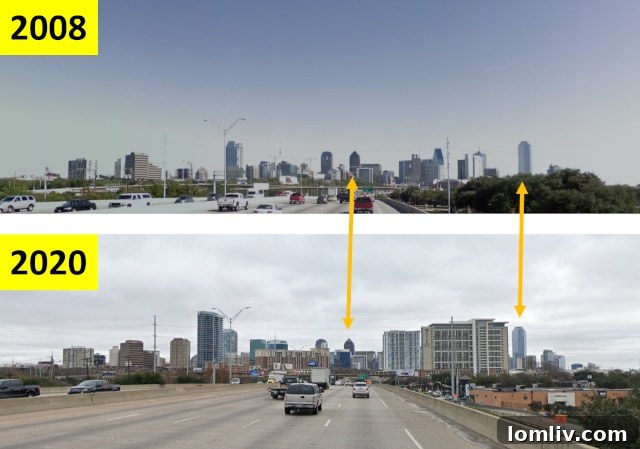
There is no question that downtown Dallas desperately needs more visually captivating skyscrapers, structures that inspire awe and add genuine character. However, this pursuit should not come at the expense of preserving its citizens’ views of existing, impactful buildings. Repeatedly, I hear City Hall assert that they “cannot define or demand pretty architecture”—a stance that, while perhaps understandable, feels somewhat like a cop-out. It is, however, an entirely different matter to actively protect its citizens’ enjoyment of the architectural heritage and visual beauty that already exists. In many respects, downtown Dallas increasingly resembles an architecture exhibit with a concerning scarcity of “studs” and an overwhelming abundance of “duds,” reflecting a lack of coherent visual planning and an unfortunate disregard for the public’s visual commons.
Iconic Dallas Structures: A Call for Preservation
Dallas boasts a distinctive collection of architectural icons that are fundamental to its identity and often serve as the first impression for newcomers. These aren’t just buildings; they are landmarks, symbols, and touchstones of the city’s history and ambition. The question must be asked: Should the distinctive ball of the Reunion Tower, an undisputed beacon on the skyline, ever be obstructed from key vantage points?
The radiant green glow of the Bank of America Plaza is an instantly recognizable feature, particularly at night. Should this vibrant spectacle ever be allowed to be diminished or blocked?
The unique “X” pattern of the Renaissance Tower adds a striking geometric dimension to the downtown cluster. Is its distinctive profile not worthy of protection?
The elegant, angular design of Fountain Place is an architectural triumph, a testament to modernist design. To allow its views to be compromised would be a significant loss to the city’s aesthetic heritage.
And what of the majestic JP Morgan Chase Tower? While some might debate the merits of its blue bug logo, its imposing structure is undeniably a critical component of the Dallas skyline. Should its prominence ever be threatened by unsympathetic development?
Beyond these modern giants, Dallas also possesses venerable historical structures whose visual integrity is equally vital. The 1943 Mercantile National Bank Building, a celebrated Art Deco landmark, already suffers from obstructed views. Should its visual degradation be allowed to continue or worsen? And looking back, should the elegant 1923 Magnolia Oil building, with its Pegasus atop, have been more rigorously protected in its time, preventing the encroachment that has diminished its impact?
These questions are not merely rhetorical; they underscore a pressing need for a comprehensive urban strategy in Dallas that recognizes the intrinsic value of its architectural landmarks. Protecting the views of these iconic buildings is not about halting progress but about ensuring that new development harmonizes with and enhances, rather than detracts from, the existing beauty and identity of the city. Each of these structures contributes uniquely to the collective visual narrative of Dallas, and their unobstructed presence is a public good, enriching the lives of residents and captivating visitors.
Views in The Public Realm: Equity, Identity, and the Future of Dallas
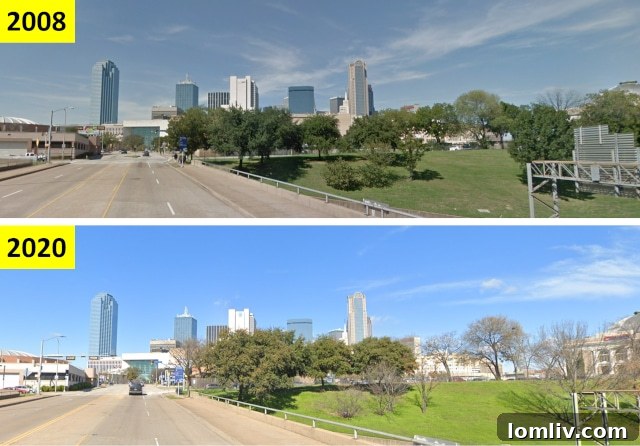
Many enlightened cities globally grasp the profound intrinsic value derived from the enjoyment of their natural vistas and magnificent man-made wonders. For Dallas residents and visitors, it is high time we initiated a serious, city-wide discussion about the imperative of view preservation. As vividly illustrated by recent transformations, the past decade’s relentless development has radically altered and regrettably obscured the visibility of the Dallas skyline from countless points across the city. What were once clear, inspiring panoramas have been swallowed by a proliferation of dreary, architecturally trite buildings that now act as suffocating shrouds over the vibrant canvas of our city, diminishing our collective enjoyment and civic pride.
Interestingly, a crucial and often overlooked dimension to this issue is the role that race and historical development patterns play. Paradoxically, some of the best-preserved, most expansive views of the iconic Dallas skyline are found in Southern Dallas. This isn’t due to intentional planning to protect these views, but rather a somber reflection of decades of underinvestment; developers historically have not chosen to build view-altering high-rises or, indeed, much of anything substantial in historically brown and black Dallas communities. This stark reality means that while more affluent, predominantly white areas in the north have seen their cherished skyline views eradicated by unchecked development, the neglect in the south has, inadvertently, preserved a different kind of visual heritage.
There’s a deep irony in this situation: the very “northern high-rise money” that drives much of Dallas’s development is, in essence, inflicting a self-inflicted wound, obliterating the very skyline views that many residents, particularly in white Dallas, once treasured. This highlights a critical need for equitable and thoughtful urban planning that considers the visual impact of development across all parts of the city, not just where the immediate investment capital flows. A city’s skyline is a public good, a shared amenity that contributes to the quality of life, tourism, and overall civic identity. To treat it as a limitless commodity, susceptible to piecemeal degradation, is to diminish the city itself.
Forging a Path Forward: Strategies for Dallas’s Skyline
To reverse this trend and secure Dallas’s visual legacy, a proactive and comprehensive strategy is urgently needed. The city could establish clearly defined view corridors, similar to Chicago’s Ogden Slip, identifying critical vantage points from which iconic buildings or the entire skyline should remain unobstructed. These corridors could be legally protected through zoning overlays and integrated into the city’s master plan, making view preservation a non-negotiable aspect of future development proposals. This would move beyond subjective aesthetic debates and provide objective criteria for assessing new construction.
Furthermore, Dallas must undertake a city-wide inventory of its valuable views—both natural and man-made—and explicitly articulate which architectural landmarks and natural features are considered essential to its identity. This process should involve urban planning experts, architects, historians, and, critically, community members from all parts of Dallas, ensuring a diverse range of perspectives. Such an inventory would serve as a powerful tool for policymakers, developers, and citizens alike, guiding responsible growth and preventing further visual degradation.
The long-term benefits of view preservation are undeniable: an enhanced urban experience for residents, a stronger draw for tourism, increased property values in areas with protected views, and a reinforced sense of civic identity and pride. Dallas City Hall’s assertion that it “cannot define or demand pretty architecture” may hold some weight, but it is an entirely different matter to protect the public’s enjoyment of what already exists. Safeguarding existing iconic views is about valuing our heritage, investing in our future, and ensuring that Dallas’s skyline remains a source of inspiration, not regret. It’s time for Dallas to step up and join the ranks of globally recognized cities that understand and actively protect their unique visual assets.
UPDATE: Following the initial publication of this column, an illustrative tip regarding a zoning case emerged, further underscoring the pressing need for these protections. To delve deeper into this ongoing challenge for Dallas’s skyline, I encourage you to read more here.
The concept of “view protection” often conjures images of affluent high-rise residents fiercely guarding their exclusive aerial panoramas. While there’s certainly a degree of truth to that sentiment, as someone who has personally invested time in scrutinizing nearby zoning regulations to anticipate future obstructions—a foresight few possess until it’s too late—the discussion extends far beyond individual property rights. What about the breathtaking vistas of our urban landscapes, those intricate tapestries of concrete, steel, and glass? Are these collective views, which define a city’s character, not equally deserving of preservation for all residents and visitors alike?
Indeed, city skylines are more than just clusters of buildings; they are indelible signatures, the visual epitaphs that encapsulate a city’s spirit and history. Just as the iconic opening credits of the 1980s television show Dallas etched its skyline into the global consciousness, so too do the silhouettes of other great cities serve as powerful symbols. Consider Washington, D.C., where strict height restrictions ensure no structure eclipses the majestic Capitol dome, maintaining a visual hierarchy that honors its democratic foundations. Think of Paris, where the Eiffel Tower remains a prominent beacon visible for miles, a testament to thoughtful urban planning that prioritizes its landmark. Honolulu, in the 1960s, famously halted plans that would have shrouded the majestic Diamond Head behind a wall of high-rises, recognizing the irreplaceable value of its natural icon. My hometown of Chicago offers another compelling example: certain buildings are deemed so integral to the city’s visual fabric that their views from Lake Michigan cannot be obstructed, even if these architectural marvels are located several blocks inland. These examples underscore a fundamental principle: a city’s aesthetic appeal, its very identity, is intrinsically linked to the preservation of its distinctive views.
Global Precedents: Cities That Champion View Preservation
The foresight displayed by cities like Washington D.C., Paris, and Honolulu in protecting their defining views isn’t merely an act of aesthetic preference; it’s a strategic decision rooted in cultural reverence, economic benefit, and a commitment to civic identity. In D.C., the Height of Buildings Act of 1910 ensures that the monumental core remains visually dominant, reinforcing the city’s role as the nation’s capital and preventing the dwarfing of its historic landmarks. This legislative framework not only preserves views but also fosters a unique urban experience, distinct from the towering canyons of other major metropolises.
Paris, with its renowned urban planning traditions, has long understood the power of an unobstructed vista. The city’s relatively uniform building heights, coupled with specific protected view corridors, allow the Eiffel Tower, Notre Dame, and the Sacré-Cœur to stand out as defining features against a cohesive urban backdrop. This approach contributes significantly to Paris’s global appeal as a tourist destination, where the romance of its architecture is consistently celebrated. Similarly, Honolulu’s decision to protect Diamond Head wasn’t just about preserving a natural landmark; it was about safeguarding the essence of Hawaiian identity and its allure for visitors, demonstrating a clear understanding of the interplay between natural beauty and urban development.
These global examples provide a powerful argument for proactive urban planning that considers view preservation as a critical component of sustainable growth. They highlight how cities can strategically manage their development to enhance, rather than diminish, their unique character and ensure that iconic landmarks remain visible and accessible to the public imagination. Such planning fosters a deeper connection between residents and their city, cultivates civic pride, and ultimately contributes to the long-term economic and cultural vitality of the urban environment.
Chicago Protects Its Classics: The Tribune Tower Legacy
Chicago’s Tribune Tower stands as a monumental testament to the city’s commitment to architectural heritage and view preservation. Erected in 1925, its distinctive neo-Gothic form was the triumphant result of a globally acclaimed design competition that attracted entries from avant-garde modernists like Eliel Saarinen and Walter Gropius. Its victory underscored a prevailing appreciation for architectural grandeur that endures to this day. Despite being situated four substantial blocks inland from Lake Shore Drive, the Tribune Tower remains distinctly visible from the tranquil waters of Lake Michigan, a privilege afforded by the city’s farsighted leaders who designated it worthy of a protected view corridor, famously known as the Ogden Slip view corridor.
This protection isn’t just about admiring a beautiful building; it’s about safeguarding a piece of Chicago’s soul. The Tribune Tower, with its intricate carvings and flying buttresses, embodies a significant era in journalism and urban development. In an age where many metropolitan newspapers have downsized their operations, moving into smaller, more functional spaces, the grand edifice of the Tribune Tower has transitioned into luxury condominiums. This transformation, while reflective of changing urban economies, also ironically highlights a past era that placed immense value on the civic duty of fostering an informed citizenry.
The rear section of the tower, which once housed the massive printing presses within a more modest, low-rise structure, has naturally caught the eye of developers. With their perpetual drive to maximize urban real estate, there were plans to erect a new tower on this very parcel. However, thanks to the established view protections, any new construction must respect the existing visual integrity of the Tribune Tower from the lakefront. As the accompanying image illustrates, this forthcoming development cannot obstruct the public’s cherished lakeside views of this nearly century-old architectural stalwart. The Tribune Tower, therefore, endures not just as a historical landmark but as a vibrant, visually accessible element of the Chicago skyline, a living example of how thoughtful urban planning can reconcile modern development with historical preservation.
Dallas’ Eroding Skyline: A Case of Unintended Consequences
My early professional travels to Dallas in the late 1980s and 1990s were often marked by a particular moment of pure urban enchantment: the drive into the city from the airport. Exiting south onto TX-183, passing the old stadium, I’d anticipate the first spectacular glimpse of Dallas’s illuminated skyline, sprawling majestically in the distance as I navigated the curve onto I-35E. That specific, breathtaking vista, a true signature of the city, is now tragically gone. It has been regrettably “stolen” by a proliferation of undistinguished, often bland, buildings that have sprung up in areas like Victory (notably, The Katy and Alexan) and the Design District, including the unremarkable AMLI tower. While the AMLI Fountain Place at least attempts to harmonize with I.M. Pei’s original design, many of these newer structures contribute little to the city’s visual language, instead acting as architectural noise.
One cannot help but wonder if the Dallas Plan Commission or the City Council ever truly deliberated on the immense value of preserving that iconic I-35E view for the countless residents and visitors who pass through. My skepticism is profound. Was there an open discussion regarding the architectural merits or the visual impact of One Arts Plaza’s monolithic slab, which now obstructs crucial downtown views from the east? Again, I harbor serious doubts. In both these unfortunate instances, the encroaching buildings offer little in the way of architectural verve or distinction to compensate for the significant visual “thefts” they have committed. While I’ve always wished for a bolder statement, structures like the Museum Tower at least contribute positively to the downtown’s visual dialogue, unlike the uninspired Stewart building, clumsily placed near the Myerson, or the impending Atelier, which threatens to further clutter the landscape.
There is no question that downtown Dallas desperately needs more visually captivating skyscrapers, structures that inspire awe and add genuine character. However, this pursuit should not come at the expense of preserving its citizens’ views of existing, impactful buildings. Repeatedly, I hear City Hall assert that they “cannot define or demand pretty architecture”—a stance that, while perhaps understandable, feels somewhat like a cop-out. It is, however, an entirely different matter to actively protect its citizens’ enjoyment of the architectural heritage and visual beauty that already exists. In many respects, downtown Dallas increasingly resembles an architecture exhibit with a concerning scarcity of “studs” and an overwhelming abundance of “duds,” reflecting a lack of coherent visual planning and an unfortunate disregard for the public’s visual commons.
Iconic Dallas Structures: A Call for Preservation
Dallas boasts a distinctive collection of architectural icons that are fundamental to its identity and often serve as the first impression for newcomers. These aren’t just buildings; they are landmarks, symbols, and touchstones of the city’s history and ambition. The question must be asked: Should the distinctive ball of the Reunion Tower, an undisputed beacon on the skyline, ever be obstructed from key vantage points?
The radiant green glow of the Bank of America Plaza is an instantly recognizable feature, particularly at night. Should this vibrant spectacle ever be allowed to be diminished or blocked?
The unique “X” pattern of the Renaissance Tower adds a striking geometric dimension to the downtown cluster. Is its distinctive profile not worthy of protection?
The elegant, angular design of Fountain Place is an architectural triumph, a testament to modernist design. To allow its views to be compromised would be a significant loss to the city’s aesthetic heritage.
And what of the majestic JP Morgan Chase Tower? While some might debate the merits of its blue bug logo, its imposing structure is undeniably a critical component of the Dallas skyline. Should its prominence ever be threatened by unsympathetic development?
Beyond these modern giants, Dallas also possesses venerable historical structures whose visual integrity is equally vital. The 1943 Mercantile National Bank Building, a celebrated Art Deco landmark, already suffers from obstructed views. Should its visual degradation be allowed to continue or worsen? And looking back, should the elegant 1923 Magnolia Oil building, with its Pegasus atop, have been more rigorously protected in its time, preventing the encroachment that has diminished its impact?
These questions are not merely rhetorical; they underscore a pressing need for a comprehensive urban strategy in Dallas that recognizes the intrinsic value of its architectural landmarks. Protecting the views of these iconic buildings is not about halting progress but about ensuring that new development harmonizes with and enhances, rather than detracts from, the existing beauty and identity of the city. Each of these structures contributes uniquely to the collective visual narrative of Dallas, and their unobstructed presence is a public good, enriching the lives of residents and captivating visitors.
Views in The Public Realm: Equity, Identity, and the Future of Dallas
Many enlightened cities globally grasp the profound intrinsic value derived from the enjoyment of their natural vistas and magnificent man-made wonders. For Dallas residents and visitors, it is high time we initiated a serious, city-wide discussion about the imperative of view preservation. As vividly illustrated by recent transformations, the past decade’s relentless development has radically altered and regrettably obscured the visibility of the Dallas skyline from countless points across the city. What were once clear, inspiring panoramas have been swallowed by a proliferation of dreary, architecturally trite buildings that now act as suffocating shrouds over the vibrant canvas of our city, diminishing our collective enjoyment and civic pride.
Interestingly, a crucial and often overlooked dimension to this issue is the role that race and historical development patterns play. Paradoxically, some of the best-preserved, most expansive views of the iconic Dallas skyline are found in Southern Dallas. This isn’t due to intentional planning to protect these views, but rather a somber reflection of decades of underinvestment; developers historically have not chosen to build view-altering high-rises or, indeed, much of anything substantial in historically brown and black Dallas communities. This stark reality means that while more affluent, predominantly white areas in the north have seen their cherished skyline views eradicated by unchecked development, the neglect in the south has, inadvertently, preserved a different kind of visual heritage.
There’s a deep irony in this situation: the very “northern high-rise money” that drives much of Dallas’s development is, in essence, inflicting a self-inflicted wound, obliterating the very skyline views that many residents, particularly in white Dallas, once treasured. This highlights a critical need for equitable and thoughtful urban planning that considers the visual impact of development across all parts of the city, not just where the immediate investment capital flows. A city’s skyline is a public good, a shared amenity that contributes to the quality of life, tourism, and overall civic identity. To treat it as a limitless commodity, susceptible to piecemeal degradation, is to diminish the city itself.
Forging a Path Forward: Strategies for Dallas’s Skyline
To reverse this trend and secure Dallas’s visual legacy, a proactive and comprehensive strategy is urgently needed. The city could establish clearly defined view corridors, similar to Chicago’s Ogden Slip, identifying critical vantage points from which iconic buildings or the entire skyline should remain unobstructed. These corridors could be legally protected through zoning overlays and integrated into the city’s master plan, making view preservation a non-negotiable aspect of future development proposals. This would move beyond subjective aesthetic debates and provide objective criteria for assessing new construction.
Furthermore, Dallas must undertake a city-wide inventory of its valuable views—both natural and man-made—and explicitly articulate which architectural landmarks and natural features are considered essential to its identity. This process should involve urban planning experts, architects, historians, and, critically, community members from all parts of Dallas, ensuring a diverse range of perspectives. Such an inventory would serve as a powerful tool for policymakers, developers, and citizens alike, guiding responsible growth and preventing further visual degradation.
The long-term benefits of view preservation are undeniable: an enhanced urban experience for residents, a stronger draw for tourism, increased property values in areas with protected views, and a reinforced sense of civic identity and pride. Dallas City Hall’s assertion that it “cannot define or demand pretty architecture” may hold some weight, but it is an entirely different matter to protect the public’s enjoyment of what already exists. Safeguarding existing iconic views is about valuing our heritage, investing in our future, and ensuring that Dallas’s skyline remains a source of inspiration, not regret. It’s time for Dallas to step up and join the ranks of globally recognized cities that understand and actively protect their unique visual assets.
UPDATE: Following the initial publication of this column, an illustrative tip regarding a zoning case emerged, further underscoring the pressing need for these protections. To delve deeper into this ongoing challenge for Dallas’s skyline, I encourage you to read more here.