In the vibrant and rapidly evolving urban landscape of Dallas, discussions surrounding park development and the revitalization of public spaces often ignite passionate and complex debates. Reverchon Park, a historic and cherished green oasis nestled within the city, has recently found itself at the heart of such a significant discourse. It is imperative, however, to clarify from the outset that my core concern is not merely about the ultimate fate or specific architectural design of Reverchon Park itself, but rather the opaque, often questionable, and inconsistent processes that appear to govern such pivotal civic projects. While I readily acknowledge the city’s continuous need for progress, modernization, and thoughtful urban renewal, the methods employed in reaching these significant outcomes are of paramount importance. In the case of Reverchon Park, these methods have regrettably raised a considerable number of red flags, prompting a deeper examination of civic accountability.
To state it plainly and unequivocally: the specific operational details or the future commercial viability of Reverchon Park do not directly impinge upon my personal daily life. Whether a cutting-edge sports complex were to emerge, or even if a second American Airlines Center were to be strategically positioned within its historic bounds—provided such a development were executed with meticulous planning and garnered comprehensive, transparent support from the surrounding neighborhood—I would remain largely unaffected. My personal lifestyle does not involve engagement with local sports; I do not have children who would utilize the recreational facilities at the park, and my interaction with the immediate vicinity of Reverchon Park is generally confined to occasional leisurely strolls. Furthermore, my high-rise residence is strategically oriented away from the park, effectively insulating me from any direct visual, auditory, or olfactory impact of potential developments. Consequently, apart from the inherent ecological and aesthetic value of its cherished green spaces, the precise nature of the future developments within Reverchon Park remains a matter of distant personal concern.
Nevertheless, my personal detachment from the ultimate outcome does not, in any way, diminish my profound and unwavering concern for the process through which such a significant transformation is being pursued. This is precisely where the core issues become strikingly apparent, revealing a troubling pattern of irregularities that fundamentally undermine public trust and challenge the very principles of transparent, democratic urban governance. This is not about the end goal, but the integrity of the journey.
Unveiling a Troubling Pattern: The Reverchon Park Development Process
The entire journey of the Reverchon Park development project has been notably marked by decisions that, at their most favorable interpretation, seem high-handed, and at their most critical, suggest a deliberate strategy to circumvent genuine public engagement and due process. Let’s delve into some of these critical junctures and examine the implications for Dallas urban planning:
- The Shifting Narrative: From “Redevelopment” to “Renovation”: A significant point of concern arose in December 2016 when the Parks Board initially explored plans for a comprehensive “redevelopment” of Reverchon Park. However, a mere eight months later, as public meetings were eventually announced, the official narrative subtly but significantly shifted to a less ambitious term: “renovation.” This linguistic change is far from trivial. “Redevelopment” inherently implies major structural changes, potential alterations in land use, and often new construction, all of which necessitate extensive public scrutiny and environmental impact assessments. “Renovation,” by contrast, typically suggests minor improvements, repairs, or upgrades to existing facilities, which tends to elicit less public attention and concern. Was this a deliberate, calculated move to downplay the true scope and ambition of the project, thereby mitigating potential community opposition and minimizing rigorous oversight? The sequence of events strongly suggests such an intention.
- A Startling Dearth of Public Dialogue: Following the initial, sparsely attended “public” meetings in 2017, an astonishing and unsettling three-year period ensued without a single subsequent public forum or town hall meeting. This prolonged silence persisted even as the project’s scope dramatically expanded, including the proposed stadium’s seating capacity surging to an imposing 3,500. This extended absence of continuous public discourse, particularly through the crucial stages of two Requests for Proposals (RFPs), effectively marginalized and silenced community voices. It denied concerned residents the fundamental opportunity to stay informed, to question evolving plans, or to meaningfully influence the project’s direction. Such a glaring lack of sustained public dialogue is profoundly antithetical to the principles of sound urban planning and responsible community development.
- Inadequate and Ineffective Public Outreach: A critical question arises: Were the initial public meetings in 2017 adequately promoted and publicized to ensure broad and meaningful neighborhood engagement? The unfortunate answer, based on community feedback and observed participation levels, is a resounding no. Effective public engagement demands proactive, multi-channel, and culturally sensitive outreach strategies, not merely token announcements or obscure postings. The apparent lack of genuine and sustained effort to inform and involve the local community raises serious doubts about the commitment to inclusive decision-making and genuine civic participation.
- The Overturning of Democratic Decisions: The high-handed and abrupt manner in which the Dallas City Council’s December 2019 decision regarding Reverchon Park was overturned is particularly troubling. This maneuver directly undermined the democratic process, sending a chilling message that legitimate council decisions could be reversed or overridden through less transparent means. Such actions erode public confidence in the integrity and reliability of city governance, fostering cynicism among citizens.
- A Hasty Approval Without Due Process: The decision by the city council in January 2020 to approve the measure, rather than postponing it for a crucial month to facilitate much-needed public meetings, epitomizes a “damn the torpedoes” approach to urban development. This inexplicable haste, especially when viewed against the backdrop of preceding years of minimal public engagement, strongly suggests a predetermined resolve to push the project through regardless of public sentiment, procedural norms, or the imperative for comprehensive community input.
- Unusual Political Dynamics and District Override: The peculiar lead role assumed by District 14 Council Member David Blewett on a project physically situated within District 6 (which is represented by Council Member Adam Medrano), particularly when Medrano ultimately expressed opposition to the project, was undeniably bizarre. Such an unusual political alignment raises significant questions about influence, the customary protocols of inter-district cooperation, and the potential for a council member to champion a project outside their immediate constituency, seemingly against the wishes of the locally elected representative. This dynamic further complicates the narrative of community representation.
- A Deception by Omission: Perhaps one of the most glaring revelations was the subsequent discovery that the city had possessed available funds for a genuine “renovation” of the ballfield for a substantial 13-year period. This was precisely the type of renovation that had been subtly suggested in early invitations and public statements. Yet, the city chose to remain entirely silent on this crucial fact. This deception by omission suggests a deliberate withholding of vital information that could have provided a simpler, less contentious, and more community-aligned path for the park’s improvement. This lack of transparency casts a deep shadow over the true motivations behind the more ambitious and controversial development proposal.
Questionable Bidding and Unaddressed Financial Irregularities
The procurement process for the Reverchon Park project further compounds the growing concerns about transparency, fairness, and potential conflicts of interest:
- Sole Bidders and Expedited Plans: It was notably peculiar that only a single bid materialized for each Request for Proposal (RFP issued for the project). In the realm of public contracting, competitive bidding is not merely a formality; it is a fundamental safeguard designed to ensure fair competition, prevent undue influence, and guarantee the best value for taxpayers. Even more remarkable was the reported ability of these lone bidders to assemble comprehensive and detailed plans in an unusually short timeframe—under 30 days. This raises legitimate and pressing questions about whether the RFPs were inadvertently or intentionally tailored to suit specific entities, or if certain bidders possessed privileged insider knowledge that granted them an unfair competitive advantage, thereby undermining the integrity of the bidding process.
- Unexplained Capacity Surge: The 2019 RFP introduced an inexplicable and significant 1,100-seat increase in the proposed stadium’s capacity. This sudden expansion, which conveniently and precisely aligned with the needs and capabilities of the sole bidder, lacked any apparent public justification or documented community demand. Such an arbitrary escalation in project scope, without transparent rationale, strongly suggests that the project’s parameters were being adjusted to accommodate a specific developer’s interests rather than evolving organically from identified community needs, independent assessments, or a robust public consultation process.
- Misdirected Donations and Conflict of Interest: The revelation that “Friends of Reverchon Park,” an organization ostensibly dedicated to the park’s betterment, directed its accumulated donations to another affiliated organization with shared officers, rather than directly investing those much-needed funds into Reverchon Park itself, represents a serious and undeniable conflict of interest. This practice effectively diverts resources explicitly intended for the park, severely undermining public trust and accountability in charitable giving for civic projects. It raises ethical questions about the true beneficiaries and the stewardship of funds meant for public good.
Beyond the Surface: Deconstructing the Arguments for Development
Despite these myriad irregularities, many city officials, various media outlets, and a chorus of anonymous online commentators often appear singularly focused on pushing the stadium’s construction to an immediate completion. They frequently dismiss legitimate community concerns, often resorting to a narrow, and at times, misleading narrative.
Officials, for instance, frequently claim strict adherence to process, yet concurrently offer vague assurances of future improvements—a perpetual “we’ll do better next time” promise that consistently fails to address the very real failings of the present. This serves as a convenient tactic to deflect criticism without offering genuine accountability for past missteps or a tangible commitment to rectify procedural deficiencies.
A particularly common rhetorical strategy employed is the “think of the children” defense, framing the proposal as the sole viable alternative for children to play baseball at Reverchon Park. This argument is, frankly, a disingenuous smokescreen. The opposition from neighbors has never been about denying recreational opportunities for youth. Instead, their profound concerns are deeply rooted in the proposed massive five-fold increase in the project’s overall size, the introduction of semi-professional teams, and the prospect of hosting large-scale concerts and other commercial entertainment events. These elements carry significant and unavoidable implications: intensified traffic congestion, pervasive noise pollution, amplified strain on already stretched local infrastructure, and a fundamental, irreversible alteration of the park’s character—transforming it from a beloved neighborhood amenity into a regional entertainment venue.
It is crucial to consider how dramatically perspectives might shift if those vehemently advocating for the project were themselves directly impacted by its externalities. One can easily imagine the justifiable outrage of an East Dallas resident, whose primary and pressing concern is a poorly maintained sidewalk near a school, being dismissively told that their sidewalk would only be repaired by a developer opening a boozy concert venue directly adjacent to the school. This hypothetical scenario, while designed to be illustrative, powerfully highlights the profound disconnect between the project’s proponents and the tangible reality faced by residents residing within the immediate “blast radius” of such a large-scale development.
The pervasive assertion that this issue represents a zero-sum game—implying that either the stadium is built precisely as proposed or nothing at all will improve—is both simplistic and patently false. This reductionist view entirely ignores the existence of alternative, potentially more creative, and genuinely community-driven solutions that could significantly benefit Reverchon Park without overwhelming its surrounding residential neighborhood and its vital infrastructure. True urban planning demands a nuanced approach, not binary thinking.
Lessons from Other Dallas Developments: Fair Park and Beyond
Tim Rogers of D Magazine, in a February 25th piece that seemingly aimed to discredit my earlier investigative work on Reverchon’s complex finances, drew a comparison to Fair Park. He wrote: “Think about Reverchon in the context of Fair Park. Repairing the buildings at Fair Park isn’t the point. Or it’s not all the point. The big deal, the real fix that will serve Dallas and its citizens, is finding a smart, creative operator to assume control of an underused asset and run an amenity the way City Hall can’t. The Dallas Zoo = private operator. Fair Park = private operator. And Reverchon Park? There are those who live in the neighborhood around it who don’t see it as equal.”
While the broader concept of engaging private operators to revitalize underutilized public assets certainly holds merit, Rogers and many other commentators frequently overlook a crucial, distinguishing factor concerning projects of the scale of Fair Park, the Dallas Zoo, and even the Dallas Arboretum. These significant developments, although now skillfully managed by private entities, underwent extensive, protracted, and highly visible periods of public consultation and engagement. I personally participated in numerous public meetings concerning Fair Park, often sitting on panels alongside individuals who would later become Dallas mayors. Even the controversial, yet ultimately approved, deal meticulously crafted by former Mayor Rawlings’ close associate Walt Humann involved an immense level of public involvement, including dedicated city council sessions focused specifically on the Hall of State property. This robust and comprehensive public engagement stands in stark contrast to the development process for Reverchon Park, where neighborhood involvement was virtually non-existent, leaving residents feeling sidelined and unheard.
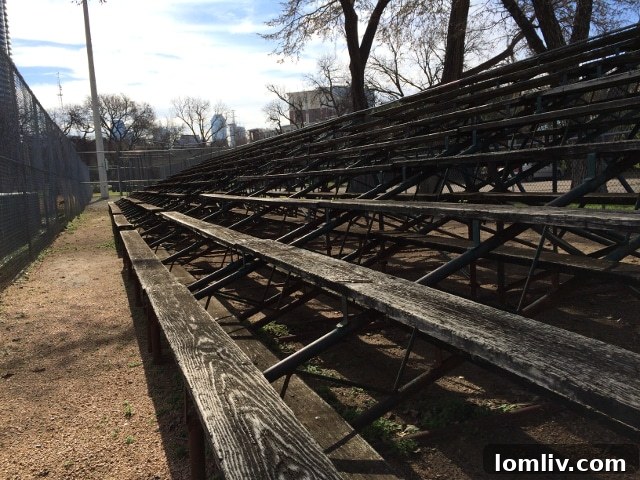
Furthermore, the fundamental purpose, original design, and supporting infrastructure of these comparative sites are vastly different from Reverchon Park. The Dallas Zoo, Fair Park, and the Arboretum were specifically conceived and designed from their very inception as large-scale public venues, inherently capable of accommodating massive crowds. Consider the historical context: Reverchon Park’s baseball field, with an original capacity of a mere 700 attendees, was established in a city whose 1920 population was a modest 158,976, and where car ownership was minimal. Today, with the unprecedented proliferation of high-rises and dense residential developments, areas like Oak Lawn and Uptown alone could potentially house that many people within a much smaller geographical footprint.
Crucially, both the Dallas Zoo and Fair Park benefit from direct and immediate access to major highways and extensive public transportation links, facilitating efficient ingress and egress for large numbers of visitors. Reverchon’s ballfield, however, is inconveniently situated at the terminus of a two-lane road, offering notoriously scant parking, and lies approximately half a mile—navigating through a challenging six traffic lights—from the nearest major artery, I-35E. The existing local infrastructure is simply not engineered or equipped to absorb the proposed five-fold increase in stadium capacity and the associated traffic, noise, and congestion that a commercial-scale stadium and concert venue would inevitably generate, especially within an already densely populated and rapidly developing urban core. To ignore these fundamental differences is to engage in a disingenuous comparison.
The Enduring Importance of Process and Transparency in Urban Development
Ultimately, my stance remains unyielding and consistent: the specific outcome or the future commercial viability of Reverchon Park is not, and has never been, my primary personal concern. What deeply matters to me, and what will always remain paramount, is the unwavering integrity of the process. When glaring numerical discrepancies emerge, when genuine public engagement is curtailed or ignored, when pivotal decisions appear to be orchestrated behind closed doors, and when the foundational principles of transparency and accountability are overtly neglected, it sends a profoundly troubling and damaging message about the manner in which urban development is conducted within the city of Dallas. Ensuring a fair, open, equitable, and genuinely community-centric approach to city planning and park revitalization is not merely a bureaucratic ideal or a nicety; it is the absolute bedrock of fostering public trust, ensuring sustainable growth, and maintaining the democratic fabric of our city. Without strict adherence to these fundamental principles, even the most ostensibly well-intentioned development projects risk not only failing to achieve their desired impact but also significantly alienating the very communities they are purportedly designed to serve.