Fair Park Dallas: Unpacking the Controversial Privatization Plan and the Call for Transparency
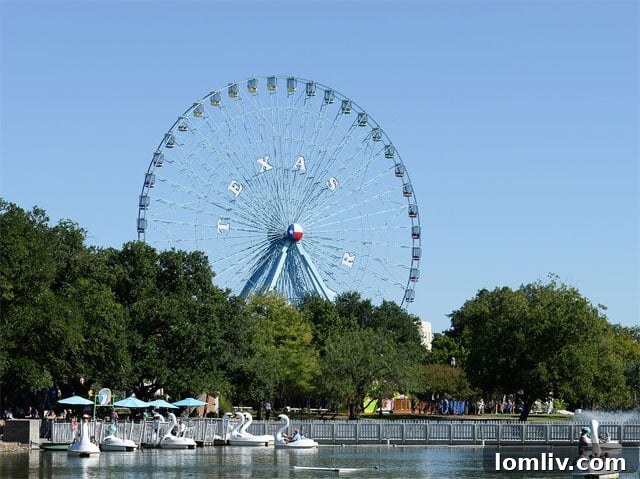
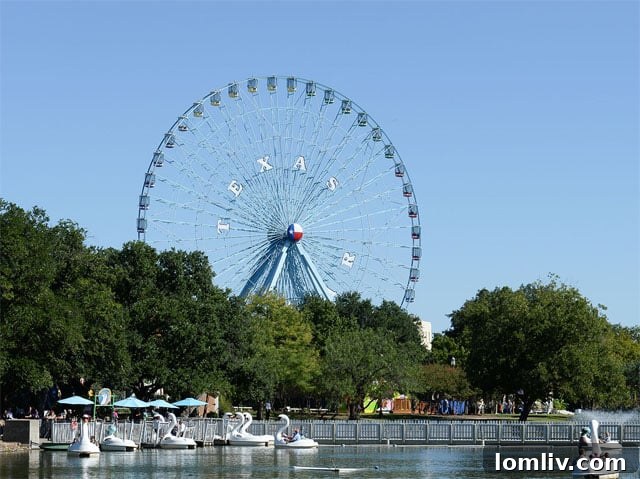
Fair Park, a monumental landmark in Dallas and a National Historic Landmark, stands at a critical crossroads. Its future, and the stewardship of its rich legacy, hang in the balance as the City of Dallas considers a pivotal 20-year management contract with the Fair Park Texas Foundation. This proposal, championed by Mayor Mike Rawlings and Walt Humann, has ignited a fervent debate among community members, civic leaders, and local media outlets. As we approach crucial decision-making points, including an upcoming City of Dallas Park Board meeting, the urgency for transparency, accountability, and robust public discourse has never been greater.
The core of the current contention isn’t necessarily the concept of a public-private partnership itself, a model that has found success in other urban centers. Rather, it is the opaque manner in which this particular plan has progressed, shrouded in secrecy and characterized by what many critics perceive as a rushed agenda. Concerns range from vague contractual language and ambiguous timelines to a notable lack of detailed financial projections and clear accountability frameworks. These issues have led to widespread skepticism and a demand for more rigorous oversight, echoing the sentiments expressed across platforms like D Magazine, the Dallas Morning News, WFAA, and the Dallas Observer.
The Rush to Decision: A Question of Due Diligence
The process surrounding the Fair Park Texas Foundation’s proposed contract has been anything but smooth. A recent Parks and Recreation Board meeting saw five board members walk out, preventing a quorum, amidst attempts by President Max Well to limit discussion. This dramatic walkout highlighted deep-seated concerns about the accelerated pace of the vote and the suppression of open debate. Mayor Rawlings’s public complaints about not being invited to a community forum titled “Our Fair Park: A Conversation About a Dallas Treasure” further underscored the disconnect between proponents of the plan and the broader community seeking answers.
Opponents of the current proposal are not inherently against a new management structure for Fair Park. Instead, their primary contention lies with the profound lack of transparency and specificity within the proposed 20-year contract. Critics fear that the agreement’s “loosey-goosey language” and “blank timetables” will perpetuate opaqueness, hindering public oversight and accountability for decades to come. While proponents, including Mayor Rawlings and Walt Humann, have dismissed these concerns as “myths,” the contractual documents themselves appear to tell a different story. Requirements for public meetings and open records were notably absent in earlier drafts, raising red flags about public access to crucial information and the Foundation’s future operations.
Examining the Contract: Vague Commitments and Unanswered Questions
A recently updated agreement, made available as part of the Parks Board meeting agenda, does include language supporting open meetings. However, it remains notably vague on public access to financial records beyond the IRS Form 990, a standard disclosure for non-profits that often lacks the granular detail needed for true financial scrutiny. Compounding these issues, the document itself was presented in a “HEAVILY edited work-in-progress” state, replete with visible strike-throughs, edits, and numerous blank pages. Such a condition is highly problematic for a multi-million-dollar, multi-decade project poised for a critical vote, suggesting an alarming lack of preparation and finality.
Key sections of the proposed contract reveal concerning ambiguities and a reliance on future determinations rather than concrete commitments:
Performance Plan: A Promise of Future Planning
“Development of Performance Plan will (i) . No later than April 30, 2017, the Foundation shall identify the marketing performance objectives and operational performance indicators (hereinafter referred to as “to be included in the Performance Plan and shall provide a written report to the Park Board with respect to same. No later than December 31, 2017, the Foundation shall identify and develop the various devices and systems that will be used to measure the Foundation’s performance with respect to the performance indicators”
This passage exemplifies the “trust us” approach embedded in the plan. Instead of presenting a clear, actionable performance framework, it merely promises to *develop* one at a later date. This deferred planning raises serious questions about how the Foundation’s effectiveness will be measured, and more importantly, how the City and its citizens will hold it accountable for its performance over a 20-year term.
The Community Park: Conceptual Designs and Contingent Funding
Section 6.16 Community Park. Subject to Director’s approval, noNo later than six (6) months from the Commencement Date, the Foundation intends to begin conceptual designs for a community park to be located within Fair Park in the vicinity of Robert B. Cullum Boulevard, Martin Luther King Junior Boulevard, Grand Avenue, and Second Avenue, as shown on Exhibit 6.16, to be open to the public free of charge so as to allow the surrounding neighborhood year-round access to green space and recreational opportunities. Notwithstanding anything to the contrary in this Agreement, a children’s play area, and recreational opportunities. Pursuant to Section 6.05(a), the Foundation shall obtain the approval of the Director prior to the commencement of any construction of the community park. Subject to any necessary consents or approvals, the community park referenced in this Section 6.16 shall remain open to the public free of charge on a year-round basis., including during the annual run of the State Fair of Texas. The Foundation acknowledges that construction of this community park is the Park Board’s top
priority, and the City acknowledges that the Foundation’s ability to construct this community park will be dependent on the ability to raise the necessary funding.” (Note: strikethroughs denote deletions of prior language while underlines are additions)
While the inclusion of a community park is a welcome addition, the language regarding its implementation is equally concerning. The Foundation merely “intends to begin conceptual designs within six months,” with no concrete timeline for completion. Crucially, its construction is explicitly made “dependent on the ability to raise the necessary funding,” creating a significant loophole for potential delays or even abandonment. Furthermore, the referenced “Exhibit 6.16” – which presumably would detail the park’s location and scope – was a blank page with a “see attached” note, yet no attachment was provided. This level of uncertainty on a “top priority” project for the Park Board is unacceptable and indicative of a plan lacking solid foundations.
Dallas as “Sugar Daddy”: The Financial Burden and Lack of Alternatives
The proposed plan risks transforming the City of Dallas into a perpetual “Sugar Daddy” for Fair Park and the State Fair of Texas, should Mayor Rawlings and Walt Humann prevail. Critics argue that Dallas taxpayers will be on the hook for millions annually without adequate assurances or a clear return on investment. The architects of this plan have been notably reluctant to provide straightforward answers to fundamental questions concerning finances, accountability, and project timelines posed by a broad coalition of citizens and community groups. Instead of offering clarity, the response has often been characterized by obfuscation, deflection, and defensiveness. This pattern of avoidance suggests either deeply flawed answers or an alarming lack of due diligence in preparing the plan itself. When public funds are at stake for decades to come, citizens have a right—and a responsibility—to demand comprehensive answers.
Adding to the concern, the City of Dallas reportedly did not actively seek alternative partners for Fair Park management, potentially overlooking other, more beneficial options. This lack of a competitive process raises questions about whether the current proposal truly represents the best interest of the city and its residents. In the corporate world, key investments are never made based on a simple “trust me, you’ll love it” premise. Businesses demand impact statements, detailed implementation schedules, financial forecasts, and outcome analyses. Yet, for a multi-million-dollar public asset, such foundational business principles seem to have been largely ignored.
Board Input and Corporate Standards: Why This Wouldn’t Fly
The lack of internal governance and expert input further undermines confidence in the plan. Tammy Johnston, a panelist at a community meeting and a board member of Humann’s Fair Park Texas Foundation, revealed that the Foundation’s first board meeting was not even scheduled until late August or early September. This means that Humann effectively operated as “a one-man band,” receiving minimal input or guidance from his own hand-picked board members during the critical drafting stages of the contract. Johnston, who joined the board hoping to effect change from within after earlier criticisms, stated that she had not even seen the current management contract prior to its presentation, describing the board’s role as “token.” Her continued skepticism regarding the Humann plan, despite her involvement, speaks volumes about the process.
Both Johnston and the author, having backgrounds in the corporate world, agree that such an approach would be dead on arrival in the private sector. Major investments demand rigorous due diligence, multiple competitive bids, comprehensive risk assessments, and clear projections of success. The notion of committing hundreds of millions of dollars to a plan without solid financial underpinnings, detailed resuscitation plans—down to year-by-year, building-by-building, tree-by-tree specifics—and measurable outcomes, is simply unfathomable in a business context. This opaqueness not only risks public funds but also undermines the trust essential for successful public-private partnerships.
Benchmarking Best Practices: The Case of Balboa and Millennium Parks
Proponents of the plan frequently reference San Diego’s Balboa Park and Chicago’s Millennium Park as shining examples of successful public-private partnerships. However, these references often lack crucial “hard-dollar facts” or detailed analyses of how these rejuvenations have specifically benefited park operations, surrounding neighborhoods, and, critically, their financial results. For a proposal requesting significant public investment, robust case studies with transparent financial and social impact data from comparable projects are indispensable. Their absence in the Humann plan prevents a meaningful evaluation of its potential efficacy and whether it genuinely aligns with best practices in urban park management and revitalization.
The State Fair of Texas: A Questionable Partnership
A significant point of contention revolves around the proposed inclusion of the State Fair of Texas on the Fair Park Texas Foundation board. Critics argue that giving a tenant a seat at the table to govern the financial and operational aspects of the owner’s property presents a profound conflict of interest. This is especially problematic given the State Fair’s history as a controversial neighbor and a questionable steward of Fair Park. The State Fair itself has been a prime example of the very “opaque management” that Rawlings and Humann claim the new Foundation will avoid.
A notorious incident involved the State Fair suing an Austin attorney for daring to request financial information, leading to a “SLAPP” (Strategic Lawsuit Against Public Participation) lawsuit. The State Fair lost this suit and was fined $38,600, yet they appealed the decision rather than releasing the requested records. To invite an organization with such a documented history of resisting transparency to co-manage Fair Park raises serious concerns about the Foundation’s commitment to openness. It presents a “fox in the henhouse” scenario, potentially jeopardizing the public’s right to information and accountability for a vital civic asset.
The Road Ahead: Politics Versus Principled Action
While Tammy Johnston acknowledges Walt Humann’s past good intentions, particularly his work in the Jubilee Park area, the adage “the road to hell is paved with good intentions” serves as a potent reminder. The current debate appears less about the inherent merits of the plan and more about political maneuvering and a hurried push for approval. As Tiffinni Young, District 7 representative, was quoted in the Dallas Morning News saying, “It’s not about the mayor, it’s not about me, it’s not about Mr. Humann,” the reality seems to contradict this statement. The entire process, from the silencing of dissenting voices to the rushed vote and opaque documentation, mirrors the controversial Trinity Tollroad project, another Rawlings-backed initiative that faced significant public opposition due to similar concerns about transparency and due diligence.
The profound and lasting impact of this decision on Fair Park, its surrounding neighborhoods, and the entire city of Dallas demands a halt to the current hurried process. Citizens, informed by the tireless questioning of individuals like Don Williams who has brought these issues to public light, must continue to demand answers, clarity, and genuine accountability. Only through a transparent, meticulously planned, and publicly vetted process can the true potential of Fair Park be unlocked for the benefit of all Dallas residents for generations to come. Anything less would be a disservice to this iconic treasure and its community.
About the Author: The author specializes in high-rises, HOAs, and renovation, bringing a unique perspective that balances modern and historical architecture with the YIMBY movement. Recognized with Bronze and Silver awards from the National Association of Real Estate Editors in 2016 for impactful writing, the author is passionate about civic engagement and real estate development. For inquiries, collaboration, or sharing a story, please reach out via email: [email protected].