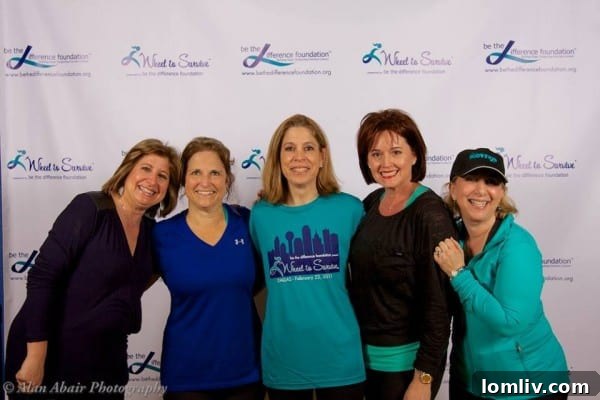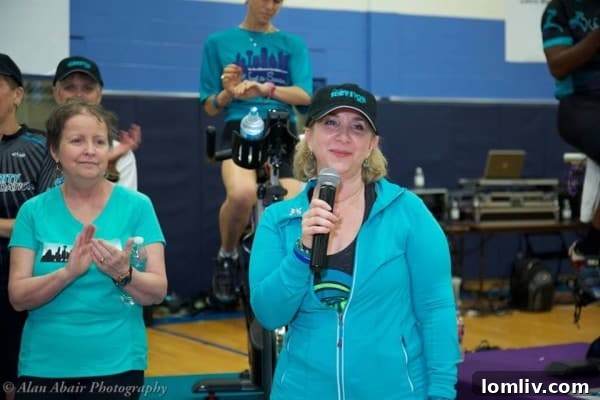
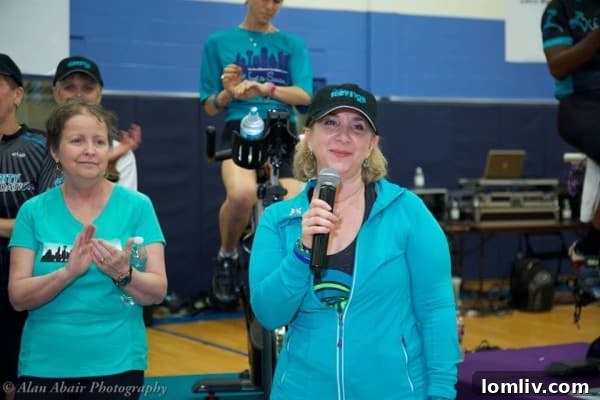
Igniting Hope: Julie Shrell and Be The Difference Foundation Lead the Charge Against Ovarian Cancer with Wheel to Survive Dallas
In the relentless fight against ovarian cancer, individuals often transform personal adversity into powerful advocacy. Such is the inspiring story of Julie Shrell, a resilient ovarian cancer survivor from Great Western Mortgage. Facing a daunting diagnosis, Julie channeled her experience into a beacon of hope, co-founding the Be The Difference Foundation just weeks after receiving her life-altering news. This foundation stands as a testament to her determination and a critical effort to improve treatment options and, ultimately, discover a cure for one of the deadliest cancers affecting women.
Ovarian cancer casts a long shadow over women’s health. Statistically, 1 in 70 women will confront an ovarian cancer diagnosis in their lifetime. Even more alarming, less than 50% of these women will survive five years post-diagnosis, making it the deadliest gynecological cancer and the fifth leading cause of cancer-related death among women. These stark figures underscore the urgent need for foundations like Be The Difference and events that actively drive research and support.
Julie Shrell, now President of Be The Difference Foundation, reflects on her journey with profound gratitude. “I’m so fortunate,” she shares, “I’m one of the lucky few who has not had a recurrence.” Her personal triumph against the disease fuels her relentless commitment to ensure more women can echo her sentiment.
It is this unwavering spirit that culminates in pivotal events such as the Foundation’s annual Wheel to Survive Dallas fundraiser. The fourth annual iteration of this high-energy, inspirational indoor cycling event took place on Sunday, February 28, 2016, from 9:00 a.m. to 3:00 p.m. at JCC Dallas. This cornerstone event brings together hundreds of participants, each pedaling with purpose, symbolizing the collective strength required to combat ovarian cancer.
Wheel to Survive: A Community United for a Cure
Wheel to Survive is more than just a cycling event; it’s a powerful demonstration of community, solidarity, and hope. Participants, whether riding individually or as part of a team, commit to raising vital funds for a cause that impacts countless lives. These funds are dedicated to supporting programs for women currently battling ovarian cancer and injecting crucial research dollars into the quest for a cure. Each pedal stroke honors friends, family members, and loved ones who have been affected by this devastating disease.
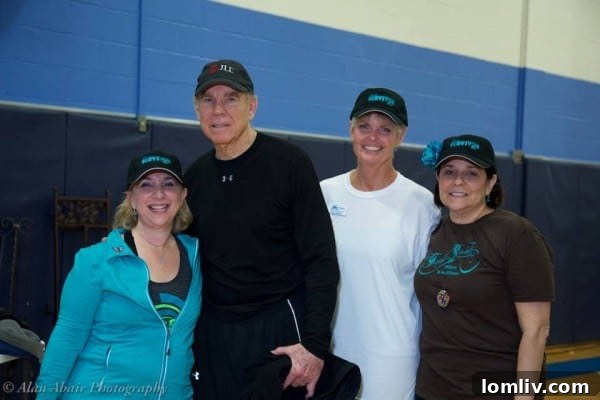
The 2016 Dallas event garnered significant attention, drawing notable personalities who lent their support to the cause. Special guests included football legend Roger Staubach, the esteemed former Dallas Cowboys Quarterback and two-time Super Bowl Champion, alongside Julie Dobbs, a well-known reporter for the Dallas Stars. Their presence amplified the event’s reach and reinforced the message that this fight transcends individual battles, embracing a broader community.
Julie Shrell emphasized this collective effort: “This is so much more than just a woman’s fight. The huge response we receive from our riders each year is truly amazing.” This sentiment highlights the inclusive nature of the movement, where individuals from all walks of life unite against a common foe.
The Silent Threat: Challenges in Ovarian Cancer Detection and Survival
The fight against ovarian cancer is uniquely challenging due to its insidious nature. A critical hurdle remains the absence of an effective, routine early detection test. Unlike many other cancers, there is no reliable screening tool available today to catch ovarian cancer in its early stages. This stark reality means that by the time symptoms become noticeable and a diagnosis is made, the disease has often progressed significantly.
Each year, approximately 22,000 women are diagnosed with ovarian cancer in the United States. Alarmingly, nearly half of these women will tragically lose their battle within five years of diagnosis. These staggering statistics underscore the desperate need for advanced research into early detection methods and more effective treatments. The Pap test, a common screening for cervical cancer, does NOT detect ovarian cancer, a crucial piece of information that is often misunderstood by the public.
The lack of an early detection tool leads to a grim reality: almost 70% of women diagnosed with ovarian cancer receive their diagnosis in Stage III or IV, when the cancer has spread beyond the ovaries, making treatment far more complex and prognosis less favorable.

Ovarian cancer is often referred to as “the cancer that whispers” because its symptoms are notoriously subtle and easily dismissed. These vague symptoms—such as bloating, pelvic or abdominal pain, difficulty eating or feeling full quickly, and urinary urgency or frequency—can mimic common gastrointestinal issues or other less serious conditions. Without a reliable early detection test, increased awareness of symptoms and risk factors becomes paramount. Educating women and healthcare providers about these “whispers” is critical to potentially saving lives.
“We ride in honor of our friends who have lost their battles, those who continue to fight today, and for those who will be diagnosed tomorrow,” said Shrell, articulating the profound motivation that drives every participant and volunteer.
Impact and Beneficiaries: Funding Critical Research and Support
The dedication of Wheel to Survive participants translates directly into tangible support for the ovarian cancer community. In the previous year, Wheel to Survive Dallas alone successfully raised over $350,000, thanks to the incredible efforts of 370 participants. A remarkable aspect of the Be The Difference Foundation’s work is its commitment to transparency and impact: 100% of the funds raised by riders are distributed directly to leading organizations actively working to end ovarian cancer.
These crucial funds are allocated to six distinguished institutions and foundations, each playing a vital role in advancing research and providing patient support:
- The Clearity Foundation: Dedicated to helping ovarian cancer patients and their physicians identify optimal treatment strategies.
- Mary Crowley Cancer Research Center: Focused on innovative clinical trials for various cancers, including ovarian cancer.
- MD Anderson Cancer Center: A world-renowned comprehensive cancer center conducting extensive ovarian cancer research.
- Memorial Sloan-Kettering Cancer Research Center: A leading institution known for its cutting-edge cancer research and patient care.
- University of Pennsylvania’s Ovarian Cancer Research Center: Concentrated on understanding and combating ovarian cancer through scientific discovery.
- The Lazarex Foundation: Provides financial assistance to patients traveling for clinical trials, breaking down barriers to advanced treatment.
“Through Wheel to Survive, Be the Difference Foundation has been instrumental in providing the funds desperately needed for research,” Shrell affirms. “Together, we continue to make a difference in the fight against ovarian cancer.” The direct allocation of funds to these high-impact organizations ensures that every dollar contributes meaningfully to patient care and the search for a cure.
Join the Movement: Be The Difference
The Be The Difference Foundation was established in 2012 by four courageous ovarian cancer survivors, including Julie Shrell. Their shared vision was clear: to “be the difference” by empowering women to increase their chances of survival. To achieve this ambitious goal, the Foundation prioritizes raising awareness about ovarian cancer and generating funds to support programs for women currently undergoing treatment, while simultaneously funding critical research efforts aimed at finding a definitive cure.
Since its inception in 2013, the Wheel to Survive event series, presented by Be The Difference Foundation, has grown into a powerful national movement. Riders from across the country have collectively raised over $1.5 million for ovarian cancer research. These inspiring events have been successfully hosted in major cities such as Dallas, Austin, San Francisco, and San Diego. Recognizing the expanding need and enthusiasm, the Foundation proudly announced the addition of three new Wheel to Survive events in 2016, extending its reach to Houston, El Paso, and Lubbock.
Your participation is vital. Whether you are a seasoned cyclist, a passionate advocate, or simply someone who believes in making a difference, there are multiple ways to contribute to this life-saving mission. To register for an upcoming ride, create a team, donate to a rider, or find more comprehensive information about Be The Difference Foundation and its initiatives, please visit:
http://www.bethedifferencefoundation.org/wheel-to-survive/wheel-to-survive-dallas-2016/
Understanding Ovarian Cancer: Key Facts and Symptoms
To effectively combat ovarian cancer, it is essential to understand its characteristics and challenges:
- Prevalence: 1 in 70 women will receive an ovarian cancer diagnosis in their lifetime.
- Survival Rates: Less than 50% of women diagnosed will survive five years after their diagnosis, highlighting the aggressive nature of the disease.
- Severity: It holds the grim distinction of being the deadliest gynecological cancer and the fifth leading cause of cancer-related death among women.
- No Early Detection: Crucially, there is no reliable, routine early detection tool available for ovarian cancer today. The Pap test, commonly used for cervical cancer screening, does NOT detect ovarian cancer. This absence is a primary reason why almost 70% of women are diagnosed in advanced stages (Stage III or IV), when treatment is significantly more challenging.
- “The Cancer That Whispers”: Ovarian cancer earned this moniker because its symptoms, if experienced at all, are often subtle, non-specific, and easily overlooked or mistaken for common gastrointestinal issues such as bloating, indigestion, or irritable bowel syndrome.
Given the lack of an early detection tool, awareness of symptoms and risk factors is the most powerful defense currently available to save lives. Women should be vigilant for persistent symptoms such as bloating, pelvic or abdominal pain, difficulty eating or feeling full quickly, and urinary urgency or frequency. If these symptoms are new, persistent for more than a few weeks, and not easily explained by other conditions, it is crucial to consult a doctor, preferably a gynecologist, and specifically mention concern for ovarian cancer.
By participating in events like Wheel to Survive, supporting the Be The Difference Foundation, and spreading awareness, we move closer to a future where ovarian cancer no longer whispers, but is instead silenced by early detection, effective treatments, and ultimately, a cure. Join Julie Shrell and countless others in this vital mission. Your effort can be the difference.