

The iconic Ambassador Hotel, a structure that once stood as a testament to Dallas’s vibrant past, has faced a turbulent journey from grand aspiration to tragic demise and now, an uncertain future. When prominent developer Jim Lake acquired the property in 2015, his vision was clear and ambitious: to meticulously transform the existing historic edifice into a collection of chic, modern apartments, breathing new life into a forgotten landmark. Originally built in 1904 as the Majestic Hotel, the building held over a century of Dallas history within its walls. However, these dreams were tragically cut short by a catastrophic blaze on May 28, 2019, which not only gutted the structure but also extinguished the hopes for its planned rebirth. The fire left behind a desolate shell, a stark reminder of what once was and what could have been. Unlike the mythical phoenix, whose story promises resurrection from ashes, the Ambassador’s plans for revitalization were left irrevocably consumed by the flames.
In a surprising development that signals a definitive end to the preservation-focused redevelopment, the Jim Lake Companies recently filed a rezoning request with the City of Dallas. This request seeks to eliminate the historic overlay designation that the company itself had painstakingly worked to secure. This historic overlay, a designation that required years of meticulous planning and extensive collaboration with both state and local officials, was not merely an honorific title. It was a crucial component of the redevelopment strategy, designed specifically to enable the developer to receive substantial tax credits for its proposed transformation of the Ambassador Hotel. These financial incentives are typically vital for making the complex and costly process of historic preservation and adaptive reuse economically viable. However, with the site now cleared of debris and the original redevelopment blueprint decisively scrapped, it appears the Jim Lake Companies are strategically maneuvering to broaden the market appeal for the now-empty lot, presumably in preparation for its sale. The removal of the historic overlay would strip away potential restrictions and open the parcel to a wider range of development possibilities, fundamentally altering its destiny in the downtown Dallas landscape.
The End of an Era: Unraveling the Ambassador Hotel’s Historic Overlay
The decision by Jim Lake Companies to seek the removal of the Ambassador Hotel’s historic overlay marks a pivotal moment in the site’s post-fire narrative. This action is more than a mere bureaucratic formality; it signifies a significant shift away from the preservation-centric vision that once defined the property’s future. The historic overlay designation served as a protective layer, guiding development towards sensitive restoration and ensuring that any new construction would honor the legacy of the original Ambassador Hotel. It offered financial incentives, such as federal and state tax credits, which are critical for offsetting the higher costs often associated with rehabilitating historic buildings compared to new construction. These credits were fundamental to Jim Lake’s initial plan to transform the stately structure into chic apartments, making the ambitious adaptive reuse project economically feasible.
However, the devastating 2019 fire fundamentally altered the landscape. With the building reduced to rubble, the economic calculus changed dramatically. Rebuilding from scratch, even with a historic façade or sympathetic design, no longer qualified for the same level of historic preservation incentives. By seeking to remove the overlay, Jim Lake Companies are essentially signaling their intent to sell the property without the constraints or benefits tied to its former historic status. This move will likely increase the property’s marketability to a broader array of developers, as it removes the specific requirements and design guidelines that often accompany historic designations. While this might facilitate a quicker sale and new development for the prime downtown lot, it also closes the chapter on any hope for the site to retain a direct link to the architectural integrity or historical essence of the original Ambassador Hotel, leaving Dallas with a vacant parcel poised for a distinctly modern future.
A Glimpse into the Storied Past: The Ambassador Hotel’s Legacy
Long before its fiery end, the Ambassador Hotel stood as a proud sentinel on the southern edge of downtown Dallas, nestled within the burgeoning The Cedars neighborhood. When it was first erected in 1904, originally christened the Majestic Hotel, its six-story stature was considered nothing short of a skyscraper, dominating the city’s skyline and symbolizing Dallas’s burgeoning ambition and modernity. Over the decades, the building underwent several identity shifts, transitioning from the Majestic to the Park Hotel, before finally settling on the esteemed name, The Ambassador Hotel. Each name change reflected an evolving era and purpose, yet the building consistently maintained its architectural grandeur and significance.
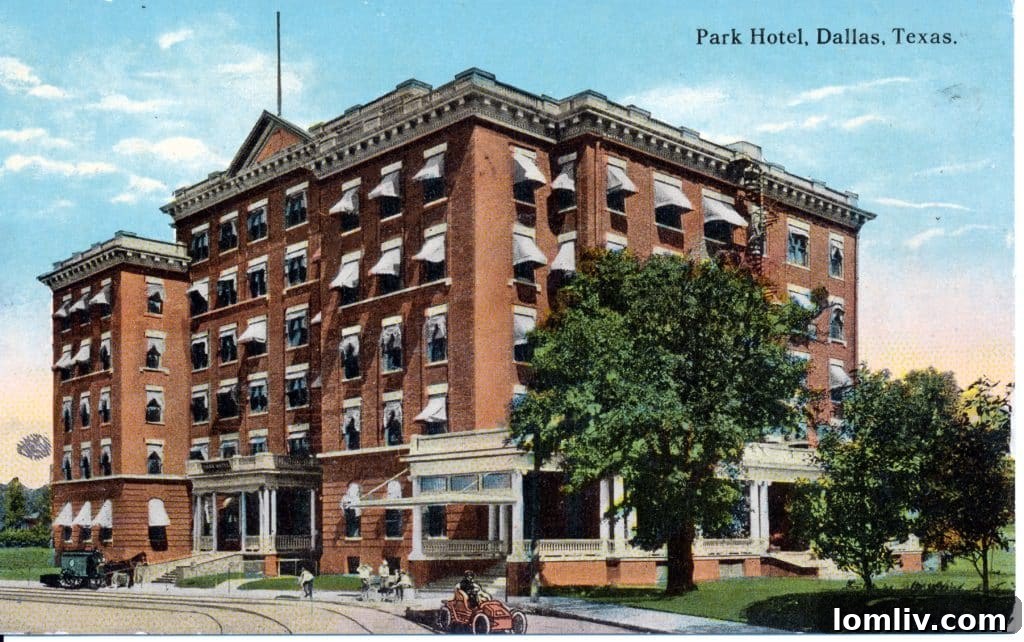
The hotel’s storied past is richly embedded deep within the lore of “Big D,” intertwined with tales of glamour, clandestine meetings, and presidential visits. During the Prohibition era, the Ambassador Hotel housed an infamous underground speakeasy, a secret haven where Dallas’s elite gathered away from prying eyes, indulging in illicit drinks and lively conversation. This hidden world added a layer of intrigue and sophistication to the hotel’s reputation, making it a whispered legend among the city’s socialites. Beyond its secretive allure, the Ambassador also played host to some of the nation’s most prominent figures. Its elegant halls and luxurious suites welcomed no fewer than three U.S. Presidents: Theodore Roosevelt, William Taft, and Woodrow Wilson, solidifying its status as a premier destination for political luminaries and influential personalities. These visits underscore the hotel’s immense prestige and its central role in the social and political fabric of early 20th-century Dallas.
Throughout its lifespan, the Ambassador Hotel underwent significant updates and transformations to remain relevant and appealing. Key renovations took place in the 1930s, 1940s, and again in the 1980s, each period bringing contemporary touches while striving to preserve its historic charm. By the 1980s, the property had evolved into a popular gathering spot and residence for Dallas artists, contributing to its bohemian appeal and cementing its place in the city’s cultural landscape. Architecturally, the building also saw notable changes. Initially constructed with striking red brick, the distinctive stucco cladding, which many came to recognize, was added in 1932, giving it a more modern and streamlined appearance for its time. Recognizing its profound historical and architectural value, the Ambassador Hotel garnered several prestigious designations. It was officially entered on the National Register of Historic Places on April 4, 2019, just weeks before the devastating fire. Prior to this, it had been designated a city landmark in 1982, offering local protection, and received the honor of becoming a Recorded Texas Historic Landmark in 1965, acknowledging its significance within the state’s heritage. These numerous accolades speak volumes about its enduring legacy and its profound importance to the Dallas community.
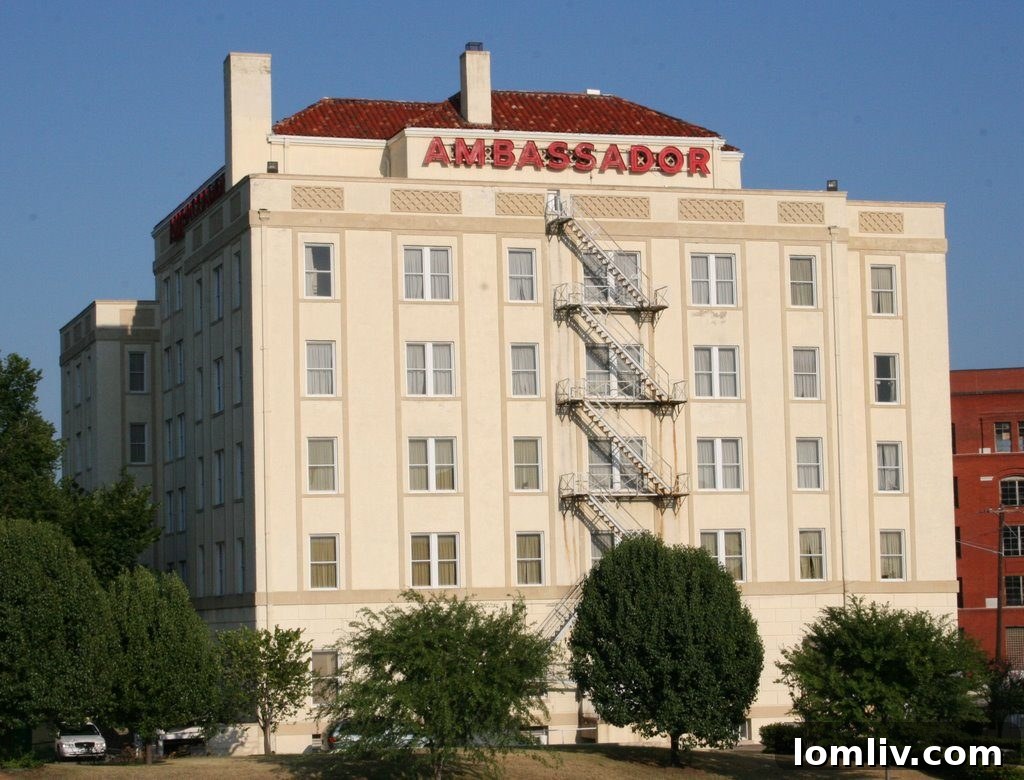
The Fire and Its Aftermath: A Community Grieves
The events of May 28, 2019, etched a somber chapter into the Ambassador Hotel’s illustrious history. On that fateful day, the entire building, a cherished Dallas landmark, became engulfed in a ferocious blaze that sent plumes of smoke billowing across the city skyline. Firefighters battled tirelessly, but the inferno proved too powerful, ultimately consuming the historic structure. The images of the Ambassador Hotel in flames were heartbreaking for many Dallasites, who viewed the building as a tangible link to their city’s past and a symbol of its enduring spirit. The fire was not merely a loss of property; it was a loss of heritage, a destruction of a place where countless memories were made and significant historical events unfolded.
In the immediate aftermath, the structural integrity of the Ambassador Hotel was severely compromised, rendering it unsafe and beyond repair. Sadly, the remnants of the once-grand hotel were scraped shortly thereafter, leaving behind a stark, empty lot where a piece of Dallas history once proudly stood. The demolition marked a poignant end to a century-long saga, transforming a vibrant landmark into a vacant space awaiting a new identity. This void has been a constant reminder of the tragedy and the unfulfilled promise of redevelopment that Jim Lake had envisioned. The removal of the historic overlay now underscores the definitive shift from a preservation-oriented future to one where the site’s potential is dictated by market forces, fundamentally changing its narrative from one of historical rebirth to an open-ended commercial opportunity.
The Future of a Dallas Landmark Site: Beyond Preservation
The rezoning request to remove the Ambassador Hotel’s historic overlay designation is a pragmatic, yet bittersweet, move following the irreplaceable loss of the physical structure. While the original intent of the overlay was to guide a sensitive, historically-minded redevelopment, its purpose became moot once the building was destroyed. The Jim Lake Companies’ decision to widen the market for the empty lot prior to selling reflects a strategic response to the economic realities of large-scale urban development. Without the physical historic asset, the financial incentives and regulatory complexities associated with a historic designation no longer align with the site’s current status as a prime, vacant parcel in downtown Dallas.
This development signifies a definitive closure to the chapter of the Ambassador Hotel as a preserved historic entity and opens the door to a completely new future for the site. Potential buyers will now have greater flexibility in their development plans, unburdened by the stringent requirements of a historic overlay. This could lead to a variety of outcomes, from modern residential towers to commercial spaces, each contributing differently to the evolving urban fabric of The Cedars neighborhood and downtown Dallas. While the community mourns the loss of a tangible piece of its past, the opportunity now exists for this significant parcel to host a new landmark, one that perhaps pays homage to its history in spirit, even if not in physical form. The former Ambassador Hotel site, once a beacon of Dallas’s past, stands ready to embrace a new, entirely contemporary identity, forever reminding us of the fragility of history and the relentless march of progress.