
Dallas’s Plastic Bag Ban: Unpacking the Controversy and Its Real-World Impact

The recent implementation of Dallas’s plastic bag ban has undeniably stirred a pot of debate and frustration among its residents. Stepping into a grocery store or retail outlet now means facing a mandatory 5-cent charge for each single-use plastic bag. This policy shift isn’t just about an added nickel to your bill; it’s about the broader implications for consumer convenience, retail operations, and the underlying philosophy of environmental governance. For those of us accustomed to the efficiency of self-checkout lanes, the transition has been particularly noticeable, as systems grapple with unexpected weight discrepancies and the proper application of bag fees. These initial hiccups underscore a widespread sentiment of disruption. My skepticism regarding this ban has been consistent from the outset, a sentiment I’ve found to be widely shared among fellow shoppers. One can only wonder what impression such a policy leaves on newcomers to our vibrant city.
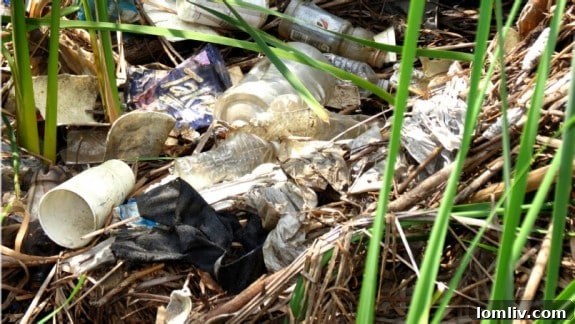
From my perspective, the core problem isn’t the existence of plastic bags, but rather the pervasive issue of litter and a collective failure in individual responsibility. Instead of casting a wide net of inconvenience over all shoppers, regardless of their environmental habits, a more targeted and effective approach would surely involve stringent enforcement of existing anti-littering laws and significant penalties for those who irresponsibly discard waste. This strategy would hold actual offenders accountable, thereby addressing the root cause of pollution without imposing a burden on the conscientious majority or requiring complex, costly reconfigurations of retail systems.
Amidst this ongoing dialogue, Teresa Gubbins, a respected voice from CultureMap, presented her take on the situation, outlining what she termed “myths” surrounding the plastic bag ordinance. While I hold great admiration for her work, my viewpoints diverge significantly on several crucial aspects. It remains perplexing to me how some initially tried to connect this local Dallas initiative to former President Obama, especially when the impetus clearly originated from local figures such as Dwaine Caraway. It is true that over 150 other cities and the state of California have adopted similar bans, yet this number represents a mere fraction when considering the approximately 20,000 cities and 50 states within the U.S. A vast majority of these jurisdictions operate without such mandates. Let’s dive deeper into Teresa’s myths, adding my own expanded “two cents” – a perspective that I believe offers valuable counterpoints to this pressing local issue.
Myth #1: It is our constitutional and/or God-given right to get free plastic bags at the grocery store.
Teresa aptly points out that being compelled to pay a nickel for a plastic bag, or remembering to bring your own, undeniably introduces a significant level of inconvenience into daily life. She suggests, perhaps with a touch of irony, that this mandate could be perceived as yet another incremental step towards an overreaching “nanny state” – an environment where individuals are increasingly obligated to consider broader societal or environmental implications beyond their immediate personal convenience. The concept of freely obtaining plastic bags for our purchases, only to unceremoniously discard them moments later, might seem like an unalienable right within a consumer-driven society. However, as she correctly observes, neither the U.S. Constitution nor any sacred texts contain explicit provisions guaranteeing the availability of complimentary plastic bags.
Debunking Myth #1: Personal Liberty, Economic Freedom, and the Nanny State Dilemma
While it’s unequivocally true that a constitutional right to free plastic bags is not enshrined in law, the implementation of such a fee nonetheless touches upon deeply ingrained American values: the spirit of independence, the principles of free commerce, and a steadfast belief in self-reliance. For many, the ability to make unfettered choices about how they transport their groceries, or to not face an additional charge for a convenience previously provided, resonates with a broader sense of individual liberty. The fundamental concern here isn’t merely the plastic bag itself, but rather the implication of a burgeoning “nanny state” mentality. This is where governmental bodies incrementally impose regulations on seemingly minor aspects of daily life, rather than trusting citizens to exercise personal responsibility. Such policies can be seen as symptoms of a societal shift where personal accountability is increasingly supplanted by sweeping, one-size-fits-all regulations.
The true crux of the environmental problem lies in irresponsible waste disposal, not in the mere existence of plastic bags. In my household, and certainly for my children—who are well-aware of the importance of proper waste management—every plastic bag consistently finds a second life. Whether as wastebasket liners, for packing lunches, or myriad other practical uses, they are consistently repurposed before being properly disposed of. The notion that an entire populace must endure inconvenience because a subset of individuals chooses to litter reflects a critical failure in the enforcement of existing public decency and waste management laws. If our goal is genuinely to mitigate environmental harm, the focus should pivot to fostering and enforcing a culture of personal responsibility: ensuring that once an apple is eaten, its core is correctly placed in the garbage; that paper and plastic products are recycled appropriately. This law, regrettably, does little to address the root behavioral issues behind littering, instead opting for a collective punishment that inadvertently penalizes responsible consumers.
Myth #2: You will be forced to carry your groceries home one item at a time.
Teresa humorously dismantles the exaggerated concern that shoppers will be reduced to carrying individual grocery items home, reassuring readers that plastic bags remain available for a nominal 5-cent fee. She also wisely reminds us of the extensive history of alternatives for transporting goods, ranging from practical knapsacks and versatile bandannas to sturdy boxes. Crucially, she highlights the availability of reusable bags, typically crafted from durable canvas or recycled plastics, designed precisely for repeat use. However, she lightheartedly suggests that arriving at the store with one’s own bag might carry the unfortunate social stigma of appearing “like a pussy or, worse, like someone who thinks ahead.”
Debunking Myth #2: The Illusion of a Solution and the Challenge of Habit Formation
Teresa presents valid points, and indeed, many consumers are gradually adapting to the new reality. Just yesterday, I successfully navigated my grocery run armed with my personal collection of reusable bags. Her fundamental argument holds true: alternatives are plentiful, and plastic bags have not vanished entirely. However, this raises a critical, frequently overlooked question: what becomes of these thicker, more durable, and often more expensive reusable bags when they fall into the hands of the same “lazy slobs” who previously littered single-use plastic bags? The core of the problem, I argue, is not the material itself but the underlying human behavior. These new, more substantial bags represent a greater investment of resources in their manufacturing. Should they ultimately contribute to litter, their environmental footprint could paradoxically be even more detrimental than their thinner predecessors.
Beyond the environmental considerations, there’s the significant psychological and habitual shift demanded from consumers. Remembering to bring reusable bags is a new routine that many find challenging to consistently adopt. It adds another item to an already lengthy mental checklist alongside keys, wallet, and mobile phone. While commendable for those who seamlessly integrate this practice, for others, it represents a minor yet persistent source of friction in their daily routines. The true challenge transcends merely providing alternatives; it lies in fundamentally altering human behavior to ensure proper disposal and consistent reuse – an ambitious goal that a simple 5-cent fee seems, by itself, inadequately positioned to achieve.
Myth #3: This law is a plot by President Barack Obama.
Teresa accurately clarifies that former President Obama had no direct involvement in the Dallas plastic bag law, nor in similar legislative measures enacted in other progressive cities such as Austin, Santa Fe, Seattle, Portland, Los Angeles, San Francisco, or throughout the entire state of California. She humorously implies that he was preoccupied with larger, national governance initiatives, suggesting that localized bag bans were simply not within his sphere of focus or concern.
Debunking Myth #3: Local Governance, Cumulative Regulation, and Economic Migration
While I will refrain from engaging in broader political discourse surrounding federal policies — *cough, cough, the Affordable Care Act* — Teresa is absolutely correct that this specific bag ban is a local ordinance. The direct responsibility, or credit, for this policy rests squarely with figures like Dwaine Caraway and the Dallas City Council. However, her assertion overlooks a more expansive concern: the cumulative impact of such local regulations.
My dear Teresa, consider the ongoing and significant influx of both people and businesses relocating to Texas, particularly to thriving cities like Dallas, from states such as California. A primary motivation for this exodus is frequently the desire to escape what they perceive as an environment burdened by excessive regulation and a soaring cost of living. When Dallas begins to layer on similar restrictions, even seemingly minor ones like a bag ban, it subtly yet steadily erodes its competitive advantage. The perception of a city becoming increasingly restrictive can lead to tangible economic consequences. Recall the critical decision by Toyota to ultimately choose Plano over Dallas for its North American headquarters. While a singular bag ban was certainly not the sole deciding factor, it contributes to a broader narrative regarding a city’s overall regulatory environment and its attractiveness to both businesses and prospective residents. A continuous pattern of imposing such regulations risks inadvertently pushing both populations and prosperity elsewhere, fostering an environment where growth and innovation are inadvertently stifled rather than robustly encouraged.
Myth #4: This will destroy the economy in Dallas.
Teresa acknowledges the sentiments of agitated shoppers, citing an impassioned comment from “Amber” on a Dallas Morning News story, who defiantly proclaimed, “Will be shopping in cities that surround the City of Dallas. Done!!” However, Teresa pragmatically highlights the economic fallacy of this threat: the additional cost of driving to a neighboring city, potentially incurring $1-$2 in gasoline expenses, vastly outweighs the mere 5 cents saved on plastic bags. Her conclusion implies that such a retaliatory move, while making a symbolic point, lacks rational economic grounding.
Debunking Myth #4: Beyond the Nickel – Psychological Discontent and Regional Economic Dynamics
While Teresa accurately calculates the immediate monetary imbalance between a trivial 5-cent bag fee and the fluctuating cost of gasoline, her analysis may underestimate the deeper psychological and economic currents at play. The reality is, the phenomenon she observes, where individuals and businesses are increasingly migrating northward to rapidly growing areas like Plano and Frisco, isn’t solely attributable to a bag ban. Instead, it forms part of a larger, more complex trend. The high-profile relocation of Toyota to Plano serves as a potent illustration of how major corporations meticulously evaluate a multitude of factors, including the regulatory landscape and the perceived ease of conducting business, when making significant investment and relocation decisions.
Furthermore, while gasoline prices are indeed variable, during periods of lower fuel costs, the incentive for some consumers to “make a point” by shopping outside Dallas – even for a relatively small saving – might be more compelling than Teresa suggests. The decision isn’t always driven by raw dollars and cents; it’s often fueled by principle, by a sense of cumulative inconvenience, and by a perception of overreach from local government. For many, this 5-cent charge, while minor on its own, can become the proverbial “straw that breaks the camel’s back,” especially when juxtaposed with other frustrations.
As for myself, I remain loyal to my preferred grocery circuit – Central Market, Whole Foods, and Tom Thumb. My collection of reusable bags has become a permanent fixture in my car ever since this law took effect. The true challenge for me, and for countless others, has been cultivating a new, deeply ingrained habit: consistently remembering to bring those bags *into* the store along with my purse, cell phone, and other daily essentials. It’s an admittedly minor adjustment, but an adjustment nonetheless. And if it means I occasionally resemble a “Bag Lady,” well, that’s a quirky title I’ve always been secretly prepared to embrace. The overarching point remains: such policies create friction, and accumulated friction, over time, can subtly but significantly influence both consumer behavior and business decisions, thereby impacting Dallas’s long-term economic vitality and attractiveness.
Myth #5: Plastic bags were previously free.
Teresa pointedly debunks the popular misconception of “free” plastic bags, asserting that their cost has always been implicitly embedded within the broader price structure of groceries. Furthermore, she highlights that taxpayers ultimately bear the financial burden of cleaning up discarded bags through the funding of municipal civil servants. Her concluding remark, “Sucker,” playfully implies that consumers have always been paying for bags, albeit through indirect means.
Debunking Myth #5: Double Taxation and the Enforcement Paradox
To simply dismiss the issue with “Sucker” is to significantly oversimplify a critical economic and ethical point. If the cost of plastic bags was indeed already seamlessly integrated into grocery prices, then the imposition of a new, explicit 5-cent charge means that consumers are now, in effect, paying for the same item twice. This scenario represents a classic instance of “double taxation,” echoing how many perceive certain financial aspects of the Affordable Care Act – a hidden, absorbed cost followed by a direct, overt one. In my recent conversation with Central Market, they confirmed they would not be introducing an additional charge for bags, as they primarily utilize paper bags and would be absorbing any associated costs. This illustrates the disparate impact of the policy across various retailers and, consequently, on their customer base.
The argument that our tax dollars already fund civil servants to clean up litter, thereby justifying the bag fee, fundamentally misdirects the locus of accountability. The logical and just solution to litter is not to restrict the availability of items that *could* become litter; it is to rigorously penalize those individuals who *do* litter. The expense associated with environmental cleanup should not be universally distributed among diligent shoppers but should instead be recouped from beating fining the “slobs” who are directly responsible for creating the mess in the first place.
The unfortunate reality is that our otherwise vibrant City of Dallas has historically demonstrated a lack of consistent and robust enforcement of existing anti-littering laws. Fining individuals for littering, while a direct and logically sound solution, is often deemed “too hard” or excessively resource-intensive to implement effectively. Consider the infamous incident of pig blood illegally dumped into the Trinity River – a stark example of environmental disregard that highlighted the persistent challenges in enforcing waste disposal regulations. Rather than confronting the core problem of lax enforcement and individual irresponsibility, it appears far simpler for the city to simply deprive society of plastic bags altogether. This approach feels akin to a form of collective, corporate punishment: if one child misbehaves on the school bus, the entire class is held back as a consequence. This “lowest common denominator” approach is precisely what I find most problematic about this plastic bag ban. I am definitively not a proponent.
If the genuine objective is meaningful environmental protection, then our collective efforts and legislative focus should be directed towards far more impactful targets. A prime example is styrofoam cups and packing materials. These items are demonstrably more detrimental to the environment, contribute to a significantly larger and more persistent form of pollution, and are even associated with potential carcinogenic risks. Crucially, unlike plastic bags, styrofoam does not biodegrade, lingering in landfills for potentially centuries. It’s heartening to see institutions like Cooper Fitness Center already taking proactive steps by ceasing their use. The inherent absurdity of this “ban-first” mentality becomes glaringly apparent when we extend its logic to other forms of waste. Just the other day, I witnessed books scattered haphazardly across Preston Road, many tragically run over by passing vehicles. It appeared a careless individual had a carton of books fall off their moving truck. Does this isolated incident then warrant a proposal from the Dallas City Council to ban books? This slippery slope illustrates the fundamental flaw in addressing superficial symptoms rather than consistently enforcing responsible behavior and directly targeting the most significant environmental culprits.