

For many Texans, the arrival of their annual property tax appraisal notice brings a familiar pang of dread. It’s a moment often likened to receiving an unwelcome financial jolt, a sharp reminder of the escalating cost of homeownership in the Lone Star State. The sentiment across Texas is clear: property values are soaring, and with them, the burden of property taxes. This guide aims to demystify the appraisal process and empower homeowners to take control of their property tax assessments.
The Texas real estate market has been experiencing unprecedented growth, a phenomenon confirmed by experts like Alvin Lankford, president of the Texas Association of Appraisal Districts, who noted, “The Texas real estate market is growing as fast as we have ever seen it in the state’s history.” While this growth can be beneficial for property owners’ equity, it directly impacts appraisal values and, consequently, property tax bills.
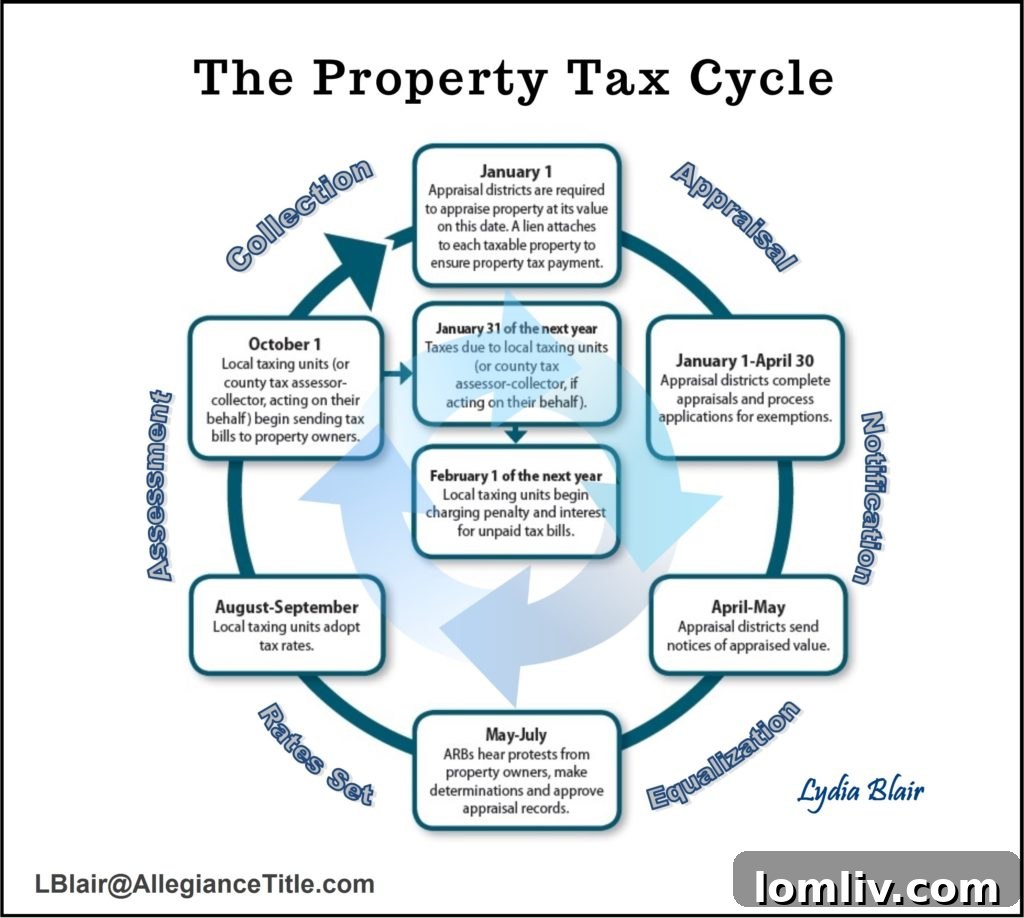
Before you consider marching to your local appraisal district office with grievances in hand, it’s crucial to understand a fundamental distinction: the appraisal district is responsible solely for determining the market value of your property. They do not set the tax rate. That responsibility falls to your respective city, county, school district, and other local taxing entities. Your property tax bill is a product of both the appraised value and these independently set tax rates. Therefore, by challenging and potentially lowering your property’s market value, you directly impact one half of this critical equation, leading to potential significant savings.
Understanding Your Right to Protest: The Critical Deadline
Amidst the frustration, there is a critical silver lining: you have the legal right to protest your property appraisal. However, this right comes with a strict deadline. You must file a Notice of Protest within 30 days of the postmark date on your appraisal notice, or by May 15th, whichever is later. Missing this deadline is akin to forfeiting your chance to appeal, meaning the appraised value set by the district will stand as the basis for your property taxes for the entire year.

Fortunately, filing your Notice of Protest is a straightforward process. The necessary form is typically included with your property tax appraisal notice. Alternatively, for added convenience and often faster processing, you can file your intent to protest electronically by visiting your appraisal district’s official website. Many districts now offer user-friendly online portals where you can create an account, locate your property, and submit your protest with just a few clicks. This digital option also often allows you to track the status of your protest and submit supporting evidence online, streamlining the entire process.
Maximizing Your Savings: Essential Steps After Filing Your Protest
Once your Notice of Protest is filed, your journey to a potentially lower tax bill truly begins. The subsequent steps involve meticulous preparation and a strategic approach to challenge the district’s valuation. The goal is to present a compelling case that justifies a reduction in your property’s assessed market value.
Step 1: Verify and Apply for All Eligible Exemptions
Before delving into market value disputes, the absolute first thing every homeowner should do is ensure all applicable exemptions are correctly listed for their property. Exemptions reduce the taxable value of your home, directly translating into lower tax bills. The most common and impactful exemption is the **Homestead Exemption**. If your home is your primary residence, a homestead exemption caps the annual increase in your appraised value for tax purposes to a maximum of 10 percent from the prior year, regardless of how much the market value actually increased. This cap is a crucial safeguard against rapid tax hikes.
Beyond the general homestead exemption, other significant exemptions can provide substantial relief. For instance, if you are 65 years or older, or if you are disabled, you are eligible for additional exemptions that can freeze your school district taxes and offer further reductions from other taxing entities. These age and disability exemptions can potentially save homeowners thousands of dollars annually. It is imperative to check your appraisal notice thoroughly to confirm these exemptions are applied. If they are not, or if you believe you qualify for one you haven’t claimed, contact your appraisal district immediately to apply. The deadlines for filing new exemptions are typically separate from protest deadlines, but it’s best to address them promptly.
Step 2: Strategically Attack the Market Value
The market value is the appraisal district’s estimate of what your property would have sold for on January 1st of the appraisal year. This is the core figure you are disputing when you file an appeal. Your primary objective is to present evidence that demonstrates your property’s market value is lower than the district’s assessment. Remember, the market value is an estimate, and estimates can be influenced by various factors.
Proven Methods to Successfully Lower Your Market Value
The good news for homeowners is that there are several effective and legally recognized ways to challenge and potentially lower your property’s market value. These methods generally fall into two categories: comparing your property to others and highlighting your property’s specific condition.
1. Leverage Comparable Sales (Comps) Data
One of the most powerful tools in your arsenal is a collection of “comps” – comparable sales of other homes near your property that have sold for less than your appraised value. Real estate agents are invaluable resources for this step. They have access to the Multiple Listing Service (MLS), which contains detailed sales data, including sale prices, property features, and photos of recently sold homes in your neighborhood. When gathering comps, focus on properties that:
- Are in close proximity to your home (ideally within a mile or less).
- Have similar characteristics to yours (square footage, number of bedrooms/bathrooms, lot size, age, construction style).
- Were sold recently, preferably around January 1st of the appraisal year.
- Crucially, sold for a lower price than your property’s appraised market value.
If you cannot find direct “apples-to-apples” comps that sold for less, broaden your search and be prepared to make adjustments. For example, if a seemingly comparable home sold for more, investigate whether that home had significant updates or amenities that yours lacks. Did it feature a brand-new HVAC system, recently replaced windows, a completely remodeled kitchen or bathrooms, or a luxurious outdoor living space? If so, while the number of bedrooms and bathrooms might be the same, these differences in condition and upgrades mean your homes are not truly comparable in market value. Document these discrepancies clearly to show why your home should be valued lower.
2. Document Your Home’s Condition and Needed Repairs
Another highly effective strategy is to meticulously document any existing deferred maintenance, wear and tear, or defects within your home. The appraisal district often uses mass appraisal techniques that don’t account for the unique condition of every single property. This is where your critical eye and detailed photographic evidence come into play.
Walk through your entire property, both interior and exterior, and identify areas that require significant repair or updating. Take plenty of high-quality, date-stamped photographs of these issues. Examples include:
- Interior Issues: Water stains on ceilings (indicating roof leaks), cracked sheetrock or walls (potentially from foundation shifts), outdated or damaged flooring (carpets, tiles, wood), worn-out kitchen or bathroom fixtures, peeling paint, non-functioning appliances (especially if they are over five years old), signs of pest damage, or an aging HVAC system.
- Exterior Issues: Cracks in the driveway or sidewalks, a leaky or visibly damaged roof, deteriorating exterior paint or siding, neglected landscaping, an aging or failing fence, or significant foundation cracks visible from the outside.
Each photo should be clear, well-lit, and accompanied by a brief description explaining the issue. For structural or major system problems, include wider shots to show context and close-ups to detail the damage. The more comprehensive your visual documentation, the stronger your case will be.
3. Obtain Repair Estimates
Beyond simply showing the problems, demonstrating the financial impact of these issues can significantly bolster your argument. Gather written estimates from licensed contractors for the cost of repairing or replacing the items you’ve documented. For example, if you have a leaky roof, get a quote for a full roof replacement or major repair. If your air conditioning unit is failing, get an estimate for a new HVAC system. These estimates provide tangible, quantifiable evidence of the expenses you would incur to bring your property up to the condition implied by the appraisal district’s valuation. When presenting your case, you can argue that the market value should be reduced by at least the cost of these necessary repairs, as a buyer would likely factor these costs into their offer.
The Protest Process: Informal Review and Formal Hearing
After you submit your evidence, your appraisal district will typically offer an informal review. This is an opportunity to meet with an appraiser from the district to discuss your case and present your evidence. Many protests are resolved at this stage. If you cannot reach an agreement, you have the right to a formal hearing before the Appraisal Review Board (ARB). The ARB is an independent panel that will listen to both your presentation and the appraisal district’s argument before making a decision. Being prepared, articulate, and having all your documentation organized is key to success in both informal and formal settings.
Don’t Delay: The Long-Term Benefits of Protesting
There is absolutely nothing to lose by filing a protest and investing a bit of time to gather the necessary information. Even a modest reduction of two or three percent in your appraised value can lead to significant savings over time. Furthermore, a lower starting point for your property’s value in the current year establishes a lower baseline for future appraisals, potentially resulting in cumulative savings for years to come. Property values tend to increase over time, so starting from a lower base means your property tax increases in subsequent years will also be calculated from that reduced figure.
Taking action by filing your protest is the crucial first step in asserting your rights as a homeowner and potentially saving yourself a substantial amount of money. Don’t let procrastination cost you. Empower yourself with knowledge and action to ensure your property taxes are fair and accurate.