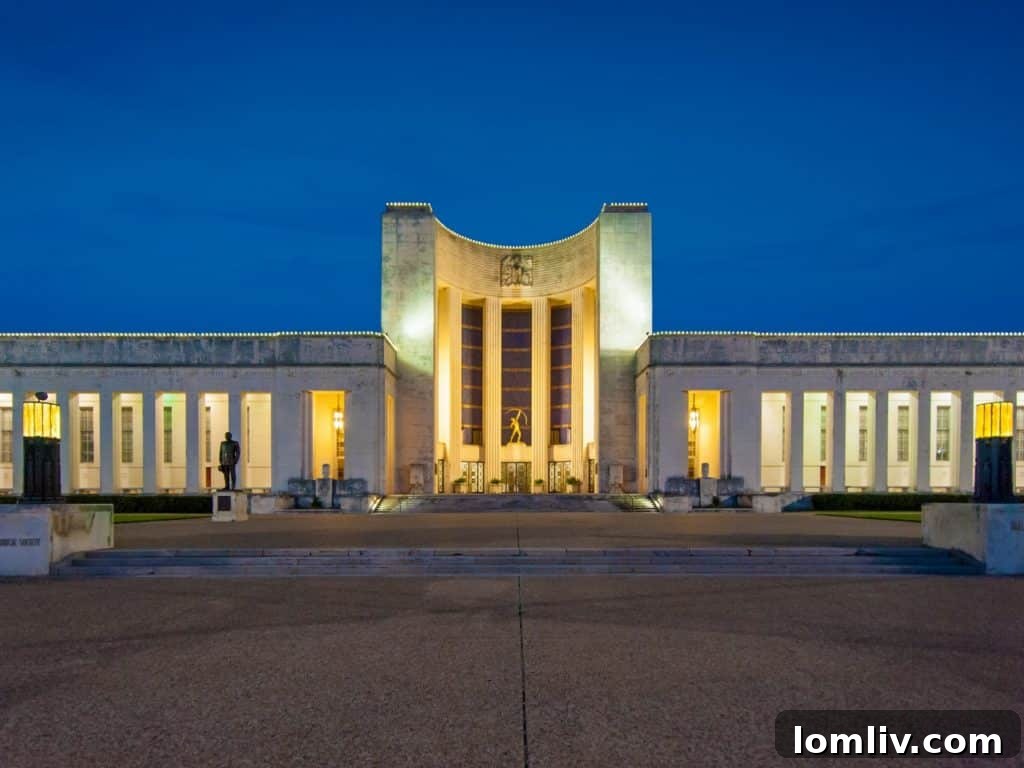
Unraveling the Mystery: Is Fair Park Texas Foundation a Registered Non-Profit?
For an extended period, the public, media, and city officials alike have operated under a significant, yet ultimately unverified, assumption: that the Fair Park Texas Foundation, an organization spearheaded by Walt Humann, was a fully certified non-profit entity. This perception was not merely an oversight; it was a cornerstone of the foundation’s appeal, particularly to the City of Dallas. The prevailing understanding was that its non-profit designation would grant it the unique ability to bypass conventional bidding processes. This distinct advantage meant the foundation could provide crucial monetary or in-kind resources to facilitate the management of Fair Park, ostensibly streamlining operations and development. Indeed, the notion that this organization held legitimate non-profit status was so widely accepted that it permeated various levels of discourse, from public commentary to prominent media coverage, including articles by respected journalists like Robert Wilonsky of the Dallas Morning News, who echoed this general belief.
However, recent revelations have cast a long, disquieting shadow over this widely held belief, suggesting that the fundamental premise might be incorrect. The true status of the Fair Park Texas Foundation has now come under intense scrutiny, raising critical questions that demand immediate answers. Is this discrepancy merely a case of administrative oversight, perhaps a matter of misplaced paperwork lost within a bureaucratic labyrinth? Or does it hint at something far more concerning, a deliberate misrepresentation that could have profound implications for the future management, financial transparency, and overall integrity of one of Dallas’s most cherished historical and cultural landmarks, Fair Park?
The pivotal moment in this unfolding narrative arrived with the dissemination of a crucial piece of evidence that directly challenged the foundation’s purported status. An individual, whose name remains redacted from the publicly available letter, took the initiative to directly inquire with the Internal Revenue Service (IRS) about the Fair Park Texas Foundation’s official tax-exempt standing. This direct approach, highlighted by a letter subsequently posted on Twitter by the investigative account “Wylie H. Dallas,” sought to definitively ascertain whether Walt Humann’s foundation was indeed registered as a legitimate non-profit organization under federal guidelines, a status vital for its claimed operational benefits and public trust.
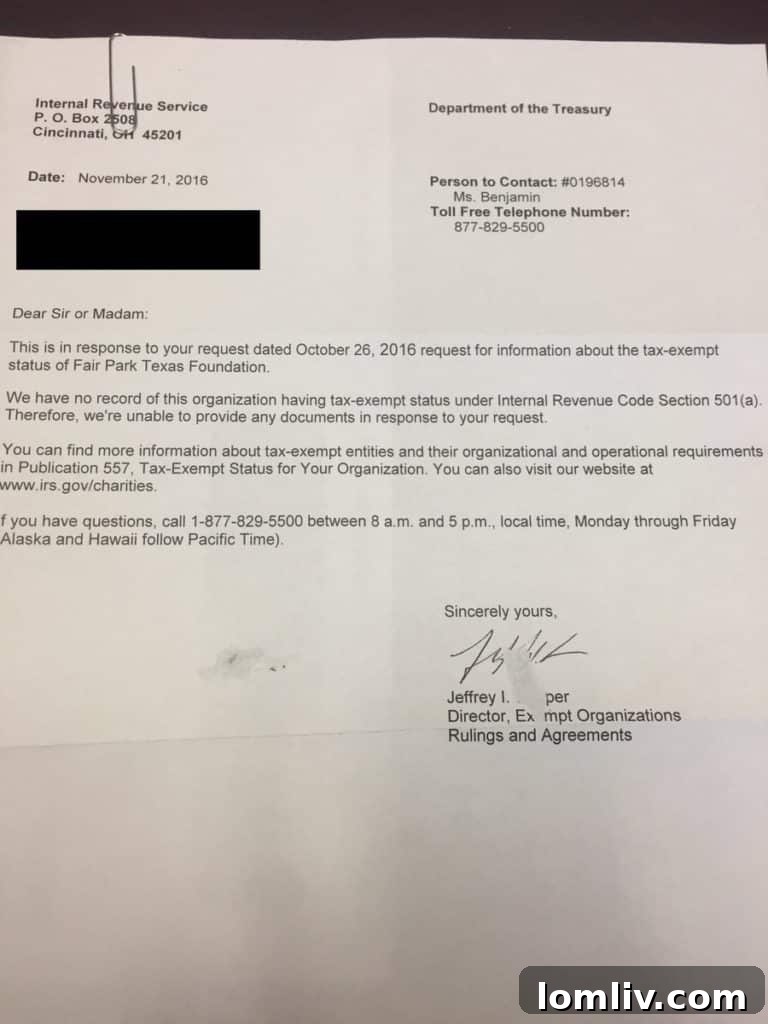
The response from the IRS, specifically from Jeffrey I. Cooper, was unequivocal and startling: “We have no record of this organization having tax-exempt status under Internal Revenue Code Section 501(a).” This statement profoundly challenges the very foundation of the Fair Park Texas Foundation’s operational model and its perceived legitimacy within the public eye. To fully grasp the gravity of this declaration, it is essential to understand what Section 501(a) entails within the complex framework of U.S. tax law. As highly respected tax guru Don Kramer explains in his publication Nonprofit Issues, the specifics of this code section are crucial for any organization claiming non-profit status:
Section 501(a) provides that organizations described under sections 501(c), 501(d), and 401(a) are exempt from federal income tax. Section 501(c) now has 29 separate sections (See Ready Reference Page: “What Do We Mean When We Say ‘Nonprofit’?”), including 501(c)(3) which describes charities. Section 501(d) describes certain religious and apostolic organizations, and section 401(a) describes qualified pension, profit-sharing and stock bonus plans. None of the organizations that meet the definitions set out in these sections has to pay federal income taxes.
This authoritative explanation underscores that 501(a) is the foundational exemption that grants relief from federal income tax liability. The explicit implication of the IRS having “no record” means the Fair Park Texas Foundation does not qualify for this fundamental benefit, which is critical for any entity seeking to operate as a genuine public charity. Within the broader 501(c) umbrella, 501(c)(3) stands out as the most common and widely recognized designation for public charities, private foundations, and other non-profit entities focused on religious, educational, scientific, literary, or charitable purposes. Organizations operating under 501(c)(3) not only enjoy significant tax exemption from federal income tax but also offer donors the highly advantageous incentive of tax-deductible contributions. This dual benefit is often absolutely essential for their fundraising capabilities and their ability to attract the philanthropic support necessary to achieve their stated missions. Without this critical status, an organization struggles significantly to present itself as a legitimate public charity in the conventional sense, severely limiting its operational flexibility, its capacity to attract funding, and its overall public credibility.
The absence of a confirmed 501(a) status, and by extension the highly sought-after 501(c)(3) designation, carries immense and far-reaching ramifications for any organization, particularly one positioned to manage a significant public asset like Fair Park. For the Fair Park Texas Foundation, this revelation directly challenges one of the key reasons it was considered an attractive partner by the City of Dallas: its supposed ability to “circumvent bidding” processes. This privilege, typically reserved for genuinely tax-exempt organizations that can demonstrate a clear public benefit, offer unique and specialized services, or operate under specific mandates that inherently justify an exemption from competitive procurement, is a serious matter. The rigorous public bidding process is a cornerstone of transparent governance, meticulously designed to ensure fairness, prevent cronyism, secure the best value for taxpayers, and uphold unwavering accountability in the expenditure of public funds. A private entity, regardless of its stated benevolent intentions, that lacks official non-profit accreditation simply cannot legitimately bypass these established rules without raising serious questions about legality, ethical conduct, and proper stewardship of invaluable public resources. This glaring absence of certified non-profit status thus casts a long, unsettling shadow over the legitimacy and enforceability of any management agreements predicated on such a designation, potentially exposing the City of Dallas to significant legal challenges and a considerable erosion of public trust regarding its due diligence and commitment to transparency.
Moreover, the journey to acquire 501(c)(3) tax-exempt status is famously arduous and protracted. Individuals and groups who have bravely navigated this complex bureaucratic maze can attest to the “long slog” it entails, often requiring meticulous documentation, extensive legal review, and a significant time investment—sometimes years—to meet the IRS’s stringent criteria. This exhaustive process is designed precisely to ensure that only legitimate charitable organizations are granted the profound privileges associated with tax exemption and public trust. Given this widely acknowledged difficulty, one might initially be tempted to extend the benefit of the doubt to Walt Humann and the Fair Park Texas Foundation, perhaps speculating that an application is currently pending or that a mere technical error occurred. However, the explicit statement from the IRS, indicating “no record” of such status, is definitive and demands a thorough, independent investigation rather than mere speculation. This is not a matter of simply misplacing a single document; it implies a complete lack of official registration under the relevant federal tax codes, a distinction with profound implications.
The implications of this situation extend far beyond just legal and administrative technicalities; they penetrate the core of public trust, governmental accountability, and the integrity of public-private partnerships. Fair Park is far more than just a venue; it is a historic treasure, a vibrant cultural hub, and a significant public asset deeply woven into the fabric of the city of Dallas. The community rightfully expects its management and future development to be handled with the utmost integrity, transparency, and adherence to legal standards. When an organization entrusted with its future appears to operate under a questionable legal status, it inevitably erodes public confidence and trust. Donors, volunteers, and citizens who believe they are supporting a legitimate non-profit may feel misled, potentially impacting vital future philanthropic endeavors and crucial community engagement efforts essential for Fair Park’s revitalization, ongoing maintenance, and long-term sustainability. The perception of an organization’s legitimacy is, in many ways, as crucial as its actual legal standing, especially when dealing with public funds and assets of such civic importance.
This situation also raises pressing questions about the level of due diligence conducted by the City of Dallas itself. Before entering into any significant agreement, particularly one involving the long-term management of a major public facility and the explicit circumvention of established bidding protocols, a thorough and verifiable investigation into an organization’s legal, financial, and operational standing is absolutely paramount. Was this verification adequately performed? If not, what specific safeguards are currently in place, or will be implemented, to prevent similar oversights and potential misrepresentations in the future? The Dallas community deserves clear answers and firm assurances that its elected officials are exercising the highest possible level of scrutiny and accountability when delegating responsibilities for such invaluable public assets. This incident serves as a critical and stark reminder of the paramount importance of rigorous vetting processes for all partners, particularly those operating under special legal designations that confer unique privileges and responsibilities.
Looking ahead, several critical actions are necessary to address this serious issue with the transparency and accountability it demands. The Fair Park Texas Foundation must provide unequivocal, verifiable proof of its tax-exempt status or, failing that, offer a comprehensive and transparent explanation for why such status has not been obtained or clearly communicated. The City of Dallas, for its part, must initiate an immediate and comprehensive review of its existing agreements with the foundation, reassessing all terms and conditions in light of this critical new information. Transparency will be absolutely key to rebuilding and restoring public trust. This may involve comprehensive public hearings, independent financial and legal audits, and a clear, proactive communication strategy from all parties involved. The very future of Fair Park, its ongoing operations, and its relationship with the broader Dallas community hinge directly on the swift, honest, and definitive resolution of this serious discrepancy. The incident powerfully underscores the vital importance of transparent governance and rigorous adherence to legal frameworks, especially for organizations purporting to act in the public interest and entrusted with significant civic responsibilities and public assets. The “long slog” of obtaining non-profit status, while challenging, is a necessary safeguard, ensuring that organizations truly serving the public good are properly vetted, recognized, and held accountable.
As this complex and unfolding situation continues to develop, the public, media, and city officials will undoubtedly remain vigilant, closely monitoring every step. The initial assumption that Walt Humann’s organization was a fully compliant non-profit enabled specific operational advantages and agreements, but the veracity of that foundational assumption is now severely challenged. Whether this turns out to be an unfortunate administrative snafu, a systemic oversight, or a more fundamental issue of misrepresentation, the ultimate outcome will significantly influence how public-private partnerships are structured, managed, and overseen not just in Dallas, but potentially setting a precedent for similar endeavors. It is a stark reminder that even well-intentioned initiatives must operate within clearly defined legal and ethical boundaries, with unwavering accountability and transparency as their guiding principles. We will continue to monitor developments closely and provide timely updates as this story progresses, ensuring that the critical questions surrounding the Fair Park Texas Foundation’s status receive the thorough attention and clarity they demand for the benefit of all Dallas citizens and the long-term preservation of Fair Park.