Activist Investor Urges A.H. Belo to Go Private Amidst Financial Turmoil and Governance Concerns
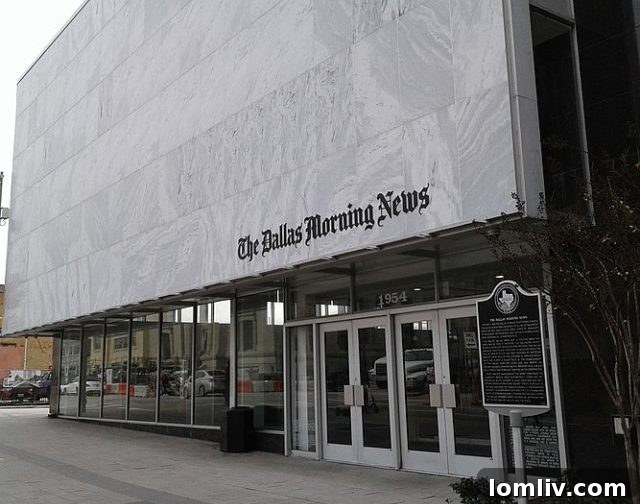
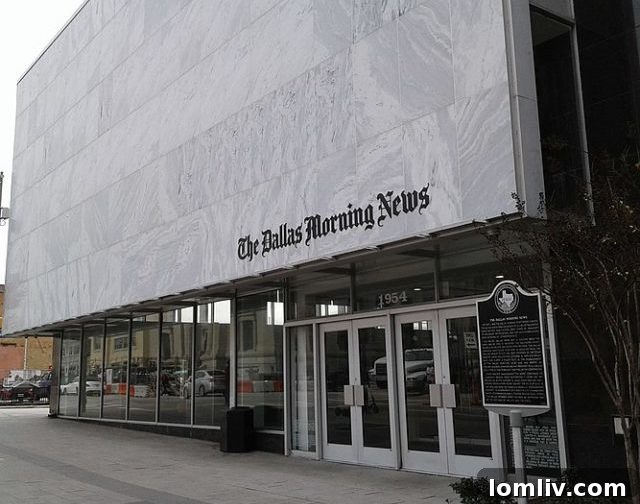
Following a profoundly disappointing fourth quarter in 2018, A.H. Belo Corporation, the parent company of the venerable Dallas Morning News, finds itself under intense scrutiny from a significant institutional investor. Minerva Advisors, an investment management firm headquartered in Bala Cynwyd, Pennsylvania, formally expressed its deep dissatisfaction with the company’s strategic decisions and corporate governance via a letter filed with the Securities and Exchange Commission (SEC) on a recent Monday. The firm unequivocally stated that A.H. Belo “has no business remaining publicly traded” and should seriously consider transitioning to private ownership.
This assertive move by Minerva Advisors, first brought to light by D Magazine’s Eric Celeste, manifested as a 13D filing. This specific SEC document is typically filed by any person or entity acquiring beneficial ownership of more than 5 percent of a company’s common stock. It frequently serves as a potent tool for “activist” investors to publicly voice their discontent and pressure management when prior, more discreet dialogues have failed to yield desired changes. In essence, this filing acts as a clear warning shot, signaling a more aggressive engagement strategy aimed at driving fundamental change within the company.
The Imperative to Go Private: Minerva Advisors’ Core Argument
David Cohen, president of Minerva Advisors, articulated his firm’s foundational belief that A.H. Belo’s status as a publicly traded entity is no longer viable or beneficial for its shareholders. The core of this argument rests on several critical observations concerning the evolving media landscape and the company’s operational inefficiencies.
Navigating the Decline of Print and Rising Public Company Costs
Cohen underscored the relentless challenges facing the traditional print media business, a sector that has seen dramatic declines in advertising revenue and readership over the past two decades. As these struggles intensified, A.H. Belo divested itself of all non-Dallas Morning News newspaper assets, effectively narrowing its focus. However, according to Minerva, this rationalization has not been sufficient to justify the continued burden of being a public company. The costs associated with public company governance—including rigorous reporting requirements, regulatory compliance, investor relations, and board oversight—are substantial. For a company like A.H. Belo, with diminishing revenues and profitability, these costs represent a disproportionate drain on resources that could otherwise be deployed to benefit shareholders or fortify the core business. Cohen argued that in an era where these governance costs are elevated, maintaining public status for a company with such a concentrated and challenged business model becomes an unsustainable luxury.
Questionable Diversification into Digital Marketing
Another significant point of contention for Minerva was A.H. Belo’s ill-fated attempt to diversify its business into digital marketing. Cohen explicitly criticized this endeavor, stating that the company embarked upon this strategy despite having “no apparent competitive advantage” in a highly saturated and intensely competitive market. Digital marketing requires specialized expertise, significant investment in technology, and a distinct corporate culture, all of which A.H. Belo seemingly lacked. This diversification effort, rather than providing a new growth engine, was perceived as a misallocation of capital and management focus, further exacerbating shareholder concerns about the company’s strategic direction and leadership.
Failure to Return Capital to Shareholders
Minerva also highlighted a specific request made to A.H. Belo executives: to return a portion of the cash held on the company’s balance sheet to investors. This request, aimed at enhancing shareholder value, was reportedly rebuffed with the explanation that the cash was essential to maintain the company’s liquidity. This response struck Minerva as contradictory, especially given the company’s ongoing financial struggles and the perceived mismanagement of funds elsewhere. While A.H. Belo did announce a modest quarterly dividend of 8 cents per share to be paid on June 7, it appears this action was insufficient to placate Minerva Advisors, who likely sought a more substantial capital return in light of the company’s performance.
Shareholder Grievances: A Deep Dive into Corporate Governance and Compensation
The filing of the company’s 2019 proxy statement proved to be a turning point for Minerva Advisors, transforming what they previously viewed as mere “variations in business judgment” into a serious indictment of corporate governance. David Cohen detailed several specific instances where insider actions appeared to prioritize personal gain over broader shareholder interests, particularly given the protective mechanism of super-voting B shares that grant insiders disproportionate control despite owning a minority of shares.
Executive and Board Compensation Under Scrutiny
Minerva’s letter meticulously outlined what it perceived as excessive and misaligned compensation practices for A.H. Belo’s board of directors and top executives. These practices raised fundamental questions about the board’s commitment to shareholder value and the overall integrity of the company’s compensation structure.
Board of Directors’ Compensation and Conflict of Interest
A striking detail revealed in Minerva’s letter concerned the financial alignment—or lack thereof—between the outside board members and the company’s common shareholders. The six outside directors collectively owned approximately 208,000 shares of AHC stock, valued at around $800,000 at the then-current market price. In stark contrast, their combined board fees for the previous year also amounted to over $800,000. This near one-to-one ratio of stock value to annual fees raised significant “doubt in our minds as to how much belief they have in AHC stock as an investment.” Given that a majority of these directors were described as experienced investors with access to capital, their apparent reluctance to significantly invest in AHC stock themselves “speaks volumes” about their confidence in the company’s future prospects. Furthermore, Minerva highlighted a critical skill gap, noting that none of the board members possessed described experience in media or digital marketing, areas crucial for the company’s strategic pivot and survival.
Accelerated Vesting of Restricted Stock Units (RSUs)
A particularly concerning practice cited by Minerva was the board’s decision to accelerate the vesting of its own Restricted Stock Unit (RSU) awards on December 10, 2018. RSUs are typically granted to align the interests of insiders with those of shareholders by vesting over time, contingent on performance or continued service. By accelerating their own units, board members were able to cash out at the then-current market price. This timing proved highly advantageous for the directors, as it occurred just before the announcement of AHC’s dismal fourth-quarter results, allowing them to “avoided the losses associated with holding the stock” that outside stockholders subsequently experienced. This opportunity was not extended to general shareholders. Minerva pointed out that the company’s proxy statement offered no adequate explanation for this self-serving action. For 2019 and beyond, directors further opted to convert all non-cash compensation into cash increases, a move Minerva interpreted as sending a “very negative message” about the board’s outlook on the company’s future stock performance. While the board might argue this was to protect shareholders from dilution, Minerva suggested a more aggressive stock buyback program would have been a more impactful and transparent signal of confidence.
Former CEO’s Departure Package and Stock Sales
Minerva also scrutinized the compensation of former CEO James Moroney. Upon his retirement last May, Moroney received his full cash bonus for the entire year, based on meeting certain objectives, despite serving for fewer than five months. This raised questions about the ambition and attainability of these objectives. Adding to the concern, SEC records indicated that Moroney had been systematically divesting himself of AHC stock since January, selling over 105,000 shares for approximately $438,813.70, all at prices above $4 per share. This continuous sell-off by a former top executive was viewed by Minerva as “another very negative message to current and potential shareholders,” implying a lack of long-term confidence from someone intimately familiar with the company’s operations and prospects.
Compensation for Key Executives: Moise and Storer
The letter extended its critique to the compensation packages of current executives, including Dallas Morning News publisher Grant Moise and Belo & Company president Timothy Storer. Storer’s compensation reportedly totaled $1 million, and in 2018, he received a performance bonus amounting to 55 percent of his target, alongside restricted stock units that were subsequently cashed out. Notably, Storer also benefited from the board’s “largesse” regarding his RSUs, which were cashed out in the same manner as the board’s units, yielding roughly $400,000. Even more controversially, Storer traded future RSU awards—which were contingent on performance in 2020 and 2021—for a direct $1 million cash payment in January 2019. This transaction effectively allowed an executive to forgo future performance-based incentives for an immediate cash payout, further detaching his financial interests from the company’s long-term success. Grant Moise also received an RSU cash-out worth $130,000, bringing his total compensation over the previous two years to $2 million. These executive compensation details, particularly the pre-emptive cash-outs and trading of future performance-based awards, fueled Minerva’s argument that insider interests were being prioritized over prudent financial management and shareholder alignment.
A.H. Belo’s Troubled Financial Landscape
The backdrop for Minerva Advisors’ aggressive stance is A.H. Belo’s rapidly deteriorating financial performance, particularly evident in its 2018 results.
Dismal Q4 2018 and Full-Year Performance
During the conference call for the fourth quarter of 2018, A.H. Belo reported a meager net income of $151,000, translating to a penny per fully diluted share. This figure represented a precipitous decline compared to the $12.8 million net income recorded in the same quarter of 2017, marking a nearly 99% drop in profitability. The full-year results painted an even grimmer picture, with the company reporting a net loss of $5.4 million. This stark shift from profitability to a significant loss underscored the severe operational and market pressures A.H. Belo was facing, signaling a clear erosion of its financial health.
Revenue Decline at The Dallas Morning News
The flagship publication, The Dallas Morning News, also experienced significant financial headwinds. Its total revenue for Q4 2018 plummeted to $47.1 million, a substantial decrease of $9.4 million, or 16.6 percent, compared to Q4 2017. For the entire fiscal year, the newspaper’s total revenue was $180.3 million, a decline of $37 million from the previous year. These figures highlight the accelerating challenges faced by traditional print journalism in attracting and retaining advertising revenue and subscribers, indicating that the core business was struggling to adapt to the digital age.
Layoffs Amidst Executive Raises: A Public Relations Nightmare
The financial distress had tangible consequences for A.H. Belo’s employees. In January, The Dallas Morning News announced the layoffs of 43 employees, with 20 of those positions eliminated from the newsroom. This decision sparked criticism, particularly as it came to light that AHC executives had received “nice raises” in recent years. This stark contrast between employee layoffs and executive compensation fueled public and media condemnation, as reported by outlets like the LA Times. Such a juxtaposition not only damages employee morale but also erodes public trust and investor confidence, exacerbating the perception of corporate misalignment.
The Public Company Debate: Costs Versus Perceived Benefits
The question of whether A.H. Belo should remain a public entity has been a recurring theme, with David Cohen having previously grilled executives on the associated costs during prior conference calls.
The Cost Burden of Being Public
Cohen had estimated the costs associated with being a publicly traded company to be “certainly over $2 million.” He argued that while this figure might seem modest compared to the adjusted operating income of $15 million or $20 million that the company “used to generate,” it became “pretty substantial” when juxtaposed against a current adjusted operating income of merely $5 million. His skepticism extended to the historical benefits of being public, questioning “what the value is as being public right now” for A.H. Belo given its current financial predicament.
Management’s Counter-Argument and The Civic Institution at Risk
Chairman, President, and CEO Robert Decherd, along with Senior Vice President Katy Murray, countered Cohen’s assertions, insisting that many of the expenses he cited would persist regardless of whether the company was public or private. Murray also disputed Cohen’s specific financial calculations regarding these costs. Despite these technical debates, Cohen emphasized his unwavering support for The Dallas Morning News as an “incredibly important piece of the Dallas media environment” and a vital “civic institution.” However, he expressed profound concern that its health and integrity could not be assured as a public company, suggesting that the very act of being public was working “across purposes” to the institution’s long-term well-being. This perspective underscores a broader conflict between the fiduciary duties of a publicly traded corporation and the civic responsibilities often associated with a venerable local newspaper.
Minerva’s Strategic Maneuver and the Shareholder Landscape
Minerva Advisors’ filing of the 13D letter was not an impulsive act but a calculated escalation, predicated on a carefully increased investment in A.H. Belo.
Increasing the Stake for Influence
According to the most recent available information, Minerva Advisors strategically increased its investment in AHC stock by 2.5 percent during the fourth quarter of 2018. This deliberate move brought their total ownership to 964,669 shares, representing a substantial stake of approximately $3 million. This increase was widely noted at the time, particularly in conjunction with the news of The Dallas Morning News layoffs, prompting speculation about Minerva’s intentions. In hindsight, it appears this strategic accumulation of shares was, in part, aimed at solidifying the firm’s position to reach the crucial 5 percent ownership threshold necessary to file a 13D report, thereby enabling them to exert more formal pressure and publicize their demands for corporate change. At the time of the filing, The Dallas Morning News itself reported that Minerva owned about 5 percent of the company’s stock.
Key Institutional Investors and Insider Control
Minerva Advisors is not alone in its institutional ownership of A.H. Belo. Other significant stockholders include Parthenon LLC, which held 183,884 shares as of the last quarter; Penn Capital Management, with 311,574 shares; Renaissance Technologies, owning 830,449 shares; and North Star Investment Management, which commands the largest reported institutional stake with 1,283,607 shares. By most accounting, institutional investors and hedge funds collectively hold roughly 60 percent of the company, indicating a fragmented but powerful block of ownership that demands accountability. Despite this, insiders maintain significant control, accounting for 12.8 percent of stock ownership, crucially buttressed by their possession of super-voting B shares, which grant them disproportionate voting power and insulation from outside shareholder pressure.
The Road Ahead: Uncertainty and Silent Responses
In the wake of Minerva Advisors’ impactful 13D filing, the immediate response from A.H. Belo Corporation has been one of silence. Robert Decherd, the company’s CEO, declined to comment on the matter, adhering to a standard corporate stance that “the company does not comment on matters of this type.” Minerva Advisors, for its part, has also refrained from offering further public commentary beyond the contents of its SEC filing, allowing the letter to speak for itself. As the market absorbed this news, shares of A.H. Belo closed at $3.96 on Wednesday evening, reflecting the ongoing uncertainty surrounding the company’s future and the potential for a protracted battle over its strategic direction. The confrontation between an activist investor and a legacy media company struggling to adapt to modern economic realities underscores the broader challenges facing the print industry and the critical need for sound corporate governance and genuine shareholder alignment in a rapidly changing world.
Minerva 13D filing by Bethany Erickson on Scribd
James Moroney Stock Sale by Bethany Erickson on Scribd