

It is with profound sadness that we acknowledge the passing of Cole Smith, an architectural titan whose influence extended far beyond Dallas to touch the entire United States. His death on August 25th marks the end of an era, leaving a significant void in the world of design and a lasting legacy of extraordinary structures.
Born in 1926, Cole Smith was more than just an architect; he was a visionary, an artist, and a devoted husband to interior designer extraordinaire Sherry Hayslip Smith, who aptly described her beloved partner as “a national treasure.” This sentiment encapsulates the deep respect and admiration held for a man whose life and work were seamlessly intertwined, each enriching the other in a pursuit of timeless beauty and functional elegance.
Sherry Hayslip Smith eloquently shared insights into her husband’s philosophy: “Cole Smith’s life and work have been inseparable. Dedicated to preserving and promoting craftsmanship, he has mastered many crafts and found patrons to underwrite the work of others. A lover of history, he has woven it into his architecture. Compelled to infuse design into everything he does, his philanthropies, hobbies, and pleasures involve creating unique and beautifully crafted structures and objects, or preserving existing ones.” This dedication to craftsmanship was not merely a professional choice but a deeply ingrained passion that defined his approach to every project, big or small. He believed in the enduring value of skill, precision, and artistry, ensuring that every detail, from the grandest facade to the smallest fixture, bore the mark of meticulous attention.
The sheer volume and unparalleled quality of Cole Smith’s architectural contributions to Dallas and North Texas are truly staggering. To fully chronicle all the homes and significant buildings he designed would require extensive research, a testament to his prolific career. His portfolio showcases not only grand residences but also classic, beautiful homes that transcend mere size, embodying a timeless aesthetic and structural integrity. Many believe he was one of the most productive and influential architects of his generation, shaping the urban and suburban landscape with buildings that will continue to enhance the beauty and character of this region for generations to come, long after we are all gone. His work was not confined to opulent mega-mansions; his genius shone through in a diverse range of projects, each imbued with his distinctive blend of historical reverence and innovative design.
 Cole Smith’s commitment to architectural history was a cornerstone of his professional ethos, inspiring numerous restoration projects that breathed new life into venerable structures. A prime example of this dedication is the painstaking restoration of the Lyles home in Garland, Texas. This historic residence, one of the oldest in the city, underwent a meticulous transformation under Smith’s guidance, eventually becoming the cherished centerpiece of the Garland Landmark Museum. This monumental effort earned him widespread acclaim and the profound appreciation of Mayor Ruth Nicholson and the Garland City Council, highlighting his ability to blend modern architectural principles with an unwavering respect for the past.
Throughout his illustrious career, Cole Smith designed hundreds of homes and various other structures across the United States and even abroad. His clientele often included some of the nation’s wealthiest patrons, a common thread among architects of historical significance. Yet, Smith’s role often extended beyond that of a mere designer; he frequently became an educator to his clients, guiding them through the intricacies of architectural excellence and cultivating a lifelong relationship built on trust and shared vision. His ability to interpret and elevate his clients’ dreams into tangible, enduring masterpieces set him apart, making him a sought-after collaborator for those who valued art, history, and unparalleled quality.
Cole Smith was widely esteemed within the dual realms of high art and high craft, a testament to his comprehensive mastery. In 1959, he co-founded Smith Ekblad & Associates in Dallas, Texas, with a steadfast commitment to designing lasting structures of exceptional quality. While the firm was adept at contemporary work, their greatest interest lay in period residential and commercial structures, allowing them to showcase their deep understanding of historical architectural styles and integrate them seamlessly into modern living. The hallmark of a Smith Ekblad building, a signature recognized by connoisseurs, was the inherent elegance evident in every aspect, from the foundational structure to the most intricate finished details. This holistic approach ensured that each project was not just a building, but a meticulously crafted work of art, designed to stand the test of time both aesthetically and structurally.
Smith’s groundbreaking work garnered extensive recognition and was highly published in leading architectural and design journals. He was the proud recipient of numerous prestigious awards, underscoring his excellence and innovation in the field. These accolades included several First Place ASID (American Society of Interior Designers) national and regional awards, a Craftsmanship Award, the President’s Certificate, and the President’s Gavel, all conferred by the Dallas chapter of CSI (Construction Specifications Institute). Further solidifying his status, he received a Citation of Honor from the Dallas chapter of the AIA (American Institute of Architects). In a crowning achievement that affirmed his profound impact on the architectural profession, Smith was named a Fellow of the American Institute of Architects in 1993, an honor reserved for architects who have made significant contributions to architecture and society.
Cole Smith possessed an insatiable curiosity and an unwavering dedication to his craft, embodying the spirit of a true polymath. He never ceased working, thinking, or problem-solving. Beyond his architectural prowess, he was also a highly skilled engineer, meticulously integrating structural integrity and innovative solutions into his designs. Furthermore, he harbored a profound passion for painting. The last time this writer encountered him in one of his magnificent homes, he was proudly displaying his canvases, revealing yet another dimension of his artistic genius that was nothing short of amazing. His artistic talents extended across various mediums, enriching his architectural perspective.
His clients, often becoming lifelong friends, held him in such high regard that they frequently hosted parties and honors in his name, celebrating his remarkable contributions and charming personality. Cole Smith was also a dedicated member and active participant in esteemed organizations such as the Design Leadership Summit and Leaders of Design, where he shared his insights and mentored future generations. His interests were remarkably broad and diverse; he was a generous patron of the Dallas Museum of Art and the Dallas Opera, reflecting his deep appreciation for culture and the arts. He explored pioneering ideas such as alternative energy sources, including early experiments in solar and wind energy, showcasing his forward-thinking mindset and concern for the environment. He was endlessly driven to probe, experiment, and innovate. His meticulous attention to detail even led him to design and engineer almost every component used in his homes, from custom hardware to unique hooks and bespoke door knobs, ensuring that every element was perfectly aligned with his overarching design vision and commitment to craftsmanship.
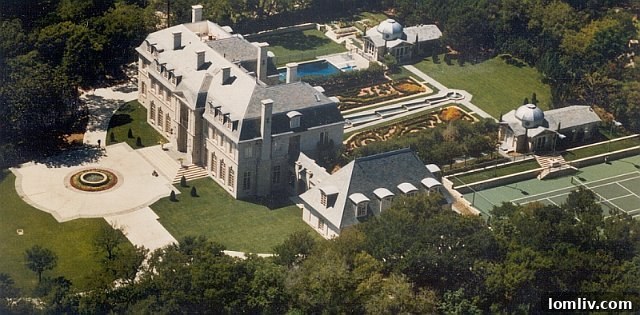
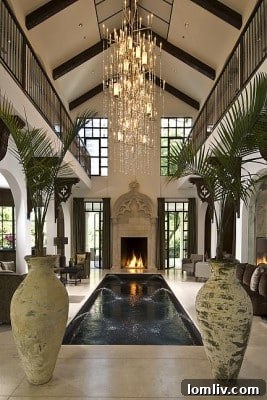
As mentioned, the sheer number of homes and significant places Cole Smith designed is far too vast to comprehensively list in a single writing. However, some standout projects highlight his extraordinary talent and lasting impact on Dallas’s luxury real estate landscape. Cole once shared that he believed his finest residential creation was the home he designed for Dick and Jinger Heath, founders of BeautiControl, located at 4707 Park Lane. Tragically, this exquisite residence later burned down when it was owned by Scott Ginsburg, a testament to the devastating loss of a true architectural gem. He also designed the inaugural home for Joyce and Larry LaCerte, another iconic Park Lane property, which subsequently became one of the most expensive home sales in Dallas history after being acquired by Kelcy Warren. Smith’s relationship with Warren extended further, as he designed at least one other property and oversaw significant modifications to 5323 Park Lane. His portfolio includes the elegant Tolleson’s home on Hunters Glenn and the grand Herman and Mimi Lay estate at 4935 Radbrook Place in Preston Hollow, which was regrettably torn down years later. Among his more distinctive designs was the Braden Power house, a somewhat notorious residence (though this writer adores Braden P.) famously featuring a swimming pool integrated into the main foyer. This unique property was initially sold to Lee Bailey, who then sold it to Real Housewives of Dallas star Stephanie Hollman, ensuring its continued place in Dallas’s storied architectural lore.
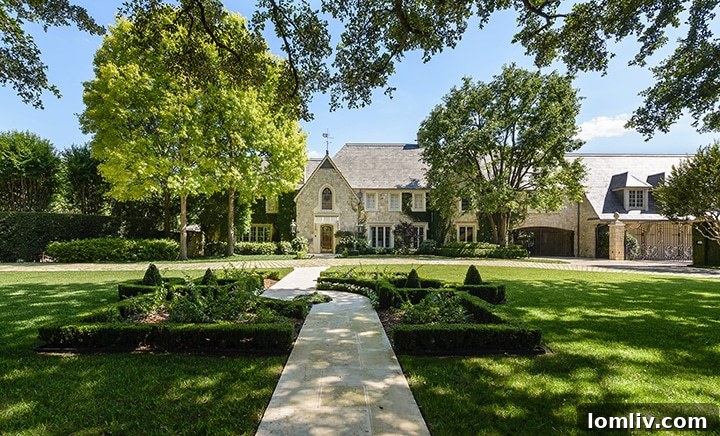
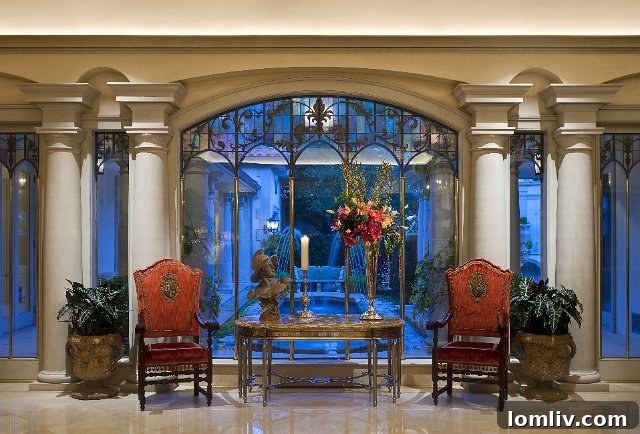
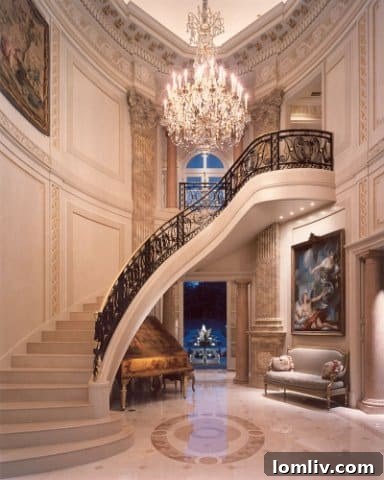
Perhaps the pinnacle of Cole Smith’s residential genius, his true opus, is the breathtaking estate at 6767 Hunters Glen. This sprawling 11,500-plus square foot home stands as a monumental testament to his unparalleled dedication to custom craftsmanship and integrated design. Every single piece of metalwork within this magnificent property was meticulously custom-designed and hand-forged by Cole Smith himself. This includes every door handle, every stopper, every elegant doorknob, every window handle, every hinge, and every drawer pull – each a bespoke work of art. The windows throughout the estate open with a distinctive “Lobster Claw” bronze handle, a unique detail that exemplifies Smith’s attention to functionality and aesthetic charm. Similarly, the abundant French doors are adorned with custom “Lobster Claws,” creating a cohesive and luxurious tactile experience. Even the air vents are not standard; they are custom-created grates of varying shapes and sizes, thoughtfully designed to complement the specific character of each room—a signature element in any Cole Smith home. Furthermore, most of the estate’s majestic chandeliers were also hand-forged and personally designed by Cole, then meticulously wired to electrify and illuminate the interiors with a warm, inviting glow, reflecting his deep understanding of light and space.
The crowning glory of 6767 Hunter’s Glen is undoubtedly its spectacular solarium. This architectural marvel features coated rotating metal panels, each custom-designed by Cole Smith himself. These ingenious metal leaves operate with astonishing precision, opening and sliding out while rotating to completely cover the sunroof, offering respite when the Texas sun becomes too intense. Then, with the mere push of a button, these leaves gracefully retract, folding back in like a blossoming flower, one tucking elegantly under the other. This seamless blend of engineering ingenuity and poetic aesthetics perfectly encapsulates Cole Smith’s brilliant mind and his ability to transform functional elements into breathtaking artistic expressions. It’s a testament to his vision of creating spaces that are not only beautiful but also responsive and engaging.
Rest in peace, dear friend. Your incredible vision, unparalleled talent, and the enduring beauty you brought to the world will be cherished and remembered forever. Cole Smith, a true national treasure, you will be greatly, greatly missed, but your architectural legacy will continue to inspire and awe for centuries to come.