Dallas Confronts Growing Homelessness Crisis: Key Insights from the HOPE Report
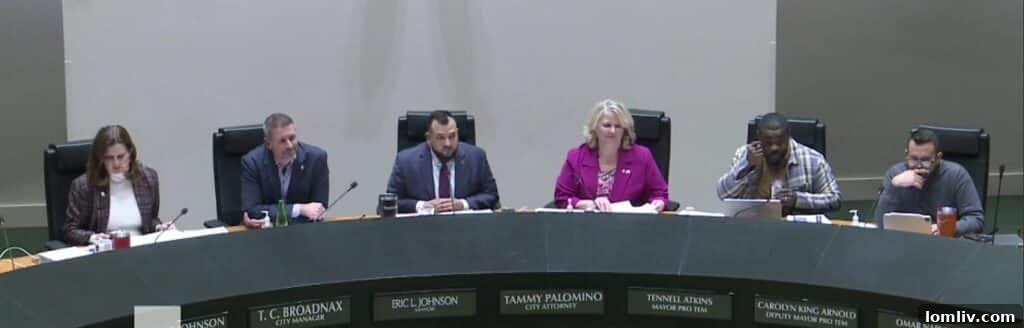
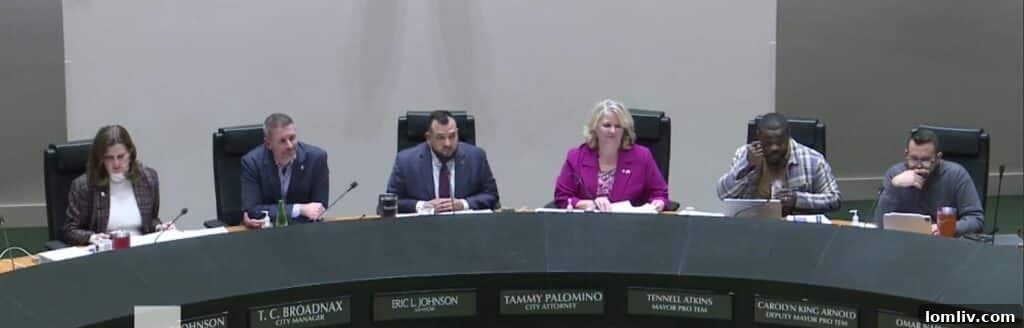
Dallas, a rapidly expanding urban center, faces an escalating challenge: a significant and deeply concerning rise in unsheltered homelessness. As the biting cold of a January 18 evening settled over the city, a critical meeting of the Dallas City Council’s Housing and Homelessness Solutions Committee took center stage. The committee’s focus was the Homelessness, Organizations, Policies, and Encampments (HOPE) report, a meticulously compiled document designed to illuminate the crisis and chart a path toward sustainable solutions.
District 2 Councilman Jesse Moreno, who presides over the Housing and Homelessness Solutions Committee, opened the discussion with a poignant observation. He highlighted the stark contrast between the attendees, who would soon retreat to their warm, secure homes, and the hundreds of individuals outside braving the freezing temperatures. Moreno emphasized that while dialogues are crucial, they must translate into tangible, meaningful change to truly impact the lives of those experiencing homelessness.
“Homelessness is not merely a social issue; it is a profound humanitarian concern, a public health crisis, and a direct threat to the safety and well-being of our entire community,” Councilman Moreno asserted. He underscored the interconnectedness of the city’s population, explaining, “Businesses, residents, and sheltered individuals alike suffer when our unsheltered population endures such hardships. Addressing this crisis is paramount for fostering a more equitable, healthy, and thriving Dallas for all.” His words resonated with the committee, stressing the urgency of finding systemic and compassionate solutions.
The data presented in the HOPE report painted a stark picture of Dallas’s worsening situation. The city has experienced an alarming surge in its unsheltered homeless population, a trend that significantly outpaces the national average. In 2014, the number of individuals experiencing unsheltered homelessness in Dallas stood at 242. By 2022, this figure had dramatically escalated to more than 1,300. This near six-fold increase over just eight years underscores the pressing need for immediate and effective interventions, indicating that underlying systemic issues are driving a continuous flow of individuals into homelessness.
For those seeking to delve deeper into the specifics of this crisis and the proposed remedies, the comprehensive June 2023 HOPE report is an invaluable resource, accessible here. Furthermore, to witness the committee’s robust discussions and gain a complete understanding of the dialogue, a full recording of the January 18 meeting is available for public viewing here. These documents provide the foundational context for the city’s strategic approach to homelessness.
Recommendations For Addressing Homelessness Comprehensively
The January Housing and Homelessness Solutions (HHS) meeting brought together a diverse array of leaders, reflecting a growing regional consensus on the need to address homelessness. Prominent speakers included the mayors of neighboring cities such as Farmers Branch, Addison, and Carrollton, highlighting the shared nature of this North Texas challenge. The HOPE report itself was presented by its distinguished co-chairs: Peter Brodsky, Ellen Magnis, and Betty Culbreath. Their detailed presentation was followed by an interactive question-and-answer segment, allowing council members to scrutinize the report’s recommendations and implications.
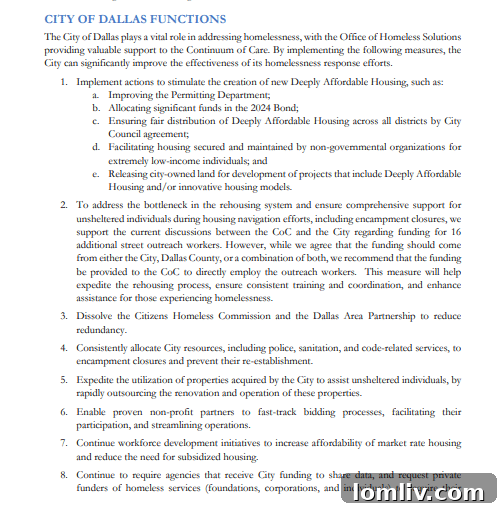
A cornerstone of the task force’s recommendations, as articulated by Ellen Magnis, is the imperative for a truly holistic approach. This strategy transcends simplistic solutions, advocating for a multi-faceted framework that integrates crucial elements like permanent supportive housing (PSH), comprehensive mental health services, and critical administrative reforms to streamline cumbersome permitting processes that often impede the development of essential housing. Magnis emphasized the nuanced balance required, stating, “While both interim and long-term solutions are undeniably needed, we must be judicious. At times, interim solutions can inadvertently divert critical financial resources that would be more effectively utilized for sustainable, longer-term interventions. This demands a carefully balanced approach because there is no single magic bullet, no singular solution that can comprehensively address this multifaceted problem.”
The Critical Shortage of Affordable Housing in Dallas
A primary driver of Dallas’s escalating homelessness crisis is the severe and systemic shortage of deeply affordable housing options. A compelling report compiled by the Child Poverty Action Lab meticulously details this deficit, revealing that Dallas currently lacks an astounding 33,000 units of “deeply affordable housing.” This category of housing is specifically designed for individuals and families whose income falls at or below 50 percent of the area median income (AMI). This massive shortfall represents a fundamental breakdown in the city’s ability to provide basic, affordable shelter for a significant segment of its population.
“This isn’t just a statistical anomaly; it’s a monumental challenge that will continue to push more and more individuals into the harsh reality of homelessness if we fail to confront it decisively,” Magnis cautioned. The implication is clear and urgent: without a substantial and immediate increase in the supply of deeply affordable housing, Dallas will find its unsheltered population continuing to expand, regardless of other well-intentioned interventions.
The HOPE report vividly illustrates this dire predicament with a powerful and evocative analogy: until Dallas can either significantly expand its supply of deeply affordable housing or experience a drastic reduction in the sheer number of people who desperately require it, the city will remain locked in “a game of musical chairs in which there is always someone who cannot be housed.” This analogy profoundly captures the grim reality of a system where demand far outstrips supply, leaving a substantial portion of the population without a fundamental human necessity.
To counteract this critical shortage, the report outlines a comprehensive suite of targeted recommendations aimed at boosting the availability of both affordable and market-rate housing. These strategies span a wide spectrum, from offering incentives to developers and expediting bureaucratic approval processes to exploring innovative funding mechanisms and land-use policies. However, the report also sheds light on a troubling historical pattern: “While past commissions and task force groups have consistently identified the critical need to add well over 1,000 units of additional permanent supportive housing (PSH) – a vital component for addressing chronic homelessness – only approximately 300 units have actually materialized and come online in the past five years.” This stark disparity between recognized need and actual progress underscores the persistent bureaucratic, financial, and political hurdles that have historically hampered effective intervention and timely housing development.
Housing Committee Members Address Solutions and Challenges for Homelessness
The profound complexity of Dallas’s homelessness crisis and the depth of the proposed solutions are fully reflected in the extensive HOPE Report, which spans 46 detailed pages of analysis and recommendations. Furthermore, the rigorous committee discussion during the January 18 meeting extended for a comprehensive three hours. For stakeholders, policymakers, and concerned citizens alike, a thorough review of the full document and the complete meeting video is essential to gain a granular understanding of the intricate challenges and the multifaceted pathways forward.
District 13 Councilwoman Gay Donnell Willis acknowledged the ongoing efforts, noting that indeed, progress is being made in housing more individuals, albeit at a frustratingly slow pace. Her concern deepened when she spoke of the interim reality: “What we are witnessing in the meantime,” she observed, “is people being warehoused under underpasses and on parkland.” While acknowledging that these informal encampments might appear to be a ‘free’ solution, she passionately advocated for the urgent need for temporary shelter alternatives that offer genuine dignity and a greater sense of stability. “I don’t necessarily love the traditional shelter idea,” Willis clarified, expressing a preference for “a middle ground – something that feels more like actual housing, providing a stepping stone toward permanent solutions rather than simply temporary containment.”
Addressing Dual Challenges: Mental Health and Substance Use Disorder
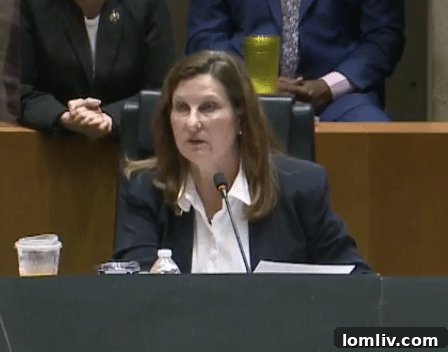
A substantial segment of the committee’s discussion critically focused on the formidable challenge of effectively serving unsheltered residents who contend with co-occurring drug addiction and severe mental illness. The HOPE report provides sobering statistics on these intertwined conditions, revealing that approximately 40 percent of Dallas’s homeless population suffers from some form of mental illness, while 32 percent battle substance use disorder. A particularly vulnerable subset, representing 14 percent, experiences both. Betty Culbreath, one of the task force co-chairs, highlighted a glaring and tragic deficiency: there are currently no dedicated, no-cost beds available within the city specifically designed to comprehensively address these intertwined issues.
District 12 Councilwoman Cara Mendelsohn voiced her profound dismay and shock at this revelation regarding the lack of specialized resources. She further underscored the dire, often fatal, consequences of this neglect, tragically noting that more than 300 homeless individuals perished in Dallas in 2022 alone. This harrowing statistic serves as a stark and painful reminder of the critical intersection of homelessness, a severe lack of accessible care, and untreated mental health and addiction issues.
The debate surrounding appropriate shelter models, particularly “low-barrier shelters” that permit drug use, emerged as a contentious point. Peter Brodsky, another task force co-chair, expressed reservations against such models, citing legitimate concerns that they could inadvertently contribute to increased crime rates and public safety issues for the city. However, task force members also clarified a crucial ethical and legal constraint: individuals cannot be forcibly compelled into drug treatment programs, significantly complicating intervention efforts. This delicate balance between providing accessible, non-coercive help and respecting individual autonomy remains a central and ongoing challenge in effective outreach.

“The undeniable need for enhanced behavioral health and drug treatment services is constant and ever-present,” Brodsky affirmed. He commended the commendable work of the North Texas Behavioral Health Authority but stressed the ongoing and strenuous effort required to fully integrate disparate systems. “What we are rapidly becoming much more proficient at is meticulously coordinating the entire homeless response system with the existing behavioral health system. This crucial integration is precisely why the collective impact model – an approach where multiple agencies, community organizations, and governmental stakeholders work in concert towards a common agenda – is so critically important and must continue to solidify and gel into a seamless operational framework.”
District 7 Councilman Adam Bazaldua echoed the sentiment for more strategic and data-driven action, emphasizing the critical need for city leaders to be far more intentional and precise in leveraging the wealth of data they receive. “I firmly believe that the data you’ve meticulously provided on the prevalence of substance use disorder and/or mental health challenges among the homeless population strongly correlates with the observable ratio of unsheltered individuals who willingly accept resources versus those who consistently decline them,” he posited. “This direct correlation strongly suggests that there is a significant segment of our population that we are currently failing to reach effectively with our existing outreach and support models.”
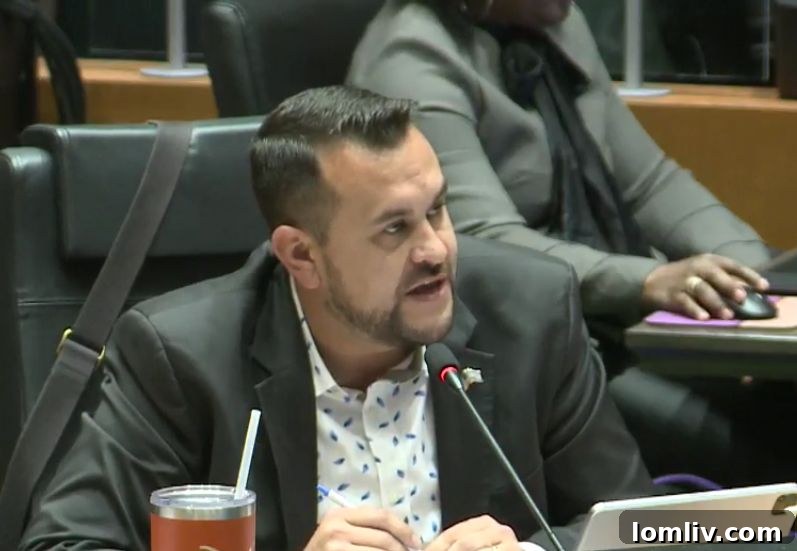
In light of this formidable challenge, Councilman Bazaldua proactively suggested the deliberate implementation of “a low-barrier shelter of some sort,” carefully aligning his proposal with the specific language and legislative intent of Texas House Bill 1925. This legislative framework provides a potential avenue for addressing the complex and often resistant needs of individuals who may be unwilling or unable to engage with traditional assistance models offered by the city. He candidly acknowledged the inherent limitations of a universally applied strategy: “We understand that the highly effective Housing First model, while profoundly successful for many individuals, isn’t going to serve as the definitive or sole solution for every single unsheltered individual, particularly those grappling with the most complex behavioral health needs and long-term trauma.”
The Path Forward: Sustained Effort and Adaptive Strategies
In his insightful concluding remarks, Peter Brodsky succinctly encapsulated the profound essence of the challenge and the unwavering commitment required: reducing homelessness is inherently “long, hard, arduous work.” He wisely cautioned against the persistent allure of quick fixes or transient, faddish solutions, stating, “There’s always a new flavor du jour of, ‘This is going to miraculously solve the problem’… but ultimately, the fundamental and enduring answer remains to consistently get people housed.”
Brodsky underscored that while opportunities for refinement and improvement are perpetually present – “There are a million different ways we can improve” – the core strategic direction must remain firmly anchored to methods that have demonstrably proven their efficacy. “We’ve meticulously tried to list the ones that our task force unanimously agreed upon and rigorously vetted,” he explained. “However, we must steadfastly resist the urge to take an abrupt hard right turn and abandon the strategies that are demonstrably showing positive results. While we anticipate inevitable bumps in the road, unforeseen challenges, and occasional setbacks, what we are currently implementing appears to be consistently yielding positive outcomes, and crucially, these very same strategies have proven successful in other communities facing similar adversities and complexities.”
The Dallas City Council, fortified by the comprehensive insights and strategic framework provided by the HOPE Report and galvanized by the unwavering commitment of its dedicated members and diverse community partners, is resolutely poised to navigate this complex and multifaceted journey. The path to significantly reducing and ultimately eradicating homelessness in Dallas will undoubtedly be incremental, demanding sustained political will, innovative cross-sector partnerships, and a deep, empathetic understanding of the diverse and often profound needs of its unsheltered population. Ultimately, the collective vision remains a Dallas where every single individual has equitable access to safe, stable, and dignified housing, a reflection of the city’s core values of compassion, human dignity, and robust community well-being.