From Personal Narratives to Architectural Preservation: Why Our Homes Matter
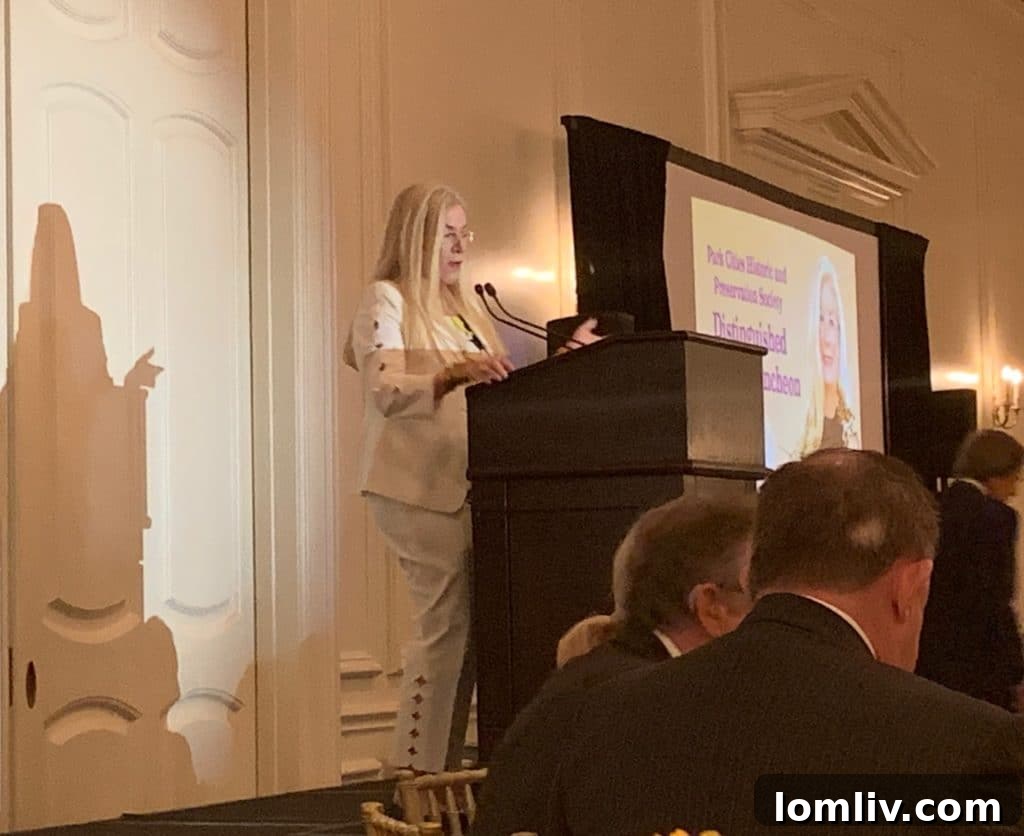
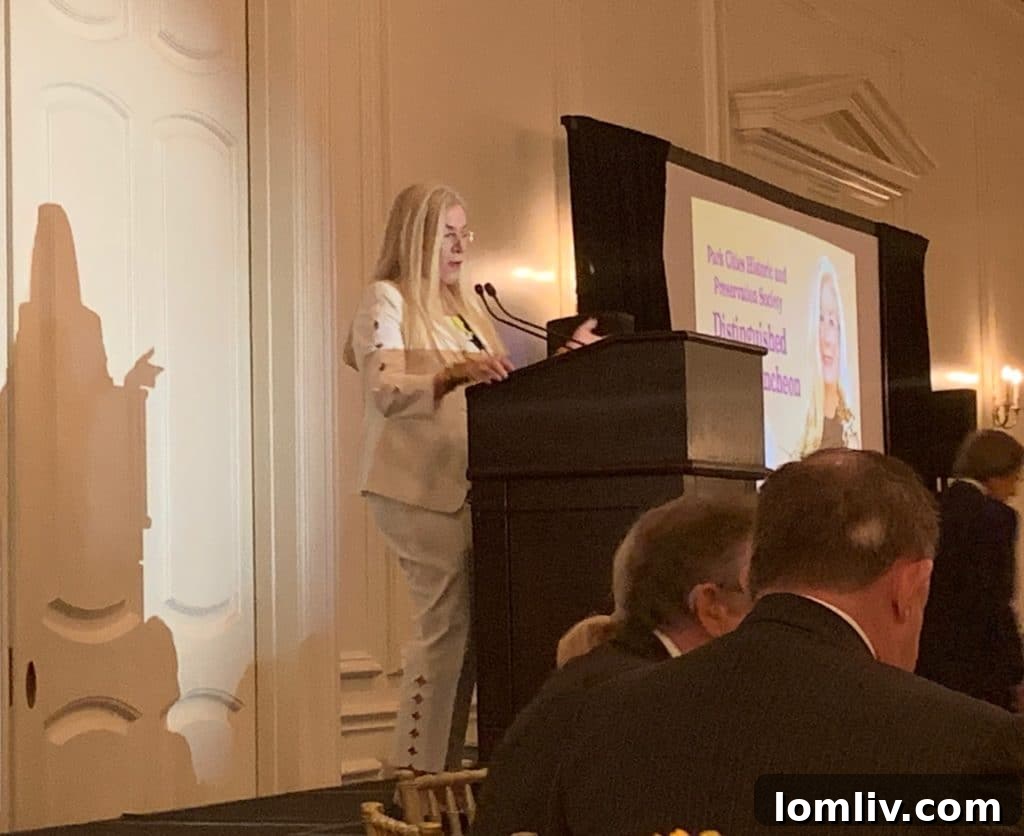
Last Wednesday marked the vibrant kickoff of the Park Cities Historic and Preservation Society’s event season, with a compelling keynote luncheon delivered by Candy. Addressing a full house, Candy skillfully wove the poignant theme of “homes as the footprints of our history” through her discussion. Her speech, which resonated with both humor and insightful challenges for the preservation community, offered a fresh perspective on safeguarding our architectural heritage in an ever-evolving world.
We are delighted to share the full transcript of her inspiring speech, alongside the accompanying slideshow, providing an in-depth look at her powerful message.
Our Homes, Our Stories: A Personal Journey Through Time
Hi there! Like many, I’ve found that my family’s life story is intrinsically linked to the homes we’ve inhabited, each dwelling serving as a distinct bookmark in the chapters of our collective memory.
My childhood unfolded in suburban Chicago, initially at 10115 The Strand, remarkably close to the legendary Frank Lloyd Wright house in Oak Park, Illinois, my birthplace. Later, the house on Gladstone Avenue holds a vivid memory: my mother recounted how my father was washing the car and she was ironing in the kitchen when the news of Pearl Harbor broke.
As a teenager, I recall furtively blowing smoke out the window at 948 Seminole and 1331 Algonquin Drives. These homes were part of Blackhawk Manor, a housing development launched in 1953, named with a Native American theme. This development perfectly epitomized the post-World War II suburban expansion sweeping across America, a phenomenon mirrored in cities like Dallas.
These were typically one-story ranch-style homes, constructed with brick veneer – a design that perhaps sounds familiar even today. The initial homes were modest, around 900 square feet, often with just a single bathroom. While good black earth was provided for the yards, buyers were responsible for cultivating their own lawns. Many even postponed building a garage or paving a driveway for years – a testament to a bygone era of delayed gratification.
By the 1960s, a new trend emerged: larger split-level, two-story, and even three-story homes, now complete with garages. These residences primarily attracted young families, much like mine, often headed by fathers who had served in World War II. Mortgages backed by the Veterans Administration significantly facilitated these purchases, embedding these homes deep within the fabric of American history.
Homes are truly the footprints of our history, each leaving an indelible mark.
My high school graduation occurred a mere 30 days after our move to 648 Council Hill Road, a residence my mother custom-built as her personal ode to the 1970s dream house. It boasted distinct features of the era: orange shag carpet in the family room (which you literally “raked”), a sunken living room that likely served as a mini-conversation pit, indoor/outdoor carpet in the kitchen, and charming faux marble, shell-shaped sinks.
This passion for building dream homes wasn’t unique to my mother. In their later years, my aunts and uncles also pursued this ambition. It was a shared family fascination, though tastes varied widely. My favorite, almost a replica of a Palm Springs time capsule, belonged to my Uncle John. A true house connoisseur himself, our architectural preferences diverged slightly. His home was designed to evoke the lavishness of his favorite Vegas haunt, the Bellagio. Picture an abundance of white and gold French Provincial decor, complemented by avocado appliances and a matching sink, avocado green shag carpet, a pink marble master bathroom with gold fixtures, sliding glass doors leading to the pool, mirrored closet doors, and “frou-frou” in every corner.
Before his passing at the remarkable age of 100, I made an unusual request to my uncle. I inquired if I could inherit the unique purple grape glass hanging light fixtures from his hallway bathroom, which was itself an opus of powder blue. He simply looked at me as if I were mad. “What,” he quipped, “you don’t want a Rolex?”
Let me elaborate. My uncle had “friends.” The origins of these friendships were never questioned in Chicago; you simply didn’t ask. Consequently, a fascinating array of items would periodically “appear” at his house: stacks of silk shirts, an assortment of trinkets, and fine jewelry. He had a standard explanation: “It fell off a truck.”
My mother, the only daughter among five brothers, was born to Romanian immigrants. Her brothers were successful, self-made entrepreneurs. Three of my uncles were machinists who each worked two jobs to establish their own company. They acquired war surplus machines designed to produce 90mm shells, then skillfully retooled them to manufacture steel valves. These valves eventually found critical applications in submarines and artificial limbs, a testament to their ingenuity and hard work. Remarkably, my uncle’s first home, more akin to an estate, served as the initial financial cornerstone, a piggy bank that funded their burgeoning business when he eventually sold it.
I later discovered a fascinating anecdote from one of Uncle John’s youthful escapades – and he had many – during which he saved the son of a Chicago-area mobster from drowning in a pool in River Forest. This incident solidified lifelong connections. Indeed, my uncle had friends for life, and his initial home played a pivotal role in financing a family-run business that was eventually acquired by one of the largest steel valve manufacturers in the steel belt.
These stories underscore a fundamental truth: homes are the profound footprints of our history. But sometimes, to truly understand our present and shape our future, we must retrace those footsteps.
The Digital Revolution and Our Obsession with Homes
My ambition to become a writer has been lifelong, but my focus sharpened specifically on homes and real estate around the year 2000, when I had the privilege of working alongside the brilliant Christine Allison at DHome Magazine. My love for real estate has always been profound. As a self-proclaimed voyeur, I instinctively knew that people harbored a deep curiosity about the interiors of homes in their vicinity, and perhaps even more so, what they commanded on the market!
Our national fascination with “House Porn” – a phrase I believe was coined at The Washington Post, but since they didn’t trademark it, I’m claiming it! – truly exploded with the advent of online real estate. The year 2006 was pivotal: it saw the creation of Zillow, and it was also when Mark David in Los Angeles, out of sheer boredom as he told me, launched “The RealEstalker.” His blog dished irreverently on the homes of famous people, captivating a wide audience. “Your Mama,” his persona, was famously unafraid to snark about questionable decor choices and even spill intimate details about why certain celebrities might be selling or moving. His hysterical, irreverent, and often controversial column was eventually picked up by Variety in 2014, solidifying his impact.
In 2008, Newsweek reporter Dan McGinn published House Lust, a book meticulously detailing Americans’ fervent obsession with real estate acquisition. Its opening chapter, “Mine’s Bigger than Yours,” struck a chord, echoing a prevalent sentiment of the time. McGinn’s primary aim was to analyze the phenomenon of real estate “junkies”—the eager consumers and perpetual “droolers” over properties. He even enrolled in real estate school around the same time I was pursuing my license, purely to enhance his writing prowess. Clearly, I was already a full-blown house junkie myself!
However, McGinn’s book didn’t receive universal acclaim. The New York Times, often referred to as the “Grey Lady,” gave it a resounding thumbs down, calling it a “mood-chilling morning after pill.” What did they know? The very next year, the market crashed, adding an ironic twist to their critique.
Zillow, the real estate database behemoth, was co-founded by Rich Barton and Lloyd Frink, both former Microsoft executives who also founded Expedia.com, a platform many credit with forever altering the travel industry. I had the opportunity to meet Spencer Rascoff, Zillow’s former CEO, at a San Francisco real estate conference in 2007, when Zillow was still a nascent concept to me. With all due respect, I candidly told him I doubted the company would achieve much success with such an unusual name. Covering real estate and yet being unfamiliar with Zillow, I realized I had put my foot in my mouth. I immediately delved into frantic research and became utterly fascinated. Zillow ingeniously offered consumers a highly user-friendly website to browse houses, a term and concept I wasn’t fully familiar with then. Crucially, it was entirely free for consumers.
Zillow’s ingenious main revenue stream comes from advertising, paid by real estate agents – the very same agents whose listings populate the MLS system that Zillow taps into. When this realization finally dawned on me, I was awe-struck: Zillow acquires its core content essentially for free from the agents, only to then charge those same agents to place ads alongside their listings. Talk about re-tooling a business model! This brilliant strategy captured 200 million eyeballs a month, all solely focused on homes. It became clear: I was far from the only “house junkie” on the planet!
Here I was, someone deeply entrenched in the business of content creation—what we once simply called writing—observing a company generating millions of dollars and attracting millions of views, merely by publishing real estate listings! This observation profoundly convinced me that the entire ecosystem of buying, selling, and marketing real estate was destined for dramatic transformation. It sparked an idea: to create an online vertical that would captivate readers with compelling “House Porn” (which, let’s be clear, signifies in-depth house stories), and relentlessly hyper-focus on every facet of real estate. Unlike Zillow, our platform would offer generous dollops of local news and elevate local real estate agents to superstar status.
Thus, I became an accidental publisher. At the time, Dallas lacked any media dedicated to chronicling the moves, achievements, job changes, and listings pertinent to real estate agents. Traditional media simply didn’t cover this vital industry segment—at least, not until we arrived on the scene. And then, the copycats followed! This venture began at a pivotal moment when the real estate industry was undergoing significant re-tooling, facing looming threats from AI, AVMs (Automated Valuation Models), and iBuyers, all poised to minimize the role of the traditional Realtor, much as Expedia had nearly eliminated the travel agent. If these terms are unfamiliar, I highly recommend reading and subscribing to Daltxrealestate.com for comprehensive insights.
I successfully filled a significant niche that North Texas’s 30,000 real estate agents eagerly devoured. Through this journey, I learned that when a home is sold, at least 80 professionals beyond the agents themselves are involved in the transaction. Thirty thousand North Texas real estate agents multiplied by 80 involved professionals equals an immense number of eyeballs and a vast network! And I built this entire enterprise online, a space I firmly believe represents the future of media.
Our staff often jokes about our humble beginnings: a lady blogging from her kitchen table, perhaps with a glass of champagne in hand. Today, we proudly operate with three full-time editors and a team of 12 dedicated writers. Selling real estate is an incredibly tough business that often appears deceptively easy. Those who not only succeed but also sustain wealth within it are truly exceptional individuals. Realtors, in my experience, are among the most creative and intelligent people you’ll ever encounter; they deserve every bit of recognition and success. I earned a reputation as a disruptor because I consistently challenged and refused to conform to conventional real estate marketing practices.
Disrupting Preservation: Safeguarding Architectural Heritage
Now, I aim to extend this spirit of disruption into the realm of preservation, advocating for the maintenance of the invaluable real estate we still possess – homes that powerfully connect us to our past. Without proactive efforts, there will be no footprints left to guide future generations.
Immediate action is imperative, or our city risks becoming an indistinguishable collection of sleek white stucco boxes and bland, Soviet-style apartment complexes destined to age poorly. As anyone who has visited Cuba can attest, such structures are far from aesthetically pleasing. I recently engaged in a conversation with Wilson Fuquay, one of our city’s most talented classical architects, who attributes this pervasive design trend to the overwhelming influence of social media and Apple. “Drive down any street in the Park Cities,” he observed, “and you’ll find 25 white box houses with black windows.”
How did we arrive at this architectural homogeneity, I asked? Wilson posited a compelling explanation: living in an overstimulated, frenetic world, we might subconsciously seek to strip away detail from our homes, creating environments that don’t further stimulate or distract us. He notes that when you visit many contemporary homes, they are sleek and minimalistic, serving as a perfect, neutral backdrop for occupants to use their cell phones, text, and share photos and selfies. Wilson’s insightful point: we’ve consciously rendered our surroundings bland, making technology the undisputed focal point. Once inside, you’re not meant to be fully human; you cannot accumulate “stuff” without landing on Marie Kondo’s “naughty list.”
The new architectural mantra seems to be: Build it, and they will text it.
It is unequivocally time to think outside the box when it comes to preservation. Builders must genuinely consider the historical and aesthetic value of what they are about to demolish, and instead, strive to retain the wonderful essence and feeling of existing houses. This sentiment is passionately articulated by nationally renowned interior designer Emily Summers, who recently published her inaugural book, Distinctly Modern Interiors, and graciously allowed us to use her exquisite photos.
Emily, an Architectural Digest 100 designer, famously undertook the restoration of a 1965 Robert Johnson Perry home, now celebrated as Touchstone House. This masterpiece features pale oak and cedar walls and ceilings, soft adobe brick on interior walls, and elegant terrazzo floors, showcasing a commitment to preserving original design while updating for modern living. She observes that the current prevalence of white stucco houses stems from a desire among buyers to feel they are acquiring something contemporary, a style currently “super hot.”
However, it is crucial for people not to simply follow the herd, advises Robbie Briggs, who is also a distinguished architect. He urges individuals to build homes that reflect thoughtful design by hiring exceptional architects and embracing diverse styles. Preservation, he emphasizes, is about embracing and protecting what will endure long after we are gone, rather than succumbing to fleeting trends. Great architecture is never gimmicky; it is profoundly rooted in art, history, and considered design. If a house possesses genuine architectural integrity, it is almost certainly worth saving and thoughtfully remodeling.
In her new book, Emily Summers beautifully articulates her long-standing intrigue with the challenge of ushering historic buildings into the modern age. Her illustrious career was initially inspired by the iconic orange Knoll books, which presented crisp modern furniture within elaborate historical settings. Her interest transformed into alarm when she relocated to Highland Park and witnessed architectural gems being demolished almost overnight. “What,” she poignantly asks in her writing, “are we doing to our irreplaceable design heritage?” She shared with me her conviction that we should restore and retain these existing homes, remodeling their kitchens and baths to make them perfectly functional for contemporary living.
Emily points to a pivotal moment in recognizing the value of Midcentury Modern homes: the Kaufmann House in Palm Springs. When it hit the auction market for $25 million in 2008 – a property once owned by Barry Manilow, though it’s unclear if it sold for that exact price or who the ultimate buyer was, a mystery even Mark David, aka The RealEstalker, hasn’t solved! – its significance became undeniable. The meticulous renovation of this circa 1948 home, designed by Richard Neutra, a titan of 20th-century modernism, even involved reopening a Utah quarry to source matching stone for its restoration. This commitment highlighted the immense value and craftsmanship inherent in such properties.
Pop quiz: which iconic Dallas mansion also reopened a quarry to complete its restoration? This speaks volumes about the dedication required to restore architectural masterpieces.
Architectural historian Stephen Fox of Rice University – whose last name is, ironically, my maiden name – once sagely observed, “Each generation has its own ignorance of recent stuff.” I would add that each generation feels entitled to its ignorance of recent stuff. When it comes to historic preservation, there’s a recurring pattern: every generation tends to dismiss buildings from the most recent past, preferring to champion those that date further back in time. For instance, early 20th-century preservationists famously referred to the Victorian era as “the dark ages,” favoring the colonial and federalist-styled structures that preceded them. It’s worth noting, many architects and experts agree that some of Dallas’s finest homes were constructed in the 1920s, like Carl and Peggy Sewell’s beautiful Beaux Arts Hal Thompson house, or the iconic Aldredge House. In the 1920s, people truly “did it right” by engaging great architects. Somehow, we’ve strayed from this practice, often hiring simply “anyone.”
Around 2008, even as the market teetered, the prominence of the Kaufmann House propelled Midcentury Modern homes into the status of hot commodity art, a trend that has only accelerated since. The good news for preservationists? We are all getting older! This means the homes of the 1970s – generally not considered the pinnacle of architectural periods – and the 1980s, our early nests, are now entering the realm of potential “hit list” candidates for preservation. Consider the ubiquitous low ceilings of the ’70s, often a consequence of builders using 8-foot sheetrock for ease and cost-efficiency. Then came the ’80s, with a penchant for soaring ceilings and colonial red brick boxes, characterized by the “four-four-and-a-door” design. Robbie Briggs confidently predicts, “I don’t know when those styles will come back, but they will!” However, Midcentury Modern architecture stands apart; it is a timeless classic.
Midcentury Modern architecture truly flourished during an unprecedented era of middle-class growth. The architectural imperative of this period was to create accessible, functional, and aesthetically pleasing housing for ordinary people. Children’s bedrooms, for instance, were not sprawling 8,000-square-foot suites complete with private basketball courts and a nail station for the nanny, but rather cozy spaces designed to offer privacy while subtly encouraging children to emerge and interact with the family. En suite bathrooms were a rarity; families typically shared a single hall bath – an almost unthinkable concept by today’s standards!
An egalitarian society brought modernism to the masses, prioritizing great basic, functional design. This ethos, once again, perfectly illustrates how homes serve as enduring footprints of societal values.
Dallas and the Park Cities are richly endowed with magnificent Midcentury design, arguably representing one of our city’s strongest architectural periods. Notable examples include the charming Disney Streets, the unique Ju-Nel homes scattered throughout East Dallas and around Northaven in North Dallas, and the countless Fox and Jacobs homes found in neighborhoods along Forest Lane, Webb Chapel, and Midway. Beyond these developments, Dallas boasts numerous sprawling ranch homes and exceptional custom builds by esteemed architects such as E.G. Hamilton, Robert J. Perry, Bud Ogilvy, David Williams, O’Neil Ford, Scott Lyons, and Howard Meier.
A modest Midcentury house situated on a reasonably sized lot is highly likely to attract a buyer committed to improving and maintaining it. In fact, these modest Midcentury homes “fly off the shelves”; we can hardly write about them fast enough. However, a Midcentury house occupying a large lot in affluent areas like Preston Hollow, Greenway Parks, or the Park Cities often faces a different fate, practically wearing a “tear me down” sign. How can a 1,200-square-foot house possibly compete in a neighborhood where 12,000 square feet has become the new norm? A prime example is the Grady Vaughn house on South Dentwood in Preston Hollow, designed by Robert Goodwin – except that it is, in fact, 9,500 square feet! Someone, please buy and restore this magnificent home!
Tragically, in Dallas’s most venerable neighborhoods, several significant Midcentury Modern homes have been lost to demolition in recent years. We have watched, mourned, and penned their obituaries:
- The E.G. Hamilton home on Crescent, where designer Mil Bodron of Bodron + Fruit meticulously restored a gorgeous Midcentury residence while ingeniously creating additional space. The home had been disfigured by a regrettable remodel, painted and expanded, but Mil painstakingly brought it back to its original glory. Rather than sandblasting the paint off the interior Northpark Brick – yes, they painted Northpark Brick! – his team painstakingly turned each and every brick to reveal its fresh, unpainted side. Despite this incredible effort, the house was ultimately torn down.
- The iconic O’Neil Ford-designed Penson house on Armstrong Avenue, which was lost despite passionate calls for its preservation.
- The unique all-steel Mayrath House on Lennox Lane, which succumbed to the wrecking ball despite its plethora of authentic period details and undeniable architectural significance.
Given market conditions that drive property values to such exorbitant heights, is there anything we can truly do to save these invaluable homes?
Yes, absolutely! We can actively promote them on Daltxrealestate! We need to cultivate greater awareness of Midcentury Modern significance among the public and the real estate community. We must help stop the pervasive trend of selling these homes solely as teardown opportunities. Instead, we need to empower potential buyers to recognize and embrace their inherent architectural potential. Emily Summers underscores this point, advocating for increased awareness within both the Realtor and design communities.
The solution lies in a shift in marketing strategy: sell the land as lot value, but market the existing home for its architectural value, which is truly priceless. As Cynthia Beard once wisely told me, it’s all in the approach, all in the story. And that is precisely where our specialty at Daltxrealestate comes into play. More than anything, we cherish the opportunity to tell the compelling stories of homes and the fascinating people who inhabit them. We are passionate about highlighting the vision of the architect, and we know our audience is listening intently! Cynthia explains that the marking of a home by the Park Cities Historic and Preservation Society is an honorary designation, made with the profound hope that this recognition will imbue the property with significance, inspiring someone to view it differently – not as a teardown, but as a cherished piece of history to be saved.
Just last week, we featured a beautiful 1939 home at 4324 Versailles, sharing its captivating story. The listing agent, Mark Godson, enthusiastically reported receiving five showings directly from our article, and not a single one was from a buyer looking for a teardown! This wonderful organization is now diligently working to preserve additional homes at 3709 Colgate, 3541 Villanova, and 3537 and 3701 Centenary, continuing its vital mission.
Every distinct home style is a powerful narrative, telling the story of the period in which it was created. Knock them down, and those invaluable stories are forever lost.
It takes years to cultivate character, which, in the context of information, can be considered a unit of data. The older we become, the more units of information – experiences, wisdom, memories – we accumulate and store within our hearts and brains. While recalling them may sometimes take a moment longer, this stored knowledge is profoundly valuable.
The same holds true for our houses. They embody our past, reflecting all the bumps and bruises, the pain and the laughter, the countless moments that have shaped us.
Which is why I want to leave you with a deeply significant thought concerning Dallas Preservation:
Dallas currently boasts three National Landmarks: Dealey Plaza, the stunning Art Deco buildings of Fair Park, and the iconic Highland Park Village. However, we have an extraordinary and unique opportunity to create a fourth National Landmark District – and I am speaking specifically about the historic 10th Street homes in South Dallas.
Did you know that an authentic former slave narrative, complete with photographs, was meticulously documented at one of the West Tenth properties in December 1937? The existing structure associated with that powerful interview stands today. No American city has ever truly valued or formally recognized its African American historic district as a national treasure. What if Dallas were to become the first American city to courageously establish an African American Historical District on 10th Street, designating it as our Fourth National Landmark? This would be a profound statement, recognizing and honoring a vital piece of our national heritage.
Conclusion: Our Homes, Our Enduring Footprints
Thank you for reading, for listening, and for joining us in the crucial mission of saving our houses. They are truly the irreplaceable footprints of our past, guiding us toward a richer, more conscious future.
Thank you!