North Texas Housing Market Soars: November Reports Reveal Strong Growth and Tight Inventory
The North Texas housing market experienced a remarkable surge in November, with single-family home sales showing robust growth across key counties. According to the comprehensive November sales reports compiled by the MetroTex Association of Realtors, and further supported by the authoritative Real Estate Center at Texas A&M University, the region continues to be a hotbed for real estate activity. This detailed analysis delves into the compelling statistics that underscore a dynamic and highly competitive market, particularly noting significant increases in sales in Collin and Denton counties.
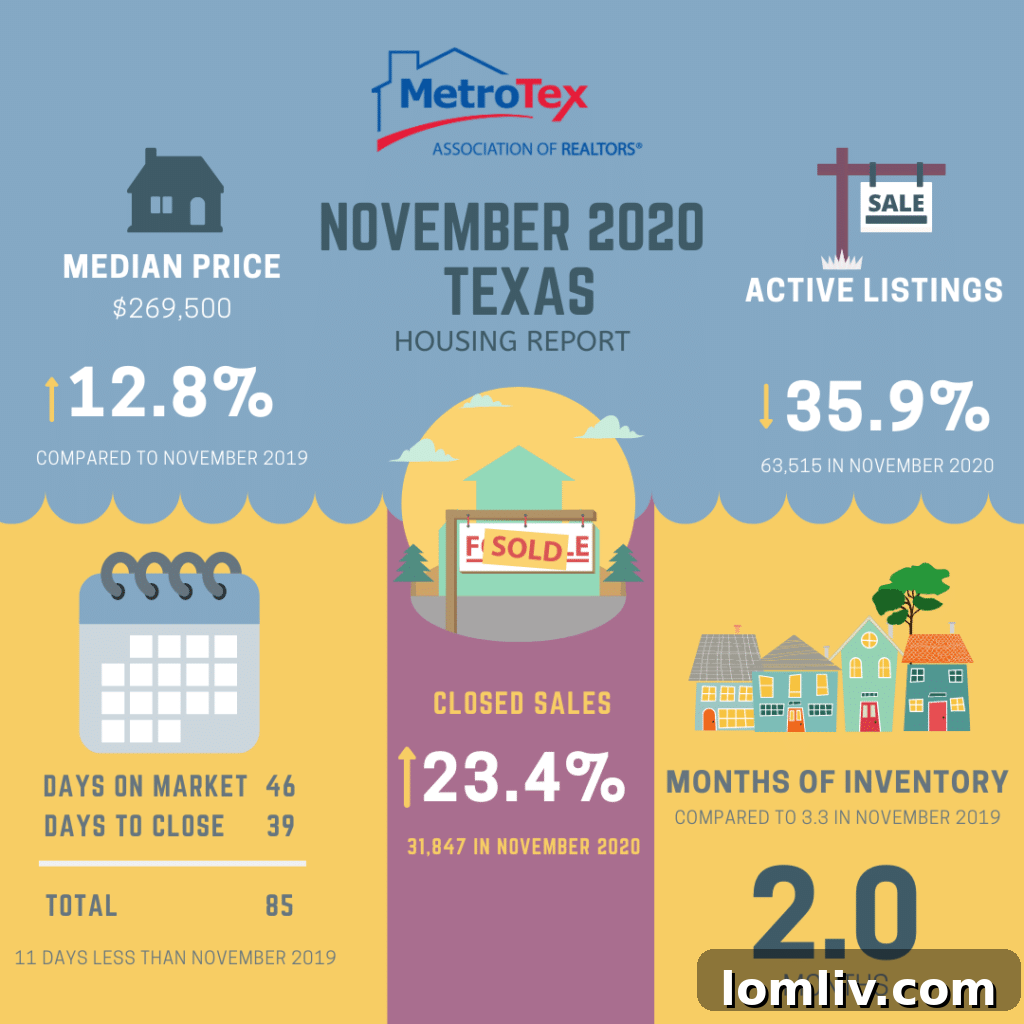
Real estate agents across North Texas successfully closed on an impressive 31,847 homes in November, marking a substantial 23.4 percent increase compared to the same period last year. This surge in sales activity highlights a resilient demand within the market, driven by various factors including sustained population growth, a robust job market, and attractive economic conditions. However, this high demand is met with a challenging supply landscape, as active listings witnessed a significant decline of 35.9 percent. This imbalance between supply and demand is a critical factor shaping the current market dynamics, pushing prices upwards and creating a fast-paced environment for both buyers and sellers.
Understanding the Tight Inventory in North Texas Real Estate
The dwindling supply of homes available for sale is perhaps the most defining characteristic of the North Texas housing market as reported in November. The region’s home inventory currently stands at a mere 2 months, a sharp decrease from the 3.3 months recorded just a year prior. To put this into perspective, a balanced housing market typically has an inventory of 5 to 6 months. An inventory level of 2 months signals a strong seller’s market, where homes are sold quickly, and sellers often hold the upper hand in negotiations. This tight inventory scenario creates an intensely competitive environment for prospective homebuyers, often leading to multiple offers, bidding wars, and properties selling above asking price.
The implications of such low inventory are far-reaching. For buyers, it means fewer choices, increased pressure to make swift decisions, and potentially higher prices. They must often be pre-approved for mortgages and ready to act immediately when a suitable property emerges. For sellers, however, it presents an opportune moment to capitalize on strong demand and achieve favorable sale terms. The reduced number of homes on the market translates into less competition among sellers, contributing to the observed appreciation in median selling prices across the region. This dynamic underscores the urgent need for new construction to alleviate the supply crunch and help stabilize the market over the long term.
Median Home Price Trends: North Texas Sees Significant Appreciation
Reflecting the robust demand and constrained supply, the median selling price for homes in North Texas escalated to $269,500 in November. This figure represents a notable 12.8 percent increase from a year ago, illustrating the consistent appreciation in property values across the metropolitan area. This price growth is a testament to the region’s enduring appeal as a desirable place to live and work, attracting new residents and businesses alike. While beneficial for homeowners’ equity, rapid price appreciation can also pose challenges for affordability, especially for first-time homebuyers or those with tighter budgets.
The consistent upward trajectory of median home prices is a critical indicator of market health and investor confidence. For existing homeowners, this means increased wealth accumulation through their real estate assets. For those looking to enter the market, it emphasizes the importance of understanding current trends and making informed decisions. The sustained growth in median prices across North Texas suggests a strong underlying economic foundation and a continued belief in the region’s future prosperity, even amidst varying economic headwinds. These statistics serve as a powerful beacon for real estate investors and developers looking for high-growth opportunities.
Collin County: A Leader in Sales Growth and Speed
Collin County continues to stand out as a powerhouse within the North Texas real estate landscape. In November, it recorded 1,482 closed home sales, marking an impressive 30.3 percent increase year-over-year. This significant growth underscores Collin County’s enduring popularity, driven by its highly-rated school districts, burgeoning corporate campuses, and vibrant community amenities. The county’s appeal attracts a steady stream of new residents, contributing to the intense demand for housing.
The speed at which homes are selling in Collin County is particularly striking. Properties spent an average of just 35 days on the market before going under contract, with an additional 36 days to close the deal, totaling a rapid 71 days from listing to closing. This timeline is 24 days faster than the previous year, signaling an incredibly dynamic and efficient market. Such quick turnaround times are a clear indicator of strong buyer competition and the proactive nature of both buyers and real estate professionals in securing properties.
Dramatic Drop in Collin County Listings Fuels Price Hike
Further exacerbating the competitive environment in Collin County is the dramatic decline in active listings, which plummeted by 58.3 percent – the largest decrease observed across North Texas. This severe contraction in available homes directly impacts the county’s median home price, which saw an 11.6 percent increase, reaching $364,900. The combination of high demand, rapid sales, and critically low inventory creates a challenging landscape for buyers, but a highly advantageous one for sellers who can expect strong offers and quick transactions. This trend also points to the continued desirability and investment potential of real estate in Collin County, attracting both local and relocating families seeking premium living environments.
Denton County: Strong Growth and Similar Market Dynamics
Denton County mirrored Collin County’s robust performance, recording 1,387 closed home sales in November, an impressive 30.2 percent increase from the previous year. Denton County’s growing appeal stems from its attractive blend of suburban charm, excellent educational institutions, and expanding economic opportunities, drawing a diverse demographic of residents. The consistent growth in home sales underscores the county’s position as a highly sought-after location within the North Texas region, offering a compelling alternative for those seeking quality of life combined with appreciating property values.
Similar to its neighbor, Denton County also experienced swift market activity. Homes in Denton County spent an average of 34 days on the market and 37 days to close, culminating in a total of 71 days for a transaction – 23 days faster than a year ago. This rapid sales cycle is indicative of a market where buyers must be decisive and prepared to act quickly to secure a home. The efficiency of the sales process reflects the strong demand and the expertise of local real estate agents in navigating a fast-moving environment. Such quick turnover periods are beneficial for sellers looking to move swiftly and for the overall liquidity of the market.
Inventory Challenges and Price Gains in Denton County
The challenge of limited supply is also evident in Denton County, where active listings declined by a significant 53.3 percent. This substantial reduction in available homes contributes directly to the upward pressure on prices. The median selling price in Denton County increased by 8.1 percent, reaching $340,000. While slightly lower than Collin County’s median, this growth still represents substantial appreciation and reflects the county’s strong market fundamentals. The combination of limited inventory and strong buyer interest continues to shape Denton County as a competitive arena for homebuyers, underscoring the importance of working with experienced real estate professionals to successfully navigate this dynamic market.
Diverse Performance Across North Texas Counties
Beyond Collin and Denton counties, other areas within North Texas also demonstrated impressive real estate activity. Tarrant County, a major economic hub, led the entire North Texas region in total home sales, with agents closing on 2,296 properties in November. This volume highlights Tarrant County’s vast market size and sustained demand, fueled by its diverse economy and robust urban centers like Fort Worth.
Dallas County followed closely behind with 2,213 closed sales, reinforcing its status as a central and influential market within the Metroplex. Both Tarrant and Dallas counties play pivotal roles in the overall health and direction of the North Texas housing market, attracting a wide range of buyers and offering diverse housing options.
Notably, Kaufman County experienced the most dramatic percentage increase in total home sales, surging by nearly 44 percent. This exceptional growth in Kaufman County points to a trend of buyers seeking more affordable housing options and larger properties just beyond the immediate core of the major metropolitan areas. As prices in central counties continue to rise, outlying counties like Kaufman become increasingly attractive, offering greater value and space, which in turn stimulates significant new development and residential expansion. This outward migration trend is a crucial element in understanding the evolving landscape of the wider North Texas housing market, indicating a broadening of desirable residential areas.
Future Outlook and Key Takeaways for the North Texas Housing Market
The November housing market reports for North Texas paint a clear picture of strong demand, rapid sales, and critically low inventory, leading to significant price appreciation. This environment is largely driven by consistent population growth, a booming economy attracting major corporations, and potentially still-favorable interest rates making homeownership an attractive prospect. For sellers, this represents an ideal time to list properties, often leading to quicker sales and higher returns. However, for buyers, the market demands preparedness, swift decision-making, and a keen understanding of local market nuances.
Looking ahead, the sustainability of these trends will largely depend on several factors: the ability of new construction to replenish the depleted inventory, changes in interest rates, and the continued strength of the regional economy. While the current market heavily favors sellers, sustained high prices and limited options could eventually impact affordability and slow the pace of sales if inventory doesn’t improve. Real estate professionals will continue to play a crucial role in guiding both buyers and sellers through this complex and competitive landscape, offering invaluable insights and strategies.
The North Texas housing market remains a dynamic and robust sector, consistently demonstrating resilience and growth. Staying informed about these trends and consulting with local experts from organizations like the MetroTex Association of Realtors is essential for anyone looking to navigate the exciting, yet challenging, North Texas real estate market successfully.