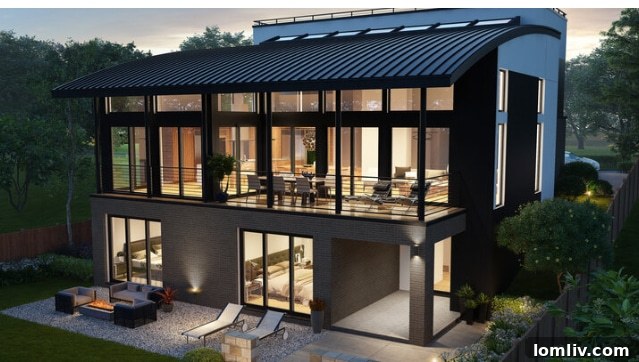
The New Blueprint: How Post-Pandemic Life is Redefining Homeowner Preferences and Residential Design
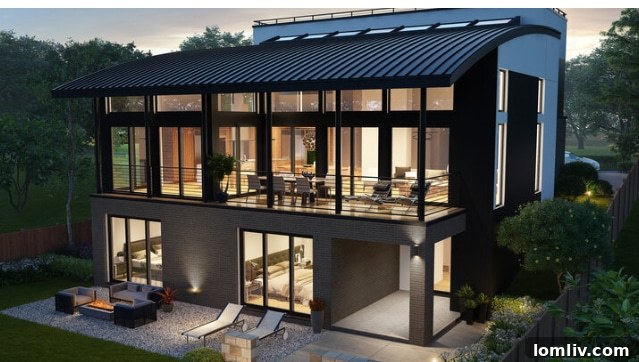
Two years have passed since the COVID-19 pandemic reshaped global lifestyles, forcing us into self-quarantine, mask-wearing, and the unfamiliar practice of social distancing. This unprecedented period fundamentally altered our relationship with our homes, transforming them from mere dwelling places into multi-functional hubs for work, education, leisure, and sanctuary.
While businesses have long since reopened and children have returned to school, the profound shifts in daily routines have left an indelible mark on homeowner expectations. For many adults, the home is no longer just a place to unwind after a long day; it’s a primary base of operations, demanding far more versatility and functionality than ever before. Builders and designers across the industry unanimously observe a clear evolution in homeowner preferences, signaling a permanent recalibration of what constitutes an ideal living space.
These shifts, though sometimes subtle in their manifestation, are dictating the future of residential design and construction. Homebuyers are now actively seeking environments that offer not just comfort and aesthetics, but also enhanced adaptability, privacy, and seamless integration of indoor and outdoor living.
Changing Spaces: The Demand for Enhanced Functionality and Privacy
Heaven Porteous, the esteemed chief design officer and co-creator of Avant Group, a highly regarded builder known for innovative designs, confirms that while no dramatic overhauls have occurred, the shifts in homeowner priorities are undeniable.

“Nothing has changed dramatically,” Porteous observes, “but bigger homes have certainly become more desirable. It’s not necessarily a direct result of COVID, but a general trend we’ve seen amplify. Just two or three years ago, clients would ask us, ‘Can you make it smaller?’ We haven’t heard that since. Now, the common request is for five bedrooms, a dedicated, private office space, and a flexible room that can serve as an additional bedroom, a second office, or a hobby space. While we’ve always offered these options, they are now non-negotiable for many buyers.” This reflects a desire for ample personal space and adaptability within the home.
Beyond individual bedrooms and workspaces, families are also expressing a strong preference for closed game rooms or designated play areas for children. Crucially, these spaces must be distinctly separate from adult working environments, a stark contrast to previous open-concept playroom trends. “We used to design many open playrooms without doors or walls,” Porteous explains. “That’s simply no longer desirable. Parents need clear separation for concentration and noise management.”
David Goettsche, founder of Desco Fine Homes, echoes these sentiments, noting that while core design elements like open floor plans, expansive kitchens, and dedicated media rooms remain popular, the underlying financial considerations for homebuyers have become more pronounced. “Costs are above what everyone will expect,” he cautions, highlighting the increased investment required for these evolving preferences.
Further solidifying these observations, a recent survey by the National Association of Home Builders (NAHB) provides robust data. The survey revealed that a significant portion of Millennials, over a third (36%), are now actively seeking larger homes due to the pandemic’s influence. This demographic shift is prompting builders nationwide to adapt their offerings to meet this growing demand.
However, the NAHB report also critically points out the financial implications of this trend. Larger homes naturally come with a higher price tag, and in an environment of rising interest rates, securing an affordable mortgage for these more spacious properties presents an increasing challenge for many prospective homeowners. This balancing act between desire and affordability is a key dynamic shaping the current real estate market.
The Rise of Outdoor Living: Enhancing Recreation and Connection
Another profound shift in homeowner preferences, particularly in the post-COVID era, is the elevated importance of outdoor entertaining spaces. According to Porteous, the demand for sophisticated outdoor areas has become just as non-negotiable as the need for dedicated indoor spaces.
“The biggest change we’ve seen post-COVID is an overwhelming desire for pools and expansive outdoor living areas,” Porteous emphasizes. “This is arguably the number one request we’ve received in the last two years. The surge in demand for pools, in particular, has led to a noticeable increase in their prices, reflecting this heightened priority among homebuyers.”
Beyond just pools, homeowners are now envisioning their outdoor spaces as extensions of their indoor living areas. This includes elaborate covered patios, outdoor kitchens equipped for gourmet cooking and entertaining, cozy fire pits for evening gatherings, and meticulously designed landscaping that creates private retreats. The goal is to maximize opportunities for recreation, relaxation, and social interaction within the confines of one’s property.
A notable trend accompanying this outdoor living renaissance is the growing request for guest houses or “casitas” – detached structures separate from the main residence. These secondary dwellings offer unparalleled flexibility, serving as private accommodations for visiting family and friends, multi-generational living solutions, or even secluded home offices or art studios. Porteous links this trend directly to the pandemic experience: “[COVID] probably made our appreciation for entertaining – having guests, family, and friends over, hosting dinner parties – even greater. We never truly know what we’re missing until it’s gone, and the lockdowns certainly amplified our desire for connection.” This sentiment underscores a renewed value placed on hospitality and shared experiences within a private, comfortable setting.
Illuminating Modern Home Design Trends: Light, Layout, and Technology
As homes continue to grow in size and complexity, the need for abundant natural light has become a paramount design consideration. Porteous notes that homeowners are increasingly drawn to transitional-style homes that blur the lines between indoors and outdoors, creating a bright, airy, and inviting atmosphere.
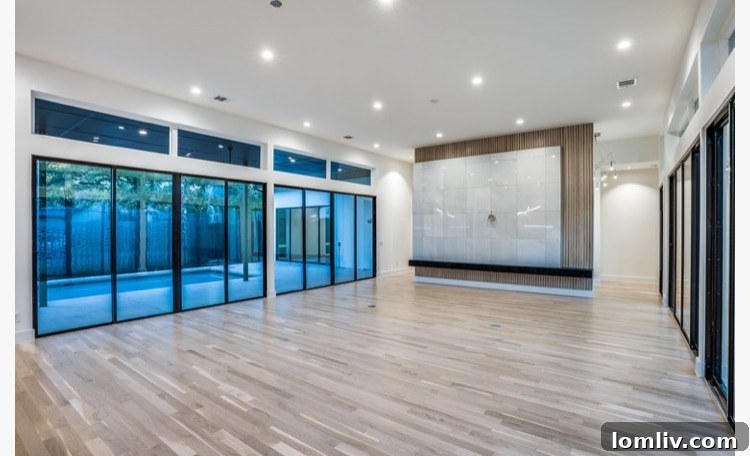
“Now, more than ever, you want to have the ability to bring the outside in,” she asserts. “This is always something I like to focus on – an open floor plan bathed in natural light, creating a seamless connection with the environment.” Large windows, expansive sliding glass doors, and strategically placed courtyards are becoming standard features, enhancing well-being and making interior spaces feel larger and more connected to nature.
The open kitchen, featuring a generously sized island and ample seating, has been a dominant trend for years, and its popularity continues unabated. Paired with an informal dining space, these layouts reinforce the kitchen’s role as the social heart of the home, a place for family gatherings, casual meals, and entertaining guests. This design encourages interaction and fosters a sense of togetherness that has become even more valued in the post-pandemic landscape.
Another significant shift involves the prioritization of landscape design. “People are now thinking about landscape early on in the process,” Porteous reveals. “It used to be a secondary thought, an add-on at the end. Now, it’s an integral part of the initial design brief.” This elevated importance reflects a desire for integrated outdoor aesthetics, privacy, and functionality from the outset of a project, recognizing landscaping as crucial to the overall home experience and curb appeal.
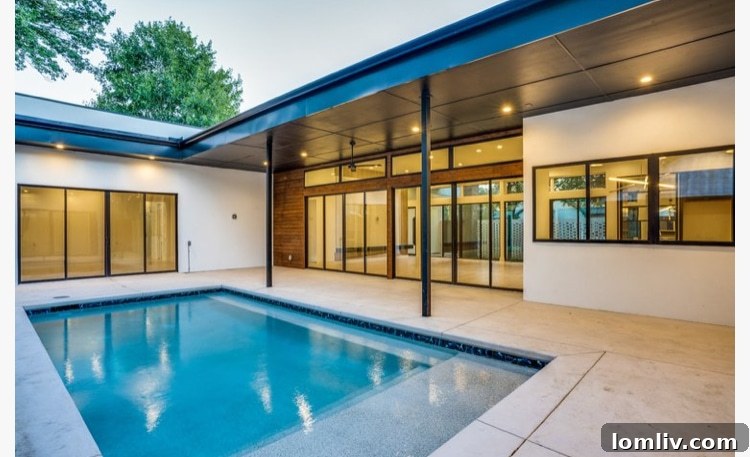
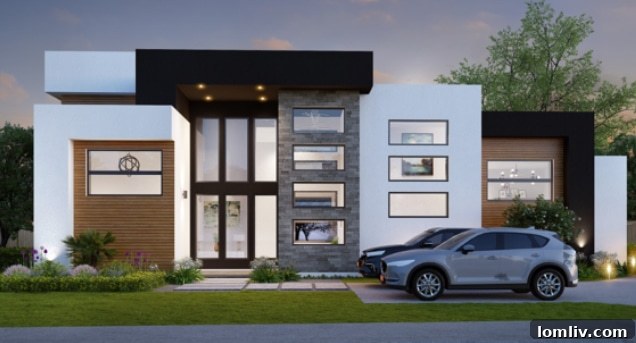
Avant Group homes, typically attracting young families and empty nesters seeking a blend of modern design and functional luxury, range in price from approximately $240 to $305 per square foot, depending on the level of customization. A prime example of what discerning new buyers are seeking is the recent custom build at 4302 Bluffview Blvd.
“It’s a really cool modern C-shaped home with the pool centrally located in the courtyard,” Porteous describes. “This design creates direct access and visual connectivity from the living area, kitchen, casita, and master bedroom. It’s a beautifully integrated and highly functional floor plan that perfectly encapsulates current homeowner desires for connectivity and luxury.”
The Empowered Homeowner: Customization and Future-Proofing for the Remote Era
The integration of a well-equipped home office is not a novel concept for Avant Group, which has been in business since 2015. However, the pandemic has significantly intensified the demand for robust technology infrastructure and smart home features, transforming them from luxuries into essential requirements.
“We’ve always been heavy-handed on the technology and smart home features,” Porteous explains. “Many of our clients are software engineers or work remotely for physicians, requiring exceptionally reliable connectivity and data processing capabilities. They are very particular about the precise location of every outlet and data port. We go to extreme lengths, walking through the entire home when it’s still just a frame, meticulously marking every detail that goes beyond standard specifications. Our clients often bring their own markers to ensure everything is exactly where they need it.” This level of meticulous planning ensures homes are truly future-proofed for high-demand remote work and advanced smart home integration.
Builders are also now giving careful consideration to the natural lighting of potential office spaces, recognizing that individuals spending entire days on video calls require optimal illumination and a professional backdrop. This thoughtful approach extends to every aspect of the home’s design, ensuring that it supports productivity and well-being.
The NAHB study further supports this trend, indicating that Millennials and Gen Xers are driving the demand for dedicated home offices, which in turn is contributing to the continued growth in the square footage of new constructions. “The home-building industry expects to see home sizes continue to increase due to a shift in consumer preferences as more activities are taking place in the home in the post-pandemic environment,” stated NAHB Chairman Jerry Konter in a press release. This underscores a long-term shift rather than a temporary anomaly.
Porteous has also observed a notable influx of out-of-state homebuyers relocating to Texas in this post-pandemic era, often driven by a desire for greater personal freedom and less restrictive living environments. “They’re not just coming for economic opportunities,” she notes. “There’s a strong pull towards a little more freedom. People from places like New York and New Jersey, who experienced extensive lockdowns, express feeling more at ease, safer, and less confined here. They seek and find a strong sense of community and neighborhood freedom.”
Ultimately, the COVID-19 pandemic, despite its challenges, ushered in some profoundly positive changes in how people perceive and utilize their living spaces. “What COVID did was allow people to start pursuing what they actually wanted,” Porteous concludes. “It’s empowered them to make that big step, that significant leap of getting a custom home that truly reflects their values and lifestyle. I think it’s incredibly important to have spaces that are specifically designed for what is most valuable to you and your family.” The home has undeniably evolved into a personal sanctuary, a dynamic workspace, a learning environment, and a primary entertainment hub, demanding thoughtful design and robust functionality for the modern era.