The Unfolding Battle: HOA Covenants Versus Religious Freedom in North Dallas
A fascinating and complex legal challenge has emerged in the heart of North Dallas, sparking a heated debate over property rights, community covenants, and the fundamental right to religious freedom. This contentious case pits a homeowner against his neighbor, an Orthodox Rabbi who hosts daily synagogue services in his private residence, raising critical questions about the limits of Homeowners Association (HOA) agreements and the reach of federal law.
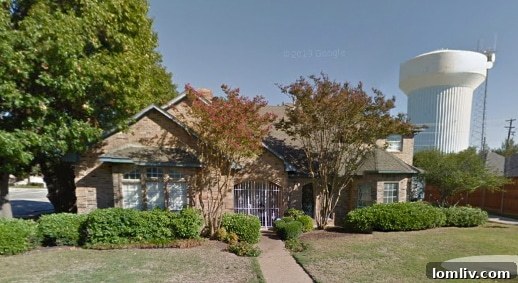
At the center of this dispute is Rabbi Yaakov Rich, the spiritual leader of Congregation Toras Chaim. Rabbi Rich has been utilizing his North Dallas home, a spacious 3,572-square-foot residence with four bedrooms and four-and-a-half baths at 7103 Mumford Court, to host two synagogue services daily. The property, built in 1986 and purchased by Rabbi Rich in June 2013 for an estimated $330,000, has become a focal point for the growing Orthodox Jewish community in the area.
The situation escalated when Rabbi Rich applied for a Certificate of Occupancy with the City of Dallas, aiming to formally recognize his home as a religious center. This move triggered a lawsuit from his neighbor, David Schneider, who is seeking $50,000 in damages. Schneider asserts that the in-home synagogue is negatively impacting his property values within the Highlands of McKamy, a custom home subdivision known for its carefully maintained residential character and served by the Plano ISD.
The Neighbor’s Stand: Upholding HOA Covenants
David Schneider’s legal challenge hinges on the protective framework of homeowners association covenants and conditions, which are legally binding agreements signed by residents upon purchasing a home within the community. These covenants typically regulate various aspects of property use, including restrictions against operating home-based businesses or engaging in commercial activities within a purely residential zone. Schneider emphasized his reliance on these established rules, stating, “The courts in the State of Texas have upheld the rights of homeowners in communities such as ours. As an individual, I have looked to them for relief.”
Homeowners Associations (HOAs) are designed to maintain property values, ensure a consistent aesthetic, and uphold a certain quality of life within a planned community. They achieve this through a set of rules and regulations, often referred to as Covenants, Conditions, and Restrictions (CC&Rs). When a homeowner buys into an HOA community, they typically agree to abide by these CC&Rs. The core of Schneider’s argument is that Rabbi Rich’s consistent, twice-daily services, drawing congregants to the residential street, constitute a commercial or institutional use that violates the established residential nature of the neighborhood, thereby infringing upon the rights and property values of other homeowners.
The perception of increased traffic, noise, and the general character shift from a quiet residential street to a more active gathering place are common concerns cited by homeowners in similar disputes. For residents like Schneider, the integrity of these covenants is paramount to preserving the very environment they chose to live in. The fear is that if such restrictions are not enforced, it could set a precedent, gradually eroding the residential fabric of the community and leading to a decline in property appeal and value.
The Rabbi’s Defense: Federal Protection of Religious Land Use
On the opposing side, Rabbi Rich’s counsel, Justin Butterfield of the nonprofit Liberty Institute, argues that the gatherings at the Mumford Court home are unequivocally protected by federal law. Butterfield, a 2007 Harvard Law graduate, points directly to the Religious Land Use and Institutionalized Persons Act (RLUIPA). “The Religious Land Use and Institutionalized Persons Act protects religious land use,” Butterfield explained in a report by Fox 4 (KDFW). “And that can be anything from a church to a person having a Bible study in their home.”
RLUIPA, enacted by Congress in 2000, is a powerful piece of legislation designed to protect individuals and religious institutions from overly burdensome or discriminatory land use regulations. It specifically prohibits governments from imposing or implementing land use regulations in a manner that substantially burdens the religious exercise of a person or institution, unless the government can demonstrate a “compelling governmental interest” and that the regulation is the “least restrictive means” of furthering that interest. The Liberty Institute, a prominent legal organization dedicated to defending religious freedom, is representing Rabbi Rich, underscoring the significant constitutional implications of this case.
Furthermore, Rabbi Rich himself offers a counter-narrative regarding property values. He posits that Orthodox congregations, far from diminishing property values, actually serve as a boon for neighborhoods. He argues that the foot traffic generated by community members supporting local religious life can often drive home values up, not down, by fostering a vibrant, family-oriented environment and increasing demand for homes within walking distance of the synagogue.
Understanding RLUIPA: A Shield for Religious Practice
The Religious Land Use and Institutionalized Persons Act (RLUIPA) emerged from a history of local zoning boards and municipal governments enacting land use regulations that inadvertently or intentionally stifled religious exercise. Congress recognized that religious groups, particularly smaller or newer denominations, often faced significant obstacles in securing suitable places of worship or gathering due to restrictive zoning ordinances, excessive permit requirements, or outright discrimination. RLUIPA was designed to mitigate these burdens by establishing a high legal standard for governments to meet when their land use decisions impact religious freedom.
In the context of this North Dallas dispute, the core question under RLUIPA is whether the HOA’s enforcement of its covenants against home-based businesses or commercial use constitutes a “substantial burden” on Rabbi Rich’s religious exercise. If the court finds such a burden exists, the HOA (or the city, if involved in zoning interpretation) would then need to demonstrate a compelling governmental interest in upholding that specific restriction and prove that their method is the least restrictive way to achieve that interest. This is a rigorous test, making it challenging for HOAs to prevail against RLUIPA claims without very strong justifications.
For example, while an HOA might argue a compelling interest in traffic management or maintaining peace and quiet, a court might question if an outright ban on religious gatherings is the “least restrictive means” to achieve these goals, or if alternative solutions, such as specific parking arrangements or limited gathering times, could suffice.
The Broader Implications for HOAs and Homeowners
This case is not merely about a single North Dallas neighborhood; it holds significant implications for every community governed by a Homeowners Association across the nation. The fundamental question it poses is whether meticulously drafted and legally binding HOA covenants can withstand challenges rooted in federal religious liberty protections. Eric Nicholson, writing for the Dallas Observer‘s Unfair Park blog, aptly summarized the dilemma:
Liberty Institute is basing its defense of Rich and his synagogue on the Religious Land Use and Institutionalized Persons Act, a law passed by Congress in 2000 protecting arbitrary zoning rules that infringe on religious liberty.
Whether that argument flies depends on whether the Liberty Institute and Congregation Toras Chaim can convince the court that the government — or, in this case, a homeowners association — has no compelling interest in barring a church or synagogue from operating out of a single-family home.
Whether the fight expands depends on how Dallas chooses to interpret its zoning laws. Churches and homes occupy separate parts of the city’s zoning code, with the former required to provide a certain amount of parking.
The tension lies between the collective rights of a community to enforce agreed-upon rules for the common good and the individual’s constitutional right to religious freedom. If RLUIPA is found to supersede HOA agreements in this instance, it could potentially weaken the enforcement power of HOAs concerning religious activities, even if those activities impact community dynamics. Conversely, if the HOA covenants are upheld, it could set a precedent that restricts the ability of religious groups to gather in residential settings, even if those gatherings are small and intended to be unobtrusive.
Moreover, the City of Dallas’s involvement through its zoning laws adds another layer of complexity. Municipal zoning codes typically differentiate between residential properties and religious institutions, often imposing specific requirements for the latter, such as designated parking, larger lot sizes, and adherence to commercial building codes. How Dallas interprets its own zoning ordinances in light of RLUIPA and the residential nature of the Highlands of McKamy will be crucial to the outcome of this high-profile case.
Navigating the Future of Community Living
The resolution of this lawsuit will undoubtedly offer significant guidance on the interplay between private contractual agreements (HOA covenants) and federal statutory protections (RLUIPA). It forces a re-evaluation of what constitutes “approved use” within a residential community and whether perceived damages, such as diminished property values or increased traffic, can outweigh a federally protected right to religious exercise.
For homeowners considering purchasing in an HOA-governed community, this case highlights the importance of thoroughly understanding the CC&Rs and recognizing that even seemingly straightforward rules can be challenged under broader legal frameworks. For HOAs, it underscores the need to ensure covenants are crafted with foresight and sensitivity to avoid potential conflicts with protected rights. Ultimately, this North Dallas dispute will help define the boundaries of communal living and individual liberty in the 21st century.
What do you believe the courts will decide? Will the congregation’s twice-daily meetings be deemed a protected use under federal law, or will the HOA covenants against home-based enterprises ultimately prevail? Stay tuned for the unfolding developments of this landmark case, as its outcome could shape the future of community associations and religious freedom nationwide.