

The spotlight has intensely focused on former Dallas Cowboys star and current Republican U.S. Senate nominee, Herschel Walker, regarding his financial dealings and residency claims. At the heart of this scrutiny is his substantial $3 million residence nestled in the exclusive Vaquero neighborhood of Westlake, Texas. While this Tarrant County estate exemplifies luxury and comfort, it has become the focal point of a significant political controversy.
The core of the issue revolves around a homestead exemption Walker claimed on his 7,370-square-foot property located at 2210 King Fisher Drive. Records indicate he filed for this tax benefit last year and is positioned to do so again this year. This action raises considerable questions, particularly since Walker is officially registered to vote in Georgia, a state where he has actively participated in elections and is currently campaigning for a pivotal U.S. Senate seat. As reported by the Texas Tribune, this duality presents a complex challenge to Texas property tax regulations.
Understanding the Texas Homestead Exemption
To fully grasp the magnitude of this situation, it’s crucial to understand what a homestead exemption entails and its strict application in Texas. A homestead exemption is a special provision in property tax law that allows homeowners to reduce the taxable value of their primary residence, thereby lowering their annual property tax bill. It’s a significant financial benefit intended to support residents by making homeownership more affordable. In Texas, the rules are unequivocally clear: a homeowner is only permitted to claim a homestead exemption on their principal residence. This exemption may only continue if the homeowner does not establish another primary residence elsewhere. The intent is to prevent individuals from claiming multiple exemptions across different properties or states, ensuring the benefit is applied fairly and as intended for genuine primary homeowners.
Herschel Walker’s homestead exemption in Texas, which records show he has benefited from since 2012, saved him an estimated $1,200 on his tax bill last year alone. For a property valued in the millions, such a saving, while seemingly modest, underscores the principle behind the exemption – it’s meant for one primary home. The ongoing claims, therefore, bring into sharp focus the legal and ethical boundaries of residency and tax benefits, especially for a public figure seeking federal office in another state.

The Georgia-Texas Residency Conundrum
The unfolding story of Herschel Walker’s dual residency claims has garnered widespread attention from various media outlets this week, injecting a fresh layer of complexity into his high-stakes political campaign. While it remains unconfirmed whether Walker owns another home in Georgia, his undeniable registration to vote in the state, his past voting history there, and his current candidacy for public office firmly establish Georgia as his declared political and electoral home. This stark contrast between his tax-exempt property in Texas and his political aspirations in Georgia presents a thorny issue that transcends simple administrative oversight.
Despite the growing public and media scrutiny, the candidate, notably endorsed by former U.S. President Donald Trump, has yet to publicly address the specifics of his Texas tax exemption. This silence leaves many questions unanswered and fuels speculation regarding the implications for his eligibility and public perception in the crucial Georgia Senate race. The discrepancy inevitably raises questions about where his true primary residence lies, a fundamental requirement for both homestead exemptions and, potentially, for holding office.
High Stakes in the Georgia Senate Runoff
Herschel Walker is currently locked in a highly publicized runoff election against his Democratic opponent, incumbent U.S. Senator Raphael Warnock. This particular race is not just another election; it holds immense significance as it will ultimately determine the exact margin of control Democrats will wield in the Senate for the next two years. The stakes are incredibly high, with national implications hanging in the balance, making every aspect of each candidate’s profile subject to intense scrutiny.
On his campaign website, Walker passionately articulates his mission, stating, “This race is too important to sit on the sidelines. Georgians deserve better. America deserves better.” Ironically, this same website lists a P.O. Box in Atlanta as the headquarters for “Team Herschel,” further cementing his deep involvement and professed ties to the state of Georgia. This juxtaposition of a Texas tax break and a Georgia campaign headquarters serves to highlight the apparent inconsistency in his residency claims, drawing sharp criticism from opponents and commentators alike.
The “Carpetbagger” Accusation: A Political Minefield
The U.S. Constitution outlines specific qualifications for senators, including the mandate that a potential senator must be an inhabitant of the state they represent at the time of their election. While the legal nuances of “inhabitancy” can be complex, the controversy surrounding Walker’s residency has undoubtedly transformed into a potent political weapon for his adversaries. A recent CNN report quoted Anthony Michael Kreis, a law professor at Georgia State University, who weighed in on the issue. Kreis suggested that while residency requirements under state law can be flexible, Walker’s predicament is likely more of a political challenge than a purely legal one.
“At the end of the day, this is more of a political problem than a legal one in all likelihood … where Walker can be painted as a carpetbagger,” Kreis commented in the CNN report. The term “carpetbagger” carries significant historical weight in American politics, often used to criticize a political candidate who runs for office in an area where they lack deep roots or genuine connection. Kreis further elaborated, stating, “It does call into question whether Walker’s change of residency was made in good faith.” This assessment suggests that the core issue is not necessarily about legal loopholes, but rather about the perception of authenticity and commitment to the state he seeks to represent.
Walker’s purchase of the King Fisher Drive residence within the Keller Independent School District dates back to 2011. Since 2012, records consistently show that he has claimed the homestead exemption on this property. The financial benefit from this filing, as previously mentioned, allowed him to save approximately $1,200 on his tax bill in the preceding year alone. This prolonged history of claiming a tax benefit in Texas while now actively campaigning and registered to vote in Georgia paints a picture that his political opponents are keen to highlight, aiming to erode public trust and voter confidence in his sincerity and commitment to the Peach State.
The Luxurious Tarrant County Homestead: A Closer Look
Beyond the political storm, the King Fisher Drive property itself is a remarkable estate. This luxurious home boasts four bedrooms and four bathrooms, situated in an affluent area. According to Realtor.com, the property carries an estimated market value of $4.8 million, though it was last appraised at $3 million. These figures underscore the significant value of the asset at the center of the homestead exemption debate, further magnifying the public interest in his tax practices.

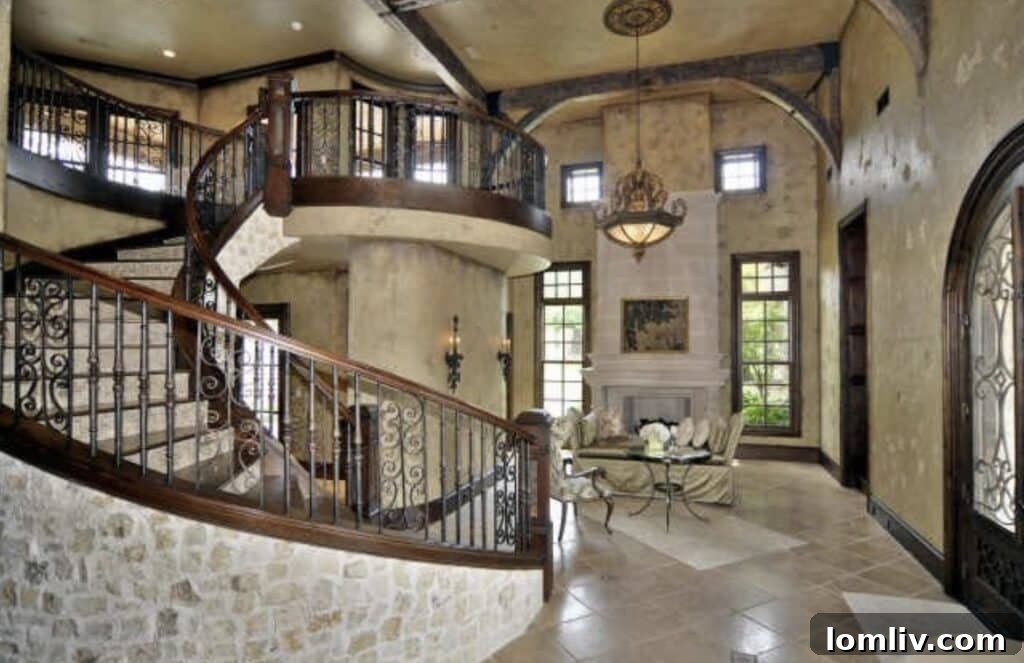


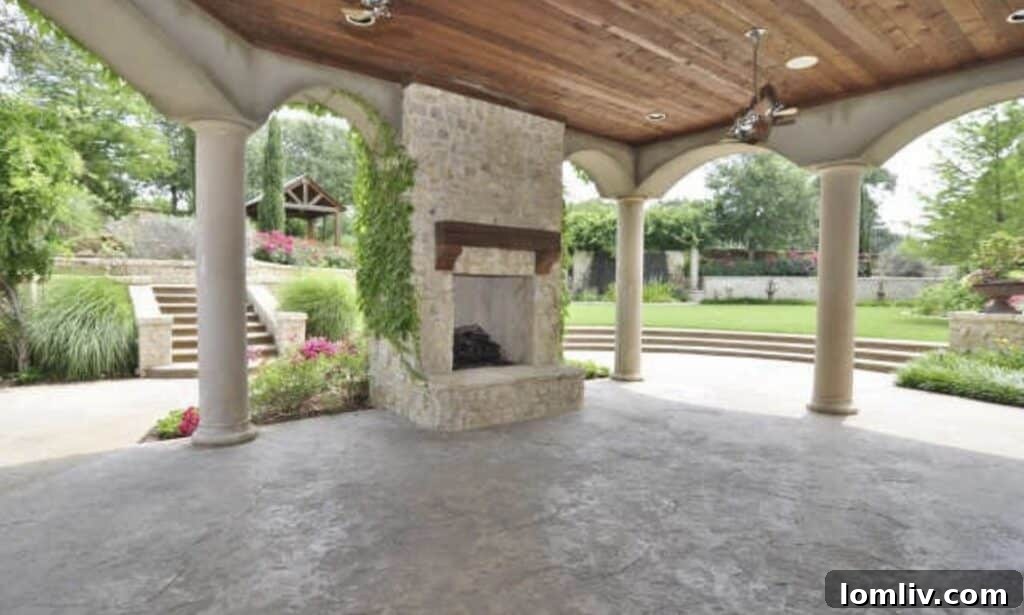
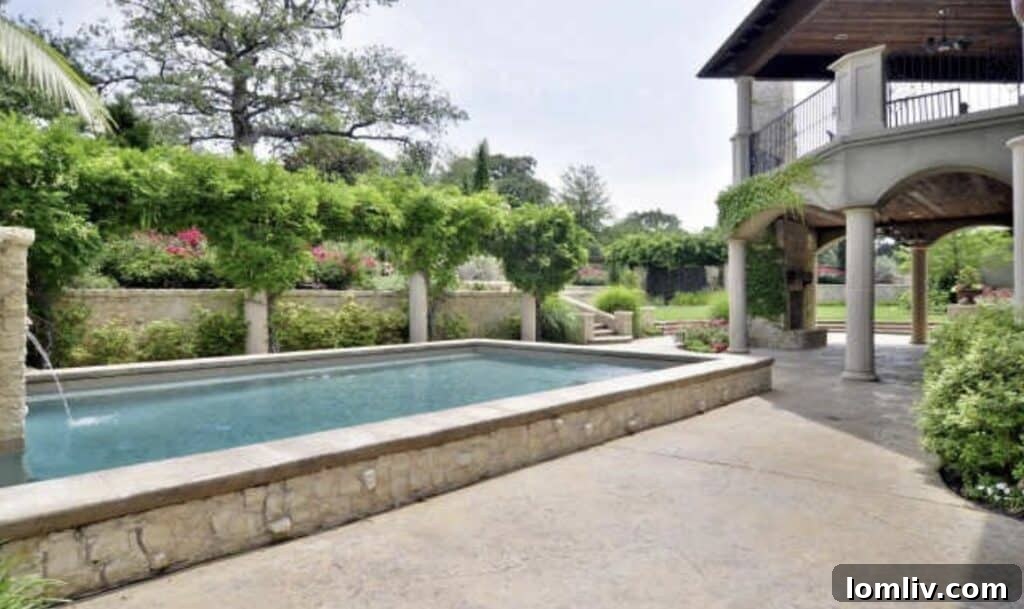
The expansive estate spans 1.13 acres, providing ample space and privacy within the prestigious Vaquero community. Among its many features is a capacious four-car garage, indicative of the home’s high-end specifications. While the property is currently off-market, preventing access to a full suite of detailed listings, these existing details paint a clear picture of a substantial and valuable Texas residence. The stark contrast between this lavish Texas homestead, benefiting from a tax exemption, and Walker’s active political campaign in Georgia continues to fuel the ongoing debate, keeping the issue firmly in the public eye as the critical runoff election approaches.