By Hayley Enoch
Special Contributor
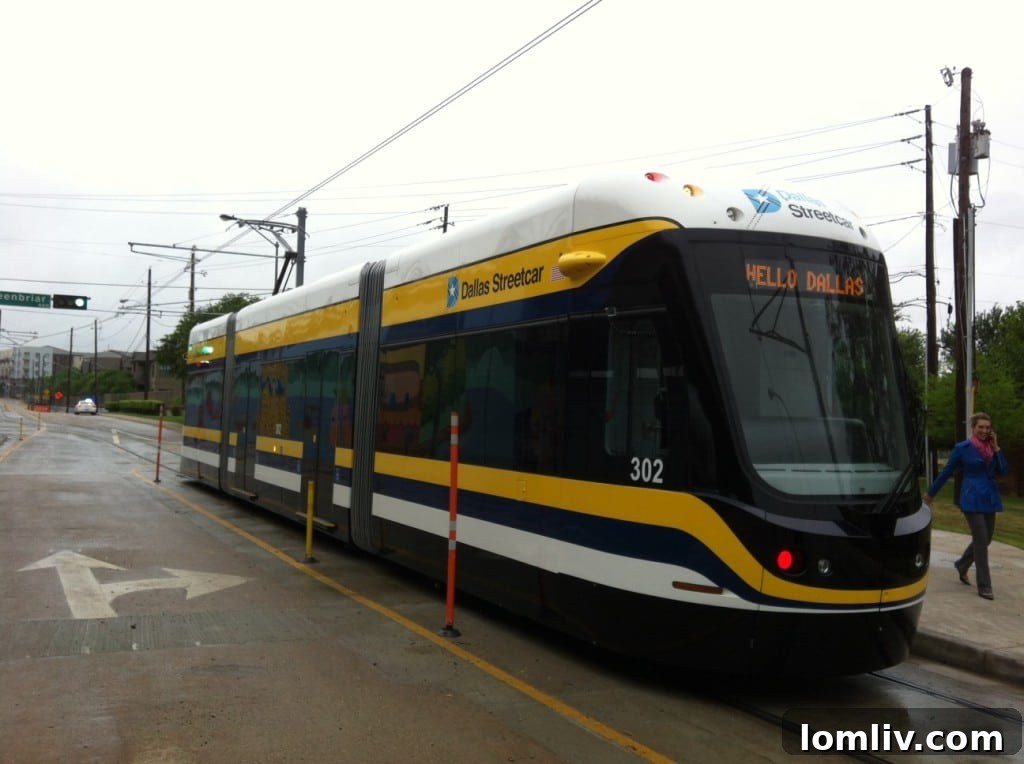
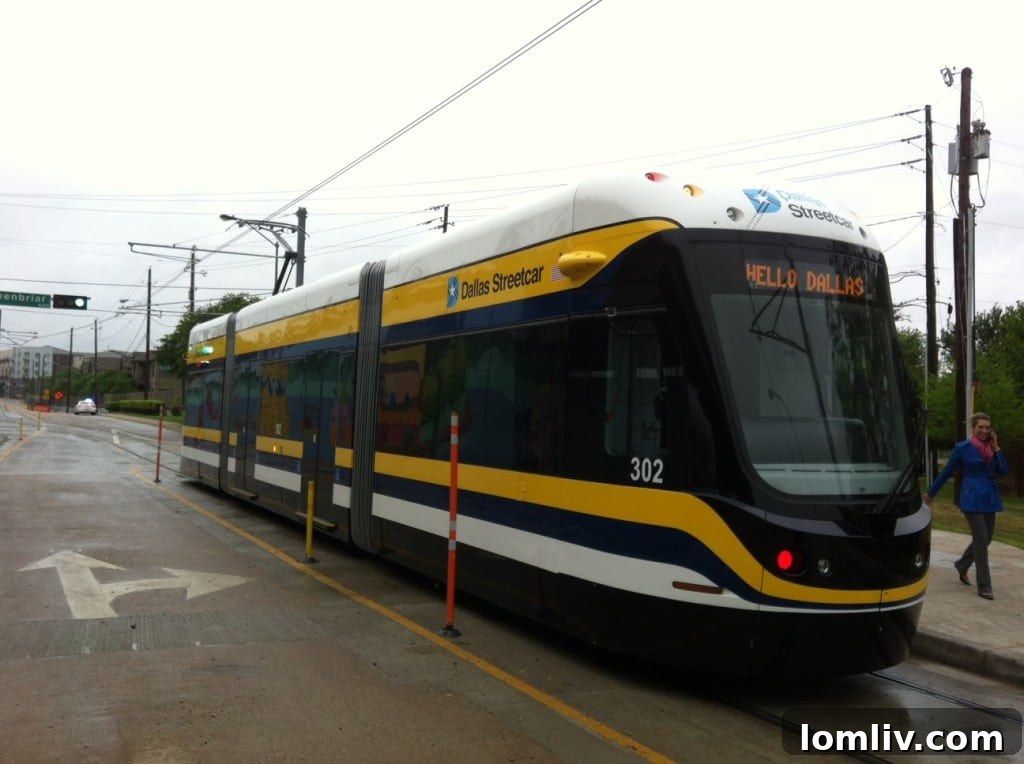
In the rapidly expanding urban landscape of Dallas-Fort Worth, the persistent challenge of traffic congestion has become an undeniable reality for its residents. Daily commutes, once manageable, now routinely stretch into an hour or more, even for short distances, underscoring the severe strain on our highway infrastructure. This escalating issue has cultivated a strong public appetite for comprehensive public transportation Dallas-Fort Worth solutions, including expanded light rail networks, modern streetcars, and enhanced bus services. The successful realization of projects like the Oak Cliff Streetcar, which faced considerable hurdles from conception to operation, serves as a powerful testament to the community’s urgent need and growing enthusiasm for improved urban mobility.
However, despite this clear demand, the development and expansion of new transit systems often progress at a remarkably slow pace. This delay can lead to frustration and inadvertently strengthen the arguments of those who advocate primarily for traditional solutions such as widening highways and constructing more toll roads, asserting that public transportation cannot efficiently meet the needs of a sprawling region like Dallas-Fort Worth. Yet, the slowness of progress is not primarily a failure of civic planners to recognize the critical need for additional transit capacity. Instead, it is a direct consequence of an incredibly intricate and multi-layered pre-planning process that must be meticulously executed before any new infrastructure construction can commence. A more profound understanding of these detailed steps is essential for all residents to meaningfully engage in and effectively plan for our collective transportation future in North Texas. This knowledge empowers citizens to support the long-term vision of sustainable urban planning Texas needs.
Phase One: Comprehensive Needs Assessment and Feasibility Studies
The journey of any new transit project begins long before any physical construction, with a comprehensive needs assessment and feasibility study. Public transportation agencies first immerse themselves in extensive data analysis, examining current and projected population growth, intricate traffic patterns, and demographic shifts. Advanced analytical tools, including origin-destination studies, are employed to pinpoint areas with high commuter volumes, identify underserved communities, and accurately forecast future demand for transit services. The primary objective is to strategically determine where new light rail Dallas extensions or streetcar lines will offer the greatest impact, effectively alleviating congestion and significantly enhancing overall regional connectivity.
Alongside demand assessment, a thorough evaluation of the physical feasibility of constructing a new route is undertaken. This critical step involves scrutinizing the local topography, assessing existing infrastructure, identifying potential conflicts with historical landmarks or environmentally sensitive zones, and navigating complex engineering challenges. Crucially, agencies must demonstrate that a sufficiently large and consistent customer base is projected to justify the enormous financial commitment required for both initial construction and perpetual maintenance. During this phase, meticulous cost estimates are developed, encompassing everything from land acquisition and the development of core infrastructure (tracks, stations, maintenance depots) to the procurement of rolling stock (trains, streetcars) and ongoing operational expenses. Multiple potential routes and their alternatives are rigorously explored, accompanied by precise ridership projections to affirm the project’s long-term viability and potential economic returns. This exhaustive data collection and analysis form the cornerstone of proposals presented to potential investors and various funding entities, crucial for securing vital transit funding from local, state, and federal programs.
Phase Two: Navigating Environmental and Community Impacts Through EIS
With a preferred route identified and initial funding strategies outlined, the next formidable step is the mandatory execution of exhaustive Environmental Impact Studies (EIS). These studies, often governed by federal regulations such as the National Environmental Policy Act (NEPA), are designed to meticulously examine how the proposed construction will affect both the natural environment and surrounding communities. The scope of an EIS is exceptionally broad, covering potential impacts on air quality, water resources, wetlands, noise pollution, ground vibration, wildlife habitats (especially endangered species), and historical or cultural assets.
A cornerstone of the EIS process is robust public engagement. This provides an indispensable platform for community members to voice their concerns, offer invaluable feedback, and suggest modifications on a wide spectrum of issues. These can range from specific noise abatement strategies and vibration reduction techniques to concerns about potential pollution, alterations to local ecosystems, and the precise placement of tracks and stations. Public transit agencies are legally and ethically obligated to seriously consider and, where feasible, integrate these public concerns into their project plans. For instance, the unforeseen discovery of endangered species within a proposed construction corridor can significantly extend the pre-planning timeline, often necessitating costly route adjustments or extensive, time-consuming mitigation efforts. In Dallas, the Dallas Area Rapid Transit (DART) agency is currently in the advanced stages of finalizing the EIS for its critical D-2 Downtown Dallas expansion project. This complex urban core initiative involves rerouting existing light rail tracks and establishing new stations in a dense environment. DART actively solicits public input to refine the exact location and design, exemplifying the collaborative and iterative nature of successful DART expansion endeavors.
Phase Three: The Intricacies of Land Acquisition
Once the Environmental Impact Studies are complete and all significant environmental or community concerns have been thoroughly addressed, the project faces its next major hurdle: land acquisition. This phase is notoriously protracted and intricate, primarily because transit agencies rarely require a single, expansive parcel of land. More often, they must acquire numerous smaller land parcels from a diverse group of private property owners. Each individual acquisition typically necessitates distinct negotiations, independent property appraisals, and often complex legal processes, which can collectively add several years to a project’s overall timeline.
While transit agencies possess the legal authority to invoke eminent domain—the government’s right to take private property for public use, provided “just compensation” is paid—the exercise of this power frequently sparks considerable public controversy. Negative public sentiment can rapidly emerge if residents perceive that the eminent domain process unfairly favors private enterprises involved in the project, or if property owners believe they are not receiving adequate compensation for their land. A compelling contemporary example in Texas is the proposed high-speed Texas Central Railway. Despite receiving significant support at its planned terminal stations in Dallas and Houston, the project has encountered staunch opposition from landowners in East Texas. Their primary grievances center on the potential for forceful requisition of private land, the fragmentation of agricultural properties, and the profound impact on rural lifestyles, vividly illustrating the delicate balance required when vital infrastructure development intersects with fundamental property rights.
Strategic Alternative: Leveraging Existing Rail Corridors
In the most advantageous scenarios, transit agencies can strategically plan new routes that either utilize or operate within pre-existing railroad corridors. This approach offers substantial benefits, primarily by significantly reducing the need for new real estate purchases and often circumventing the disruptive and costly process of demolishing existing buildings. However, this strategy does not eliminate complexity; rather, it transforms it into a different, equally intricate challenge: exhaustive inter-agency negotiations.
Crafting a comprehensive usage agreement that satisfies multiple transportation agencies, private freight railroads, and other relevant stakeholders is a monumental undertaking. These agreements must meticulously detail every operational aspect, including train schedules, liability responsibilities, maintenance obligations, track upgrade requirements, signal system integration, and crucial safety protocols. The forthcoming Texrail commuter train, designed to connect Fort Worth with DFW Airport, stands as an excellent case study in this type of collaboration. The complex operating agreement for Texrail, involving DART, the Trinity Rail Express (TRE), Union Pacific Railroad, and the Fort Worth & Western Railroad, was the product of several years of intensive, often challenging, negotiations. This intricate collaborative effort was absolutely essential to ensure seamless and safe regional connectivity while rigorously respecting the diverse operational needs and stringent safety standards of all entities involved in sharing these vital tracks. Such strategic utilization of shared corridors represents a key component of future mass transit planning and regional connectivity initiatives for the entire Dallas-Fort Worth metropolitan area.
The Unseen Timeline: Decoding the Decade-Long Process
It’s crucial to understand that many of these complex aspects of the mass transit planning process—from initial needs assessment and detailed environmental studies to intricate land acquisition and protracted inter-agency agreements—often occur simultaneously. Yet, each phase is so inherently complex and fraught with regulatory, legal, technical, and extensive public engagement requirements that even the most straightforward and universally supported pre-planning process can easily span a decade, or even longer, before a transit agency can actually break ground and commence physical construction.
Considering this inherently protracted timeline, the current state of insufficient public transit infrastructure in Dallas-Fort Worth is not primarily attributable to poor foresight or inadequate planning by our civic engineers. Instead, it largely reflects an unprecedented and largely unforeseen demographic phenomenon. In the early 2000s, few could have accurately anticipated or adequately planned for the dramatic and sustained surge in population growth Texas experienced, particularly in the aftermath of the Great Recession. This rapid and unexpected increase in residents swiftly overwhelmed existing infrastructure projections and drastically accelerated the demand for urban services, including robust public transportation systems.
In direct response to this population boom, DART and other local transit agencies have made diligent efforts to expedite their expansion projects wherever feasible. However, the fundamental complexity, regulatory burdens, and stakeholder demands inherent in the planning and approval process impose intrinsic limits on how much this timeline can realistically be shortened. Successful public transportation Dallas-Fort Worth initiatives demand not just substantial funding and engineering expertise, but also sustained political will, continuous and meaningful community engagement, and a collective public understanding that truly transformative infrastructure projects are by their very nature long-term endeavors. Investing in these projects is far more than just improving transportation; it is about strategically shaping the future of our urban landscape, fostering sustainable economic growth, and ultimately creating more accessible, vibrant, and genuinely walkable cities Dallas residents deserve for generations to come.
Understanding these profound hurdles is the vital first step toward effectively advocating for and robustly supporting the strategic, patient investment required to build the future transit networks that will define Dallas-Fort Worth as a leading metropolitan area.
—
 Hayley Enoch is a D-FW resident specializing in writing about railroads and public transportation. She is the owner and editor of Friends of the Flange, and a frequent contributor to Trains Magazine.