For many, searching for “subway” and “Dallas” conjures images of sandwich shops, not the vital subterranean transit systems that connect bustling metropolises. Yet, as Dallas grapples with rapid growth and the pressing need for innovative urban mobility solutions, the concept of a robust underground transit network is more relevant than ever. This week, the proposed D2 Subway line once again surfaced on DART’s (Dallas Area Rapid Transit) agenda, highlighting a critical discussion about the city’s future infrastructure. However, despite its importance, public awareness and engagement concerning this pivotal project appear notably sparse.
Dallas stands at a crucial juncture, navigating the complexities of its burgeoning population and the increasing demands on its existing transportation infrastructure. The D2 Subway isn’t merely a new rail line; it represents a significant step towards alleviating congestion, enhancing connectivity, and fostering sustainable urban development. Its successful implementation could redefine how Dallasites commute, interact with their city, and experience urban life, drawing parallels with other major cities that have long embraced sophisticated mass transit systems as their backbone.
Decoding Public Engagement: The D2 Subway’s Environmental Impact and Community Input
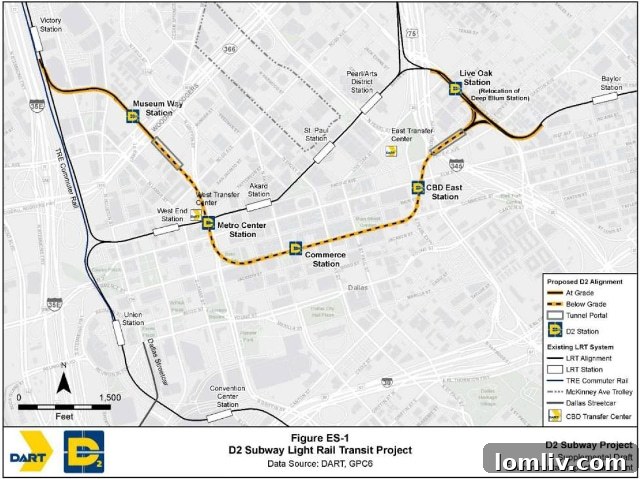
On Thursday, DART hosted two crucial public input sessions to discuss the recently unveiled Supplemental Draft Environmental Impact Statement (SDEIS) for the D2 Subway. This ambitious project outlines a 2.4-mile extension, predominantly underground, designed to significantly enhance Dallas’s light rail capacity. The D2 is envisioned to forge a vital connection between Victory Park and Deep Ellum, traversing directly beneath the downtown core along Commerce and Griffin Streets. A primary objective is to reroute the existing Green and Orange lines, currently running at ground level along Bryan-Pacific Streets, into the new underground tunnel. This strategic move aims to alleviate congestion and free up critical track capacity currently shared by four lines at street level, streamlining operations and improving efficiency across the entire network. Furthermore, the new line will also pass beneath major arteries such as Woodall Rogers Freeway and IH-345, necessitating careful planning and construction to minimize disruption.
Attending one of these hour-long virtual sessions, one couldn’t help but feel for the moderators. Despite the significant implications of the D2 Subway for Dallas’s future, only two members of the public offered comments, each granted three minutes to speak. The remaining 54 minutes were largely filled with internal presentations and appeals for further public participation, underscoring a troubling lack of widespread engagement. This limited turnout raises important questions about the effectiveness of current public outreach strategies for large-scale urban infrastructure projects. Is it a matter of public apathy, or are the mechanisms for feedback simply not resonating with the broader community?
The format of these sessions—designed solely for public comments without providing immediate official responses—often leaves participants feeling unheard or unsure of the impact of their input. This one-way communication can inadvertently discourage deeper engagement, as participants’ questions or concerns might go unaddressed, rendering the process less informative for both the public and the project planners. Meaningful public input requires not just an opportunity to speak, but also a clear indication of how that feedback will be considered and integrated into the project’s development. Without this two-way dialogue, the full potential of public consultation to inform and improve such critical projects remains untapped, potentially leading to a disconnect between community needs and project outcomes.
The two public comments received offered a glimpse into differing perspectives. The first speaker, an investor with significant property holdings in downtown Dallas, expressed opposition to the proposed D2 route. Citing previous, apparently unsatisfactory, meetings with DART officials and consultants, his remarks were largely contextual to his personal dealings, leaving other attendees with little understanding of the specific reasons for his disapproval beyond a brief mention of potential property damage. The second commenter, identifying with a community group, offered more constructive feedback. He advocated for the seamless integration of station air rights with surrounding urban development, emphasized the need for intuitive access to the proposed Commerce Street station, and urged for thoughtful architectural and landscape design of the East Portal to prevent it from becoming an overlooked, residual space. These latter points represent tangible suggestions that DART could potentially incorporate to enhance the project’s urban integration and user experience.
The remainder of the session was consumed by DART’s internal reiteration of the environmental plan and statements from NCTCOG (North Central Texas Council of Governments) highlighting the project’s necessity. Moderators repeatedly implored anyone, in either English or Spanish, to contribute, underscoring the challenge of sparking widespread public interest in complex urban planning initiatives. This experience highlights a critical need for DART and similar agencies to re-evaluate their public engagement strategies, finding more innovative and accessible ways to ensure that community voices are not only heard but actively contribute to the shaping of Dallas’s future transit landscape.
Key Insights from the D2 Subway Report: Justifying the Underground Expansion
The SDEIS for the D2 Subway provided crucial insights into the project’s rationale and potential impacts. Foremost among these justifications is the undeniable surge in DART ridership, a compelling counter-argument to any skepticism regarding the necessity of light rail expansion. Since 2011, DART has reported an impressive increase of over 20 percent in ridership, significantly outpacing the national average increase of nine percent during the same period. More recently, between 2018 and 2019 alone, the American Public Transportation Association documented a robust 14 percent growth in DART ridership. When coupled with projections indicating a staggering 55 percent population jump for the Dallas metro area by 2045, the imperative for expanding and modernizing the public transit system, particularly through projects like the D2 Subway, becomes strikingly evident. This growth underscores that residents are increasingly opting for public transit, not just as a convenience, but as a necessary component of their daily lives in a rapidly expanding urban environment.
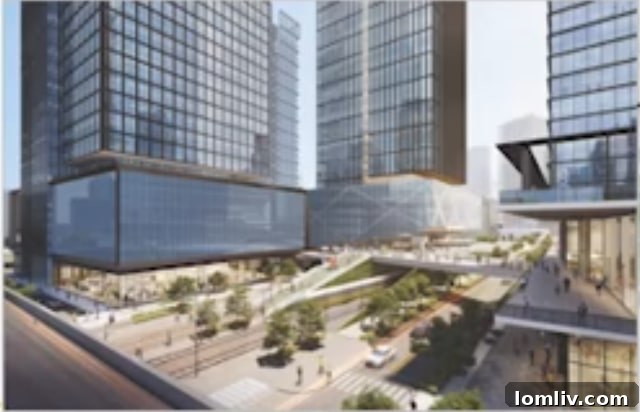
The decision to construct the D2 Subway primarily underground is a testament to a significant shift in thinking among Dallas’s business community and urban planners. Historically, infrastructure projects often prioritized surface-level solutions. However, the resounding success of Klyde Warren Park, which effectively capped a freeway to create vibrant green space and spur extensive economic development at ground level, served as a powerful proof of concept. This project demonstrated that investing in underground infrastructure can not only mitigate urban blight but also unlock immense value and opportunity above ground, far exceeding the initial tunneling costs. This newfound appreciation for subterranean development signals Dallas’s readiness to embrace sophisticated urban planning strategies that prioritize both functionality and livability, finally bringing the city’s approach to infrastructure into the 21st century.
The D2 Subway, while modest in length, is thus more than just a transportation project; it’s a statement of Dallas’s commitment to strategic urban growth, efficient mobility, and an enhanced quality of life for its residents. By increasing capacity and streamlining existing lines, it promises to make DART an even more attractive and reliable option for commuters, tourists, and residents navigating the dynamic landscape of downtown Dallas and its vibrant surrounding neighborhoods.
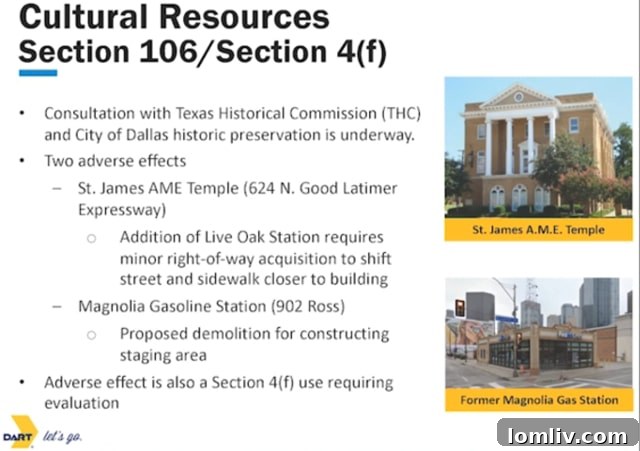
Beyond its core transit objectives, the SDEIS also shed light on specific impacts to existing structures and potential historical findings. The report indicated that the historic St. James A.M.E Church could lose between 1.5 and 5.4 feet of its front or side yard, necessitating careful mitigation strategies to preserve its integrity. Additionally, the Magnolia gas station at 902 Ross Avenue, itself a structure of historical significance, is slated for demolition to serve as a temporary construction storage site. This particular proposal has drawn criticism, as demolishing a historic building for a temporary purpose raises questions about the balance between construction expediency and heritage preservation. Such decisions often spark community debate and call for alternative solutions that can accommodate development needs while safeguarding the city’s architectural legacy.
Further displacements are anticipated with the development of the new Live Oak Station, which will replace the existing Deep Ellum station. This expansion is projected to result in the displacement of thirteen commercial establishments, including the well-known Lizard Lounge, the Bottled Blonde restaurant, and the Midtowne Spa. While urban development often necessitates changes to the commercial landscape, these specific impacts highlight the need for supportive measures for affected businesses and thoughtful planning to ensure the continued vibrancy of the Deep Ellum district. Interestingly, the parking garage located behind Neiman Marcus has been identified as a contributing historic structure, suggesting that its preservation is tied to the overall historical significance of the iconic Neiman Marcus building itself. This detail underscores the complex layers of historical designation within urban cores and the unexpected elements that can fall under protective status.
Perhaps the most intriguing, albeit remote, possibility mentioned in the report is the “minuscule potential” for encountering prehistoric archaeological deposits. The SDEIS notes that if such deposits were to be found, they would “most likely be significant.” While the prospect of unearthing ancient history beneath downtown Dallas is captivating, historical records suggest that such finds have been exceedingly rare in previous urban excavations. Nevertheless, this aspect highlights the comprehensive nature of environmental impact assessments, which account for even the most improbable scenarios to ensure that cultural and historical resources are adequately considered and protected during large-scale construction.
Beyond D2: A New Deal for Dallas Transit and the Future of Urban Mobility
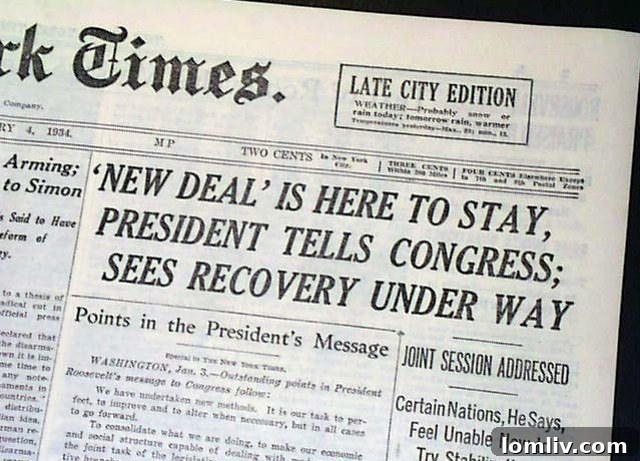
The discussion around DART’s D2 Subway project inevitably leads to broader questions about national infrastructure investment and the role of public works in economic recovery. Harkening back to the 1930s, President Franklin D. Roosevelt’s New Deal programs—including the Works Progress Administration (WPA) and Public Works Administration (PWA)—demonstrated the transformative power of federal investment in infrastructure. These initiatives not only pulled the nation out of the Great Depression by putting millions back to work but also left a lasting legacy of dams, power plants, bridges, and reforestation projects that continue to serve the country today. Given the economic dislocations wrought by the COVID-19 pandemic, a pertinent question arises: could a similar federal commitment to public works, particularly in mass transit, form a cornerstone of a post-pandemic economic recovery?
Many experts and policymakers are advocating for a “green” recovery, with energy efficiency and sustainable infrastructure at its core. Investing in expanded mass transit systems aligns perfectly with this vision, reducing reliance on personal vehicles, mitigating traffic congestion, and significantly lowering carbon emissions. The idea of getting “cars off the roads” through efficient public transportation is not just an environmental imperative; it’s an economic accelerator, freeing up capital for consumers and enhancing urban productivity. Such an approach could create millions of jobs, stimulate local economies, and build resilient infrastructure for generations to come, much like the New Deal did.
The historical precedent for federal support of mass transit is robust. In 1961, President John F. Kennedy recognized mass transportation as a “key factor in shaping [urban] community development.” His vision, initially integrated into the Omnibus Housing Act, eventually culminated in the Urban Mass Transportation Act of 1964, signed into law by President Lyndon B. Johnson. Johnson famously stated that prior to 1964, “the Federal Government did little or nothing to help the urban commuter.” This landmark legislation marked a pivotal shift, ushering in an era of substantial federal funding for transit projects across the nation. During this period, the federal government heavily financed the expansion of existing systems and supported the construction of entirely new ones, such as Washington D.C.’s METRO and Atlanta’s MARTA. Atlanta, for example, received an estimated $5 billion (in 2020 dollars) from the Federal Transit Administration for its system in the 1970s alone.
Contrast this historical generosity with the current funding landscape. Today, the Federal Transit Administration typically funds up to 80 percent of highway construction costs but only around 50 percent for mass transit projects. This disparity reflects a policy bias that prioritizes road infrastructure over public transportation, often to the detriment of urban centers. Imagine the transformative potential if this funding ratio were reversed as part of a comprehensive federal infrastructure works project. Such a policy shift would unlock unprecedented opportunities for cities like Dallas to build the world-class transit networks they urgently need, propelling them into a future defined by smart growth and sustainable mobility. From 2017 through 2020, total committed funds for rail transit projects across the US were $8.5 billion, a figure that pales in comparison to what could be achieved with a rebalanced federal funding approach.
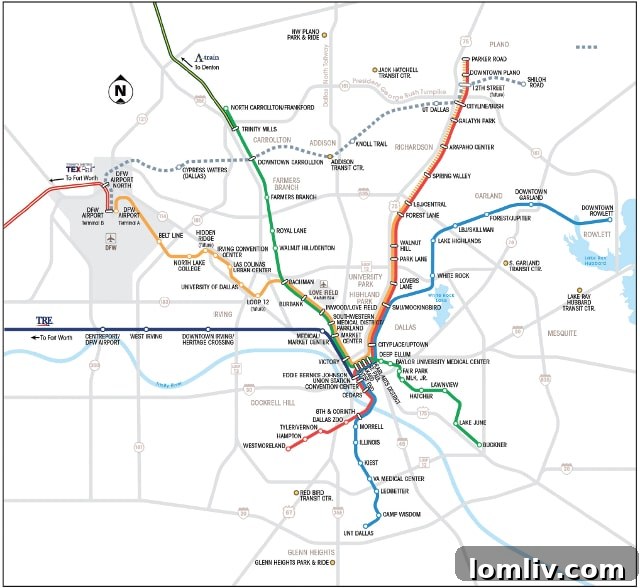
This brings us to a crucial call to action for DART: Be prepared to seize the moment. If, post-election, the federal government commits to a renewed era of infrastructure investment, Dallas must be ready with a vision far bolder than just the D2 Subway. This is an opportunity to think expansively, to submerge all downtown light rail, creating a seamless, subterranean network that enhances urban aesthetics and efficiency. More ambitiously, DART should begin planning for a “D3” subway line that extends into affluent, historically underserved areas like Uptown, Oak Lawn, and the West Village. Imagine connecting these vibrant districts to Preston Center, Preston/Royal, Preston/Forest, and the Galleria/Midtown Dallas. Such an expansion would not only alleviate traffic in these heavily congested corridors but also provide a compelling argument for Dallas to retain ownership of key assets like the Preston Center garage, anticipating its future role as a vital park-and-ride for a new subway station.
Historically, many affluent neighborhoods have resisted mass transit projects, often driven by a desire to limit access for “those people.” However, this mindset is increasingly antiquated and detrimental to the overall health of a dynamic city. Pew Research data from 2016 highlights this disparity, noting that nationwide, 38 percent of public transit users are Black or Hispanic, compared to just 7 percent who are white. This gap is attributed to factors like lower income and car ownership rates among minority groups, coupled with the higher concentration of both public transit and minority populations in urban centers, a legacy of “white flight” to the suburbs five decades ago. Moreover, white residents in cities are often more likely to work within walking or biking distance of their homes, whereas minority residents tend to commute longer distances. Expanding transit into all areas of Dallas is not just about equity; it’s about creating a truly interconnected city where everyone benefits from reduced traffic, enhanced property values, and improved access to employment, education, and leisure opportunities. A truly integrated transit system serves all demographics, fostering economic growth and social cohesion.
Envision a Dallas that continues to attract world-class businesses and a diverse workforce, a city resilient enough to withstand future challenges. While we navigate today’s pandemic, we must simultaneously plan for tomorrow, delivering a transportation future that is truly visionary. The painful lesson of Dallas losing out on Amazon HQ2, largely due to its underdeveloped mass transit infrastructure, serves as a stark reminder of the consequences of failing to invest in modern mobility solutions. Robust public transit is not a luxury; it’s a fundamental requirement for a competitive global city. Much like universal healthcare, no one who has access to a well-functioning subway system ever wishes they didn’t; their primary desire is for better maintenance and continued expansion. The profound impact of good urban transit was eloquently summarized by New York City Mayor William Gaynor during the initial phase of that city’s subway construction over a century ago: “The effect it is to have on the city of New York is something larger than any mind can realize.” The United States is long overdue for such sweeping infrastructure projects, and Dallas, with its dynamic growth and urgent transit needs, stands ready to lead the way.