The Ultimate Guide to Real Estate Photography: Capturing Buyer Attention and Selling Faster
In today’s competitive real estate market, a property’s first impression is almost entirely digital. When potential buyers scroll through countless listings online, their decision to click for more details or schedule a viewing hinges overwhelmingly on the quality of the accompanying photographs. While professional, captivating pictures can instantly entice and draw in interest, poor quality images can inadvertently scare, confuse, or simply render a listing forgettable. As a prospective homebuyer, I expect the pictures to serve as a comprehensive visual storyboard, guiding me seamlessly through every corner of the property, creating an immersive experience that feels as if I’m already walking through the front door.
My ideal visual journey begins with the exterior, moves logically to the entryway, and progresses naturally through each room. I highly value listings where the photographs “connect” – meaning that if a specific piece of furniture or architectural detail is visible in one shot, I can see it again, from a different angle, in the subsequent picture. This deliberate sequencing acts as a crucial visual bridge, helping me understand the layout, appreciate the flow between rooms, and gain a cohesive sense of the home’s overall spatial relationship. It transforms a collection of individual images into a compelling narrative.
Unfortunately, many of us have encountered real estate listings where photos are uploaded in a haphazard, “scattershot” manner. Imagine a sequence that jumps from a bathroom to the basement, then to the attic, followed by the master bedroom, and finally the backyard – all without any discernible order. Such a chaotic presentation leaves viewers disoriented, unable to grasp the property’s layout or internal logic. The inevitable consequence is that real estate agents end up spending valuable time showing homes to buyers who would have easily dismissed the property had they been presented with a more coherent and engaging visual storyboard from the outset. A strong narrative, however, can only go so far; if the individual pictures themselves are of poor quality, even the best storyboard won’t salvage the listing’s appeal.
Beyond the Snapshot: Crafting a Visual Narrative for Your Property
While the concept of a visual storyboard is crucial, it’s equally important that each individual photograph within that story is of exceptional quality. A captivating narrative loses all impact if the visuals are compromised. Real estate photography can be broadly categorized into three pitfalls: “scary,” “bad,” and “pointless” pictures. Understanding and avoiding these common mistakes is paramount for creating a listing that truly stands out.
“Scary” Pictures: Don’t Haunt Your Buyers Away
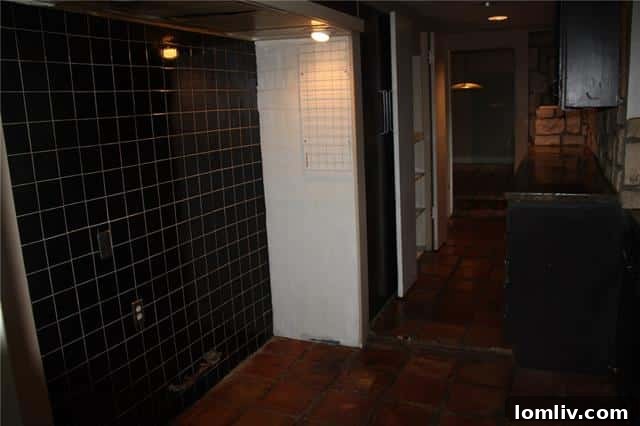
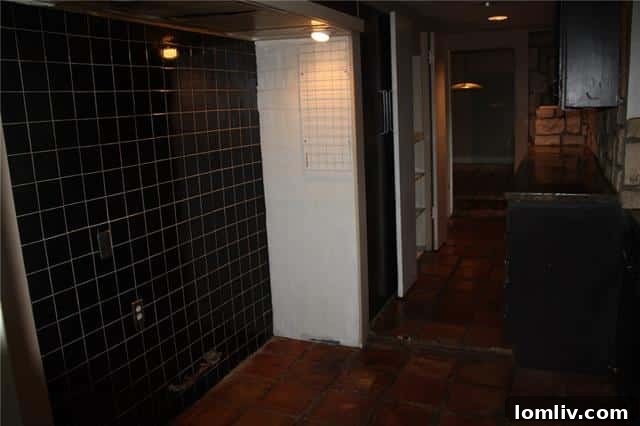
Once an agent commits to telling a photographic story, it’s imperative to ensure it’s a positive and inviting one. Real estate listings should evoke warmth and potential, not a spooky Halloween theme that’s only appropriate one day a year. If a seller isn’t able to invest in professional home staging, the selling agent still has a responsibility to present the property in the best possible light. This means avoiding dark, dimly lit pictures of empty rooms that feel neglected, or rooms clearly in disrepair. Such images immediately convey an impression of neglect, making the space feel unwelcoming, smaller, and potentially triggering buyers’ imaginations to focus on all the problems rather than the possibilities.
Unless a property is explicitly marketed as a fixer-upper with a clear vision and price point that reflects its condition, dirty, cluttered, or poorly lit rooms are an absolute no-go. Buyers struggle to envision themselves living in a space that feels unloved or requires immediate, extensive work. Basic steps like decluttering, thorough cleaning, opening curtains to maximize natural light, and turning on all lights can dramatically improve the mood and appeal of a room. The goal is to create an atmosphere that feels inviting, clean, and spacious, allowing buyers to project their own lives into the space rather than being deterred by its current, less-than-ideal state.
“Bad” Pictures: Technical Flaws That Undermine Your Listing

Outdated Equipment and Low Quality
The tools an agent uses for photography directly reflect their professionalism and dedication to their client’s listing. Sellers interviewing realtors should not hesitate to ask about their photography strategy and the equipment they employ. If a realtor pulls out a vintage Nokia “candy bar” phone, that should be an immediate red flag. The quality of images captured with such outdated technology will undoubtedly fall short, resulting in blurry, pixelated, and overall unappealing online photos that fail to do the property justice. Modern smartphone cameras offer significant improvements, but nothing truly compares to the clarity, resolution, and dynamic range offered by a dedicated DSLR or mirrorless camera, especially when wielded by a skilled photographer.
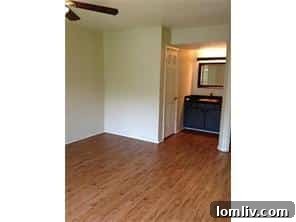
Beyond the camera itself, agents must understand the importance of adequate resolution and proper aspect ratios for online platforms. Small, grainy images are frustrating for buyers who want to zoom in on details. The overall impression conveyed by such technical shortcomings is often one of carelessness, suggesting that if the agent cuts corners on photography, where else might they be compromising? High-quality images are an investment in the property’s marketing, directly impacting buyer engagement and perceived value.
Composition, Blurriness, and Tilting: The “Sinking Ship” Effect
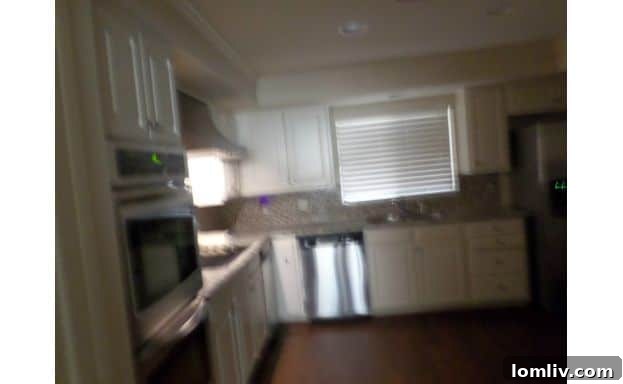
Another common pitfall in real estate photography involves questionable eyesight or a lack of attention to basic composition. As a seller, you certainly don’t want your home to appear as if it’s the Titanic on its way down. Tilted horizons, blurry subjects, and off-kilter angles create a subconscious sense of unease and can even make a buyer feel dizzy. The image above, for instance, shows a kitchen that appears to be listing to one side, completely undermining any sense of stability or comfort.
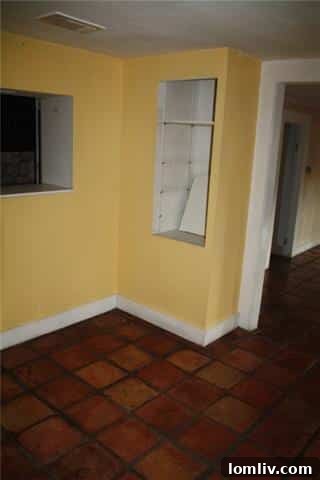
This particular agent clearly understood the “storyboard” concept, attempting to show continuity from what appears to be the dining room (below) into the kitchen. However, the photographer’s execution falls short, making it seem as though they might have broken a heel off their stilettos while taking the shot! Such a fundamental flaw in composition distracts from the actual features of the home, drawing attention instead to the poor photography itself.
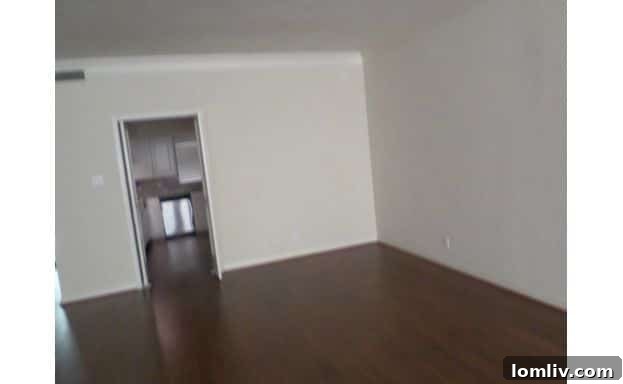
With the State Fair over and Six Flags winding down for the season, a picture like the one depicting a tilted kitchen might have to satisfy roller coaster junkies in desperate need of a vertigo fix. Or perhaps this precarious angle will attract a buyer with a flock of birds looking for the perfect, slanted perch! In reality, these photos are not only disorienting but also unprofessional. Utilizing a tripod, checking the horizontal and vertical lines in the frame, and ensuring sharp focus are basic requirements for effective real estate photography. Buyers need to feel grounded and comfortable while viewing a potential home, not like they’re about to fall over.
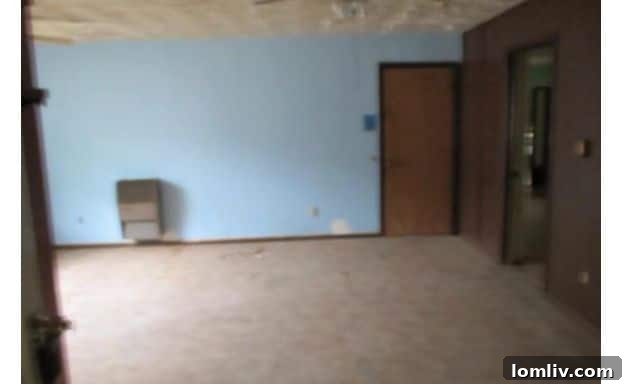
Even a slightly more level picture, presumably snapped before the high heel dramatically snapped off, can still suffer from critical flaws. The image above, while less tilted, retains a certain blurriness that allows undesirable details to stand out prominently. The ceiling rows, for instance, bear an unfortunate resemblance to a “mowed lawn,” and the sad wall heater draws unwelcome attention. The attempt by a pale blue wall to cheer up the room backfires; instead of minimizing the dated paneled wall, the clashing color palette merely amplifies its presence. These minor details, when poorly captured, can collectively diminish a room’s appeal, highlighting imperfections rather than showcasing potential.
Personal Touches Gone Wrong: The Decor Dilemma
Home decor is deeply personal, but when selling a property, personalized elements can become significant deterrents. I once saw a picture like the one below and couldn’t help but wonder if a Cher drag queen lived there. The tacky, smoke-stained gargoyle fireplace literally reeks of bad taste and glaringly points towards a flue that appears to be non-functional or poorly maintained. While unique taste is celebrated in personal living, it can alienate a wide range of buyers. The goal of real estate photography is to appeal to the broadest possible audience, allowing them to envision their own style in the space.
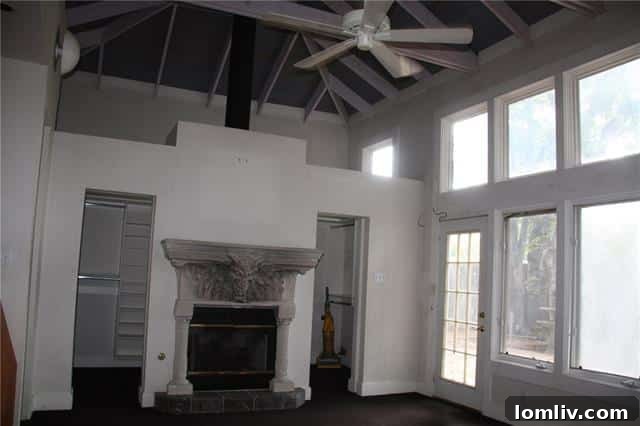
Such highly specific or dated decorative choices can make a home feel less like a blank canvas and more like a museum of someone else’s eccentricities. Even without full staging, decluttering and depersonalizing are crucial. Remove overly strong personal items, outdated fixtures, or anything that might immediately turn off a potential buyer. The objective is to create a neutral, welcoming environment that highlights the home’s features, not its previous occupants’ quirky preferences. A professional photographer often knows how to strategically crop or frame shots to minimize the impact of such elements, or how to suggest minor adjustments that yield major improvements in appeal.
Unfinished Business: Backsplash Blunders and Neglected Details

In this next picture, the glaring oversight speaks volumes: “nail up a picture of something,” or better yet, simply finish the job! All I can see is a renovator who was apparently too cheap to buy the six extra panels of backsplash tile needed to complete the installation over this kitchen sink. This isn’t just a minor detail; it’s a prominent visual cue that screams “unfinished project” to a buyer. It immediately suggests that the home requires additional work and expense, diminishing its “move-in ready” appeal. An incomplete backsplash is not merely an aesthetic issue; it impacts perceived value and can even raise questions about the overall quality of other renovations.
Details matter significantly in real estate photography. Buyers scrutinize every image, looking for signs of care or neglect. An unfinished backsplash, a loose light fixture, or a patch of unpainted wall can quickly erode confidence in the property’s condition and the seller’s attention to detail. These small imperfections, if highlighted by poor photography, can lead buyers to assume there are larger, hidden issues. Investing a minimal amount, as suggested by the caption, could have transformed a glaring flaw into a complete, polished look, significantly boosting the kitchen’s perceived value and the overall attractiveness of the listing.
“Pointless” Pictures: What NOT to Show
The Mystery of the Cropped Staircase
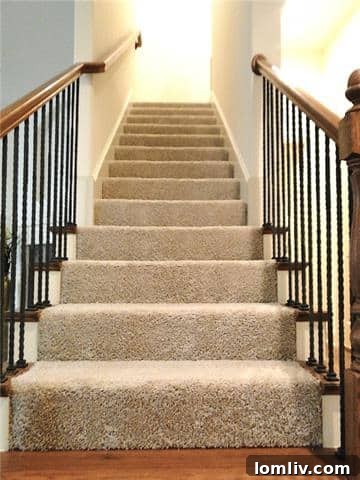
For some inexplicable reason, certain agents feel compelled to photograph the exceedingly obvious or to highlight a poorly designed detail. While taking pictures of staircases to demonstrate their integration within a larger space or to showcase architectural features is perfectly valid, capturing a tightly cropped image of a carpeted staircase seems utterly pointless. Are viewers genuinely expected to count the carpet threads to judge its quality? I simply don’t get it. Such a narrow, decontextualized shot fails to provide any useful information about the home’s layout, its flow, or the grandeur (or lack thereof) of the staircase itself. It’s a wasted slot in a listing that could otherwise be used for a more impactful image.
Effective real estate photography aims to provide context and demonstrate the function and aesthetics of a space. A well-composed staircase photo would show its width, the type of railing, the light source, and how it connects to the levels above and below, conveying a sense of scale and design. A close-up, however, offers no such value and only serves to confuse or bore the potential buyer. Agents must think critically about the purpose of each image and whether it genuinely contributes to a compelling visual story that informs and excites buyers.
The Labyrinthine Hallway: Too Many Doors
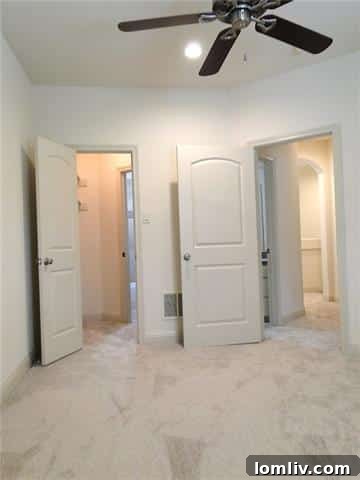
And who doesn’t love a hallway with more doors than an Abbott and Costello skit? This particular photograph achieves only one thing: it clearly points out how badly designed this area is, inadvertently highlighting a significant architectural flaw. Perhaps if you have children or pets that love to run around in endless circles, this labyrinthine setup might appeal, but for the rest of us, it begs the question: What was the architect thinking? More importantly, what was the listing agent thinking by choosing to emphasize this feature? Is cramming the maximum number of doorways into the smallest possible area suddenly a desirable “thing”?
A good real estate photo should either showcase a property’s strengths or, at the very least, neutrally present areas that might be less appealing without drawing undue attention to their flaws. This image, however, acts as a visual siren call to a design conundrum. Instead of showcasing flow or functionality, it emphasizes constriction and an awkward layout. Agents need to carefully consider how their framing choices reflect on the property. Sometimes, it’s better to skip a problematic angle or focus on broader, more appealing perspectives that minimize the visual impact of such design challenges. The aim is to sell the dream, not to document every structural quirk.
The Professional Edge: Elevating Your Listings with Exceptional Photography
The examples above clearly demonstrate that real estate photography is far more than just pointing a camera and clicking. It’s a critical component of a successful sales strategy. For real estate agents, recognizing the power of professional-grade images isn’t just about avoiding embarrassment; it’s about maximizing client value and optimizing their own time. Investing in quality photography—whether through hiring a professional or mastering advanced techniques—is not an expense, but an essential investment that pays dividends.
The benefits are tangible: homes with high-quality photos tend to sell faster, often command higher asking prices, and attract more serious, qualified buyers. This translates to fewer wasted showings and a more efficient sales process for agents. For sellers, demanding excellent photography from their agent should be a non-negotiable part of the interview process. Ask about their camera equipment, their post-processing techniques, and their strategy for crafting a visual storyboard. Furthermore, sellers play an active role by ensuring their home is decluttered, clean, and well-lit for every photoshoot.
To consistently produce compelling listing photos, agents should adhere to best practices: utilize proper equipment (ideally a DSLR or mirrorless camera with appropriate lenses), prioritize natural lighting and supplement as needed, ensure sharp focus and level horizons, declutter and depersonalize rooms, and above all, create a coherent visual narrative. Each photo should serve a purpose, highlighting the property’s best features and helping buyers envision their future within its walls. A powerful visual presentation can transform a good property into an irresistible home.
Conclusion: Picture Perfect Sales Await
Bwaaa-ha-ha! I sincerely hope these photographic faux pas didn’t scare you too badly. However, the message is a serious one for real estate professionals: the next time you prepare to upload pictures for a new listing, please keep these essential tips in mind. The difference between a quick, profitable sale and a lingering, frustrating experience can often be traced back to the quality of your visual presentation. If you don’t heed these warnings, perhaps your listing photos will be immortalized in next year’s “Houses of Horrors” column! Let’s strive for excellence and make every property shine.
Share Your Story!
Remember: Do you have a compelling HOA story to tell? A fascinating piece of high-rise history? Realtors, do you want to feature a listing that’s currently in need of renovation or one that has been completed with flying colors? How about hosting a Candy’s Dirt Staff Meeting and sharing your insights? Shoot Jon an email with your ideas and stories. Marriage proposals are also accepted (they’re legal)! We’re always eager to hear from you at [email protected].