

The global health crisis dramatically reshaped nearly every aspect of daily life and commerce, and the real estate sector was no exception. As communities across the nation grappled with unprecedented restrictions, the industry quickly had to adapt to maintain momentum and ensure essential transactions could proceed safely. Just recently, Dallas County Commissioners recognized the critical role of real estate in the local economy by amending the shelter-in-place declaration. This pivotal decision allowed various real estate-related businesses, including inspectors, escrow agents, and loan officers, to continue operating as essential services. This designation was a lifeline for countless individuals and businesses, enabling crucial property transactions to move forward, albeit with significant modifications to traditional practices. While innovative solutions like curbside closings quickly gained traction, familiar methods such as in-person showings and open houses were temporarily put on hold, prompting a wave of creative adaptations across the industry.
The Rise of Curbside Closings: Adapting to a New Reality
In the wake of these operational adjustments, real estate professionals demonstrated remarkable ingenuity and a commitment to client safety. Robert Frye, a seasoned escrow officer at Allegiance Title Preston Center, quickly became an advocate and pioneer of the new “curbside closing” model. This innovative approach allowed transactions to be completed efficiently while strictly adhering to social distancing guidelines, ensuring the well-being of all parties involved. Frye and his team at Allegiance Title have successfully facilitated numerous curbside closings, a testament to the adaptability of the industry during challenging times.
“At Allegiance Title, we try and be as light on our feet as possible when it comes to accommodating the needs of our clients. With the current restrictions in place, we saw the opportunity to take that literally with our curbside closings.
We prefer to close our clients in person, to ensure both accuracy and their understanding of the documents. Not only do curbside closing accomplish this, they establish a safe space for everyone involved and seem to be a memorable experience for our customers.”
Frye’s perspective highlights the dual benefit of curbside closings: they not only meet the immediate need for a safe transaction environment but also uphold the fundamental principles of accuracy and client comprehension. In a curbside closing, clients typically remain in their vehicles while the escrow officer, wearing appropriate protective gear, presents documents for signing through the car window. This method ensures minimal physical contact while still allowing for a clear explanation of legal documents and the proper execution of signatures. The meticulous process often involves prior digital review of documents, with the physical signing being the final, secure step. This blend of digital convenience and physical security has proven to be a highly effective solution, transforming a once daunting challenge into a seamless and often memorable experience for clients.

Allegiance Title is not alone in embracing these forward-thinking solutions. A growing number of companies, including prominent names like Legacy Title and Fair Texas Title, have also adopted similar social distancing-friendly closing procedures. Their collective efforts underscore a wider industry commitment to maintaining service quality and accessibility during an unprecedented period. These adaptations have not only kept the market moving but have also set a new standard for client-centric service, emphasizing flexibility and safety as paramount.
National Push for Remote Notarization: SECURE Notarization Act
Beyond local adaptations, the real estate industry also rallied for national legislative changes to facilitate transactions. The National Association of Realtors (NAR), a leading voice for real estate professionals, took proactive steps to advocate for widespread adoption of digital solutions. Recognizing the limitations imposed by shelter-in-place orders on traditional in-person notarization, NAR sent a compelling letter to Congress. The letter urged legislators to expedite the passage of the SECURE Notarization Act. This proposed legislation aims to establish a national framework for remote online notarization (RON), which would allow critical documents to be legally notarized from different physical locations using secure audio-visual technology.
The primary goal behind NAR’s lobbying efforts was to sustain transaction volume and support the housing market, a vital component of the national economy. With many localities restricting physical showings and open house traffic, the ability to complete transactions entirely digitally became more crucial than ever. Remote online notarization offers a secure, convenient, and legally sound alternative to in-person notarization, enabling buyers and sellers to sign documents from the safety and comfort of their homes. This technology involves a licensed notary public interacting with a signee via live video conferencing, verifying identity through advanced methods, and applying a digital seal to electronic documents. This process not only enhances safety during public health crises but also streamlines the closing process, potentially reducing delays and improving efficiency.
While 23 states had already adopted varying forms of remote notarization, its widespread use across the country remained inconsistent. Notably, Texas, a significant real estate market, was not widely utilizing this option at the time. NAR’s advocacy sought to bridge this gap, pushing for federal legislation that would standardize RON practices and make them accessible nationwide. This legislative push was seen as essential for ensuring the continuity of real estate services and protecting consumers and professionals alike. As NAR President Vince Malta articulated, the industry’s focus was not just on business continuity but also on broader societal welfare.
“As the nation and world grapple with some of the most difficult and uncertain circumstances of our lives, NAR continues working with the federal government to secure policy to promote public safety and protect this critical driver of our nation’s economy,” NAR President Vince Malta said in a statement.
Malta’s statement underscores the gravity of the situation and the critical importance of adaptable policies. The ability to complete real estate transactions remotely would not only safeguard public health but also inject stability into an economy facing unprecedented challenges, affirming the real estate market’s role as a cornerstone of economic recovery.
Coronavirus and the Real Estate Market: A Glimpse into the Future
The profound impact of the pandemic extended beyond immediate operational changes, promising to reshape the housing market for years to come. A compelling report from ApartmentList provided valuable foresight into these lasting transformations, outlining seven fundamental shifts in the real estate landscape in a post-COVID-19 era. These predictions offer a comprehensive look at how everything from housing demand to urban development might evolve.
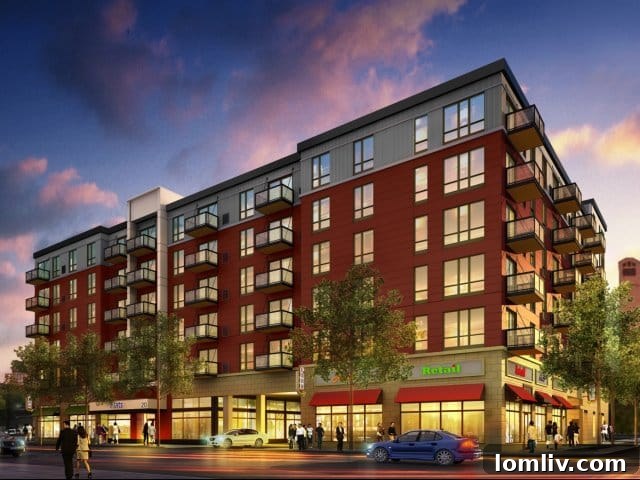
One immediate and significant change observed across the U.S. was the widespread halt on evictions, a measure aimed at protecting vulnerable populations during an economic downturn. This policy, while necessary for social stability, created a complex dynamic within the rental market, impacting landlords and tenants alike. Concurrently, the mass adoption of remote work, initially a temporary necessity, quickly solidified into a long-term trend for many industries. This shift has profound implications for housing patterns, potentially decentralizing urban populations as employees are no longer tied to a physical office location. This new flexibility could spur demand in suburban and even rural areas, altering traditional commuting patterns and housing preferences.
Another fascinating and somewhat predictable trend highlighted by the report is the anticipated increase in sight-unseen home purchases. With physical showings restricted, digital tools like virtual tours, 3D walkthroughs, and high-quality photography became indispensable. Many Realtors were already witnessing this accelerated shift towards virtual transactions, indicating a permanent embrace of digital property exploration. This trend necessitates robust online listings, detailed virtual representations, and transparent communication between buyers, sellers, and agents.
Perhaps one of the most intriguing predictions from ApartmentList concerned a potential across-the-board pause on dense urbanization. The pandemic starkly revealed the vulnerabilities of highly populated areas, which often bore the brunt of infection rates. This experience could prompt a reevaluation of urban living, with individuals and families potentially seeking less crowded environments. The very essence of urban appeal, which thrives on social interaction and shared spaces, was severely disrupted during the crisis. The report eloquently captured this sentiment:
Cities thrive on social interaction, and the outbreak of coronavirus turned off most of the benefits of urban living overnight. Shared spaces and assets in the form of restaurants, co-working, and events don’t exist in the temporary quarantine economy. The small businesses that power these activities will be hit hard in the meantime, possibly needing to close or relocate to lower-cost areas. Time will tell whether the trend of urbanization will reverse, but we should expect the expanding economies of dense urban areas to take a significant hit in the next year.
This perspective suggests a profound re-evaluation of urban density, potentially leading to renewed interest in suburban growth and different forms of community development. The resilience and adaptability of small businesses within urban centers will be crucial, as will the strategies adopted by city planners to redefine and revitalize urban living in a post-pandemic world. Whether this pause on urbanization signals a temporary blip or a more fundamental reversal remains to be seen, but its implications for real estate development, infrastructure, and lifestyle choices are undeniably significant.
Navigating the Future: Resilience and Innovation in Real Estate
The real estate industry, traditionally reliant on personal interaction and physical presence, demonstrated remarkable resilience and innovation in the face of the global pandemic. From the rapid implementation of curbside closings in Dallas County to the national advocacy for remote notarization by NAR, the sector quickly adapted to new operational realities. These immediate responses were crucial in maintaining market liquidity and ensuring essential transactions could proceed safely. Simultaneously, analytical insights from reports like ApartmentList illuminated the deeper, long-term shifts that COVID-19 would instigate, from evolving housing preferences driven by remote work to a potential re-evaluation of urban density. The confluence of these immediate adaptations and forecasted changes paints a picture of an industry undergoing profound transformation. Moving forward, the real estate market will continue to evolve, integrating technological advancements, prioritizing health and safety, and responding dynamically to shifting societal needs and economic conditions. The lessons learned during this challenging period will undoubtedly shape a more robust, flexible, and digitally integrated real estate landscape for years to come.