

The Great Migration: Why Californians Are Increasingly Choosing Texas
The movement of people between states is a constant ebb and flow, shaping the economic and cultural landscape of the nation. However, few trends have captured as much attention, discussion, and demographic scrutiny in recent years as the pronounced migration of Californians to Texas. What was once a trickle has steadily grown into a significant stream, signaling a profound shift in population dynamics, economic centers, and lifestyle preferences across the United States. This phenomenon is more than just anecdotal; it is a well-documented trend observed by moving companies, real estate firms, and government agencies alike, marking it as a bona fide sign of our times.
This article delves into the various facets of this impactful demographic shift, exploring the key drivers behind the California exodus, the implications for both states, and the future outlook of this fascinating interstate relocation pattern.
Tracking the Trend: Insights from National Movers Studies
To truly understand the scale and historical context of this migration, we can look to long-standing data sources. United Van Lines, a prominent moving company, has been diligently tracking inbound and outbound state moves since 1977 with its annual National Movers Study. This comprehensive report offers invaluable insights into the relocation habits of Americans, identifying top states for both inbound and outbound activity.
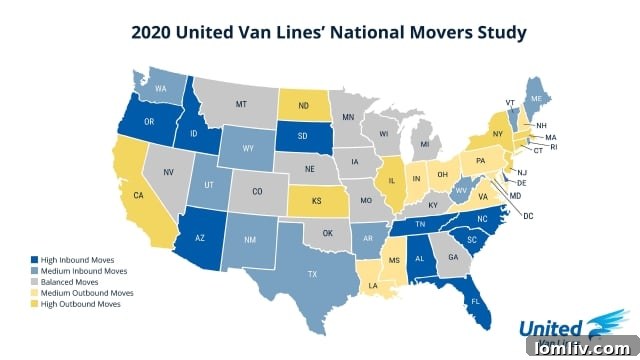
Earlier this year, United Van Lines undertook a specific deep dive into the California-Texas corridor, recognizing it as one of the most compelling trends emerging from their data. They aptly termed it “the relocation sweeping the (west of our) nation.” The findings from their 2019 National Movers Study revealed a stark contrast: among all people moving out of California, a significant 7 percent chose Texas as their new home. This figure dwarfs the next most popular destination, Arizona, which attracted only 2.8 percent of Californians. Such a substantial difference underscores Texas’s unique appeal to those departing the Golden State.
United Van Lines also offers an interactive online tool that vividly illustrates these migration patterns, allowing users to select any year back to 1977 and observe the shifting landscape of inbound (blue) and outbound (yellow) states. This tool visually confirms historical population shifts, such as a major retreat from the Northeast in the early 1980s or the surge in popularity of the Pacific Northwest in the early 90s, aligning with regional economic booms like Starbucks’ public offering. The data consistently points to Texas as a magnet for movers, particularly from California.
The Genesis of the Shift: Corporate Relocations Pave the Way
While moving studies provide the quantitative proof, the “why” behind this mass migration often lies in a complex interplay of economic, social, and policy factors. Many analysts pinpoint 2014 as a watershed moment, when Japanese automotive giant Toyota announced its ambitious plan to relocate its North American headquarters from Torrance, California, to West Plano, Texas. This move wasn’t just about a change of address; it was a strategic decision to consolidate marketing, sales, engineering, and manufacturing under one Texas-sized roof, signifying a major corporate vote of confidence in the Lone Star State.
By July 2017, Toyota officially opened the doors to its new billion-dollar campus, a sprawling facility that quickly became a symbol of Texas’s growing appeal to major corporations. Unofficially, this period marked an observable increase in vehicles with California license plates in Texas cities, a tangible sign of the impending demographic shift. The relocation of such a massive employer created thousands of direct and indirect job opportunities, drawing employees and their families from California and beyond, further fueling the real estate market and local economies.
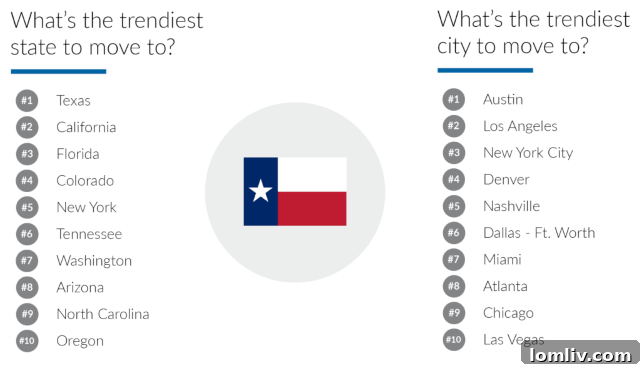
The momentum continued into 2018, with Texas Realtors reporting that over 86,000 Californians moved to the state that year. By 2019, Texas ranked second nationally for relocation activity, welcoming 563,000 new residents, with the Dallas-Fort Worth Metroplex attracting the highest number of out-of-state movers, reaching 200,966 new residents.
The Pandemic Accelerator: Remote Work and Renewed Appeal
Just as the California-to-Texas migration was gaining steady traction, the global pandemic in 2019 introduced an unprecedented accelerator: the widespread adoption of remote work. As companies and individuals grappled with lockdowns and new ways of operating, many realized that geographical constraints no longer dictated their professional or personal lives. This newfound flexibility opened up a world of possibilities, empowering individuals to choose where they lived based on factors beyond proximity to their office. Overwhelmingly, many chose Texas.
The pandemic amplified the existing drivers of migration, making Texas an even more attractive destination. Real estate services and investment firm CBRE, a global leader in tracking such data, reported compelling statistics for 2020. Moves from California to the Dallas-Fort Worth area surged by over 19.1 percent compared to 2019, translating to 16,076 individuals. More broadly, the latest figures indicate that California residents moving to Texas grew to an astounding 36 percent of all interstate moves into the state. This demonstrates the profound and lasting impact of the pandemic on relocation decisions.
The tech industry, often a bellwether for economic trends, also played a pivotal role. By May 2020, another iconic California carmaker, Tesla, and its visionary CEO, Elon Musk, began publicly eyeing Texas for expansion. Facing what he described as restrictive COVID-19 policies in California, Musk later confirmed plans to move Tesla’s operations and his personal residency from Palo Alto to Austin. This decision further cemented Texas’s reputation as a burgeoning tech hub. Musk’s tunneling startup, The Boring Company, also established a presence in Austin, signaling a broader strategic shift for his ventures. This highly publicized move sparked widespread discussion and the compelling question: Is Texas Becoming the New California?
Diving Deeper: Economic and Lifestyle Drivers
Beyond headline-grabbing corporate moves, the underlying economic and lifestyle advantages of Texas are powerful magnets. The significant difference in the cost of living, particularly housing, is a primary motivator. California’s notoriously high home prices and rental costs stand in stark contrast to Texas, where more affordable housing options, larger plots of land, and a generally lower cost of everyday goods and services attract individuals and families seeking greater financial stability and an improved quality of life.
Taxation is another critical factor. Texas boasts no state income tax, a significant advantage over California’s high income tax rates. This allows residents to retain more of their earnings, making Texas an attractive destination for entrepreneurs, high-income earners, and anyone looking to maximize their financial potential. The state also offers a business-friendly regulatory environment, often cited by corporations like Toyota and Tesla as a reason for their relocation decisions. This environment fosters job creation and economic growth, further enhancing Texas’s appeal.
Job opportunities in Texas are not limited to the tech sector. The state’s diversified economy includes robust energy, manufacturing, healthcare, and education sectors, providing a wide array of employment prospects. Urban centers like Dallas-Fort Worth, Houston, Austin, and San Antonio are vibrant hubs of innovation and industry, offering dynamic career paths and a thriving professional landscape. The combination of burgeoning job markets and lower living costs creates a compelling proposition for those seeking both professional advancement and personal well-being.
Nuances in the Data: A Closer Look at Recent Trends
While the narrative of a massive California exodus to Texas is largely accurate, recent data from the U.S. Census Bureau offers a more nuanced perspective on household movement, particularly amid the COVID-19 pandemic. Initial projections for 2020 anticipated an even more drastic interstate migration than what ultimately materialized. Joshua Roberson, a senior data analyst at the Texas Real Estate Research Center, noted that while many expected significant flows from California to Texas or New York to Florida, the reality showed a different pattern.
The Census data revealed that rather than an overwhelming surge of people moving from California and other states into Texas, a considerable portion of the movement was actually intra-state migration, with more people moving from one county to another within Texas itself. This suggests a maturing growth pattern, where Texas residents are also relocating internally, perhaps drawn to different regions within the state for similar reasons of affordability and opportunity.
Nevertheless, the influx from California remains substantial. A Texas Relocation Report released by Texas REALTORS® in February 2021, based on U.S. Census Bureau data, confirmed that Texas gained approximately 100,000 new residents from California alone in the preceding period – a figure equivalent to the entire population of a city like Allen. This underscores that while the pandemic might have shifted some internal dynamics of migration, the pull factor of Texas for Californians continues unabated.
The Future Landscape: Implications for Both States
The ongoing California-to-Texas migration carries significant implications for both states. For California, it represents a “brain drain” and an outflow of tax revenue, potentially impacting its economic dynamism and innovation landscape in the long term. For Texas, this influx brings rapid population growth, economic expansion, and increased cultural diversity. However, it also presents challenges related to infrastructure development, rising housing costs in popular metropolitan areas, and ensuring sustainable growth.
As Texas continues to grow, it faces the task of managing this expansion responsibly, investing in transportation, utilities, and public services to accommodate its burgeoning population. The question of whether Texas is “becoming the new California” is not just about demographics; it’s about whether the factors that attracted people to Texas – affordability, lower taxes, and a business-friendly environment – can be sustained in the face of rapid growth and increased demand. The continued appeal of Texas will depend on its ability to balance growth with quality of life, ensuring that it remains an attractive destination for future generations.
In conclusion, the migration from California to Texas is a multifaceted phenomenon driven by a blend of economic incentives, lifestyle choices, and accelerated by global events. It reshapes communities, shifts economic power, and highlights the dynamic nature of population movements in a modern world. This trend is not merely a transient phase but a defining characteristic of contemporary American demographics, with lasting impacts on the socio-economic fabric of both the Golden State and the Lone Star State.