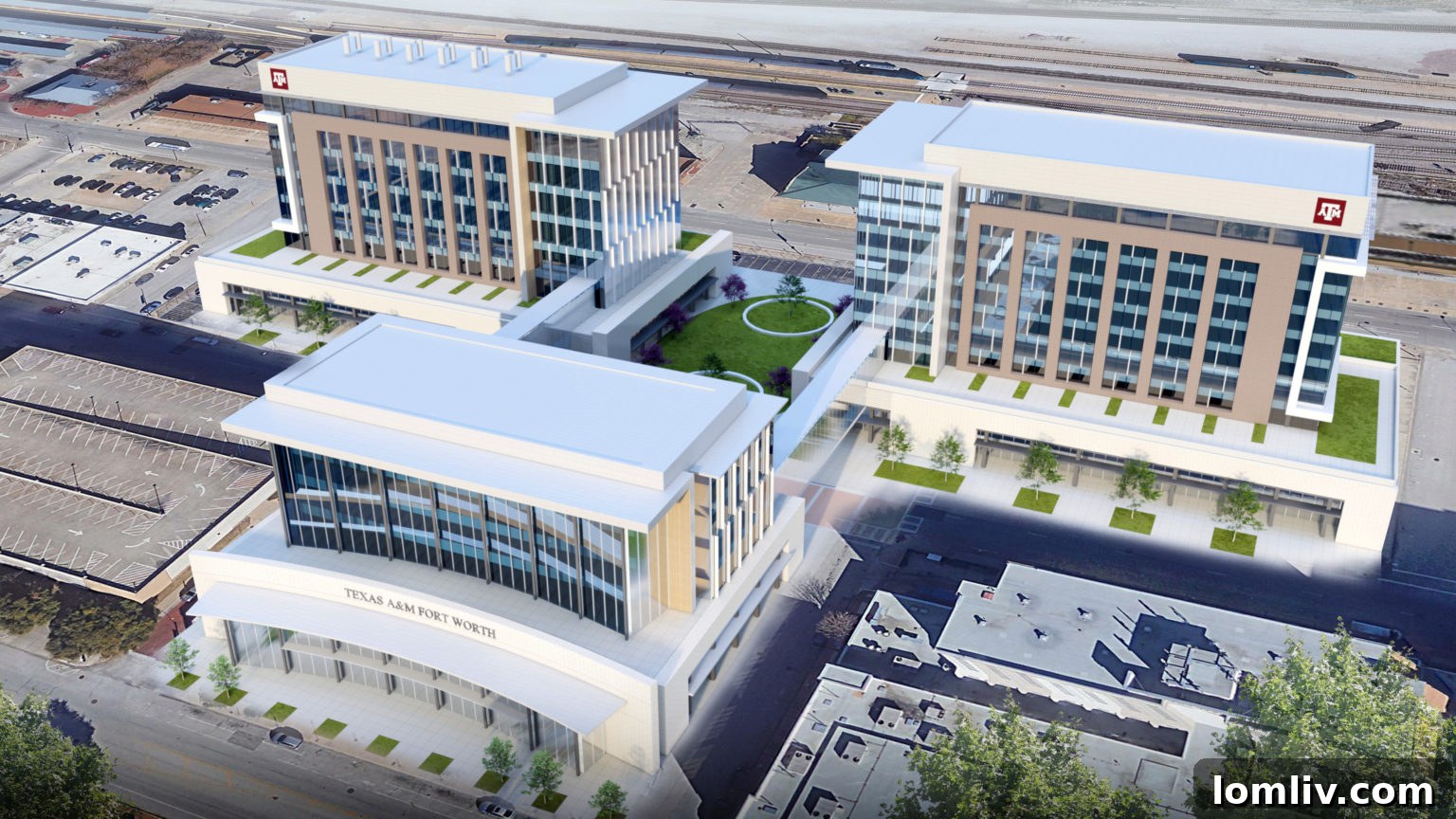
Fort Worth, Texas, is poised for a transformative era, cemented by a monumental expansion from Texas A&M University. On January 19, the university system officially unveiled ambitious plans for its Fort Worth campus, affectionately nicknamed “Aggieland North” by Chancellor John Sharp. This significant announcement was met with widespread enthusiasm, mirroring the celebratory spirit of a football victory and signaling a new chapter for the vibrant North Texas city. The investment signifies a profound commitment to fostering an educated workforce, driving economic diversification, and cementing Fort Worth’s status as a leading urban center.
The centerpiece of this ambitious project is a state-of-the-art, three-building complex slated for construction across four blocks. Strategically located at the site of the existing Texas A&M School of Law, this development is not merely an isolated campus expansion but an integral part of Fort Worth’s broader urban renewal strategy. It aligns seamlessly with the city’s planned redevelopment initiatives around its convention center, creating a cohesive and dynamic downtown district. This strategic placement ensures that Aggieland North will be a central hub, deeply embedded in the economic and social fabric of Fort Worth.
The official announcement, delivered by Chancellor Sharp alongside key university leaders, took place at Texas A&M’s temporary offices within Fort Worth’s Burnett Plaza. The project is set to break ground this summer with the construction of its inaugural structure, the Law & Education Building. This initial phase will lay the foundation for a campus designed to meet the evolving demands of modern education and research. The collaborative spirit of the project is evident in its design and construction teams. Stantec, a globally recognized firm, will serve as the architect of record, providing essential planning services, while partnering with the esteemed design architect, Pelli Clarke & Partners. Guiding the construction will be a powerful consortium of management teams, including Turner Construction Company, CARCON Industries, Source Building Group Inc., and Dikita Enterprises, collectively bringing unparalleled expertise to this landmark endeavor.
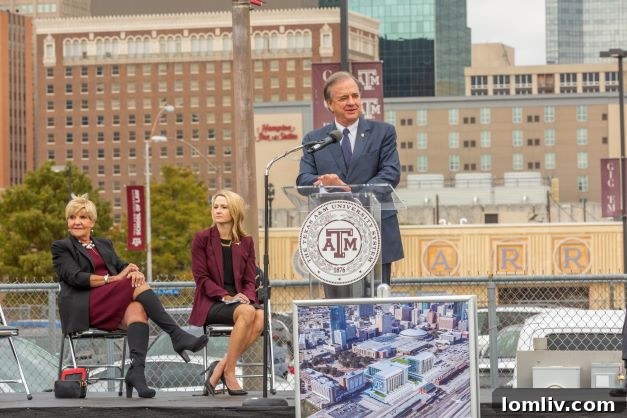
Chancellor Sharp articulated the far-reaching vision behind Aggieland North in a statement released by the university: “A top-10 public research institution ensures Fort Worth’s future is rooted in the next economy, driven by an educated workforce, whether it be lawyers, engineers, health care professionals, or technology workers whose jobs don’t even exist today.” This forward-thinking perspective underscores Texas A&M’s commitment not only to traditional academic disciplines but also to preparing students for future-proof careers in emerging sectors. He further emphasized the collaborative nature of this initiative: “Thanks to our partners, the city of Fort Worth and Tarrant County, the Texas A&M System is investing in a unique public-private sector endeavor that will be a magnet for economic growth for the North Texas region.” This public-private partnership is a critical component, leveraging collective resources to maximize the project’s impact and ensure its long-term success as an engine of innovation and prosperity for the entire North Texas area.
Aggieland North: A Catalyst for Economic Transformation and Talent Development
The announcement of Aggieland North has reverberated positively throughout Fort Worth’s central business district, eliciting widespread cheers and the characteristic Aggie “whoop” from enthusiastic business and civic leaders. This celebratory atmosphere is well-deserved, representing the culmination of years of dedicated effort and strategic planning. Both current Mayor Mattie Parker and former Mayor Betsy Price were present to commend the news, underscoring the bipartisan and long-term commitment to enhancing Fort Worth’s educational and economic landscape. Their presence symbolized the broad consensus on the importance of this expansion for the city’s future.
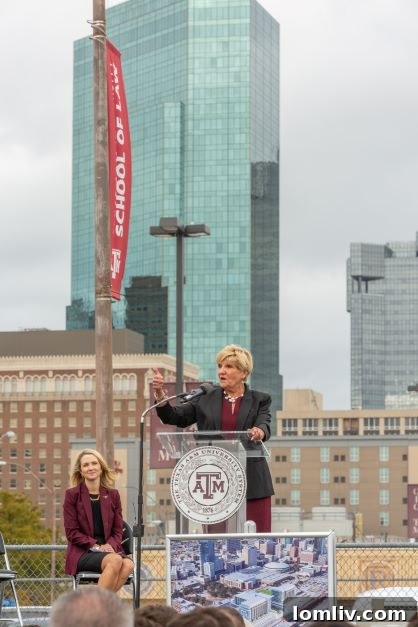
Andy Taft, president of Downtown Fort Worth Inc., an organization dedicated to promoting the central business district, eloquently described the expansion as a “game-changer for Fort Worth and downtown Fort Worth.” He elaborated on the crucial role of higher education within the city’s strategic development plans, stating, “Higher education is a key component of the downtown diversity plan. This is a highwater mark in our recruitment of smart people who generate smart people who are very attractive to companies relocating to North Texas.” This insight highlights the ripple effect of academic institutions: they not only educate individuals but also cultivate an intellectual environment that attracts further talent and investment. The presence of a prestigious research university like Texas A&M creates a robust talent pipeline, making Fort Worth an increasingly appealing destination for businesses seeking a highly skilled and innovative workforce.

For decades, Fort Worth’s economy, often affectionately referred to as “Cowtown,” has been deeply rooted in the oil and gas industry. However, city leaders have pursued a “systematic and deliberate goal” of economic diversification for a considerable period, as noted by Taft. While sectors such as hospitality, retail, and restaurant businesses have been vital and continue to thrive, the integration of higher education stands as another critical pillar in this evolving economic strategy. Taft emphasized the success in these diversification efforts, stating, “We’ve been very successful in that and continue to be.” The addition of Aggieland North significantly strengthens this pillar, fostering a knowledge-based economy that is more resilient, innovative, and sustainable in the long run. By attracting top-tier research and academic talent, Fort Worth is not just expanding its educational offerings; it’s actively shaping its economic destiny, moving towards a future powered by intellectual capital and diverse industries.
Fort Worth’s Educational Renaissance: A Collaborative Hub for Learning
Fort Worth’s downtown area is already a dynamic academic hub, home to several prominent institutions of higher learning, and the arrival of Aggieland North will further enrich this vibrant educational ecosystem. Tarrant County College’s Trinity River Campus, for instance, has been a cornerstone of downtown education since its opening in 2009, following TCC’s acquisition of the former Radio Shack complex in 2008. Similarly, the University of Texas at Arlington established its Fort Worth Campus in 2007, revitalizing the historic 1938 Santa Fe Freight Depot and former Fort Worth Rail Market through extensive renovations. These institutions have laid important groundwork, providing accessible education and contributing to the downtown area’s intellectual vibrancy.
The expansion of Texas A&M will significantly amplify Fort Worth’s growing educational footprint. The planned three-building complex, sprawling across four blocks from the site of the Texas A&M School of Law, is designed as a collaborative powerhouse. This future-oriented campus will not solely host programs from Texas A&M University; it will also integrate offerings from Tarleton State University and several other A&M System agencies. This multi-institutional approach ensures a broader spectrum of academic disciplines, research opportunities, and workforce development programs, creating synergies that benefit students, faculty, and the broader community. The collaboration signifies a collective effort to address the diverse educational needs of North Texas, from law and engineering to healthcare and technology.
Detailed plans for the new Aggieland North site reveal a high-rise complex thoughtfully designed to foster innovation and learning. These state-of-the-art facilities will encompass modern classrooms, cutting-edge laboratories, and expansive research spaces, all equipped to support advanced academic pursuits. Crucially, the university’s released details indicate that these buildings will serve as accessible platforms for both public and private sectors. This means the campus will not only cater to traditional students but also facilitate professional programs, specialized workforce training initiatives, and collaborative research ventures involving industry partners. This open model is key to addressing the evolving demands of the job market and ensuring that Fort Worth remains at the forefront of economic and technological advancement.
Fort Worth’s Ascent: Growth, Development, and a Prosperous Future
Fort Worth’s trajectory as a major American city is undeniable, now proudly ranking as the U.S.’s 13th largest city. This rapid growth is not merely a statistical achievement; it reflects a dynamic urban environment attracting residents and businesses alike. With the Texas A&M expansion, an acceleration in housing development and overall urban renewal is not just anticipated, but actively underway. Andy Taft confirms Fort Worth’s status as one of America’s fastest-growing cities, pointing to the tangible evidence of this boom: an impressive 3,000 residential units are currently in various stages of construction both within and surrounding the downtown core. This influx of new housing signals confidence in the city’s future and its ability to accommodate a growing population, including students, faculty, and professionals drawn by Aggieland North.
Beyond residential development, the broader economic landscape of Fort Worth is equally robust. Taft highlighted the staggering scale of investment, stating, “There’s $2.2 billion worth of development in the pipeline right now.” This colossal figure encompasses a diverse range of projects, from commercial spaces and mixed-use developments to infrastructure improvements, all contributing to Fort Worth’s vibrant transformation. The Texas A&M expansion is a significant contributor to this pipeline, acting as a magnet for further investment and talent. Its presence enhances the city’s appeal, driving demand for housing, services, and amenities, and creating a virtuous cycle of growth and prosperity. This comprehensive development underscores Fort Worth’s commitment to building a modern, thriving metropolis.
The combined impact of a top-tier university expansion, a thriving downtown, and unprecedented development positions Fort Worth for an even brighter future. The city is embracing its role as a leader in education, innovation, and economic diversification. The “Aggieland North” project is more than just new buildings; it’s a strategic investment in human capital, research, and community collaboration that will shape Fort Worth for generations to come. As the city continues its remarkable ascent, it proudly extends an Aggie-style “howdy” to a future filled with opportunity, progress, and unwavering growth. This expansion solidifies Fort Worth’s reputation as a dynamic, forward-thinking city, ready to tackle the challenges and seize the opportunities of the 21st century.