
Gen Z’s Journey to Independence: Navigating Economic Headwinds and Discovering Affordable Living

A recent study commissioned by Porch.com sheds light on the significant challenges faced by Generation Z as they strive for independence in their formative years.
Generation Z, broadly defined as those born between 1997 and 2012, is stepping into adulthood during a period marked by profound global shifts and economic uncertainty. Unlike previous generations who might have faced their own unique trials, Gen Z has encountered a particularly harsh economic and social landscape that is reshaping their path to independence. It’s easy for older generations to romanticize their own struggles, but the reality for today’s young adults paints a picture of genuine difficulty, far exceeding the typical generational “tough sledding.”
This generation has had to navigate crucial developmental years against the backdrop of the unprecedented COVID-19 pandemic, its lingering social and economic fallout, and more recently, a relentless surge in inflation coupled with the constant threat of a looming recession. These aren’t just minor inconveniences; they represent systemic hurdles that can profoundly impact long-term financial stability, mental well-being, and the ability to achieve traditional life milestones such as living independently, purchasing a home, or starting a family. Indeed, these challenges are exacerbating a trend observed in recent decades: young people increasingly delaying major life events due to economic pressures.
However, amidst these considerable obstacles, there’s a compelling narrative of resilience and adaptability emerging. A comprehensive study recently commissioned by Porch.com reveals that many Gen Zers are actively identifying and moving to areas across the U.S. where they can realistically achieve financial independence and live on their own, rather than residing with parents or grandparents. These young adults are strategically seeking out more affordable housing markets, predominantly found in the central U.S., but also vibrant tech- and creative-friendly locales like Austin, Seattle, and Portland, which offer promising career opportunities despite varying costs of living.
The Porch.com study meticulously crunched data derived from the U.S. Census Bureau’s 2020 American Community Survey. This robust dataset provides a comprehensive snapshot of demographics, housing, and economic conditions across the nation, offering valuable insights into where and how Gen Z is carving out its independence. Understanding these trends is crucial for policymakers, urban planners, and employers looking to support this vital demographic.
Economic Realities: Gen Z’s Earning Power and the Quest for Financial Freedom
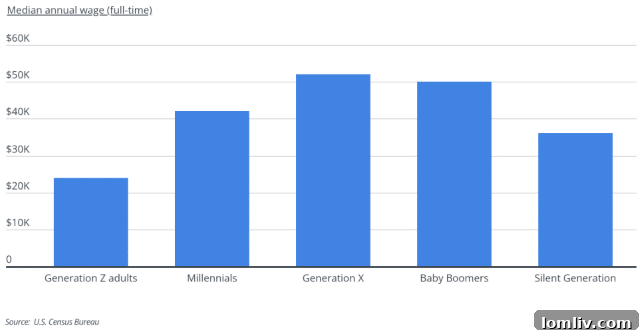
One of the most striking findings from the research underscores the challenging economic reality facing Gen Z: full-time workers in this age group earn approximately half of what the typical U.S. worker makes. This significant income disparity profoundly impacts their ability to save, invest, pay down debt, and ultimately, afford independent living. It means that even with careful budgeting and frugal living, the path to financial self-sufficiency is often longer and steeper for Gen Z compared to previous generations at similar life stages.
This wage gap isn’t just a statistical anomaly; it translates into tangible barriers. Lower earnings mean higher rent-to-income ratios, making it harder to save for a down payment on a home or even build an emergency fund. It necessitates difficult choices about education, career paths, and where to live, often forcing young adults to prioritize affordability over other factors like proximity to family or desired job markets. The quest for financial freedom for Gen Z is therefore not just about finding a job, but about finding a job that provides a living wage in an increasingly expensive world.
Leading the Way: Top Metros for Gen Z Independence
Despite the economic headwinds, certain metropolitan areas stand out as beacons for Gen Zers seeking independent living. These cities offer a combination of job opportunities, a reasonable cost of living, or a vibrant youth culture that attracts young adults.
Large Metro Areas Paving the Way
In the “Large Metro” category, several cities demonstrate a remarkable ability to support Gen Z’s journey towards independence. Oklahoma City, Oklahoma, emerges as the frontrunner, with an impressive 42 percent of its Gen Z population already living on their own. This high percentage can likely be attributed to Oklahoma City’s historically lower cost of living, a robust job market in sectors like energy, aerospace, and logistics, and ongoing urban revitalization efforts that appeal to younger demographics. Its relative affordability makes independent living a more tangible goal for young professionals and recent graduates.
Ranking second, Tucson, Arizona, sees 40.7 percent of its Gen Z adults living independently. As a vibrant university town with the University of Arizona, Tucson attracts a youthful population. Its unique blend of cultural richness, outdoor recreation, and a cost of living that remains below many coastal hubs contributes significantly to its appeal for young adults seeking a balance between lifestyle and affordability.
The dynamic Austin-Round Rock-Georgetown metro area, Texas, secures the third spot with 40.2 percent of its Gen Z residents living independently. Known as a booming tech hub and a cultural epicenter, Austin draws young talent with its abundant job opportunities in technology, creative industries, and innovation. While Austin’s housing market has seen rapid appreciation, its strong economic growth and vibrant lifestyle continue to attract young people willing to navigate its competitive landscape to be part of its unique energy.
Further down the list, the expansive Dallas-Fort Worth-Arlington metro area, Texas, ranks 21st, with 30.2 percent of Gen Zers living independently. DFW represents a massive economic powerhouse with diverse industries and numerous job opportunities. While not as high on the independence scale as Austin or Oklahoma City, its sheer size and continuous growth still offer significant pathways for young adults, though perhaps with a higher barrier to entry for solo living compared to more affordable metros.
Small Metro Hotspots for Young Independents
When considering “Small Metros,” a clear leader emerges: College Station-Bryan, Texas. This area boasts an astonishing 65.8 percent of adult Gen Zers living independently, making it the top-ranked metro across all categories. This remarkable figure is largely driven by its identity as a major university town, home to Texas A&M University. A significant student population often means a robust rental market catering to young, independent individuals, coupled with a lower overall cost of living compared to larger urban centers, making it an ideal environment for young adults taking their first steps towards living alone.
In the broader context of “All Metros,” the Dallas-Fort Worth-Arlington market finds itself at 131st out of 255. This comparison highlights the distinct advantages smaller, often university-centric, metros can offer in terms of immediate independent living opportunities for Gen Z.
State-Level Trends: Where Gen Z Finds Its Footing
Looking at the state level, the trends reveal fascinating regional differences in Gen Z’s journey to independence. Overall, Texas ranks 30th nationally, with 31 percent of its adult Gen Z population living on their own, suggesting a diverse landscape within the state itself, balancing highly affordable areas with more expensive ones.
Eleven states demonstrate exceptional environments for Gen Z independence, with over 40 percent of their young adult population living solo. Leading this group are North Dakota (46 percent) and Wyoming (45.9 percent). These states, characterized by lower population densities, unique economic drivers (such as energy and agriculture), and significantly lower costs of living compared to coastal regions, present more accessible pathways to independent living. They may not offer the same metropolitan allure as larger cities, but their economic realities make financial independence more attainable.
In stark contrast, states like Rhode Island and New Jersey show less than a fifth of their Gen Z adults living away from home. These states are well-known for their exceptionally high costs of living, particularly housing, coupled with dense populations and competitive job markets. The economic pressures in these regions often necessitate young adults remaining in multi-generational households for longer periods, highlighting a significant regional disparity in the accessibility of independent living.
Understanding the Implications for the Future
The findings from the Porch.com study offer more than just a snapshot of Gen Z’s current living arrangements; they provide crucial insights into the evolving landscape of young adulthood and its broader societal implications. The strategic migration of Gen Z to more affordable areas underscores a fundamental shift in how young people approach urban living and career development. It challenges the traditional notion that major coastal hubs are the only viable places for career growth and independent living, signaling a potential decentralization of talent and economic activity.
For cities and states, understanding these patterns is vital. Areas successfully attracting and retaining Gen Z are likely to see sustained economic vitality, innovation, and demographic growth. Conversely, regions where young adults struggle to find affordable independent living may face challenges in talent retention and long-term economic dynamism. This data emphasizes the urgent need for affordable housing initiatives, robust local job markets, and supportive community infrastructures that cater to the unique needs of this generation.
The resilience of Generation Z, adapting to challenging economic environments by seeking out new opportunities and prioritizing financial independence, is a powerful testament to their resourcefulness. Their journey reflects a conscious effort to build stable futures on their own terms, redefining traditional pathways to adulthood in the process.
What is Porch? Seattle-based Porch Group provides essential software and services to more than 25,500 home services companies across the U.S., connecting homeowners with vital resources and data throughout their homeownership journey.
Report Review: The Porch.com report offers an incredibly detailed and interactive exploration of Gen Z living trends. With its insightful data presented through static charts and a dynamic, searchable, and sortable table, it provides a comprehensive and engaging experience for anyone interested in generational demographics and housing economics. It’s a five-star rabbit hole of valuable information. 🐇 🐇 🐇 🐇 🐇