
Frisco Real Estate Fraud: Phillip Michael Carter Receives Decades in Prison for Multi-Million Dollar Investment Scam

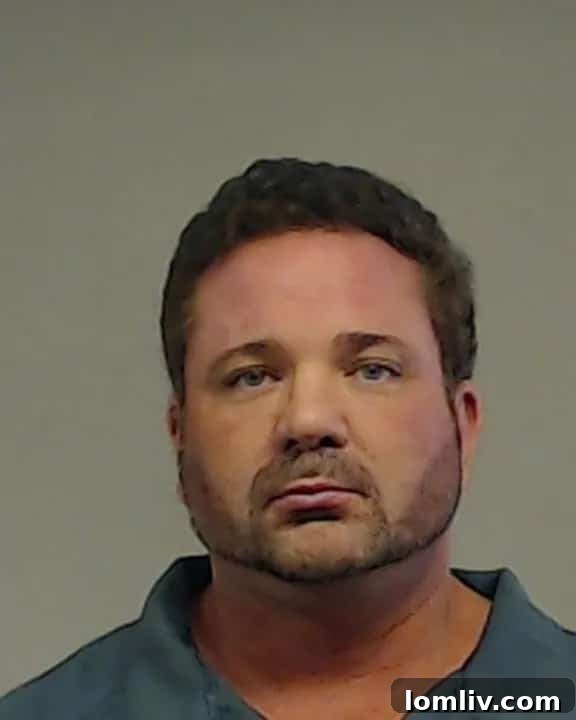
In a decisive blow against white-collar crime, a prominent Frisco developer, Phillip Michael Carter, has been sentenced to 45 years in state prison. Carter masterminded an elaborate real estate investment scheme that illicitly extracted millions of dollars from more than 300 unsuspecting individuals. The court’s judgment, delivered in Collin County, further mandates that Carter, who served as CEO of Christian Custom Homes and as a principal for Texas Cash Cow Investments Inc. and North Forty Development Inc., pay a hefty $30 million in restitution to his victims. This significant sentencing underscores the unwavering commitment of Texas authorities to vigorously prosecute those who perpetrate complex financial frauds, offering a measure of justice to hundreds of defrauded investors.
Carter’s conviction and subsequent sentencing bring a dramatic conclusion to a saga of intricate deception that spanned years. His fraudulent enterprise, built on false promises and misrepresentations, ultimately collapsed, leaving behind a trail of financial devastation and shattered trust for numerous families, predominantly residing in the North Texas region. This case serves as a stark reminder of the perils of unregulated investments and the critical need for investor vigilance.
The Anatomy of Deceit: Carter’s Real Estate Investment Empire
Phillip Michael Carter cultivated an image as a successful and trustworthy figure within the burgeoning North Texas real estate market. He operated through multiple entities, notably Christian Custom Homes, which presented a facade of legitimacy as a residential and commercial developer. Complementing this, he also ran Texas Cash Cow Investments Inc. and North Forty Development Inc., vehicles specifically designed to attract and manage investor capital. Through these companies, Carter and his associates actively solicited funds, promising investors substantial returns on what they misleadingly described as “low risk” real estate development projects.
The sophisticated nature of the scam involved persuading individuals that their investments would be directly channeled into the acquisition and development of various commercial and residential properties. However, detailed investigations later revealed a starkly different reality. A significant portion of the investor funds, meticulously gathered over time, was diverted by Carter for purposes entirely unrelated to the stated real estate ventures. These misappropriated funds were often used to sustain a lavish lifestyle, fund other undisclosed personal expenses, or to pay off earlier investors in a classic Ponzi-like scheme, rather than being allocated to legitimate construction or development activities. This critical breach of trust and misuse of capital formed the foundation of the widespread fraud.

The Legal Net Tightens: Indictments and SEC Charges
The first significant crack in Carter’s elaborate “house of cards” appeared in 2018 when a grand jury formally indicted Phillip Carter and his wife, Shelly Noel Carter. Shelly Carter faced serious allegations including money laundering and the misapplication of investor funds, and her sentencing is currently pending, highlighting the comprehensive nature of the legal pursuit. These indictments marked a pivotal moment, signaling the official beginning of the end for the sophisticated real estate scam.
Further intensifying the legal pressure, the U.S. Securities and Exchange Commission (SEC) launched a parallel investigation. The SEC subsequently filed charges against Phillip Carter and his co-defendants, Bob Guess and Richard Tilford, accusing them of violating critical anti-fraud provisions of the Securities and Exchange Act. The charges detailed their involvement in the unregistered offer and sale of securities, effectively operating as unlicensed brokers. This specific violation underscores the dangers of investing in schemes that circumvent federal regulations designed to ensure transparency and protect public investors.
The SEC’s official complaint meticulously outlined the deceptive practices at the core of the Frisco real estate fraud. It stated, “Carter, Guess, and Tilford repeatedly touted investment in the real estate development projects to prospective investors as ‘low risk,’ but never revealed to investors that they actually relied on the success of each link of a long chain of real estate development projects for repayment.” This fundamental omission of crucial risk factors, combined with Carter’s flagrant misuse of investor funds for “unrelated purposes,” created an inherently unstable and fraudulent investment landscape. The indictment on Texas criminal securities fraud charges in November 2018 ultimately sealed Carter’s fate, proving that even the most meticulously constructed schemes eventually unravel under legal scrutiny.
Justice Delivered: Convictions and Sentences for All Involved
The legal process culminated in Phillip Carter’s conviction for fraud in March at the 296th District Court of Collin County, with his sentencing occurring on May 24. His 45-year prison term is a resounding testament to the severity of his financial transgressions and the justice system’s steadfast commitment to holding perpetrators accountable. The additional order for $30 million in restitution serves as a critical effort to recoup and return some of the ill-gotten gains to the hundreds of victims, though the complete recovery of all losses often remains a significant challenge in such cases.
The long arm of the law also extended to Carter’s co-defendants, each receiving substantial prison sentences for their instrumental roles in perpetuating the widespread real estate investment scam. Bob Guess was sentenced to 12 years in prison, while Richard Tilford received a 40-year sentence, which included 12 concurrent 10-year terms for violating registration laws. Perhaps the most impactful sentence was handed down to Timothy Lloyd Booth, a former McKinney pastor and principal of a digital advertising company, who was sentenced to an astonishing 68 years for his deep involvement in the scheme. These collective convictions emphatically demonstrate the extensive reach of the criminal enterprise and the unwavering resolve of legal authorities to dismantle such networks.
The involvement of individuals from seemingly reputable backgrounds, such as a pastor, highlights the insidious nature of white-collar crime, which often exploits trust and community connections. Booth’s unusually extensive sentence serves as a grim warning that no profession or position offers immunity from the law when it comes to defrauding vulnerable individuals. The collaborative efforts of various law enforcement agencies and regulatory bodies were crucial in meticulously untangling this complex web of deceit and ensuring that all significant participants faced the profound consequences of their actions.
The Profound Human Impact: Victims and Community Trust
Officials estimate that this devastating Frisco real estate fraud targeted an astonishing 330 individuals, with the vast majority residing in the North Texas area. These victims, many of whom were ordinary citizens diligently working to secure their financial futures, often their retirement savings, faced profound financial ruin. The fraudulent scheme mercilessly exploited their trust, offering alluring promises of secure investments in a thriving real estate market, only to deliver shattered hopes and catastrophic monetary losses. The emotional and psychological toll on these victims cannot be overstated, as they grappled with the crushing realization that their hard-earned money had been systematically stolen through a meticulously planned and executed deception.
Beyond the individual financial devastation, the scam had a far-reaching impact on the broader North Texas community. It significantly eroded public trust in investment opportunities, particularly within the real estate sector. Such large-scale frauds inevitably create an atmosphere of skepticism and wariness, making it considerably harder for legitimate businesses and developers to attract essential capital and thrive. This poignant case serves as a vital reminder of the continuous vigilance required from both prospective investors and diligent regulatory bodies to safeguard the integrity of financial markets and protect vulnerable populations from predatory, fraudulent schemes.
A Clear Message: Upholding Integrity in Investment Markets
Securities Commissioner Travis J. Iles, in a public statement obtained by the Runnels County Register, underscored the indispensable role of regulatory oversight in preventing such egregious abuses. “The Texas State Securities Board vigorously works to stop fraudulent investment schemes and secure justice for victims of white-collar crime,” Iles stated, emphasizing his agency’s proactive stance. He further commended the essential collaboration with the Collin County District Attorney’s Office, highlighting how such partnerships are absolutely instrumental in successfully prosecuting these intricate and challenging cases.
Iles eloquently articulated the dual benefits stemming from these successful prosecutions: “These cases not only achieve redress for the defrauded but also level-the-playing field for legitimate businesses seeking capital.” This perspective powerfully reinforces the profound importance of maintaining a fair, transparent, and trustworthy investment environment, where genuine enterprises can flourish without being undermined or outcompeted by fraudulent actors. The hefty sentences and significant restitution orders in the Phillip Michael Carter case send a powerful and unequivocal deterrent message, thereby reinforcing the steadfast commitment of Texas authorities to rigorously protect its citizens and uphold the highest ethical standards within the financial industry.
Protecting Your Future: Key Lessons from the Frisco Fraud
The Phillip Michael Carter case offers invaluable and crucial lessons for all prospective investors. It serves as an undeniable and stark reminder that thorough due diligence is absolutely paramount before committing any funds to an investment opportunity, particularly those that promise unusually high returns coupled with “low risk.” Always take the necessary steps to verify the credentials and legitimacy of individuals and firms offering investments. Ensure they are properly licensed and registered with relevant regulatory bodies, such as the SEC or appropriate state securities boards, as this is a fundamental layer of protection.
Furthermore, investors should cultivate a healthy skepticism and be exceptionally wary of schemes that appear overly complex, lack transparent explanations of how their money will be utilized, or exert undue pressure for immediate investment. A genuinely legitimate investment will typically be characterized by clear documentation, a well-defined and discernible business model, and readily accessible, comprehensive information about all associated risks. Consulting with an independent, trusted financial advisor or an attorney can provide an invaluable additional layer of protection, helping to meticulously scrutinize investment proposals and expertly identify potential red flags that could unequivocally indicate a scam. The Frisco real estate fraud starkly highlights that even seemingly reputable developers can unfortunately engage in illicit activities, making skepticism, diligent research, and careful investigation indispensable tools for safeguarding one’s financial future against such predatory practices.
Conclusion: A Decades-Long Consequence for Deceit and Devastation
The sentencing of Phillip Michael Carter to 45 years in prison, coupled with a $30 million restitution order, brings a definitive and long-awaited conclusion to a multi-year saga of pervasive deception and immense financial devastation. This landmark case stands as a powerful testament to the unwavering resolve and persistent efforts of regulatory bodies and law enforcement agencies across Texas to relentlessly pursue and severely punish those who perpetrate large-scale white-collar crimes. For the hundreds of victims whose lives were profoundly impacted, this outcome, while inherently incapable of fully restoring their catastrophic losses, undoubtedly offers a significant measure of justice and a much-needed sense of closure.
The enduring legacy of the Frisco real estate fraud will unquestionably serve as a critical and enduring cautionary tale for both aspiring investors seeking legitimate opportunities and, more importantly, for those who might contemplate engaging in illicit financial schemes. It powerfully reinforces the fundamental principle that accountability will be meted out without compromise, and that the pursuit of illicit gains at the expense of unsuspecting others carries profound, life-altering, and decades-long consequences. The steadfast commitment to maintaining the highest standards of integrity, transparency, and fairness in the financial landscape remains an absolute top priority, ultimately ensuring that markets are secure, trustworthy, and equitable for all participants.