The future of Dallas’s urban landscape is currently at a critical juncture, with the Comprehensive Land Use Plan Committee (CLUP) meticulously reviewing the draft ForwardDallas plan. This ambitious blueprint, set to guide the city’s development over the next two decades, underwent a rigorous six-hour workshop on January 9. While the committee dedicated significant effort to refining language and correcting errors, and engaged in passionate debates concerning crucial issues like housing density, it was the fervent public comments from Dallas residents that truly illuminated the depth of community concern and revealed the plan’s most contentious aspects. The proposed changes, particularly those impacting single-family neighborhoods and the overall character of the city, have sparked considerable debate, highlighting the complex challenge of balancing urban growth with neighborhood preservation and social equity.
A central point of contention raised by numerous residents addressing the CLUP committee revolves around a specific policy statement within the draft plan: the allowance for Accessory Dwelling Units (ADUs) “by right” in single-family neighborhoods. This proposal has ignited widespread opposition, with residents expressing profound dissatisfaction regarding its potential implications for their communities. The term “by right” holds significant weight in zoning discussions, meaning a particular use is automatically permitted within a designated zoning district, thus bypassing the need for special review or discretionary approval by local government bodies. For many homeowners, this stipulation represents a fundamental shift in traditional zoning principles, potentially altering the very fabric of their neighborhoods without adequate public input or safeguards.
During the January 9 meeting, city officials clarified that while the policy statement allowing ADUs “by right” is outlined in the comprehensive plan, its actual implementation is “100 percent” subject to a multi-tiered review and approval process. This critical process involves scrutiny by the Zoning Ordinance Advisory Commission (ZOAC), followed by the City Plan Commission (CPC), and ultimately requires final adoption by the Dallas City Council. This clarification, though reassuring to some, does not fully alleviate the concerns of residents who view the initial proposal as a significant step towards undermining the established character of single-family areas. The debate underscores the delicate balance between promoting housing diversity and protecting existing community structures.
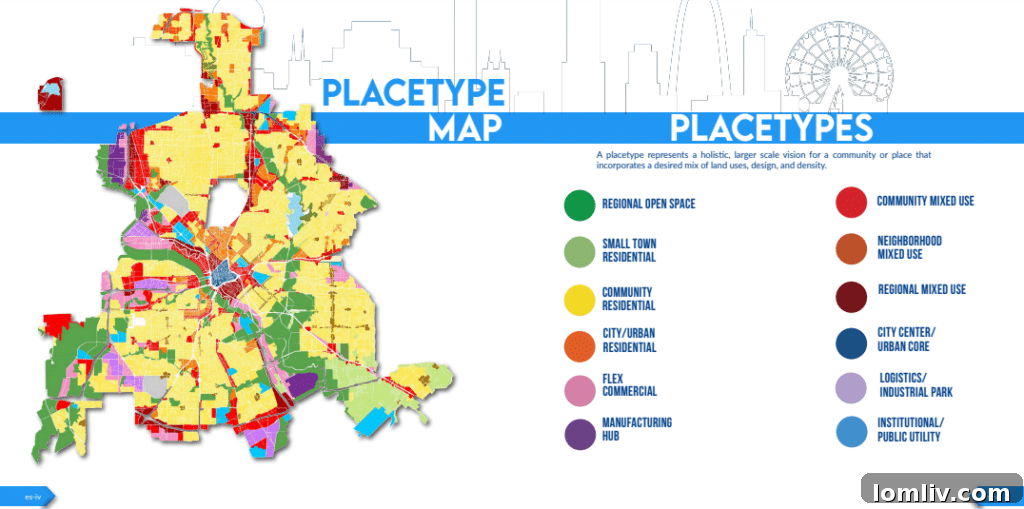
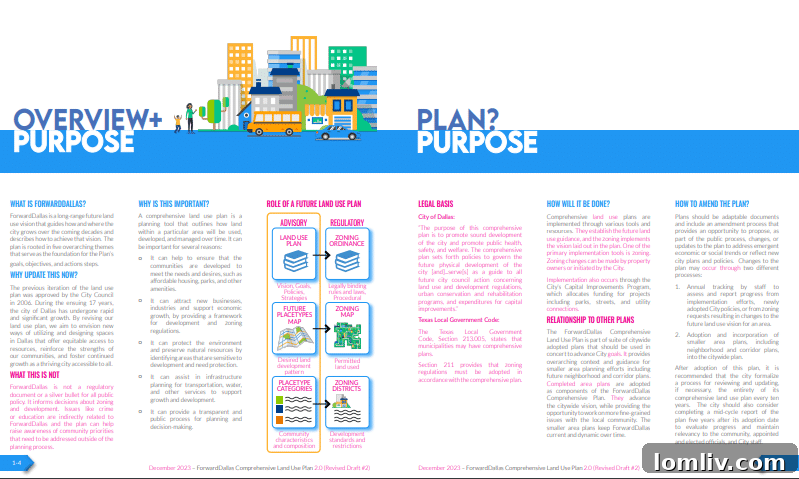
The updated ForwardDallas draft plan and its accompanying placetype map were officially released on December 11, marking a significant milestone in the planning process. Following the rigorous workshop, the CLUP committee voted to forward the draft to the City Plan Commission for its comprehensive review. The culmination of this extensive planning and public engagement process is anticipated in June, when the Dallas City Council is scheduled to cast its final vote on the document. In the interim, to ensure continued public participation and transparency, virtual ForwardDallas roundtable discussion meetings have been arranged. These crucial sessions are slated for 6 to 7 p.m. on January 16 and from noon to 1 p.m. on January 19, providing further opportunities for residents to voice their perspectives on the proposed changes shaping Dallas’s urban future.
Community Outcry: Residents Argue ForwardDallas Draft Plan Threatens Neighborhoods and Neglects Southern Dallas
The public commentary period during the CLUP workshop highlighted significant apprehension among Dallas residents, with approximately a dozen individuals weighing in on the draft ForwardDallas plan. A recurring theme of their concerns was the perceived absence of a dedicated single-family residential “placetype” within the plan’s framework. This omission, coupled with the controversial suggestion that Accessory Dwelling Units (ADUs) could be permitted “by right” across single-family neighborhoods, has fueled fears of unwanted transformations and erosion of neighborhood character. Many residents feel that the plan, in its current form, fails to adequately protect the distinct identity and stability of existing residential areas, prompting a strong collective call for reconsideration and more nuanced policy approaches.
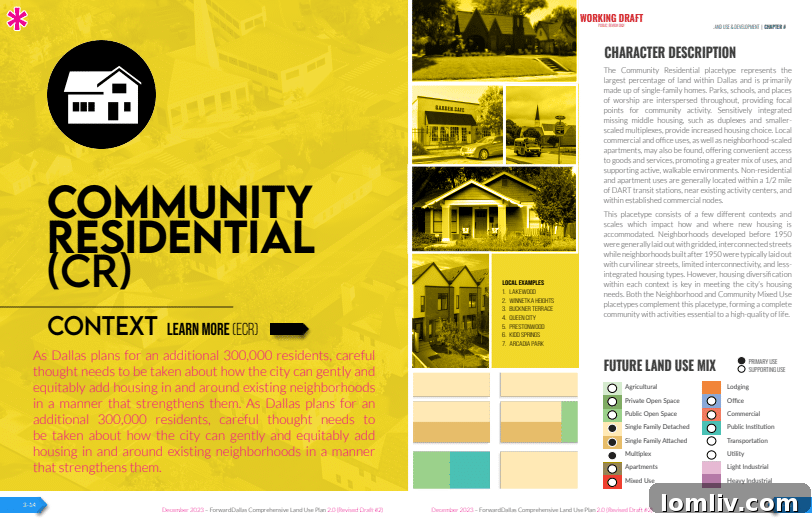
Among the outspoken critics was resident Greg Estell, who expressed grave doubts about the draft plan’s readiness for implementation. Estell argued that the plan appeared to be only about 25 percent complete, suggesting that any action by the CLUP beyond “reset[ting] your timelines” would be premature and ill-advised. He sharply criticized the plan’s approach to increasing housing density, describing the proposed “by-right” development of duplexes, triplexes, fourplexes, and ADUs in single-family areas as a “blunt-force approach.” Estell contended that such policies disproportionately favor developers, dismissing them as “lazy policy” that fails to adequately consider the long-term impacts on established communities and existing homeowners.
Melanie Vanlandingham, a resident of District 14 and a landscape architect, offered a particularly incisive critique, emphasizing the need for a more equitable and geographically targeted planning strategy. She argued that the ForwardDallas plan should focus on specific areas where population growth is genuinely anticipated, citing data from the North Central Texas Council of Governments which projects an influx of 300,000 residents primarily in far southeast, far east, and northwest Dallas. Vanlandingham strongly rejected the “density everywhere” mantra, asserting that it would only perpetuate developers’ focus on already “hot” real estate markets, leading to inequitable development outcomes and further marginalizing Southern Dallas. “Is the city turning its back again on the southern sector for another 20 years?” she questioned, highlighting a persistent concern about historical disinvestment in these areas.
Vanlandingham further advocated for the inclusion of a distinct single-family residential placetype within the plan’s matrix. She insisted that ADUs should only be permitted by a Board of Adjustment permit, mirroring current regulations, rather than being allowed “by right” as proposed, and distinctly separate from the broader “community residential” designation. Her strongest condemnation was reserved for the prospect of allowing three-story multiplex buildings containing four, ten, or even more units to be constructed “right next to single-family homes everywhere,” labeling this as “entirely unacceptable.” She posited that the current plan incentivizes the “bulldozing single-family neighborhoods” to replace them with “wildly incompatible units,” thereby threatening the architectural and social coherence of existing communities.
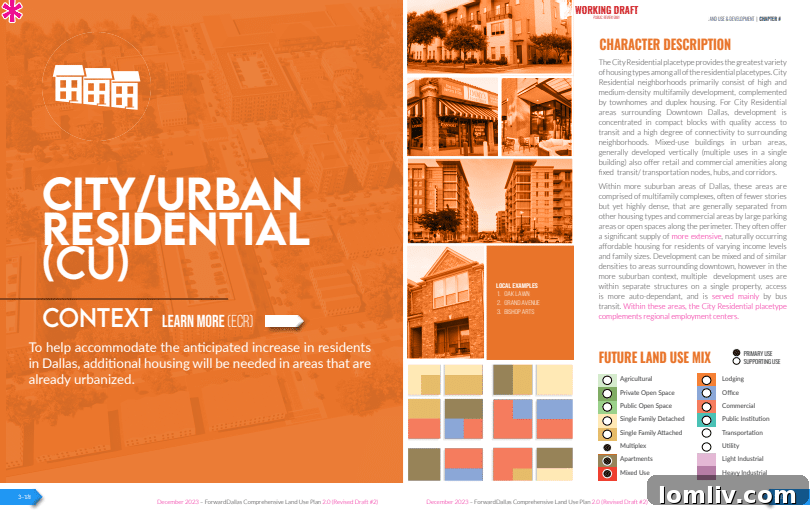
Echoing the sentiments of other residents, Vanlandingham passionately argued that the core issue was not genuinely about affordability, but rather an “assault on existing homeowners.” She contended that the plan’s proposals would lead to the replacement of valuable multigenerational homes with expensive studios and one-bedroom units, which paradoxically might result in less actual density while driving up costs. Countering the popular narrative, she stated that younger generations, specifically “Millennials wanting to return to or stay in Dallas, they want single-family homes, not mini-studios,” suggesting a disconnect between the plan’s vision and the actual housing preferences of a significant demographic.
Adding another layer to the procedural concerns, District 14 resident Ed Zahra raised a crucial point regarding the legal implications of the proposed “blanket ADU mandate.” Zahra asserted that because such a mandate effectively constitutes a zoning change, it necessitates comprehensive notification to all 257,000-plus single-family homeowners in Dallas. Furthermore, he argued that public hearings must be rigorously held across the city to gauge and determine community acceptance of such a significant alteration to zoning laws. This perspective highlights the need for due process and broad public engagement when considering policies that could fundamentally impact property rights and neighborhood character on a city-wide scale.
The scope of resident concerns extended beyond housing density to encompass critical environmental justice issues. Evelyn Mayo, representing Downwinders at Risk, voiced serious apprehension regarding the “commercial flex placetype” within the ForwardDallas plan. She specifically pointed out that this designation permits warehousing as a primary land use along the Trinity River Corridor, particularly south of downtown. Mayo emphasized the potential for adverse environmental impacts on nearby communities, many of which are already overburdened by pollution. Her organization proposed either removing this land use from the placetype entirely or, at a minimum, reclassifying it as a secondary land use to mitigate its potential harm, underscoring the vital link between land use planning and community health.
Further reinforcing the environmental justice argument, Jim Schermbeck referenced the tragic case of Southern Dallas’s Joppa neighborhood. Schermbeck powerfully described Joppa as “per capita, perhaps the most polluted neighborhood in Dallas, precisely because public policy made it so.” He argued that it is now incumbent upon public policy to provide “proportional relief” to such communities, advocating unequivocally that Joppa should be “off limits to industry of any kind.” This impassioned plea underscores the profound historical impact of land use decisions on vulnerable communities and calls for restorative justice through future planning initiatives.
CLUP Committee Deliberations: Navigating Housing Density, Affordability, and Community Input
The Comprehensive Land Use Plan (CLUP) committee members clearly acknowledged the weight of the public comments, particularly those concerning Accessory Dwelling Units (ADUs) and the contentious issue of industrial and warehouse uses. The panel dedicated a significant portion of its discussion to exploring the broader implications of these concerns, delving into topics such as air quality and impervious surfaces – critical environmental factors that directly relate to industrial development and urban density. Subsequently, the conversation pivoted to the multifaceted challenges of housing, including availability, affordability, and the delicate balance between new development and the preservation of existing community character.
Chief Planner Lawrence Agu expertly facilitated the workshop, guiding the committee through the intricate details of the draft plan. Throughout the session, Agu diligently incorporated numerous revisions and suggestions put forth by the committee members, demonstrating a commitment to an iterative and responsive planning process. His role was pivotal in synthesizing diverse perspectives and ensuring that the evolving document reflected the committee’s collective input, even amidst deeply held differing opinions on key policy directions.

Committee member Deborah Carpenter raised a pertinent question regarding the plan’s language, which seemed to simultaneously acknowledge a loss of affordable housing while also pointing to an excess of older housing stock. Carpenter emphasized the critical need for an “anti-displacement or anti-gentrification toolkit” to safeguard vulnerable residents and preserve existing community structures. She articulated a concern that the document appeared “very heavily on pro-new construction,” suggesting that the primary objective was to lower the cost of new housing. However, Carpenter warned that this focus, while seemingly benevolent, could inadvertently “negatively impact preserving naturally [occurring] affordable housing” (NOAH), thereby exacerbating the very problem it sought to address by displacing residents from their existing, more affordable homes.
Supporting the call for preserving existing housing, CLUP member Maureen Milligan highlighted that there is no pressing need to redevelop historically stable and desirable older areas, such as the elegant Swiss Avenue district, precisely because residents highly value and wish to remain in those homes. Milligan drew a crucial distinction, pointing out that historically disinvested communities, where homes may not have been adequately maintained over time, are far more susceptible to exploitation by real estate investors. These areas, she argued, represent a vital source of “naturally occurring affordable housing” that must be protected. To this end, she suggested a critical amendment to the plan’s language, proposing the addition of “equitably preserve and increase attainable housing options” to underscore the importance of protecting the existing, well-maintained homes that currently serve as the foundation of Dallas’s affordable housing stock.

CLUP Chair Brent Rubin concurred with the urgent need for robust tools and strategies to preserve naturally occurring affordable housing. He acknowledged the complexity of the issue, emphasizing that more extensive discussion is imperative to determine the most effective ways to accommodate Dallas’s increasing housing needs while simultaneously ensuring affordability for all residents. Rubin articulated the broad spectrum of opinions that surfaced during the committee’s deliberations and public input sessions.
“There are a wide range of opinions on this,” Rubin stated, reflecting the multifaceted nature of the challenge. He noted the perspectives of those who advocate for maintaining single-family zoning as the primary tool for preservation, possibly enhanced with “additional overlay elements and things like that.” Conversely, he acknowledged the proponents “at the opposite end of the spectrum who say, ‘Let’s get rid of single-family zoning.'” Rubin also highlighted a significant middle ground, where opinions converged on strategies such as infill development, utilizing vacant lots, leveraging corner lots, and developing along corridors – approaches that seek to increase density more strategically without wholesale changes to established neighborhoods. This range of views underscores the intricate balancing act Dallas faces in its pursuit of sustainable and equitable urban development.
Rubin clarified that the ForwardDallas plan, in its current draft, does not mandate a singular or specific solution regarding the future of single-family neighborhoods. He expressed confidence that “single-family areas will continue to exist after we adopt ForwardDallas,” aiming to reassure residents about the plan’s overall intent. However, he emphasized that the document’s purpose is to “open up the conversation to look at potential options for accommodating density.” This flexibility is designed to address critical issues related to housing availability, affordability, and the crucial preservation of naturally occurring affordable housing. While the plan broadens the scope for future policy considerations, Rubin highlighted one key exception: “The only thing I see as a very strict policy call that we make here on density is we do call for ADUs by right, citywide.”
This commitment to allowing ADUs “by right” citywide is, as Rubin pointed out, the only specific policy implementation explicitly called for within the ForwardDallas draft. He further elaborated that all other aspects related to “missing middle” housing – such as duplexes, triplexes, and other moderate-density housing types – which the plan looks to potentially integrate “in the middle of neighborhoods, on the edges of neighborhoods,” remain part of a much more detailed and complex policy conversation. The current document, he explained, primarily “facilitates” this broader discussion rather than making definitive “calls on those questions.” Crucially, Rubin reiterated that even the proposed allowance of ADUs “by right” in single-family areas will still be subject to “appropriate measures including ZOAC and CPC” review, ensuring that due process and expert consideration precede any final implementation. This layered approach aims to navigate the delicate balance between proactive urban planning and responsive community engagement in shaping Dallas’s future.